Improvements at the Reserve
November has been a busy month at the reserve and many improvements have been made. Here are some of the new things here at the reserve.
The first improvement you will see will be right as you enter the reserve. Micah has replaced all of the wood on the suspension bridge and built new stairs and platforms for getting on and off the bridge. The old bridge was really cool looking with all the moss and epiphytes growing on it but it was a little rickety, slippery and somewhat scary. When Micah removed the old boards he found many that were rotten through. It was definitely time to give it a face lift. The new bridge is a little sturdier although still a little bouncy. It is a suspension bridge after all.
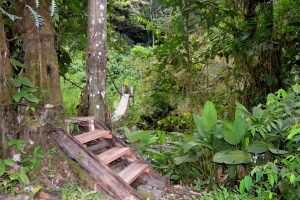
New Stairs
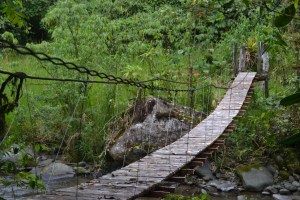
New Bridge

Old Bridge
Micah also replaced the table at the campsite. The old one was made out of a recycled aluminum sign. The new one matches the bench which is made from Chonta, a type of palm.

New table at the campsite made with chonta
Micah also finished the bookshelf inside the cabin so that the shelving goes all the way to the floor. He also included some doors to create cabinets that can be closed and locked.
 There was some wood leftover from the shelves so we used that to create a new sign at the trailhead on the road. The old sign was painted on an aluminum sheet and was starting to fade a peel a bit. We thought a wood sign wood reflect the lodge a little better. Unfortunately neither of us are artists so we could not include any pretty birds. It was a lot just for Jaime to paint the letters freehand and not look like a child painted it. Well maybe one of the future managers will be more artistic and can add some artwork to the sign. But for now we think the sign looks a little better than the old one and definitely fresher.
![IMG_1138[1]](https://reservalastangaras.com/wp-content/uploads/2012/12/img_11381.jpg?w=300&h=225)
New Sign
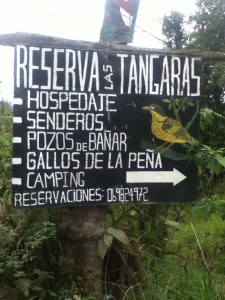
Old aluminum sign
It has been fun giving the reserve a facelift. Now we are focusing on getting it ready to hand over to the new managers. We look forward to meeting Kate and Jeff this week. Adios for now!
A Boy in the Jungle
 This week we celebrated Never’s birthday. He turned 3 years old!A friend of Nev’s, Negue, lives in town and his birthday is the day before Nev’s. So we joined celebrations and had a double birthday party. There were several kids there and they all had a good time with face painting, piñata, food and cake.

In honor of Nev we thought we would post a blog about Nev’s experience living at the reserve. It has been a really awesome experience for us to be here at the reserve with Nev. He really enjoys this place too. He has grown so much and learned a lot during our time here.
Here are some of his favorite things about the reserve:
playing at the river and throwing rocks into the water

chasing butterflies and finding cool new “buggies”
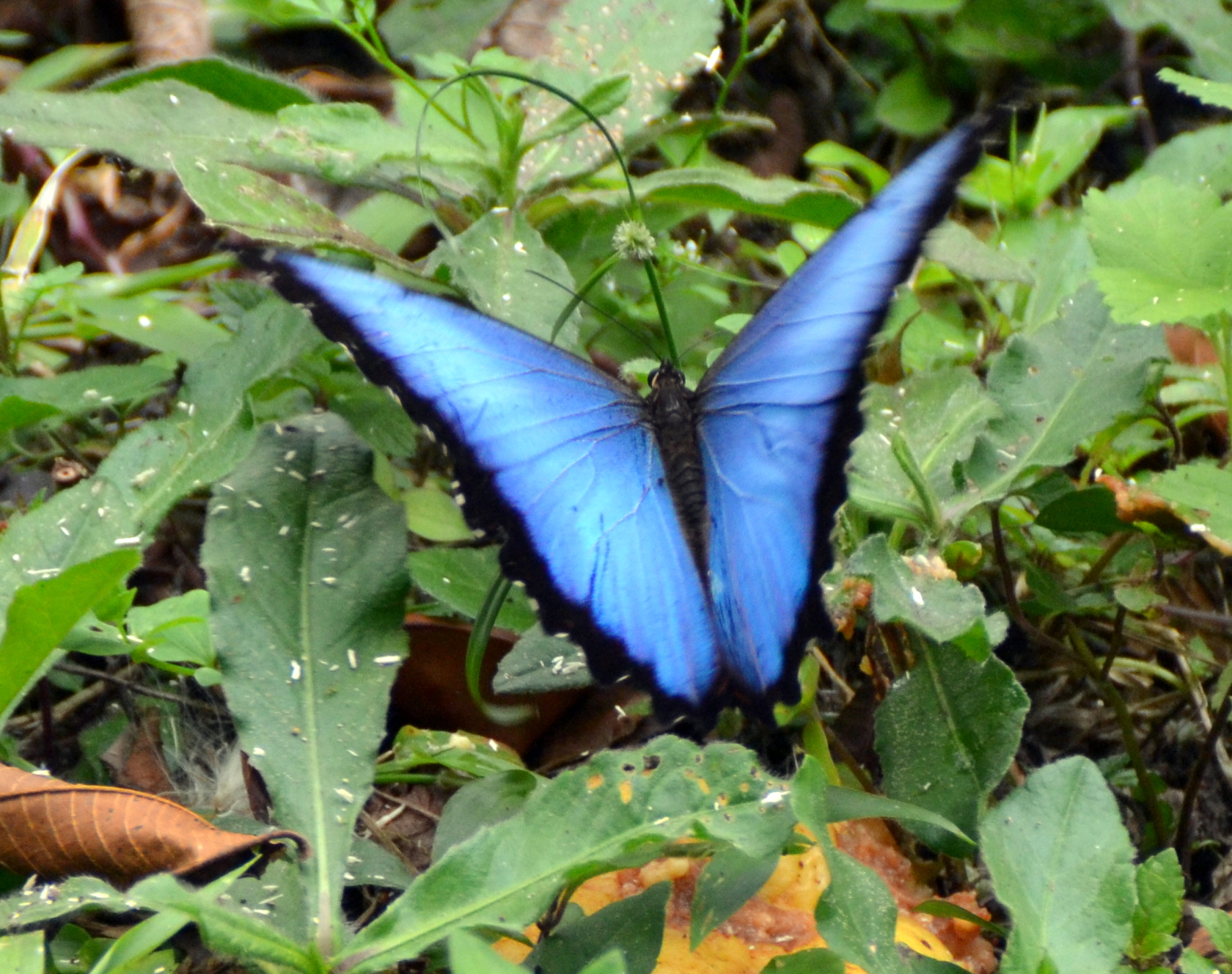
looking at all the beautiful flowers and crazy plants
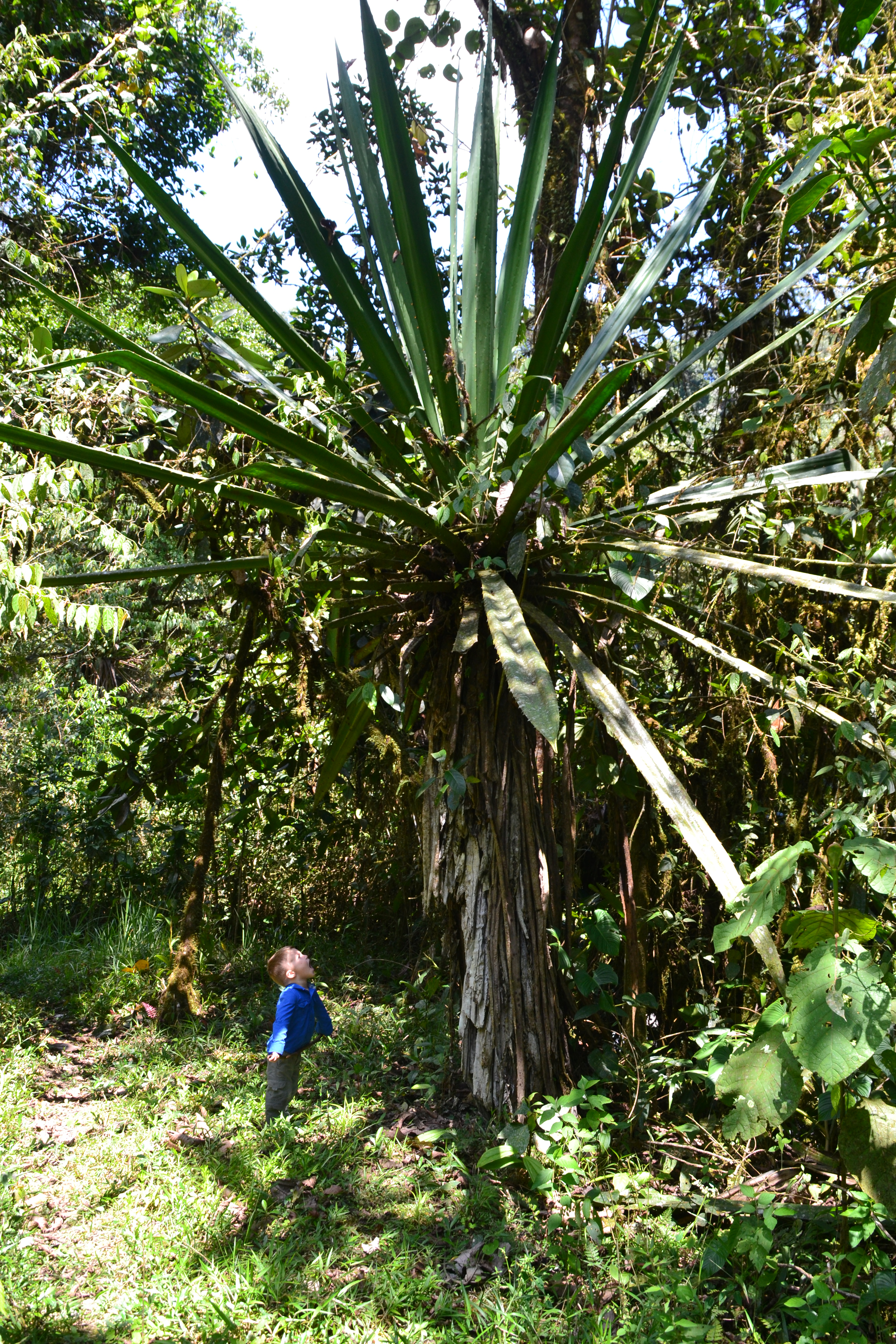
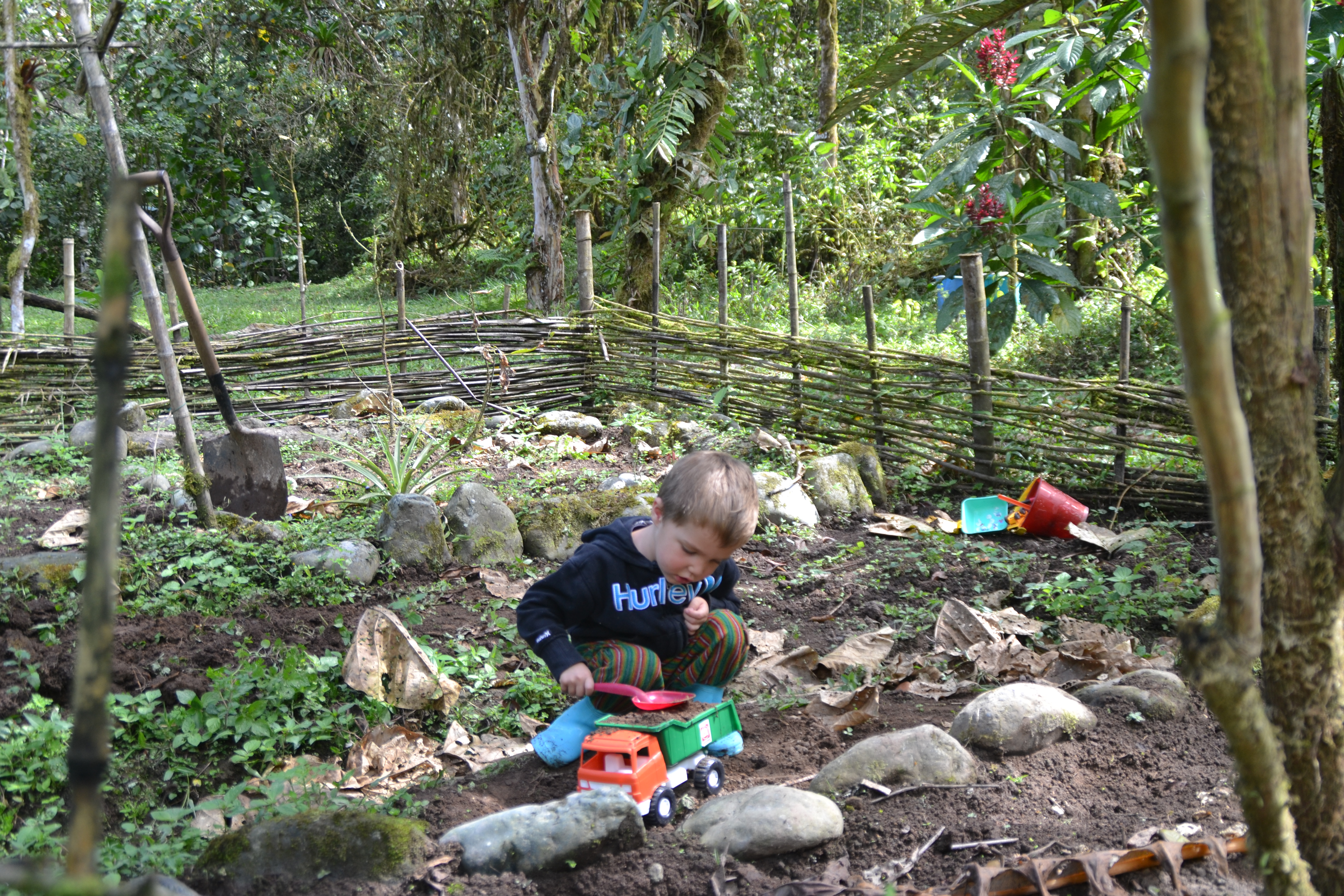
working in the garden
helping with chores around the reserve like sweeping and laundry (i.e. water play time).
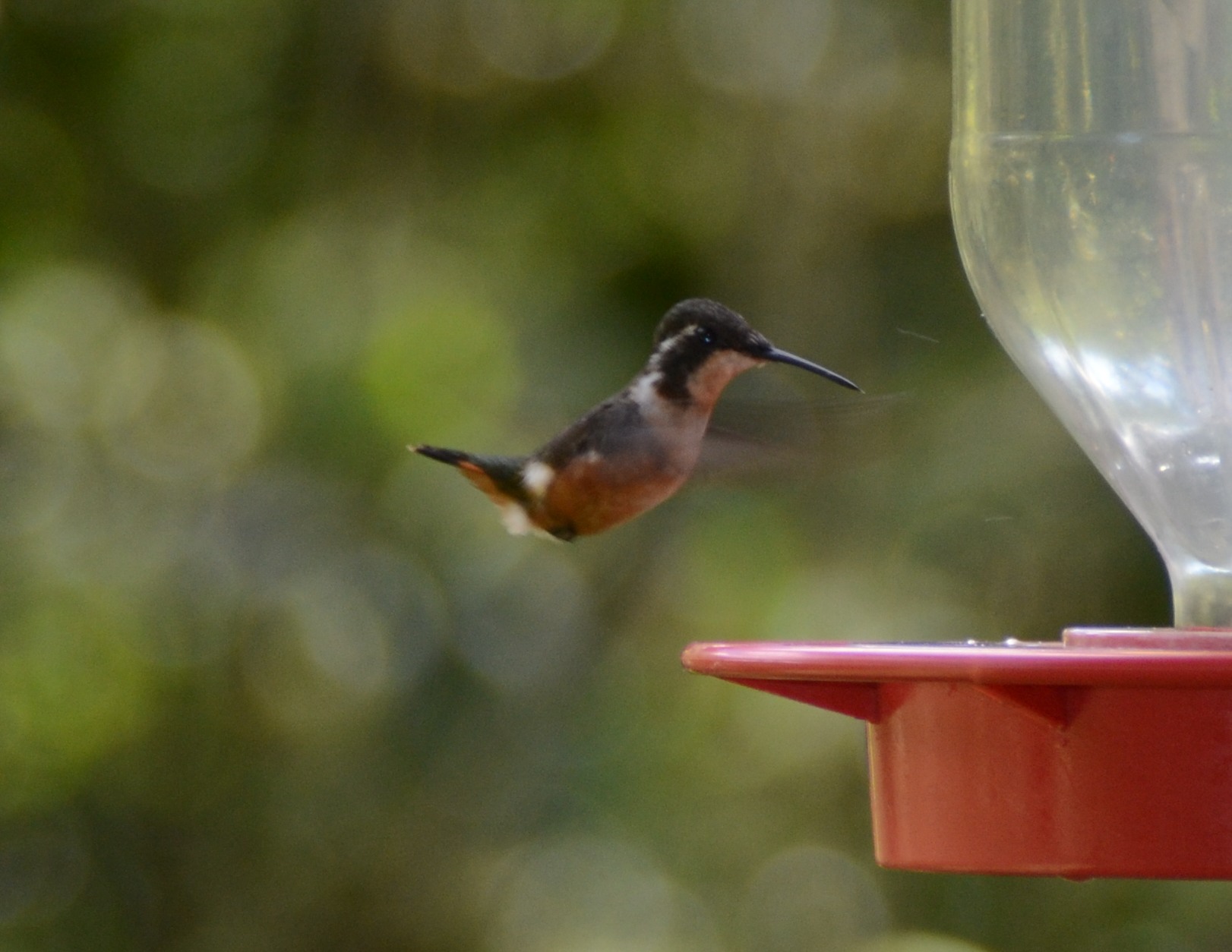
He is learning about the birds just as we are. He always asks the names of the hummers that come to the feeders. Although his favorite we just call the “bumblebee” because it sounds like a bumblebee (Purple-throated woodstar).
Nev also really loves when we have visitors at the reserve. He has wrangled pretty much everyone who has come here into playing cars and trains with him or watching a movie. His favorite movie right now is The Lorax. All of the visitors have been great with him and he is always sad to see our “friends” leave.
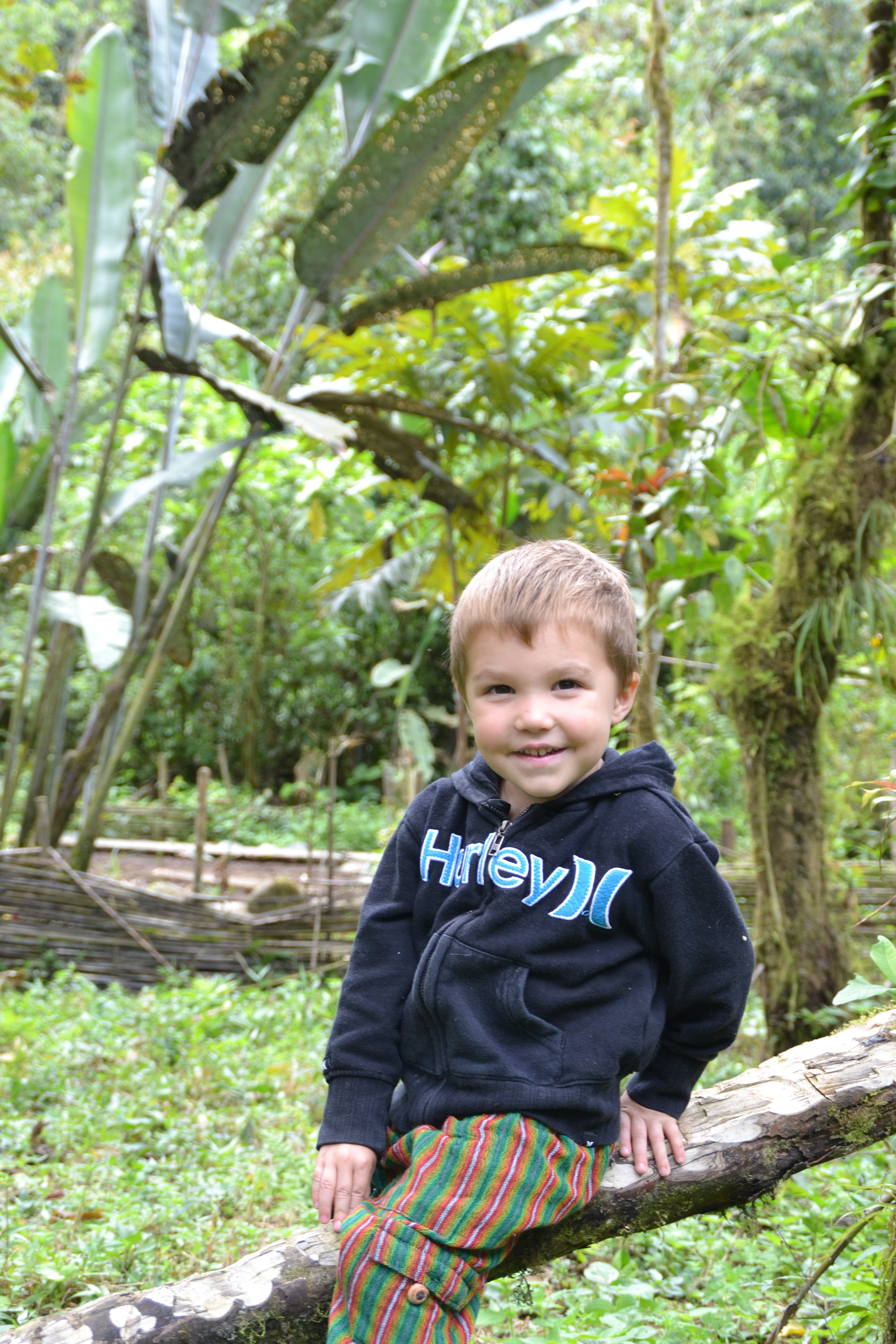
He definitely really enjoys this place and what a cool place it is for a 3 year old to spend time exploring. We think he will be just a sad as us when our time here is over and we have to leave this beautiful sanctuary. But hopefully we can return here with him when he is older or when he is an adult and off on his own adventures.

Rivers and Creeks

Nambillo River
When you first get to Reserva Las Tangaras the first thing you see is the Nambillo River. It is the sound that dominates the cabaña. When it enters the property it is in a narrow gorge and meets a little creek where the Bonito pool can be found before it drops 25 meters into the abyss above the gorge. As the river flows along the property there are two swimming holes before it meets the confluence of the Fuente Creek at the west end of the reserve. The creek winds its way down from a 10m waterfall and a sheer cliff.
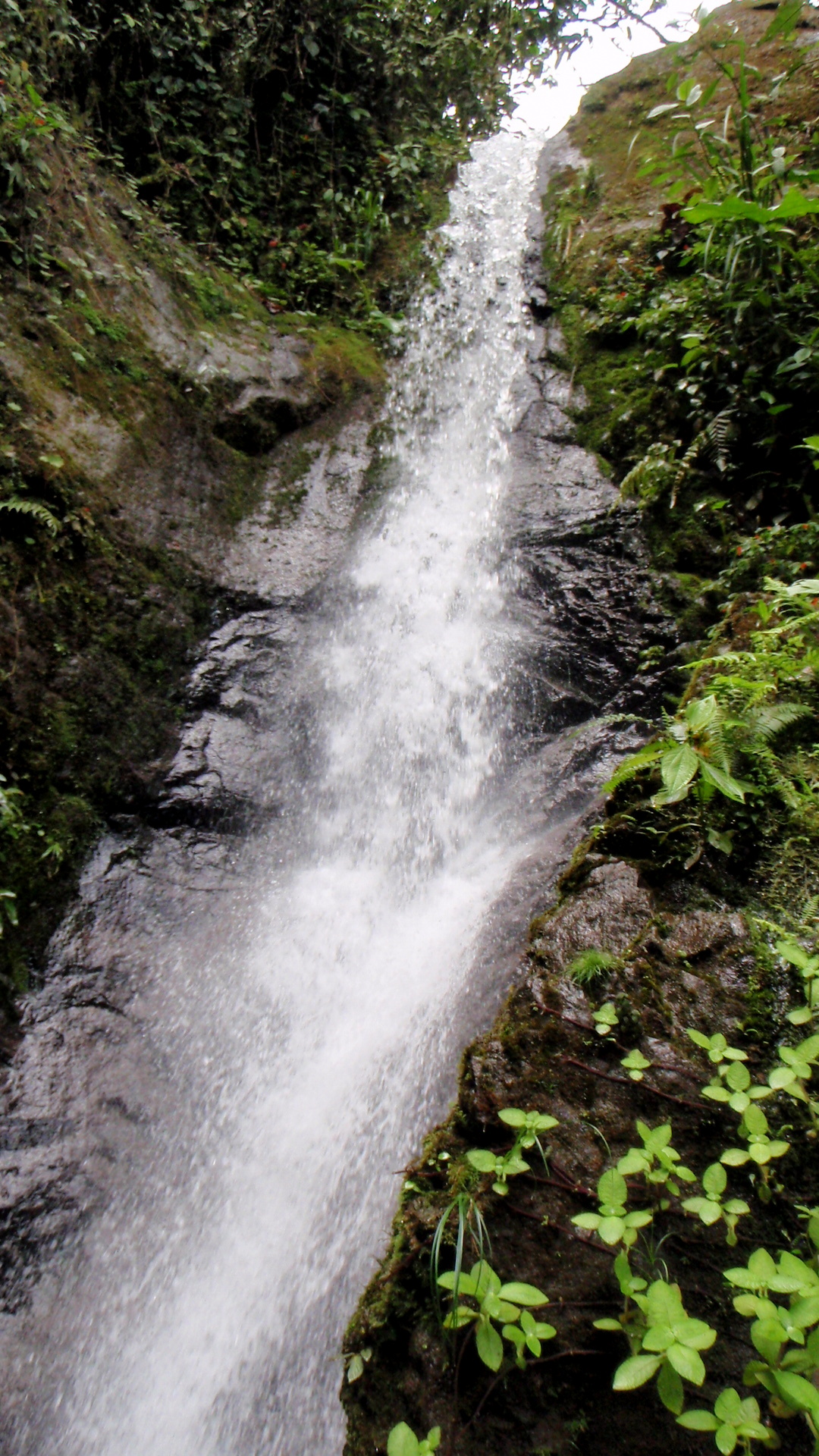
Fuente Creek Falls
The newest trail at the reserve follows the Nambillo river down from the campground to just above the confluence with the Fuente Creek. At lower water levels it is possible, with some bouldering, to walk up the creek to the waterfalls. Along the way the creek bed is in constant change and has a dozen beautiful pools.
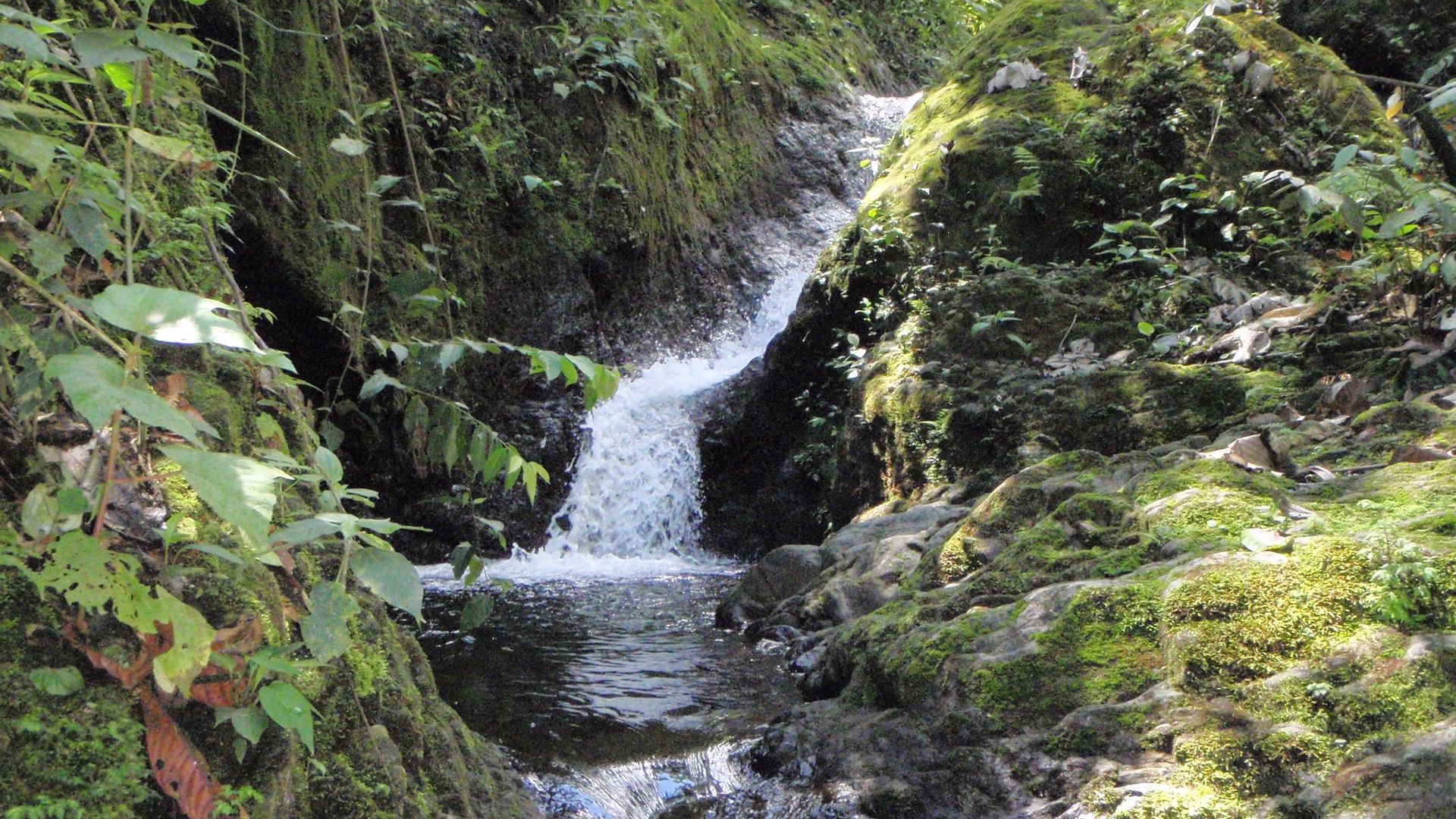
Lower Fuente Creek
If you bring a mask or goggles you can see the catfish that live in the deeper pools. If you are quiet you might see the basilisk, the Torrent Duck family or the fasciated tiger-heron. Water dominates all here at the reserve. Though we have had the most beautiful weather this last week, we know the next rain is always near.
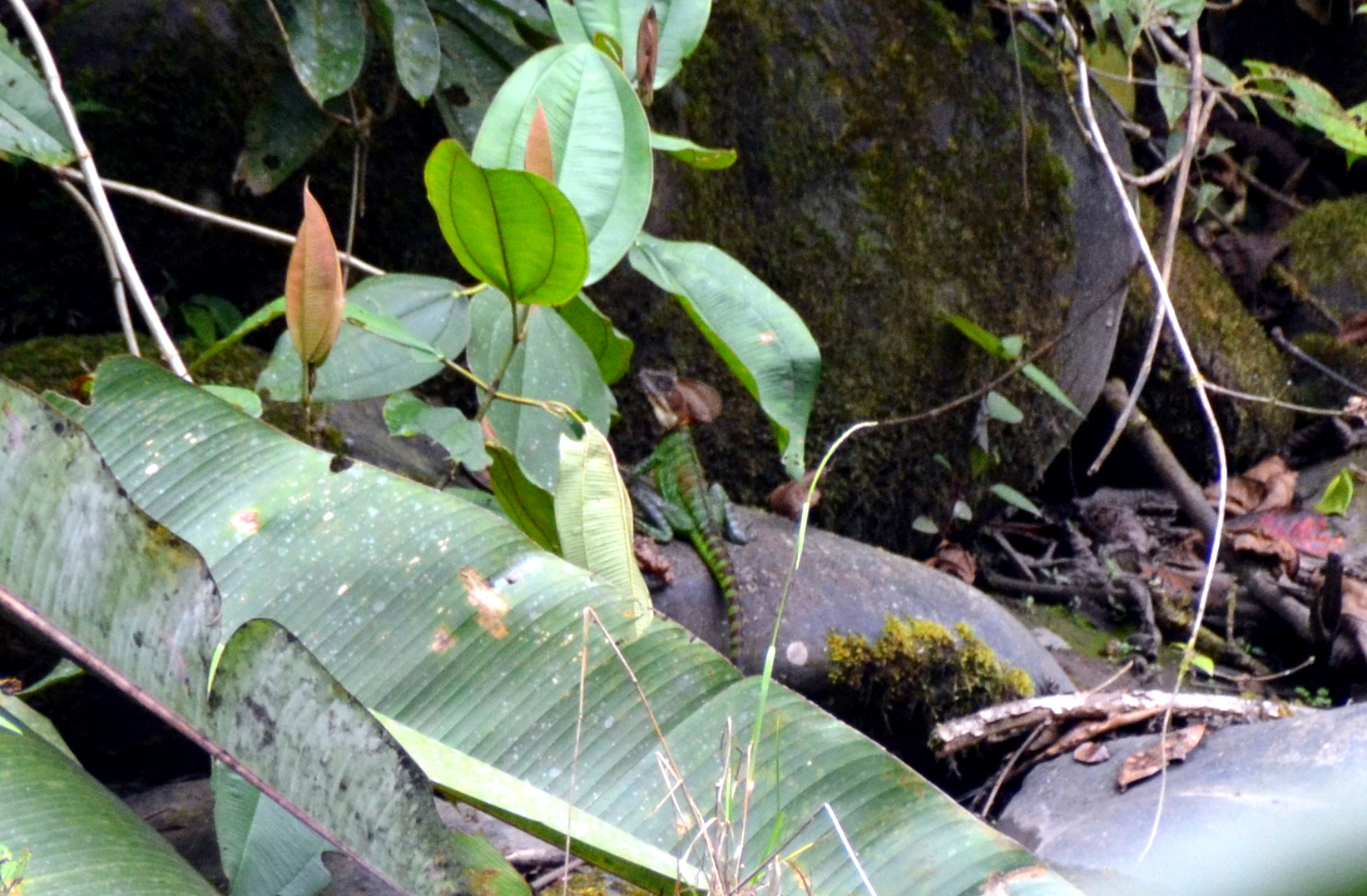
Basilisk
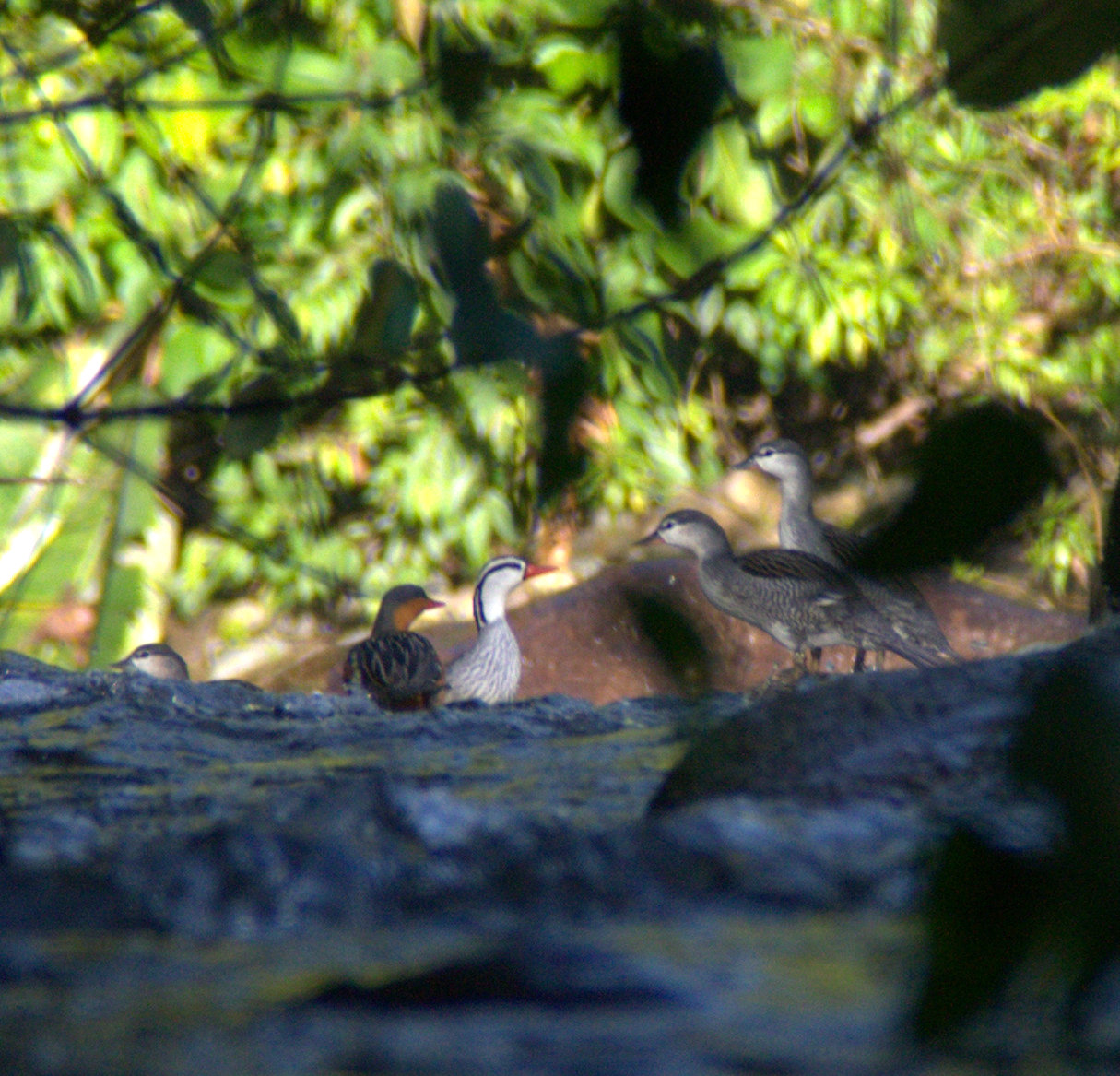
Torrent Duck Family
Work on the Agua de Fuente trail continues. With all the time spent on it we have seen Andean cock of the rock, a family of guans, Basilisks, a red Brockett deer, a heron, toucans and more. We hope to get it open for visitors in the dry season to complete the Fuente loop through some of the more Rugged parts of the reserve.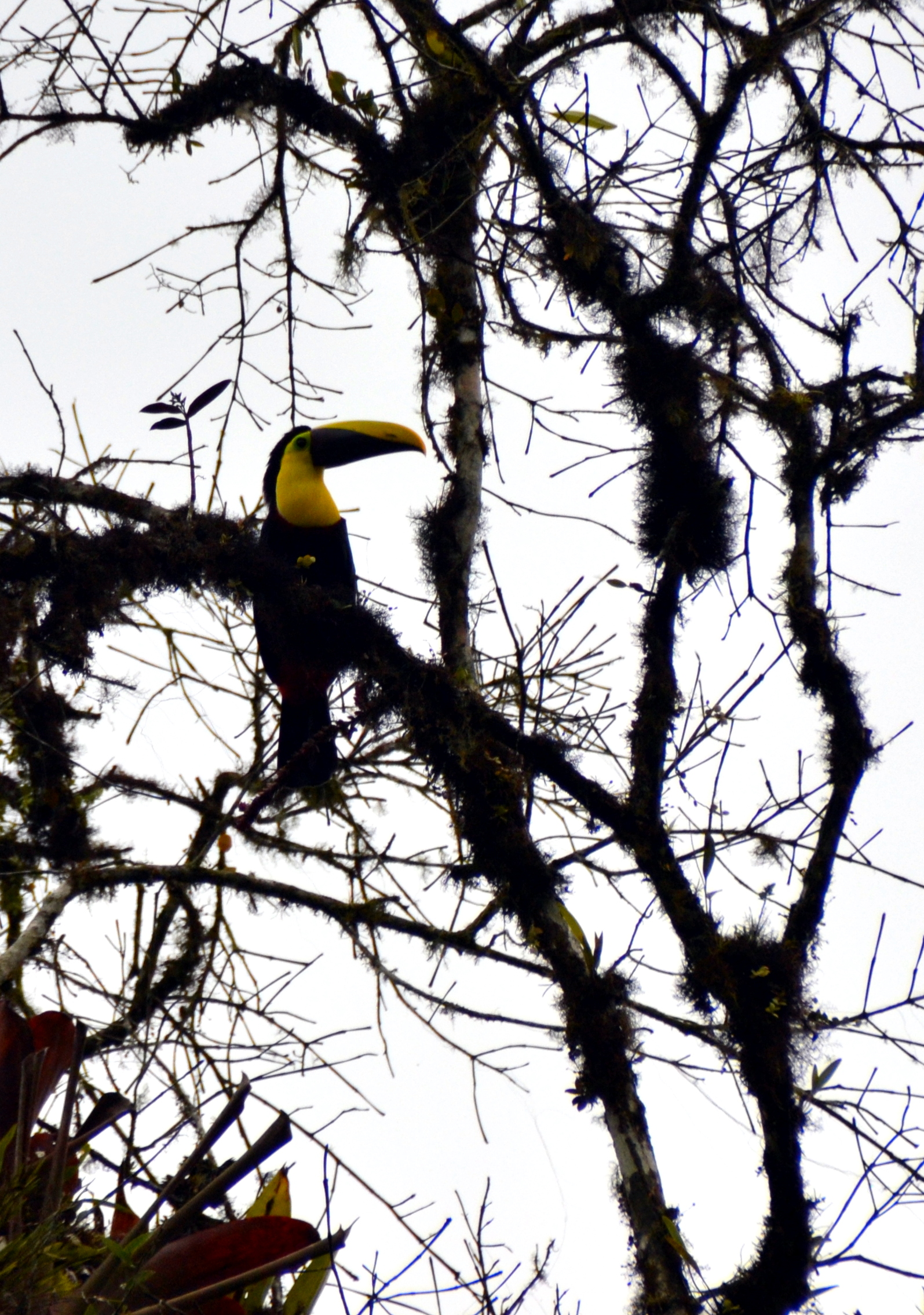
And to other news on the reserve, the orchard is doing great with the perfect mix of rain and sun. And with a steady diet of compost the garden is coming around. We’ve managed to get some onions and potatoes beyond sprouts.
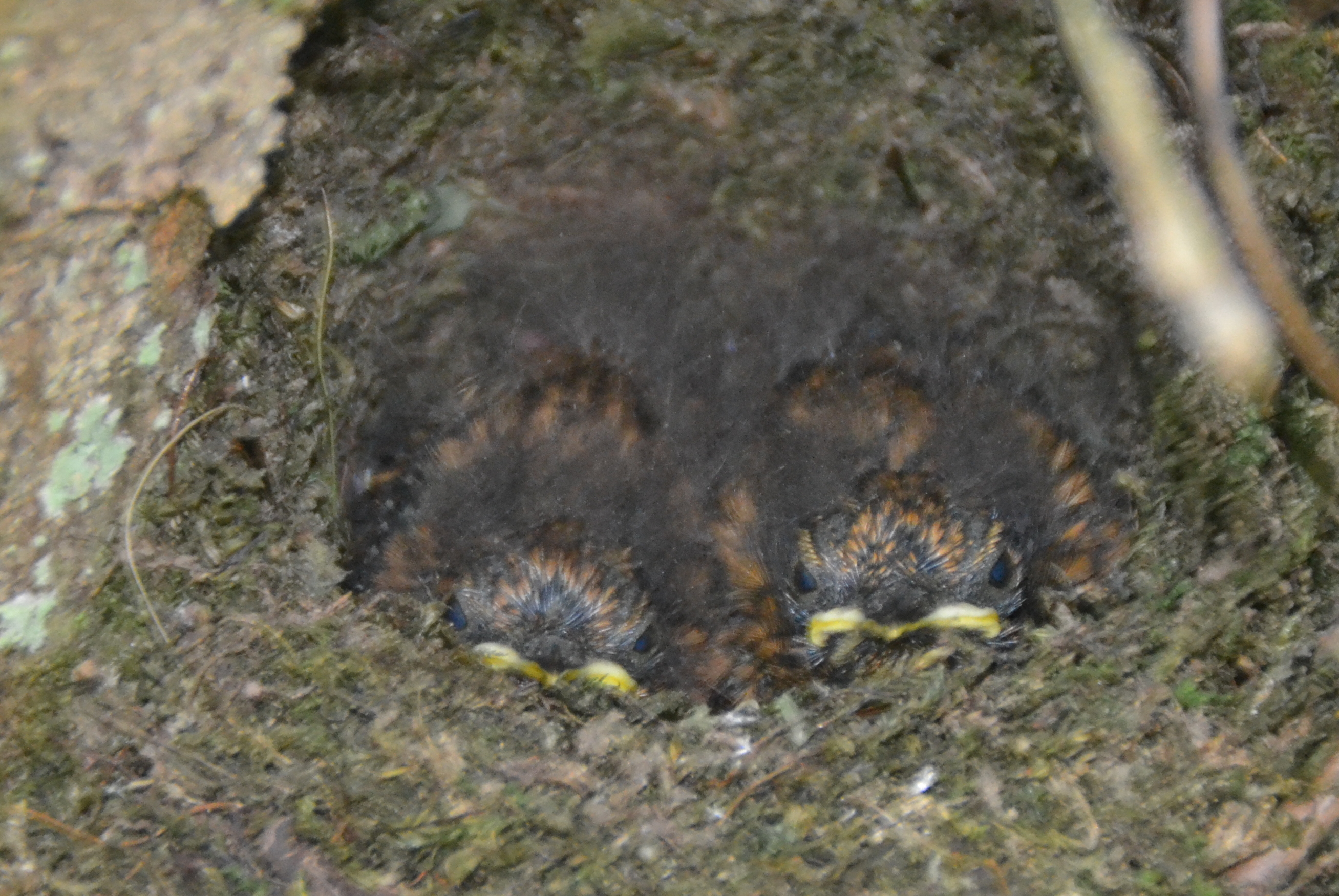
 There are two nests on the entry trail that we have been watching for a few weeks. The moms fly off so quickly we can’t get good looks at them. However, both have had two eggs in them and one now has hatchlings that are growing extremely fast! It has been such a joy to watch them every time we hike out. The fer-de-lance is still around. We have posted warning signs on the trail where we see it every day. It has recently shed its skin and looks very beautiful right now.

Since our last post we have had about 20 visitors from several countries including, USA, Germany, Netherlands, Australia, and Ecuador. We have enjoyed meeting all the visitors and thank them for their support for the reserve.
A Family in the Cloud Forest
Hola! After a smooth transition, Amanda and Shyama left for their travels. They were super helpful getting us up to speed with what is happening at the reserve. We are Micah, Jaime and Never. Jaime is an ecologist, Micah is a carpenter and an all-around handy kind of guy and Never is our 2, almost 3, year old son. Before the reserve we lived in Oregon and this last year in Hawaii. We left Hawaii in July to do our own travelling. We started in Puerto Vallarta, Mexico and travelled southward to Nicaragua. From there we flew to Quito for our first taste of South America. We are so happy to be here and looking forward to settling in for a few months after being on the road for two.

Micah, Jaime and Never
The reserve is everything we imagined and more! The weather has been perfect! Cool nights and perfect during the day. It is much like the spring time in the Pacific Northwest but we know that we will be heading into a lot more rain in the time to come. But for now the weather is pleasant and dry giving us great access to the reserve trails.
Around the reserve it has been wild watching and getting to know the 16 hummingbird species that have been visiting the feeders at the lodge, experiencing the chaos that occurs in the early mornings at the Andean Cock of the Rock lek and becoming familiar with the resident Fer-de-lance the area on the Amor trail it seems to inhabit.
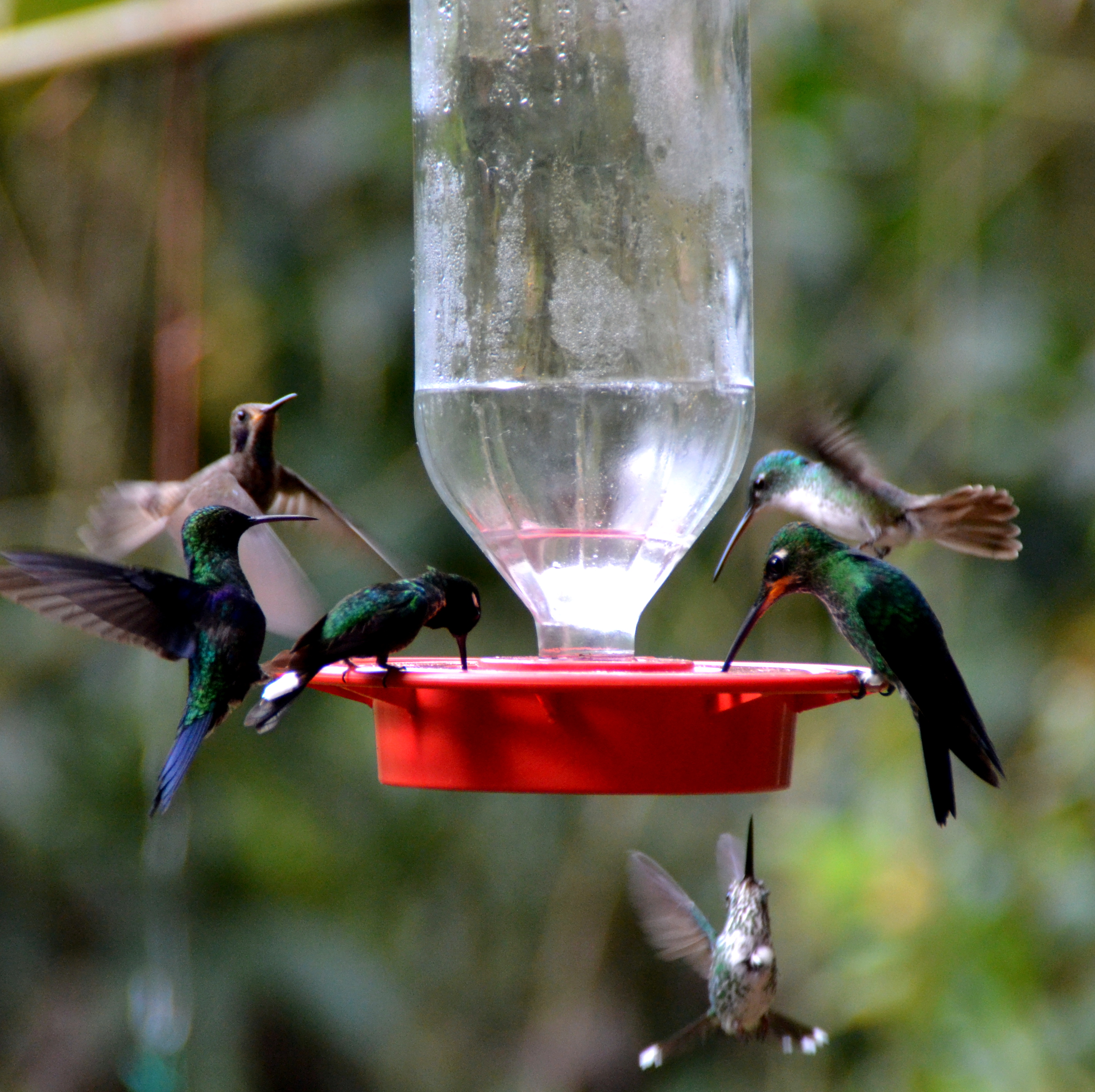
Some of the many hummingbirds we see every day

A banded Andean Cock of the Rock seen at the lek
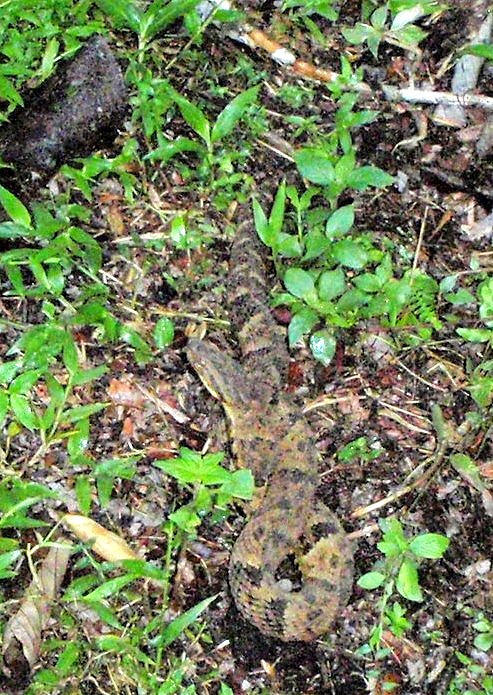
Our resident Fer-de-lance
We are attempting a small crop in the garden. It seems the success in the garden has been limited so we are starting out small. However, the young orchard planted this summer is coming along great.
While we are getting to know the reserve, its trail and the wildlife surrounding us we are also enjoying the records from previous managers that are now into their second year. It is interesting to see what has been going on, who has been visiting and what people were up to for the last few years. So many people have contributed to this place and their hard work shows. We are honored to be able to contribute to this special place together as a family .
We would also like to thank our first (and so far only) guests to the reserve, Nicole and Ryan. They camped at the reserve and joined Jaime at the lek early in the morning. They were great to have around and we appreciate their support for the reserve.
Hasta Luego
Well, we´ve come to the end of our term here at Las Tangaras and its a bittersweet feeling. We are sad to be leaving the little cabaña in the forest, but are also excited to begin our travels. Some days it feels as if the months have flown by, and other times we feel we´ve been here for years. Its impossible to put so much time and effort into such lovely surroundings without leaving a bit of yourself there, but we´ll also be taking a piece with us.
Now we hand over our responsibilities to the new managers, Micah and Jaime, and hope they enjoy their time here as much as we have. Thank you to all who have shared our experiences through this blog, we strongly encourage you to visit Reserva Las Tangaras, its even more impressive in person. We leave you with a few recent pictures and some of our favorites from the last 3 months.

View from the new picnic area on the Bosque Trail.
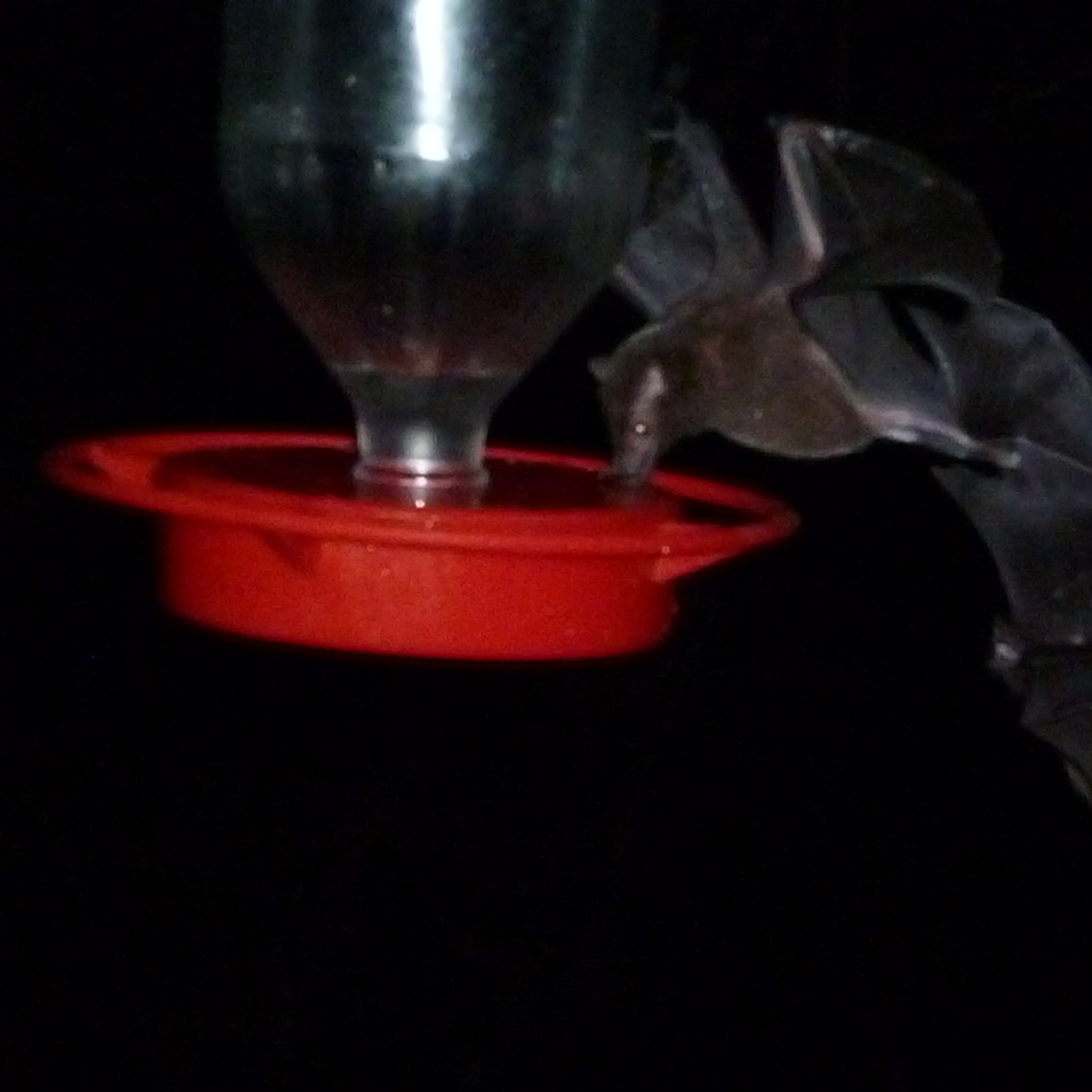
So thats why the feeders are empty in the morning!
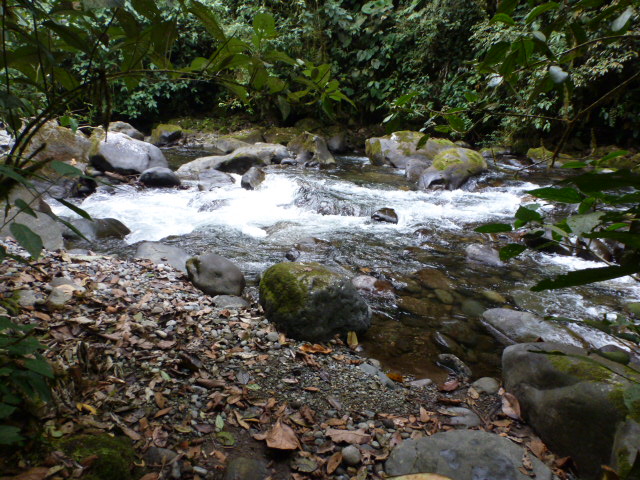
View from the other new picnic area on Rio Nambillo.
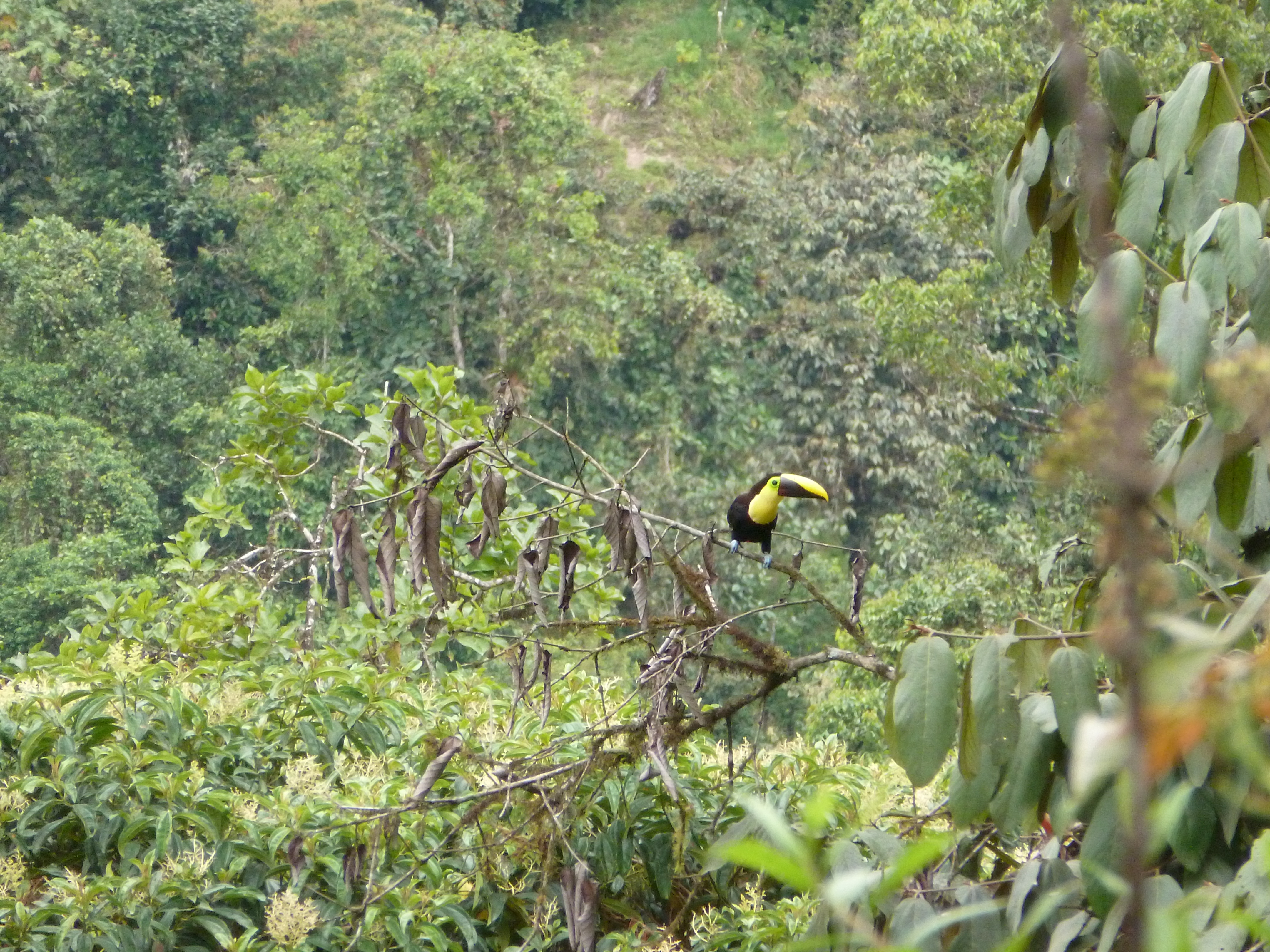
Choco Toucan taking a break in the forest.

Beautiful… This is one of our favorite views on the reserve.

Bye for now… Shyama and Amanda
Wildlife II
As our time at Las Tangaras draws to an end, we continue to enjoy the abundant wildlife that surrounds us. Our most frequent visitors are the variety of hummingbird species that drink from the cabin´s feeders everyday. In the last month we´ve witnessed an increase in both the number of species and the amount of daily activity. Food and the need to reproduce lead to combative fighting and colorful displays of territoriality.

Hummingbird wars!
Another fleet footed resident of the reserve is the basilisk. These lizards are so quick that we´d only caught brief glimpses of them scurrying out of sight, until a recent warm morning along the river, when we came across one sunning itself on a rock. As soon as it caught sight of us, we were rewarded with it´s trademark run over water as it headed for cover. It performed the feat twice more before coming to rest on a log, when we were finally able to snap a photo.

The Basilisk is in the center of the photo, above the heart shaped leaf.
One day, while clearing Sendero Bonito and checking on the new steps we´d built, Shyama let out a yell when he nearly bisected a masked trogan that came flying out of a hollow tree stump and only avoided his machete´s momentum by a few inches. These birds are known to nest in cavities of dead trees, fairly low to the ground. Our suspicion that this bird was guarding or building a nest was confirmed later that week, when we returned for a closer look.
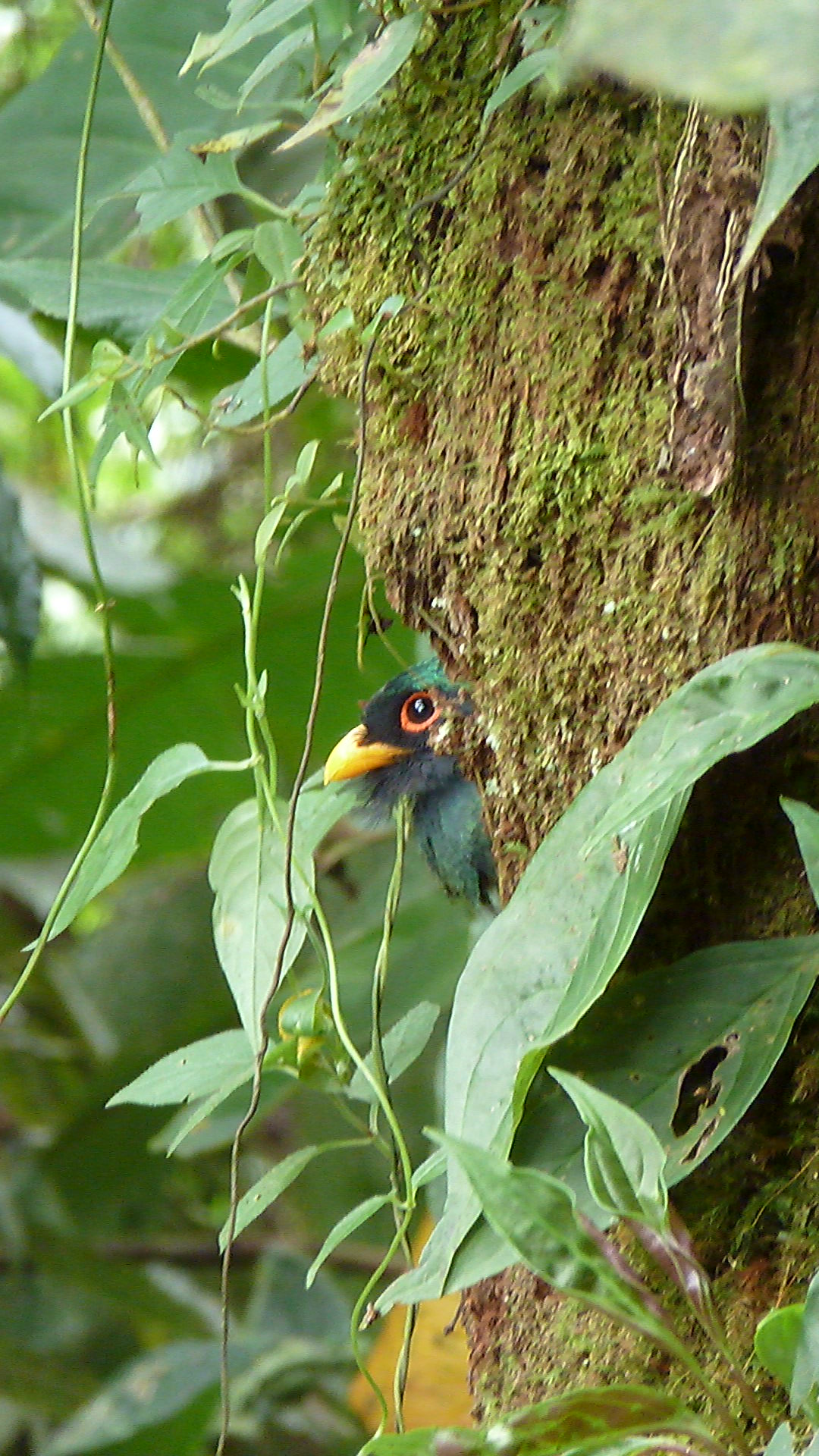
Masked Trogan guarding the nest.
Our next sighting actually occurred in Mindo, but we feel that it was unique enough to warrant it´s inclusion here. Amanda spotted this anolis fraseri in the grass of Mindo´s central park, on our way to find some almuerzo. She tried to catch this colorful, foot long lizard, but it quickly escaped up a tree and out of reach. Luckily we were able to get some good pictures.

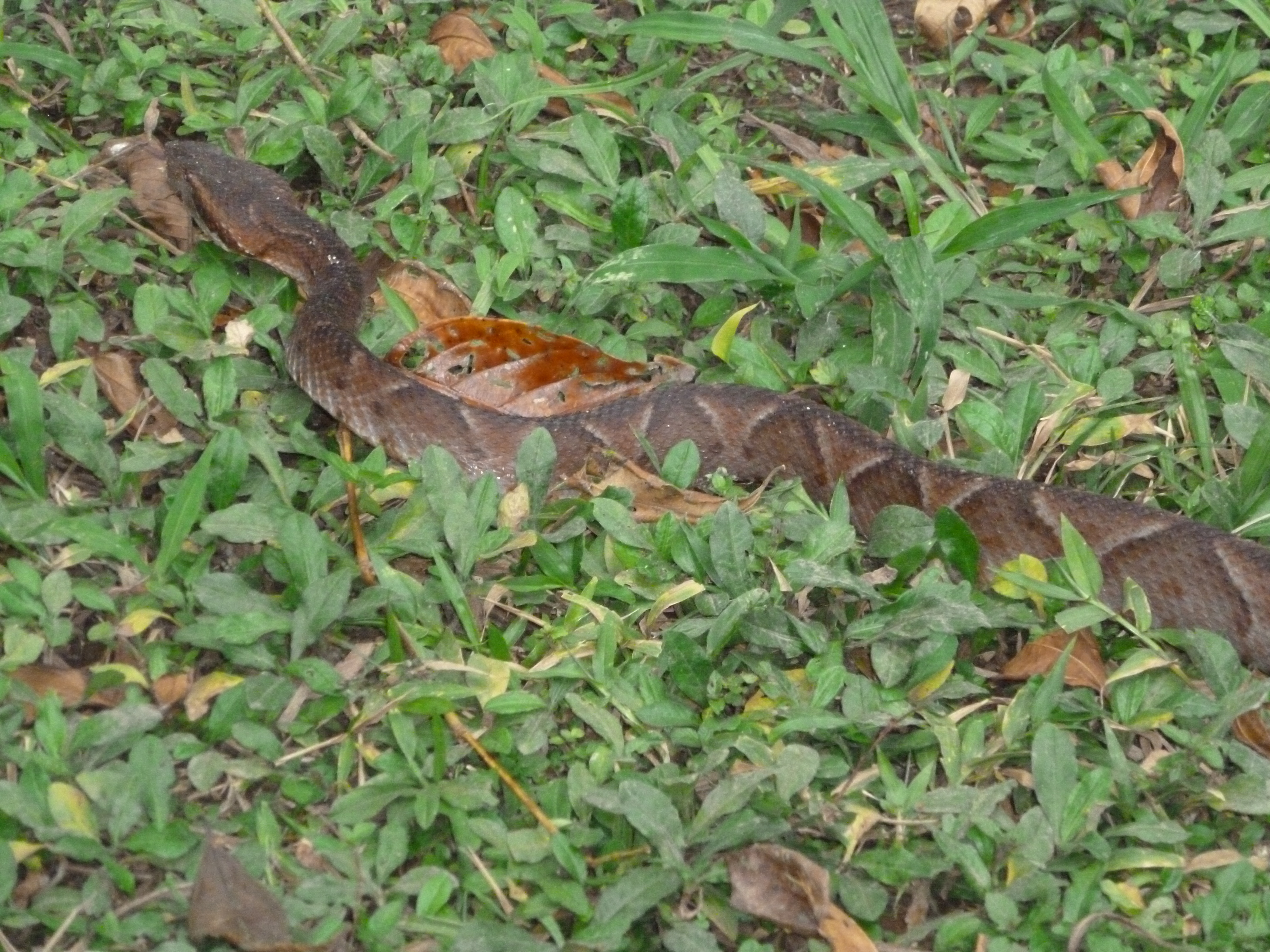
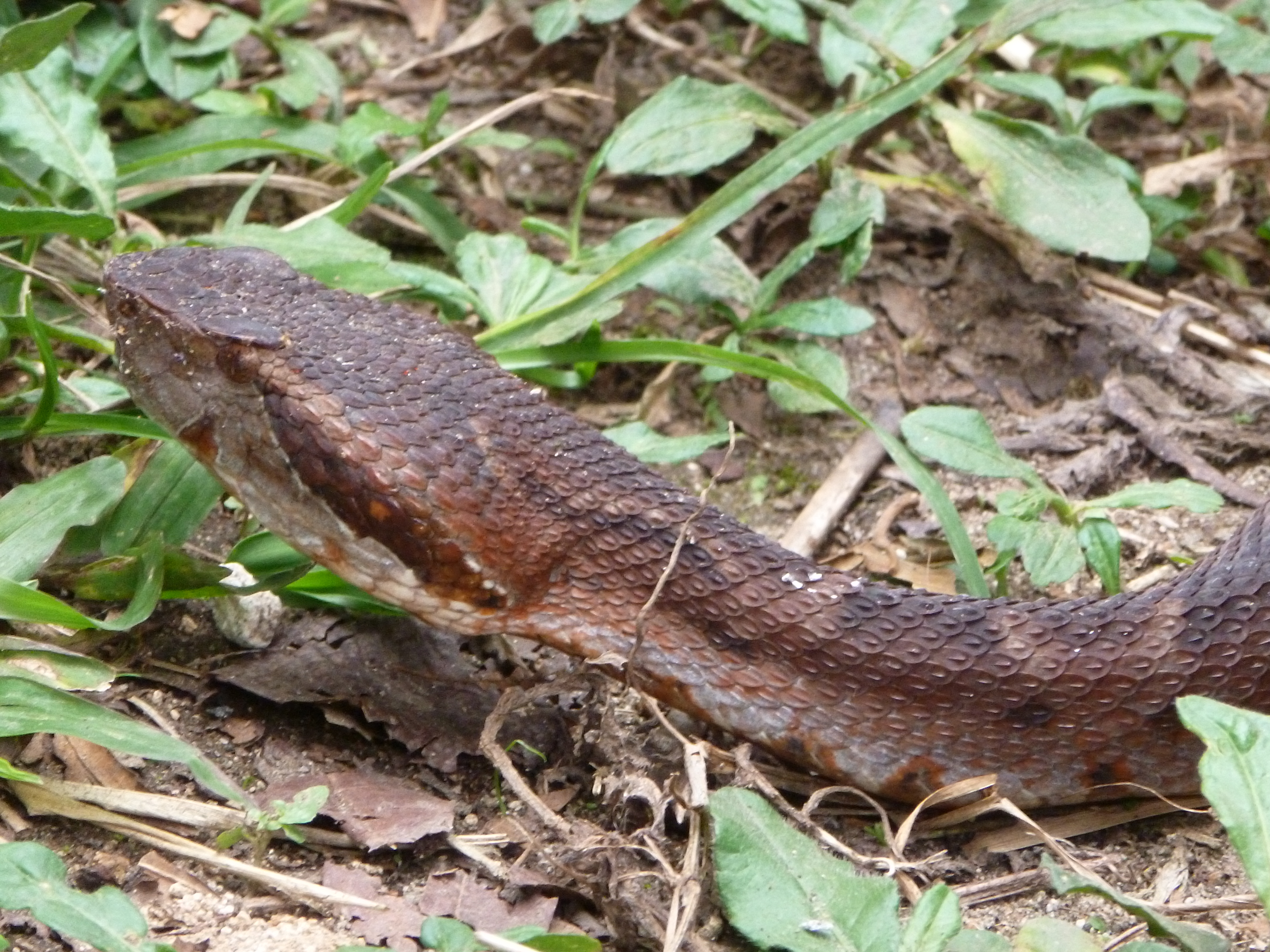
Well, we´ve saved the best for last.Our most jaw dropping (and heart-rate elevating) sighting has surely been the fer de lance. We´ve known that these highly venomous snakes inhabit this area, yet, though they are diurnal, they are rarely seen. We returned to the cabin one afternoon, after a day of erosion control at the Gallo de la Peña lek, to find this one coiled beside the front steps. We´ve seen several snakes over the months, but this fer de lance, at 1 meter long and thick in it´s midsection, was definitely the largest. As lethal as these snakes are, this one was content to rest in it´s coils while Amanda enthusiastically snapped photos and Shyama stood well back pondering his mortality. After an hour or so, we watched it make it´s was slowly off into the forest, and were able to appreciate it´s full size and beauty.
Wildlife
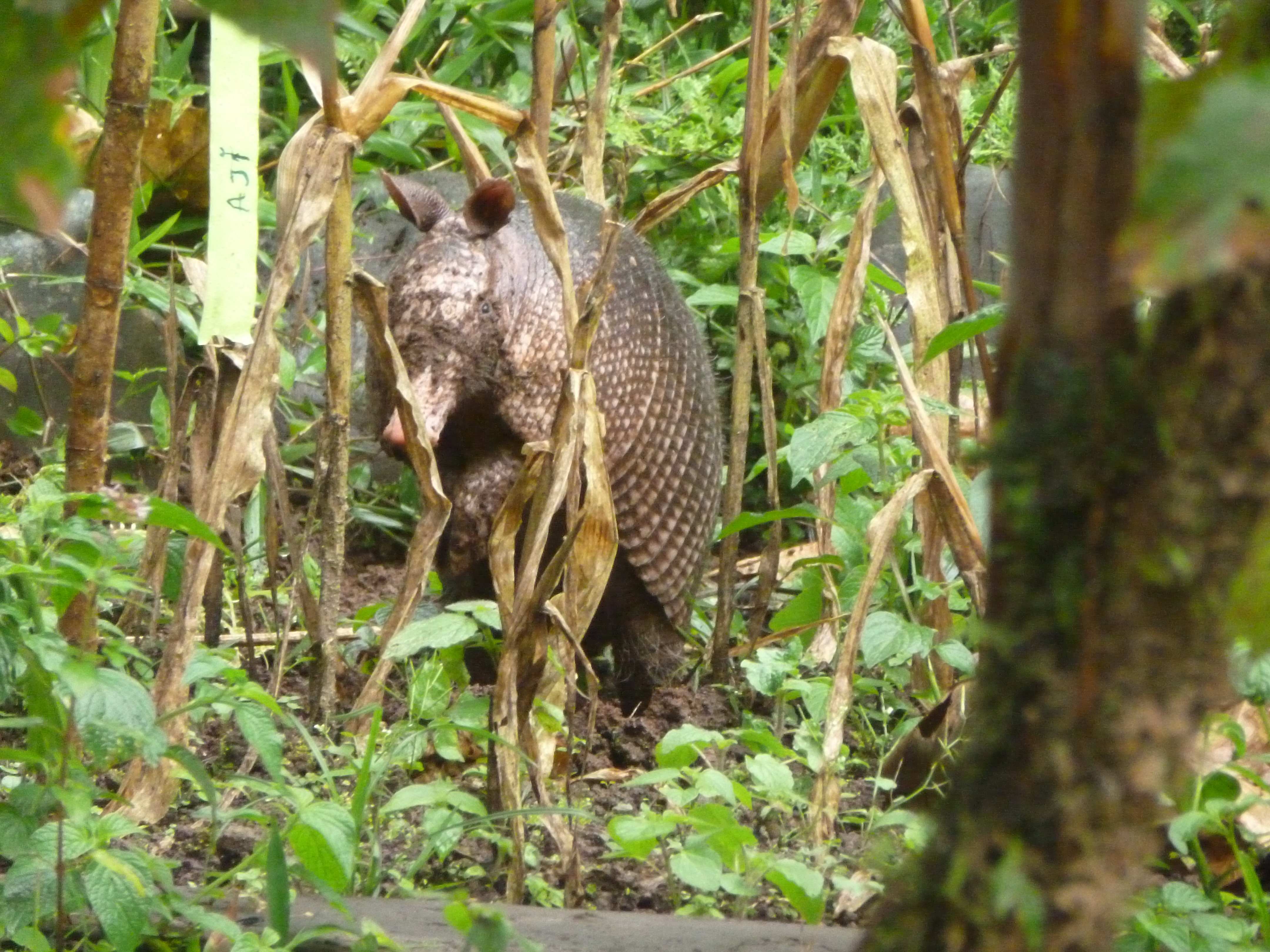
While the abundance of birdlife is the biggest draw for visitors to Las Tangaras, they are by no means the only wildlife roaming the hills of the reserve. Large mammal sightings tend to be rare, but several other creatures are commonly seen, and at least one mammal, the armadillo, turns up quite frequently.
Pablo
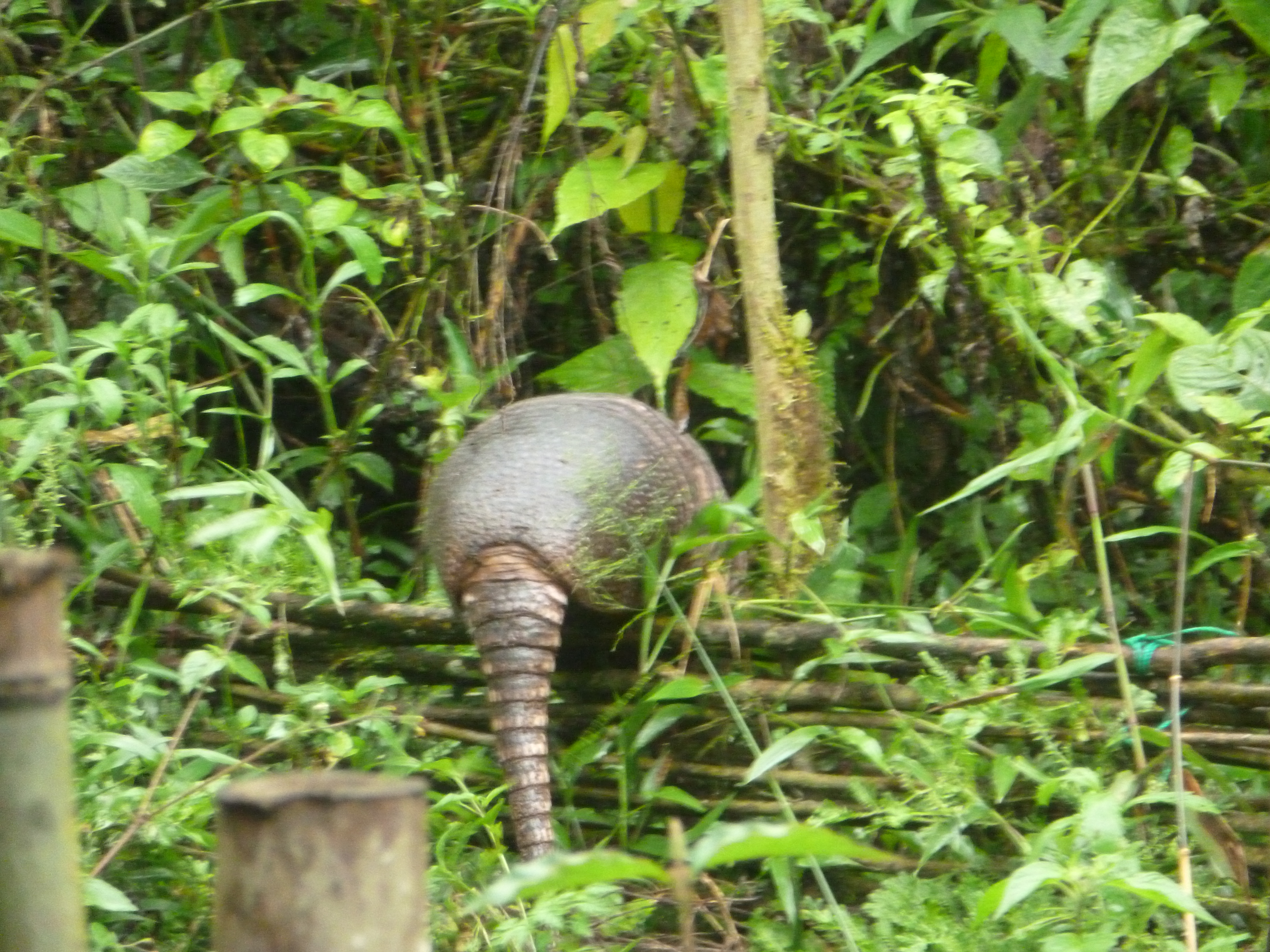
After much anticipation, and nearly 6 weeks of waiting, we finally had our first visit from the 9 banded armadillo with battle scars, dubbed ´Pablo´ by previous managers. We had read much about Pablo in the managers´ journal, and seen fresh evidence of armadillo activity nearly every day, but our first actual glimpse came as a pleasant surprise. He nosed around the garden for a few minutes, unmindful of us, before climbing nimbly over the fence that was built to keep him out.
Although squirrels are a common site in the states, we had quite an uncommon experience with a red tailed squirrel here at the reserve. We came into the care of a young squirrel after it was abandoned by its mother during the installation of a fruit tree grove. For the next 3 weeks we acted as foster parents for this squirrel; weaning it off milk, introducing solid food and encouraging it to climb and forage.
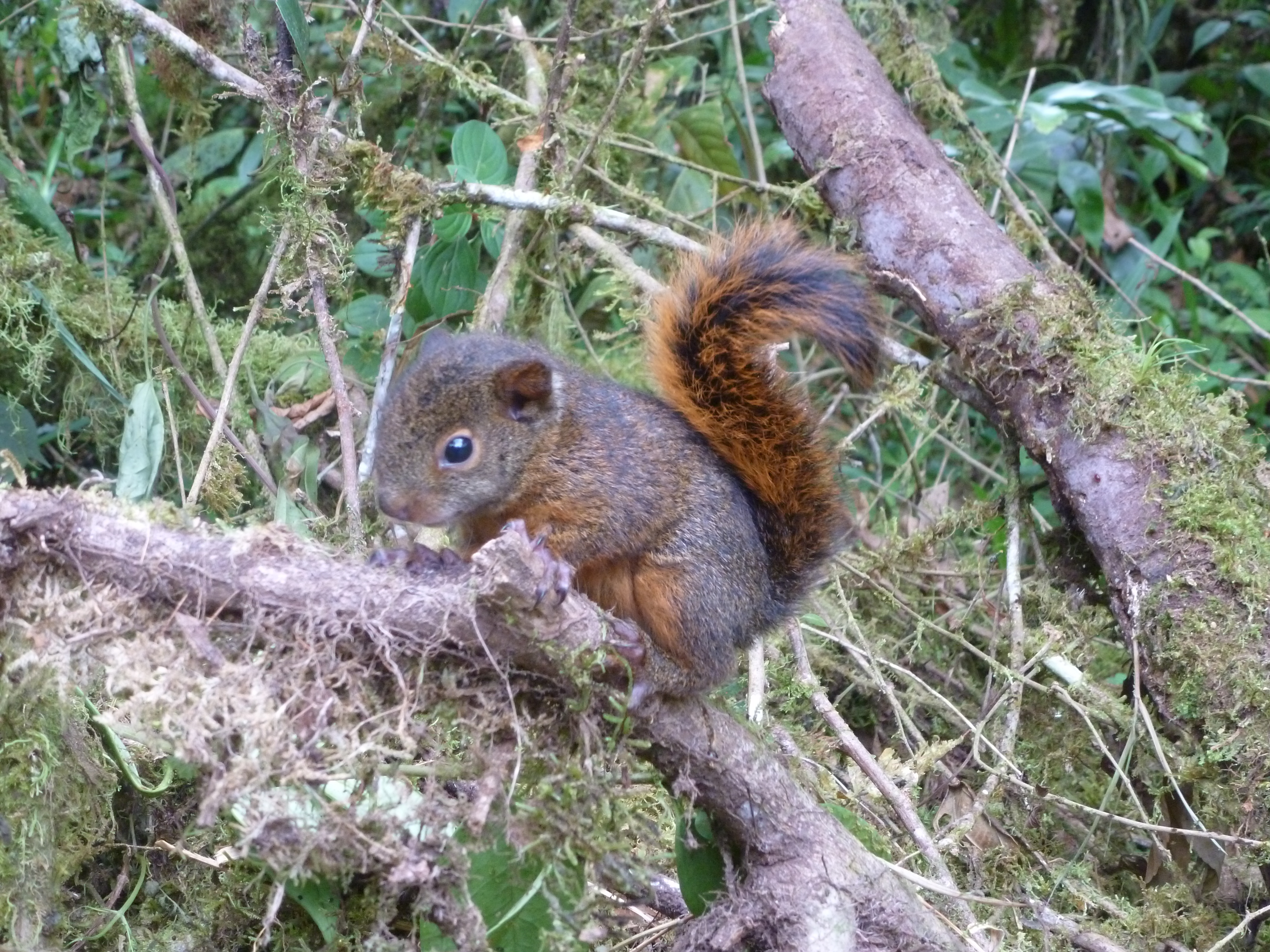
Squirrely climbing lesson
The last few nights it stayed with us, we kept its makeshift burrow outside, hoping it would leave on its own. Unfortunately it had grown accustomed to our high class cabin lifestyle, and wasn´t keen on venturing far from human care. We would solidly ignore it for hours on end, busying ourselves inside the cabin with doors shut to keep it out, only to find it snoozing contentedly in the sun atop one of our sweaty, drying work shirts.
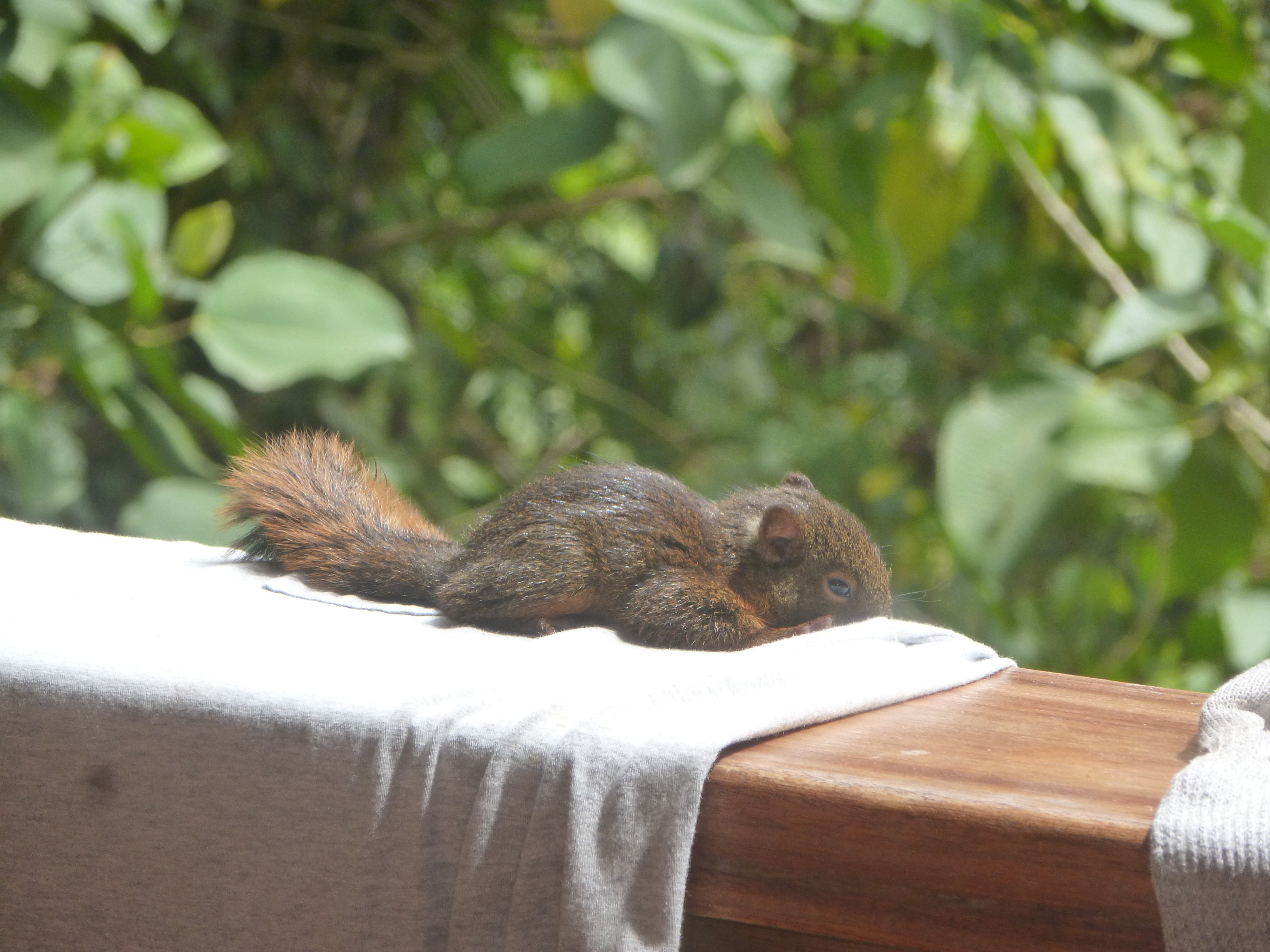
Squirrely sleeping on Shyama´s dirty work shirt
Two days passed with the squirrel sleeping on the porch, even though we´d stopped feeding it. We tried releasing it into the fruit grove where it was found, roughly 130 meters from the cabin. A day and a half later it was back on the front porch. This happened twice. Finally Shyama marched it much further away from the cabin, and in the opposite direction. We haven´t seen it since, but hope that it’s found its way and is enjoying its squirrel life in the forest.
One day, while weeding the garden and hacking away the encroaching jungle, we came across a Western Lowlands Rain Frog. It was hopping to escape in the thick bushes when Amanda snatched it up for closer inspection and a few pictures. It was a treat to see one up close, as we hear a chorus of frogs every evening at dusk.

Western lowlands rainfrog
This Marine Toad was actually spotted in Mindo, but was a neat find nonetheless. It also relieved itself twice on Amanda´s hand, which was pretty funny, and yet she persists in handling amphibians for identification.

Marine toad
We´ve also had the pleasure of observing a number of Torrent Ducks who have taken up residence on this stretch of the Nambillo River. Their unmistakable swimming expertise, from which they get their name, is impressive to witness firsthand. And apparently they are thriving in these waters, as we have spotted a mother and her ducklings on several occasions.

Mama Torrent duck and ducklings
It is also worth noting the abundance of bats that live with us in the forest. Every night we catch glimpses of them sipping from the hummingbird feeders, or catching insects above our mosquito net. Some had the misfortune of flying into mist nets during the bird surveys, while others were awoken from a pleasant day´s sleep when we cleaned the cabin´s rafters.

bat, unsure of the species, that Mauricio safely untangled from the mistnet
One of the most intriguing animal behaviors we´ve witnessed here is that of the Oilbird. They are typically nocturnal birds, and we feel privileged to have seen one in the daylight hours and to be able to add it to the Las Tangaras bird list. Oilbirds are known to roost in caves by day, and for their distinctive posture when perched on a branch. It was midday when we flushed this one off the Amor Trail, but luckily it only flew a few meters off the path. It landed on a branch and promptly positioned it´s head vertically down, with tail feathers pointing to the sky. It hung there motionless as we watched; only moving when the wind would stir the trees, whereupon it would sway like a leaf in the breeze. It´s ability to camouflage itself in the relatively open forest was uncanny. We admired this bird for some time before moving on, and we hope that it found its way home.

Oilbird hanging from branch (tail feathers up)

Oilbird hanging like a leaf
These animals are only a small sample of the abundant wildlife that exists here at Reserva Las Tangaras. We feel lucky to have witnessed these creatures in their natural habitat, and look forward to all that remains to be seen.
LifeNet Bird Survey 2012
July 15th brought our first large group of visitors to the reserve with the arrival of Dr. Dusti Becker and the LifeNet volunteers for the Las Tangaras, Ecuador Cloud Forest Bird Surveys. For the next two weeks we assisted the LifeNet team with multiple bird surveys that consisted of mist netting in low cloud forest, edge netting in Yanez Pasture and second growth forest. Volunteers were trained in the construction of mist nets, safe removal of birds from the nets, and the proper techniques for data collection and entry.
Our mornings were spent manning the nets, after which we were always rewarded with a hearty and delicious almuerzo (lunch) by our talented chefs Jessica and Alicia. Following lunch came siesta, always a favorite, where some chose to nap, swim or simply lay in the hammock and read a book. Afternoons varied with data entry, hiking the lovely trails of Las Tangaras and collecting data on the infamous Andean Cock of the Rock. In the evenings we were treated to another hot meal and occasionally surprised with a delicious homemade dessert. We were constantly amazed with the women´s ability to create such flavorful and diverse dishes in the rustic cabin, with no electricity or refrigeration.
The other half of LifeNet´s Ecuadorian staff is comprised of Mauricio and Pascual. These men proved themselves invaluable to the team on a daily basis. Pascual assisted Dusti with the bird banding, and showed great patience while explaining fieldwork techniques to the volunteers. We dubbed Mauricio ¨El Professional¨ due to his ability to safely remove even the most tangled of birds and bats from the nets. We extend our utmost gratitude to these couples for all of the insightful advice they shared that has helped us to live more comfortably on the reserve.
Too much happened in those two weeks to record with words, but some of the more memorable moments were captured on camera…

Pascual making friends with an Andean Cock-of-the-Rock
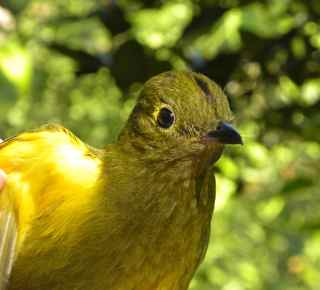
Olivaceous Piha, a new bird for the las Tangaras list!

Mauricio after working his magic with a Rufous-throated Tanager.

LifeNet Volunteers, Genavieve, Margaret, and Larry
We would like to thank Dusti, the LifeNet team and the volunteers for the opportunity to assist in the fieldwork. It was a great learning experience for the both of us, and we´re happy to have met and shared memories with so many wonderful people.

Lifenet, las Tangaras Team 2012
Summer in the Cloud Forest
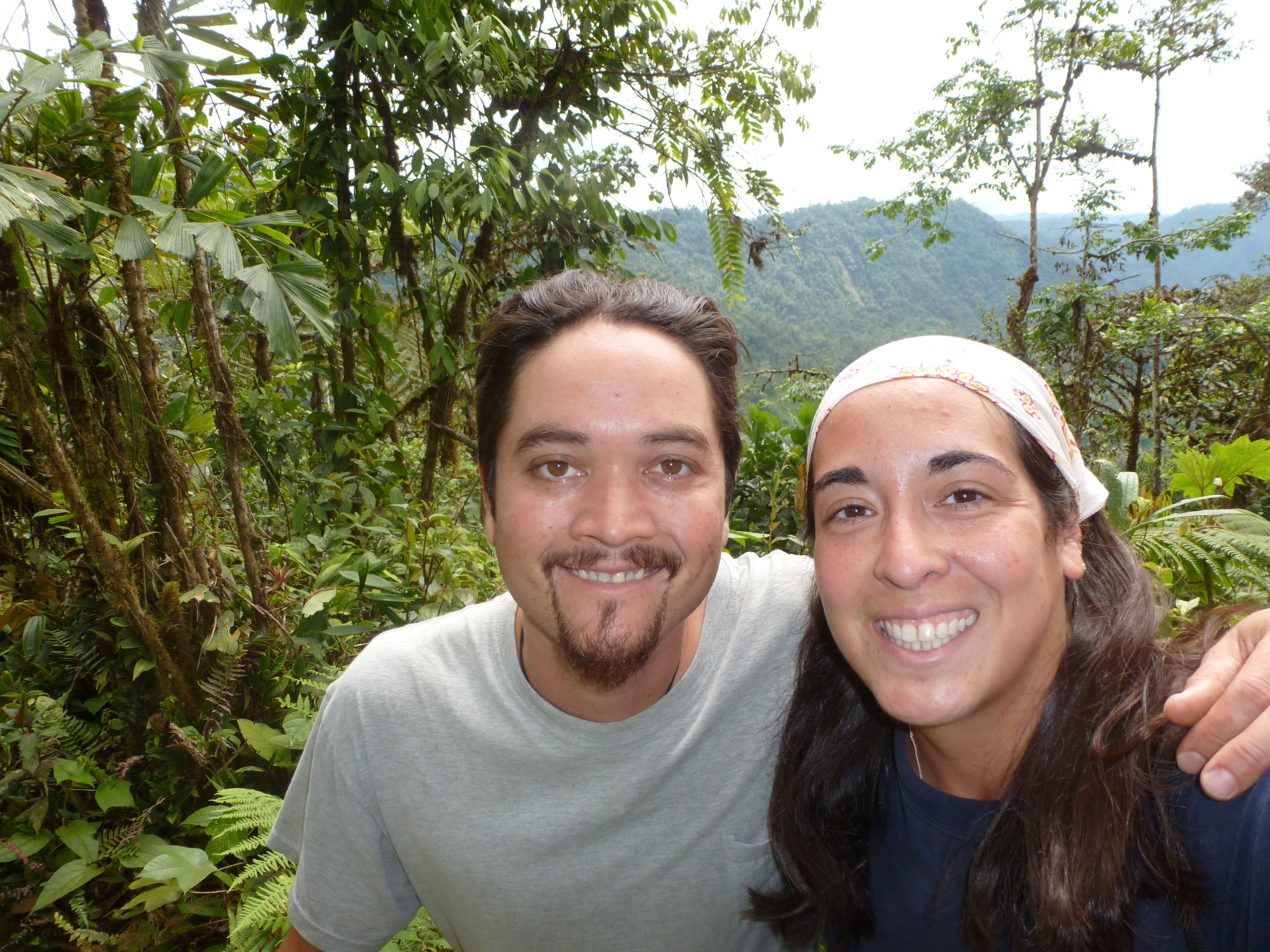
Shyama and Amanda, on a hike in their new back yard.
Greetings from the new managers at Reserva Las Tangaras! Amanda and Shyama hail most recently from Southern California and are thrilled with the opportunity to join LifeNet´s team in the cloud forests of Mindo. We both have a lifelong passion for travel and environmental preservation that has been cultivatd over the years, and now continues to grow amidst the beautiful environs of Ecuador.
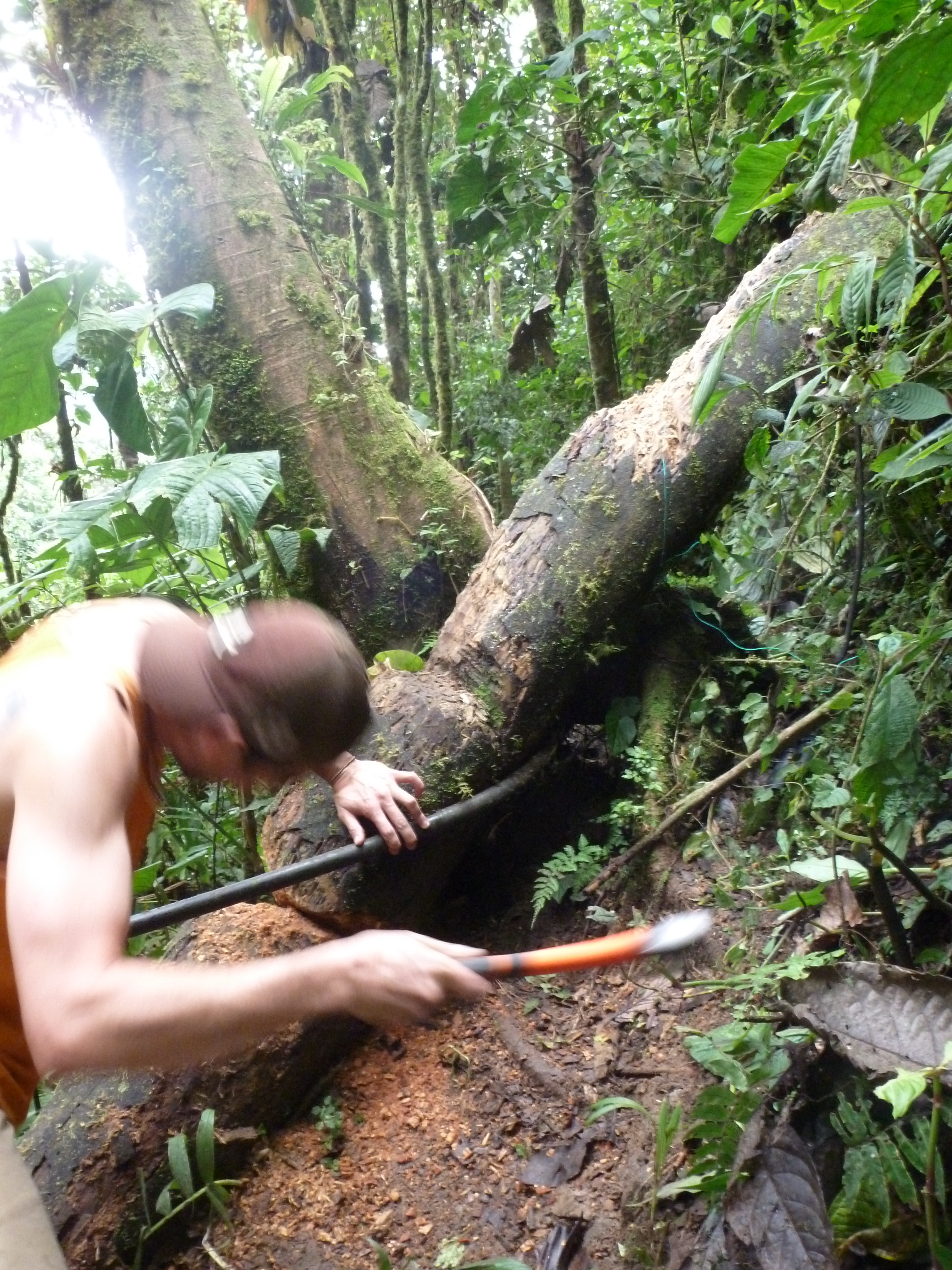
Chopping away at the downed tree.
First and foremost, our heartfelt thanks to the previous managers, Katie and Luke, for doing an excellent job of showing us the ropes and easing our transition into life on the reserve. We were lucky enough to arrive at Reserva Las Tangaras during the beginning of the dry season, and decided to take this opportunity to begin several trail maintenance projects that weren´t as feasible during the rainy months. We began by clearing all of the trails, then proceeded to work on a few rough patches of the Guillermo Trail. This is a scenic trail that meanders through the forest, following the Nambillo River, and gives access to a pair of enticing swimming holes. The first task was to reinforce an eroded section of trail that had grown narrow from heavy rain and small landslides. We went on to create a series of steps over a steeper part of the path, making the hike less strenuous for visitors.
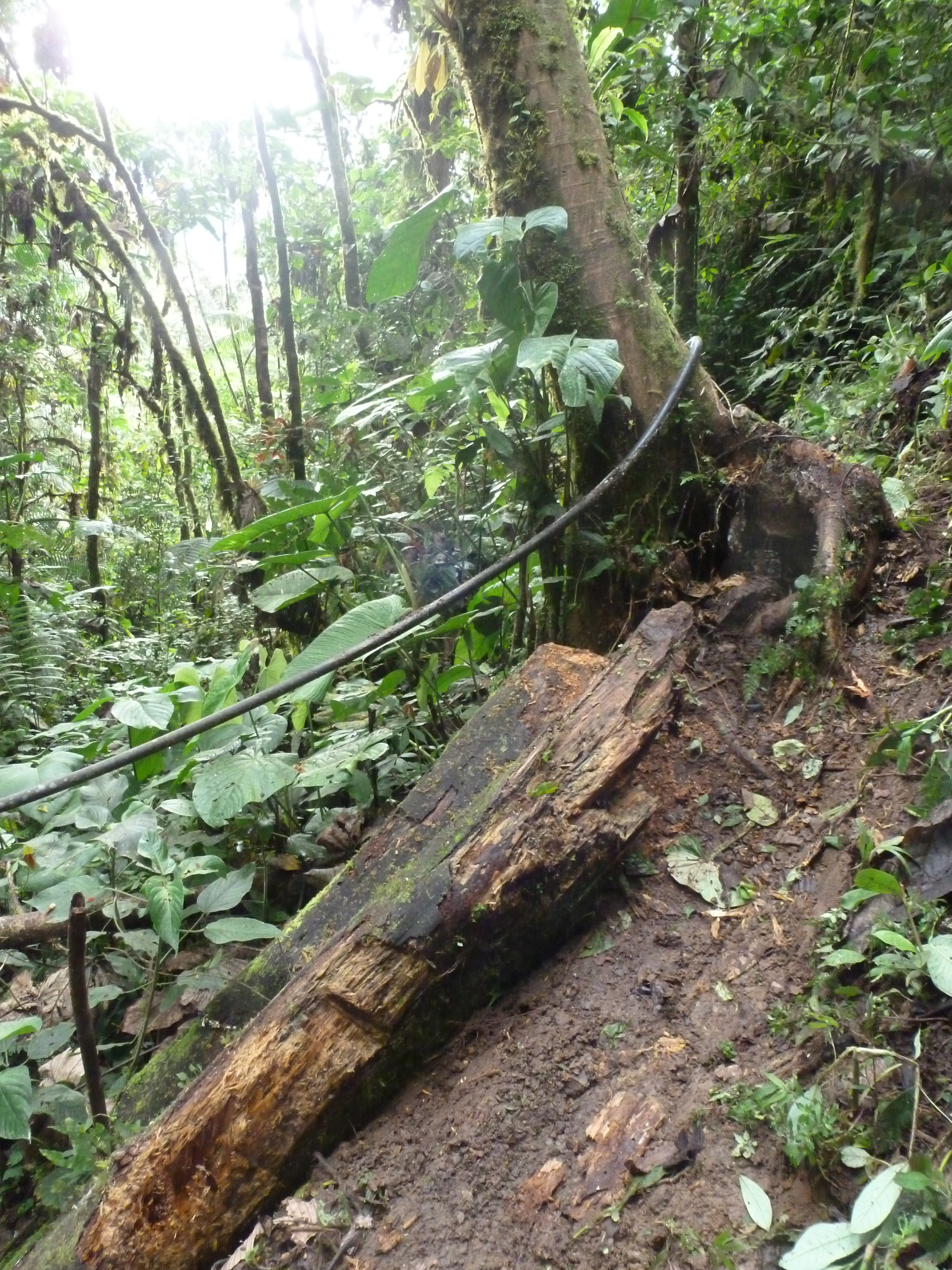
The final product of our labors on Sendero Fuente de Agua.
Our next project was along the Fuente de Agua Trail, which follows the cabin´s water line high up a mountain stream to the source of our fresh drinking water. A downed tree had fallen against a standing one some months ago, pinching the water line and restricting the flow. We went to work with the handsaw, sweating away amidst one of the most beautiful settings we´ve had the privilege of residing in. We took turns going at the downed tree, alternating between handsaw and hatchet, with a Tawny Bellied Hermit constantly distracting Amanda by swooping down and drinking from a trickling spring beside us. It took most of the afternoon, but 4 hours later, with a growing mound of swatted mosquitos at our feet, we looked on proudly at the tree we´d sawn in half. Of course now we were faced with the prospect of moving this 8 foot long, water logged tree trunk off the trail. So with many a “heave ho!”, and lots of “don´t let it roll on your foot!”, we finally pushed that big lug off the trail. A small, exhausted celebration ensued and there were at least 2 high-fives that I recall. To say we were perhaps a bit overly proud of our accomplishment would be putting it mildly. We ate well that night, and slept even better.
And so our term at Las Tangaras has begun. It´s magical to witness, on the rare occasion, a sunrise over the cloud forest as the Andean Cocks of the Rock perform their daily raucous behavior. It continues to be a learning experience identifying the new hummingbird species that have begun frequenting the cabin´s feeders as the season changes. So for those intrepid travellers, avid bird watchers and nature enthusiasts who read this, we strongly encourage you to visit this cloud forest paradise. When you can see the cabin and catch the scent of fresh banana pancakes or homemade tortillas, you´ll know you´ve made it.
Sometimes we see things (Part III and IV)
Part III

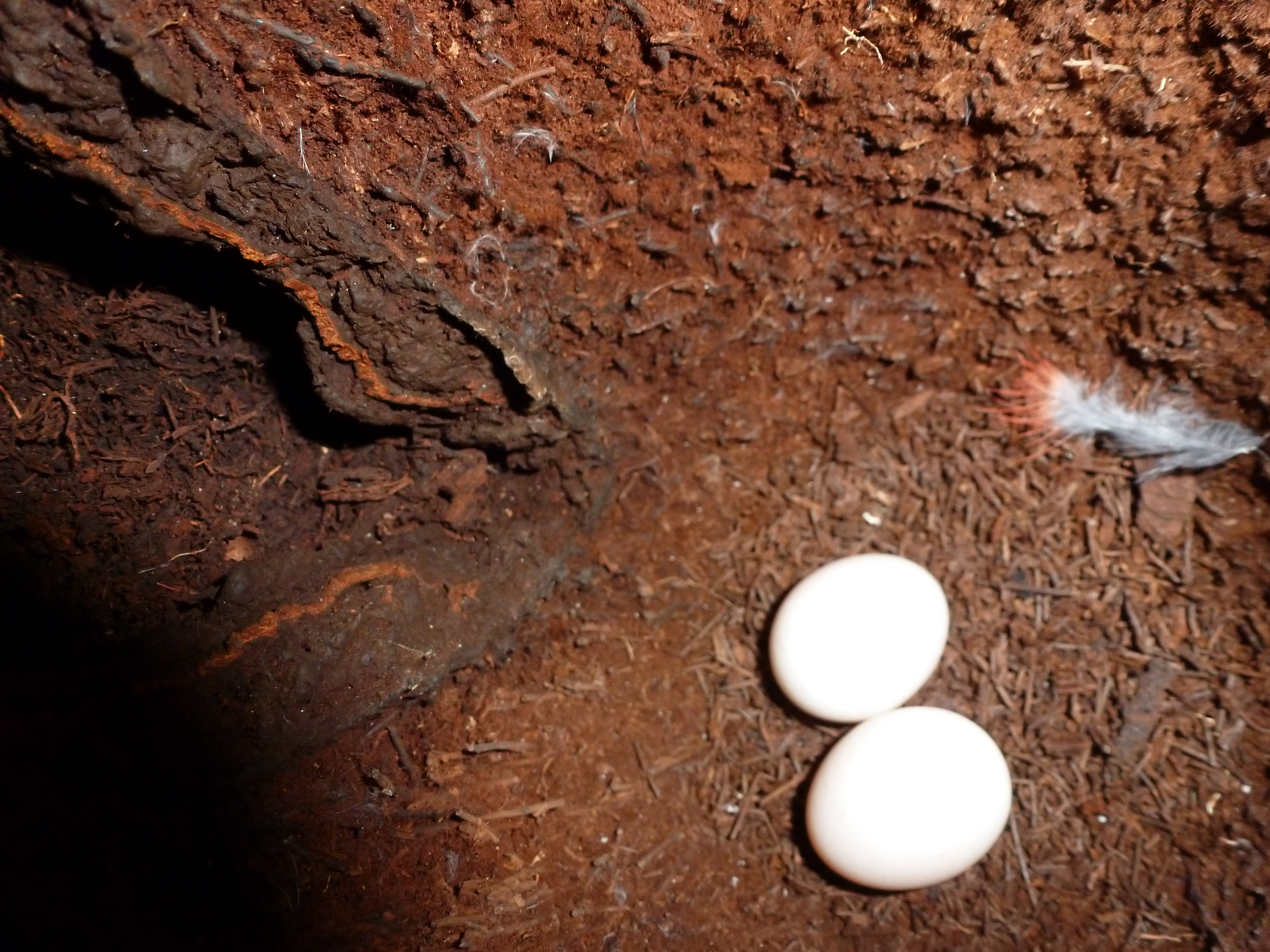
White-Necked Jacobin eggs rest inside a perfect nest. This is most likely made of only plant fiber and spider web–quite a feat to achieve perfection in the midst of the spring rains!
After more than two solid months at the reserve, heading into Mindo for provisions and computer time becomes just another activity that you do without much thought. You usually sweat through Yanez
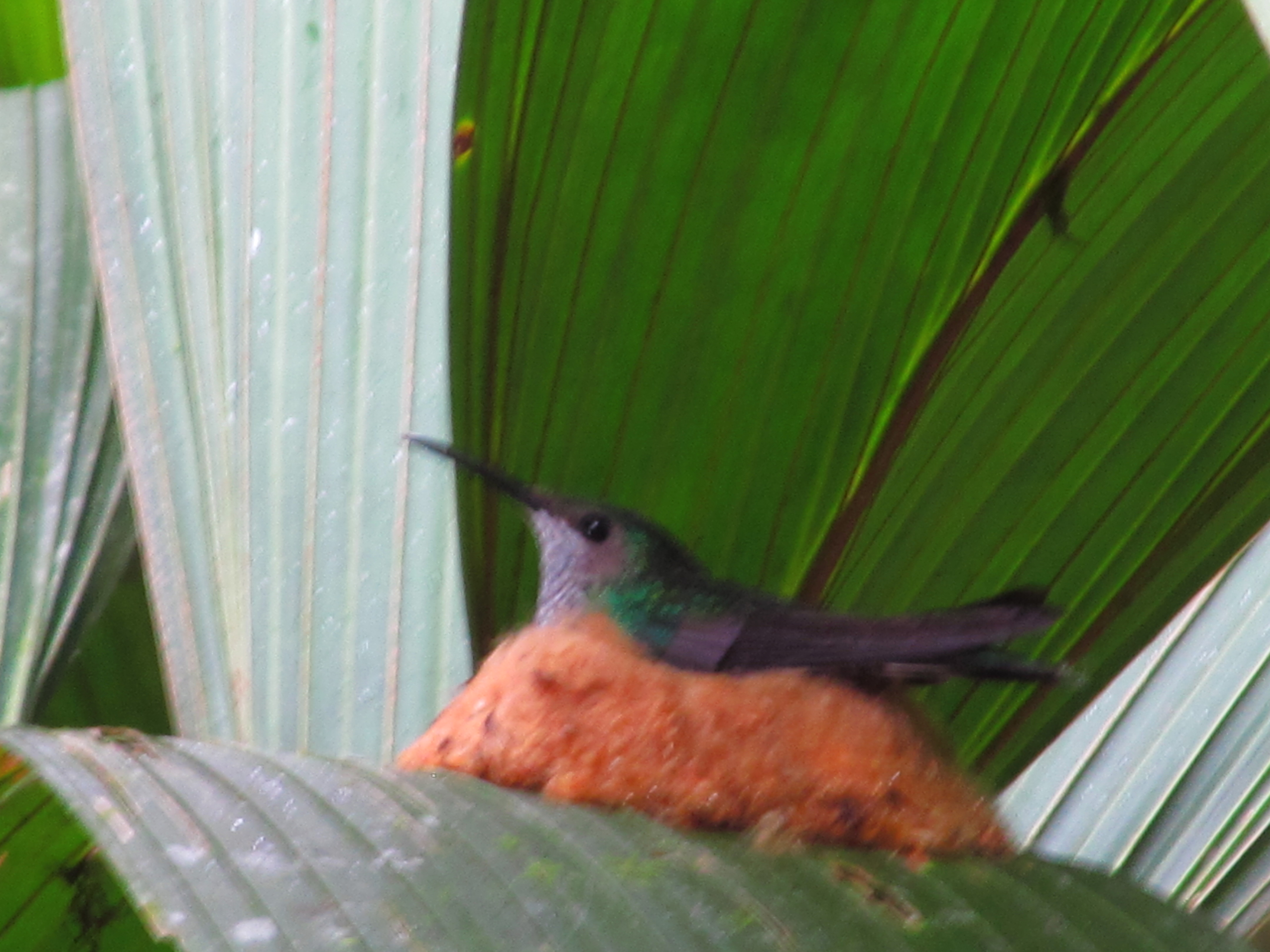
The female White-Necked Jacobin rests on her eggs before they’ve hatched.
Pasture and enjoy the views once you’re up on top. You relish in reaching the shade and occasional cooling breeze of the forested part of the entry trail. You check on signs and make sure they are still readable for the guests who might be happening to hike in. You may clear a downed tree or two with your ever-present machete. You might even add in a little excitement by looking for Crimson-Rumped Toucanets, Crested Guans, or the ever-evasive Golden-Headed Quetzal.
Just like every other trip, this was how our hike to Mindo began on May 28. The one change to our town itinerary for this day included a stop by the bus station to pick up o

Two sleeping baby White-Necked Jacobins rest quietly in the nest while their mother is out looking for food.
ur friend Donovan from Los Angeles and his traveling companion, Marne. Knowing that we had friends who were coming to the reserve for a couple of days gave Luke and I some excitement and we walked to town this day with a little extra pep in our step.
Luke, being 4 inches taller than me and a power hiker, was, as always, hiking ahead of me on the entry trail out. And, like always, we were birding and enjoying the silence of the forest before we headed into town for the day. As a Biologist with a very practical emotional side, Luke doesn’t get too excited about much. But, on this day, as we rounded the last stretch of cool, moist forest before the road to Mindo, he froze in front of a large Elephant-Ear plant stretching 3 and a half feet above the ground. His mouth dropped agape and eyes twinkled as if he was a five year old standing in front of the tree on Christmas morning. He said nothing. He just pointed… right at the leaf.
Being that my legs are not as long as his, I had a bit of catching up to do in order to get to the mesmerizing leaf, but I was certain I was about to see another of the little bright green frogs we can occasionally catch resting on these leaves. I did think to myself “why is he so excited about another frog?” That was until my eyes caught site of the perfect little yellow volcano resting on the top of this leaf.
Having never seen one of these little yellow volcanoes before, I wasn’t sure what to expect upon approaching it and peering inside. To my amazement, resting inside, were two little white eggs. Hummingbird eggs. To be more specific, White-Necked Jacobin eggs. And they were tiny and perfect and the nest was perfect too. This was yet another moment where nature really surprised me. This female Jacobin had created her little nest out of some kind of plant fiber and spider webs and it seemed quite durable and impressively without lumps.

Now with their eyes open and mouths begging, the babies begin to resemble their mother. It’s quite incredible that their initial feathers match their nest so well.
As our time at Reserva Las Tangaras passed, we got to watch the eggs hatch (somehow we were lucky enough to hike to Mindo on hatch day). We watched them as little featherless wigglers with big eyes lying silently in the nest, and then even got to see them grow into fuzzy yellow babies (matching surprisingly well with their nest, natural selection at its best?) with mouths open, begging for food. Unfortunately, we had to leave Ecuador before the baby Jacobins fledged. But we passed the task off to the next managers to watch them and take lots of pictures as they grow!
This was by far one of our highlights of life in the cloud forest. It’s not every day you get to see something as incredible as baby hummingbirds! And it’s even more amazing when you get to see them again and again, despite being at waist-level on an open hiking trail and hatching just days before a week of heavy and cold rains. This mother Jacobin was a fine example of good parenting and it was wonderful to get to learn about the life cycle of hummingbirds by actually seeing them up close.
* * * * * * * * * * * *
Part IV

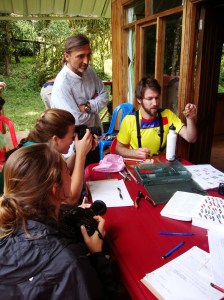 Luke demonstrates the proper way to hold a bird while taking morphometrics as National Geo students look on (and take photographs).
Who would have thought that one of the final things we get to see while at Las Tangaras is a group of American high school kids??
As representatives of Las Tangaras, we had the privilege of hosting students with National Geographic Student Expeditions for three days in the middle of June. As a group, they were looking for experiences with scientists doing scientific research in the Mindo area and visited us to learn about the work of mist netting.
Luke, with years of mist netting experience, taught the students (high school sophomores, juniors and seniors) about biological morphometrics, proper mist netting techniques, the purpose of collecting data on birds, and encouraged them to pursue studies in science. As an educator, I worked as a facilitator with the groups and demonstrated proper data recording.

National Geographic Student Expeditions students are all smiles while helping repair our entry trail at the cab
We had a really great time with the students and their adult leaders on their days of mist netting, catching everything from Gray-Breasted Woodwrens to Orange-Billed Sparrows to Spotted Barbtails and even a Broad-Billed Motmot! But, we had even more fun with them on their final day of visiting us, as they volunteered to help us clean up the campground, repaint trail signs, and dig steps on our entry trail. We are convinced that the kids enjoyed hammering, sawing, and digging more than they enjoyed anything else on their visit to our reserve!
But, in the end, the truly important matter was getting kids out in nature—observing it, enjoying it, and hopefully working to preserve it in the future. And we feel as though our experiences with the National Geographic Student Expeditions will encourage future generations of Americans to love Ecuador as much as we have come to love it.
* * * * * * * * * * * *
This serves as our final blog entry as managers of Reserva Las Tangaras. On June 24th, we handed the duties over to the new managers, Amanda and Shayama. We were sad to say good bye to all of the lovely people in and around Mindo and even sadder to say good bye to the beautiful property that is Reserva Las Tangaras. We spent our last few mornings rising before the sun in order to enjoy the beginnings of the day over in Yanez—watching the sun come up over the hills and the birds dart through the tree tops during their morning feeding. We formed many incredible memories… hopefully enough to last us until we can visit Ecuador again!

Good bye from Katie and Luke!


