A Tree Grows in the Cloud Forest
There is much wisdom to be gleaned from the old expression admonishing us not to “miss the forest for the trees.” I think it probable that whoever first said that never made it to the cloud forests of Mindo. Here it is so difficult to miss the forest that I would say the opposite applies- don’t miss the trees for the forest. The vastness of the forest and density of life within are nearly impossible to comprehend. The feeling of first entering the cloud forest is akin to being swallowed by some strange, amorphous, green beast. The amount of life supported by each individual tree in the cloud forest is staggering.
Right in front of the lodge at Reserva las Tangaras we have a large tree that has served as a case study for us in the importance of every tree in the rainforest.
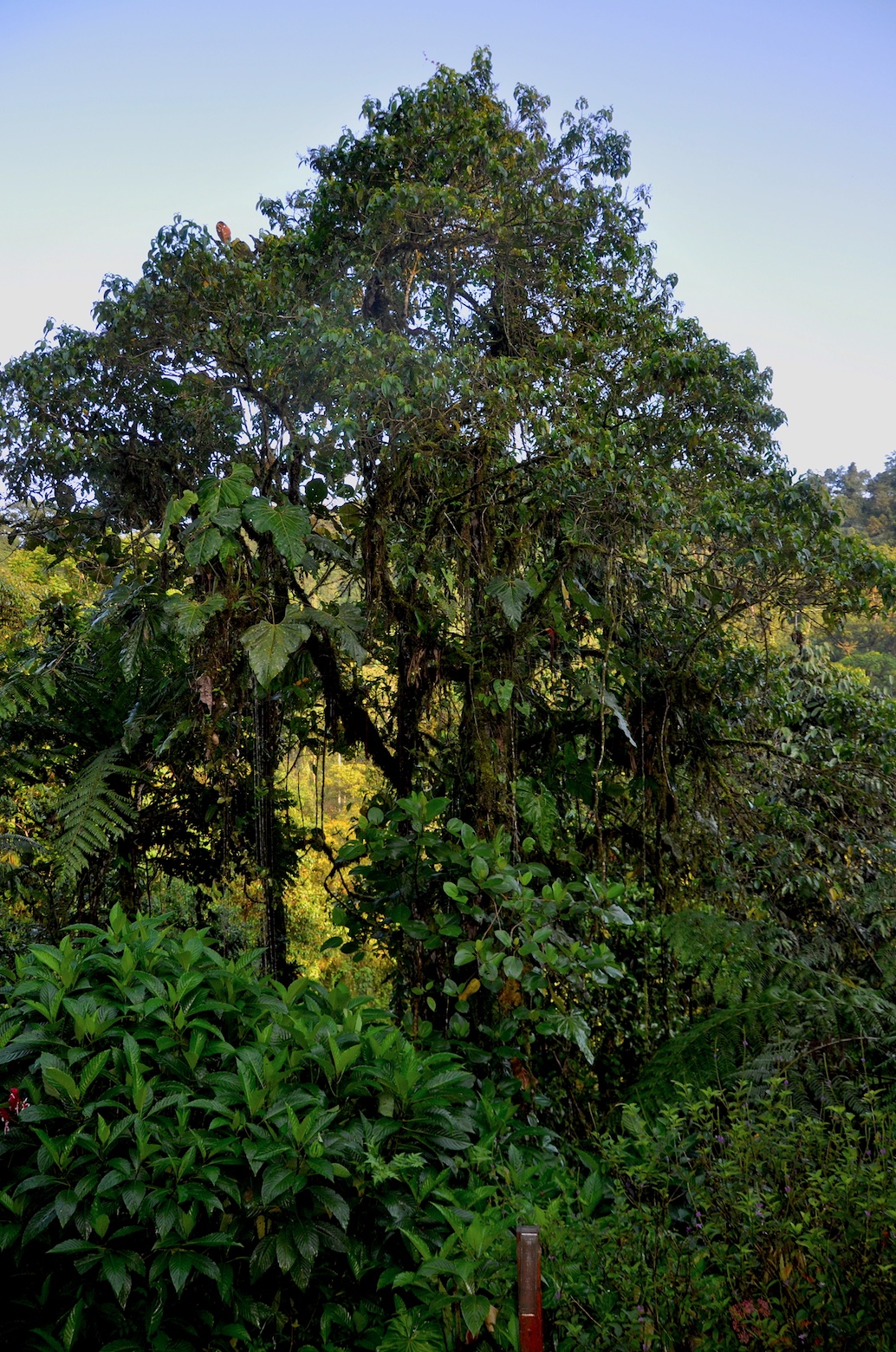
One of the things that first struck me when I got to the cloud forest was the carpet of vegetation coating nearly every limb and trunk of every tree. These hanging gardens are composed of a huge variety of orchids, mosses, ferns, and bromeliads, to name a few. They adorn the forest with blossoms of every size and color. We refer to these plants as epiphytes which in Greek roughly means “upon plants” because that’s where they grow! These plants are remarkable for their ability to thrive suspended in the treetops away from the soil. Our tree is covered with so much moss that it looks like a melted candle, with large gobs of green dripping off its branches. This moss layer is vital in trapping the water necessary for the other epiphytes to take root and survive. Only in the cloud forests do epiphytes reach their full potential due to the copious amounts of rain they receive.
In addition to epiphytes, our tree hosts plants that still need contact with the soil for survival. Most of these plants have fruit that are particularly delicious, luring birds and mammals to eat them. Their seeds have a tough and sticky exterior that helps them adhere to the upper branches of the trees as they are expelled from these animals in the form of scat. The seeds sprout in the treetops, and then send roots dropping down to the ground. These so-called aerial roots are the “vines” that’s most people imagine when they think of the jungle. Some of these plants, like the strangler figs, or matapalo in Spanish, are parasitic plants that send their roots winding down the trunk of the host tree and lianas winding up around the canopy, eventually smothering and killing it. Luckily for our tree, it doesn’t appear to be host to any of these yet. All these plants are simply vying for space up in the canopy where light is abundant. Epiphytes and aerial plants have found a way to reach the canopy without investing all the time and energy that trees require to grow.
The abundance of plant life is great news for the animals of the cloud forest. All these plants need to reproduce, and they do so by means of their flowers, fruits, and seeds which are important food sources for insects, birds, and mammals who are in turn food for reptiles, amphibians, bigger birds, and bigger mammals. Almost any time we look at the tree, there is some amount of movement from the animal life it draws in. A whole food web can be seen being played out in our front yard.
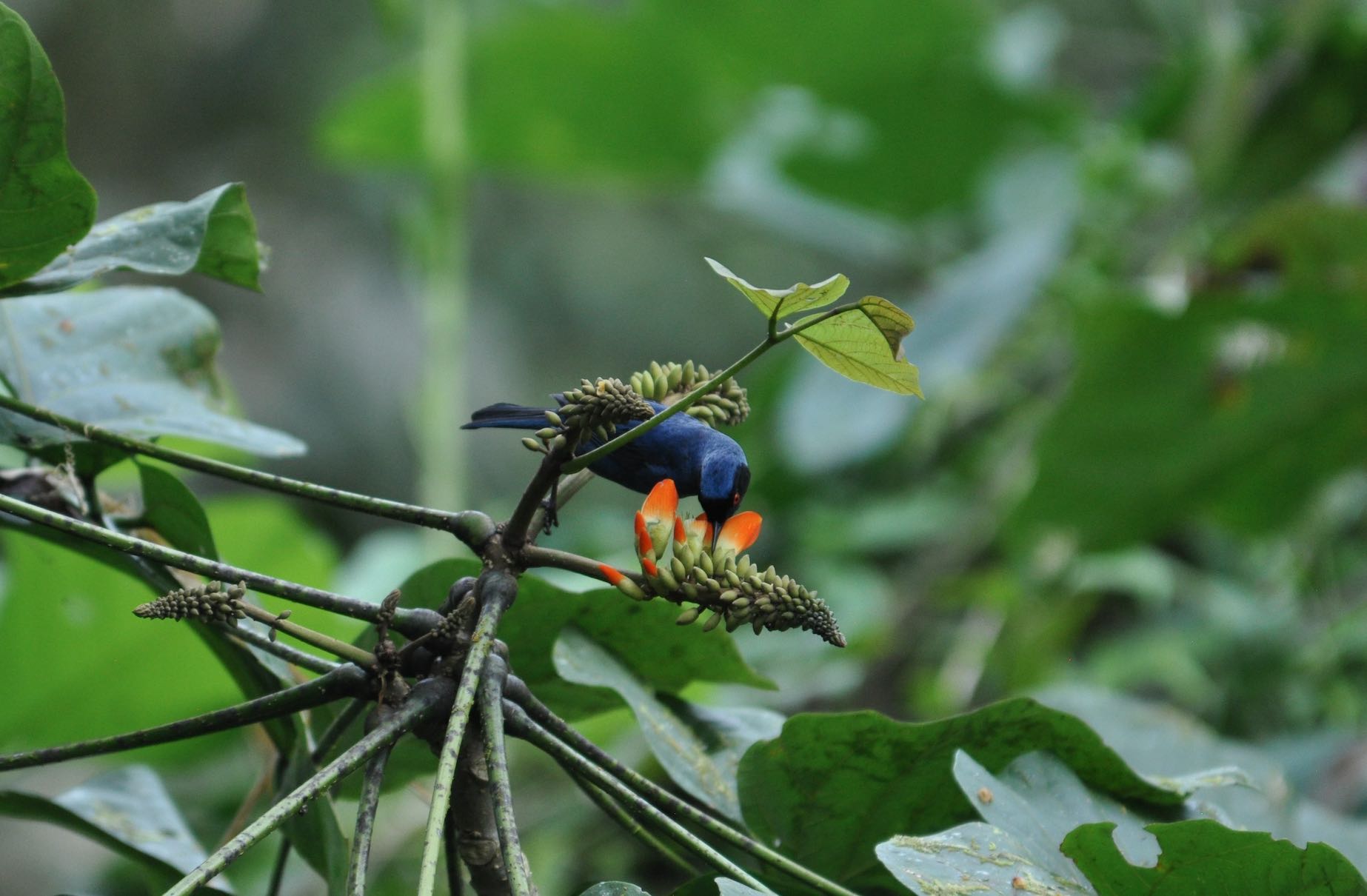
Our tree also provides shelter for its many inhabitants. It is full of katydids and stick insects disguised to look like its leaves and twigs. Birds hide under its leaves during rain storms. Squirrels nestle in the crooks of its boughs. Under its bark is a network of insects and their larvae. There are species of frogs that use the pools of water that collect in bromeliads to raise their young, and others that simply use them as cool, damp, hiding places during the day. Our tree is basically a bustling metropolis, home to a community of animals of all sizes.

Looking out at the forest surrounding the reserve, it is hard to think that one tree being cut down would make much of a difference in the grand scheme of things. Surely all the animals would just move a few feet to the left or the right and find equally suitable places to live. On a small scale this may be true, but sadly in Ecuador approximately 198,000 hectares of rainforest are deforested a year. Averaging about 500 trees per hectare, that means about 99,000,000 trees like ours are cut down in Ecuador alone. The Chocó region of Ecuador, which includes our reserve, has already lost about 98% of its area. If the rate of deforestation doesn’t decrease, the entire country would be deforested in 30 years (rainforestrescue.org.au). Facing these odds, our tree becomes an invaluable resource, because it and the other trees on our reserve are some of the last few refuges many of the amazing plants and animals of the cloud forest have to go.
Our Cloud Forest Home
¡Hola! Our names are Liat (lee-aht) and Alex (hopefully you can pronounce this one), and we are excited to be the new managers of Reserva Las Tangaras! We arrived here just over a week ago from our home country, the United States, and are currently acclimating to our new lifestyle here. However, between fresh tropical fruit and the wonders of the cloud forest, acclimation could be a lot harder. Thus far, managing and being at Reserva Las Tangaras has been an absolute treat.
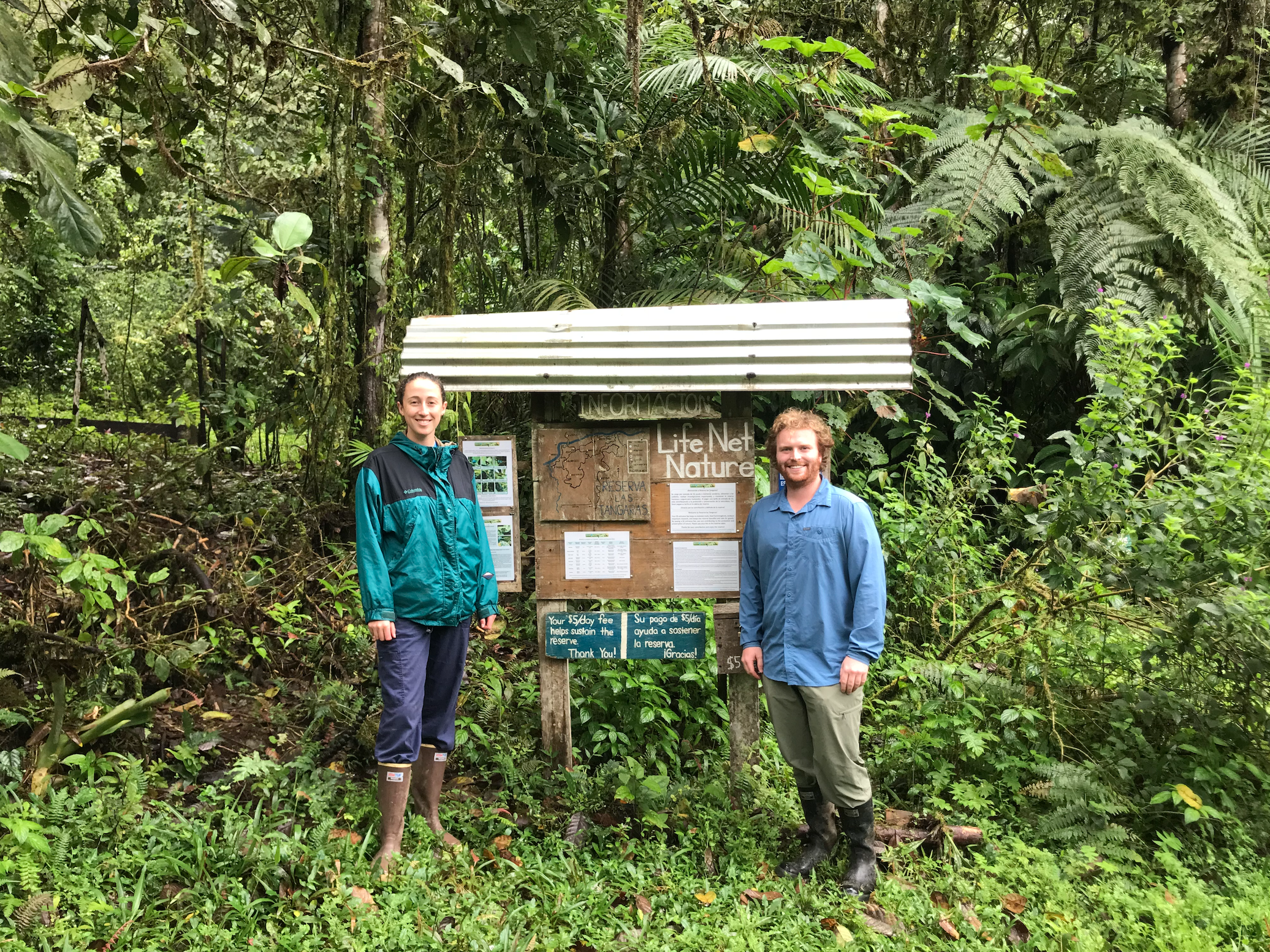
Reserva Las Tangaras is beautifully nestled in the cloud forest that surrounds Mindo, Ecuador. While sitting on the reserve’s porch and peering in all different directions one gets a sense of the vast scales and incredible density of the forest. The physical comforts of the reserve are just that much more comfortable when contrasted with the wildness of the jungle. We’d be hard pressed to think of something more luxurious than a hot shower and a tasty warm meal while in the middle of wilderness (except maybe a butler fanning us with banana leaves and dropping fresh fruit into our mouths, but we can’t have it all, can we/that’s not in our budget). Until then a hot shower and warm meal suit us just fine.

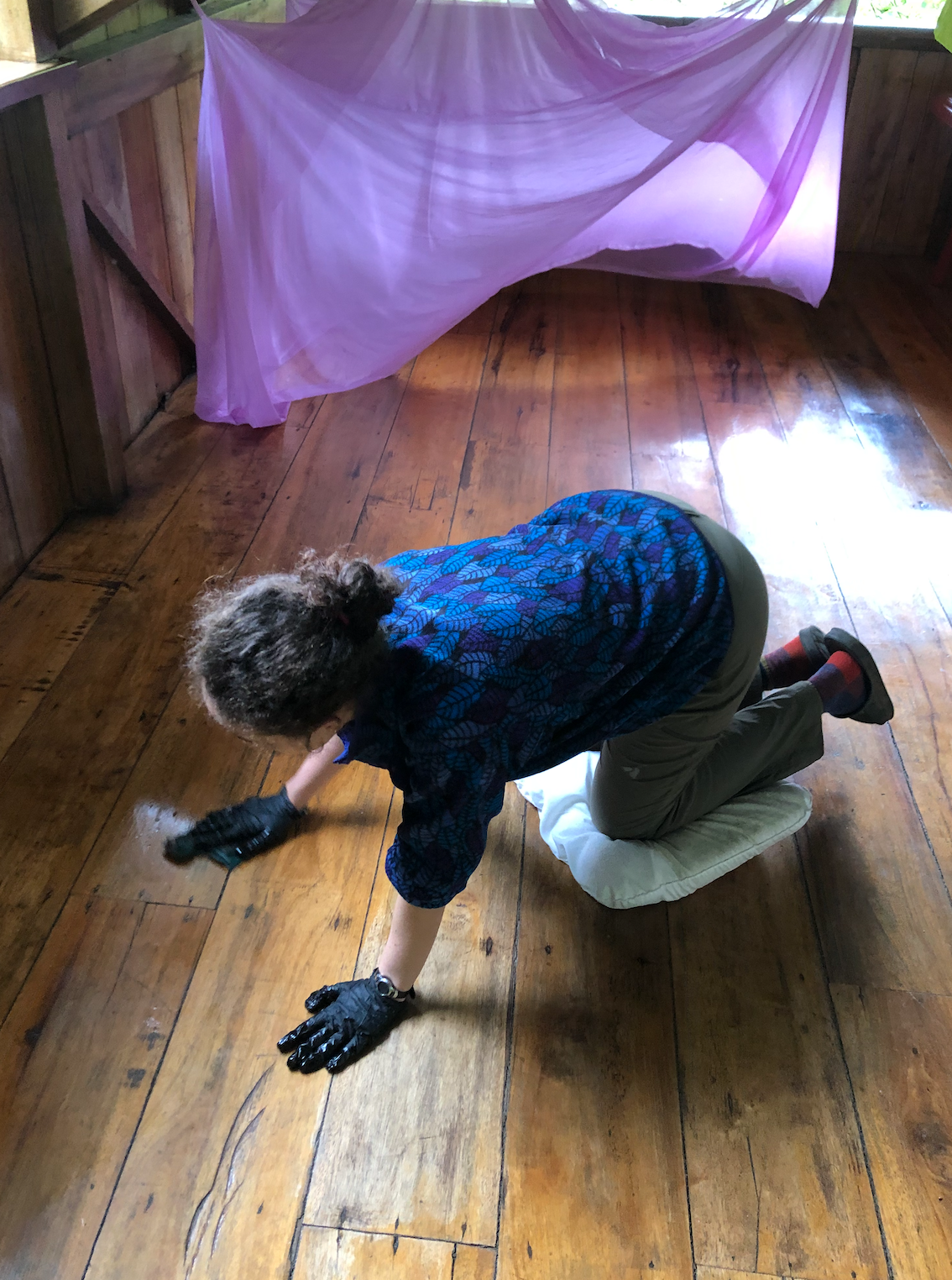
Very quickly one realizes that the rainforest does not exactly want our manmade projects to exist here. It is always ready to swallow them up with heavy rains and all the fungi and micro life. So, we must make our efforts to persuade the forest to let the reserve stay here. We do that with a good amount of maintenance to the property; sanding, maderol, varnishing, and waxing are necessary precautions to keep the massive quantities of water circulating through the forest out of our wooden structures. Rio Nambillo, the river lining the northern edge of Las Tangaras’ property, can be heard coursing from the reserve’s porch, but despite its intensity it still offers serene swimming holes for a dip in between rain showers. The swimming holes are gorgeous and look like the quintessential images of tropical paradises from adventure novels or Bachelor in Paradise.
It seems best to be honest upfront and confess that we are both biology nerds, but much like a job interview perhaps we can claim that this ‘weakness’ is actually a strength… At least out here in the cloud forest it may just be. It would be difficult not to be impressed by the sheer magnitude of biology that is present in a cloud forest. Layers upon layers of life exist here, whether or not they are directly visible to onlooking human eyes.
Seeing this extent of biological magnitude begs the question: Why exactly is there so much biomass here?
With large amounts of biomass, there must be a large amount of energy to produce so much life. The sun, an awesome source of energy, is, according to some sources, very hot. Too much or too little of its immense heat and light, or rather its energy, and climate conditions change drastically. Mindo’s cloud forest, due to its location as a next door neighbor of the Earth’s equator, receives little fluctuation in sunlight intensity and duration. The days here receive a fairly consistent amount of sunlight year-round, and unlike places that have intense seasonal variations, the temperatures here remain fairly consistent as well. Without intense seasonal fluctuations the air here does not gain or lose a significant amount of heat. For example, think of the extreme environment of the arctic. The arctic is characterized by long, freezing cold winters with almost no daylight and short, intense summers with near constant daylight minus a few hours. The arctic air will fluctuate in temperature tremendously, losing immense amounts of heat in the winter and warming up significantly in the summer only to be lost again next winter.
Interestingly, both regions in this example, the cloud forest and the arctic, receive the same number of hours of sunlight throughout the year. The stark difference is when that sunlight is received and the angle at which it hits the surface of the Earth. The tropics receive nearly direct sunlight due to a perpendicular angle of their location along the equator relative to the sun and thus receive a higher concentration of photons (energy packets from the sun) throughout the year. Contrastingly, the angle of sunlight at the poles varies drastically but never approximates the perpendicular equatorial rays. These differences in when and angle – consistent sunlight/air temperature and high concentration of photons – are key to the success and existence of the cloud forest.
Now, the other key component for the cloud forest to generate so much biomass is, maybe not so shockingly, water. And a lot of it. Fortunately and not coincidently, a cloud forest is a type of rainforest. Not only is it a rainforest, but it is among the rainiest of rainforests. Mindo’s cloud forest receives nearly 5000 mm of rain annually. Rain is amazingly abundant here, with the dry season receiving about 345 mm of rain per month and the wet season receiving about 486 mm per month. Although ‘dry season’ seems to be a bit of a misnomer, the name is relative. Perhaps we should call it the ‘not quite as wet as the wet season season,’ but we digress. These rain values reveal substantial differences in the amount of rain, although it is still abundant year-round. In temperate zones plants shed their leaves when it is cold and dry. As we addressed before, cloud forest temperatures rarely drop significantly, and looking at the rain value in the ‘not as wet as the wet season season’ one can see that it never gets very dry here. This means plants do not shed their leaves seasonally, and so the leaves, called by some the photosynthetic launchpad, are shed throughout the year. Leaves are always abundant and collecting sunlight for photosynthesis, which is a critical piece of the tropical puzzle we laid out. Except for some of the bizarre alien creatures that live on the bottom of the ocean, all of the energy that is used by life on Earth is captured by photosynthesis. Generally speaking, more photosynthesis yields more biomass.
And finally (we promise this is going somewhere), with the consistent daylight, consistent temperature, and a plenitude of water we get a ton of photosynthesis yielding lots of oxygen and sugar energy for more forms of life! Pretty amazing, isn’t it?
These conditions of daylight and rain make the tropics, and specifically the cloud forest, a unique and magnificent place to marvel at. Understanding some of why it exists has only added to the wonder of the life here in all its forms and abundance. We hope you want to come see it for yourself. If you do, be sure to come say hi to us at Reserva Las Tangaras.
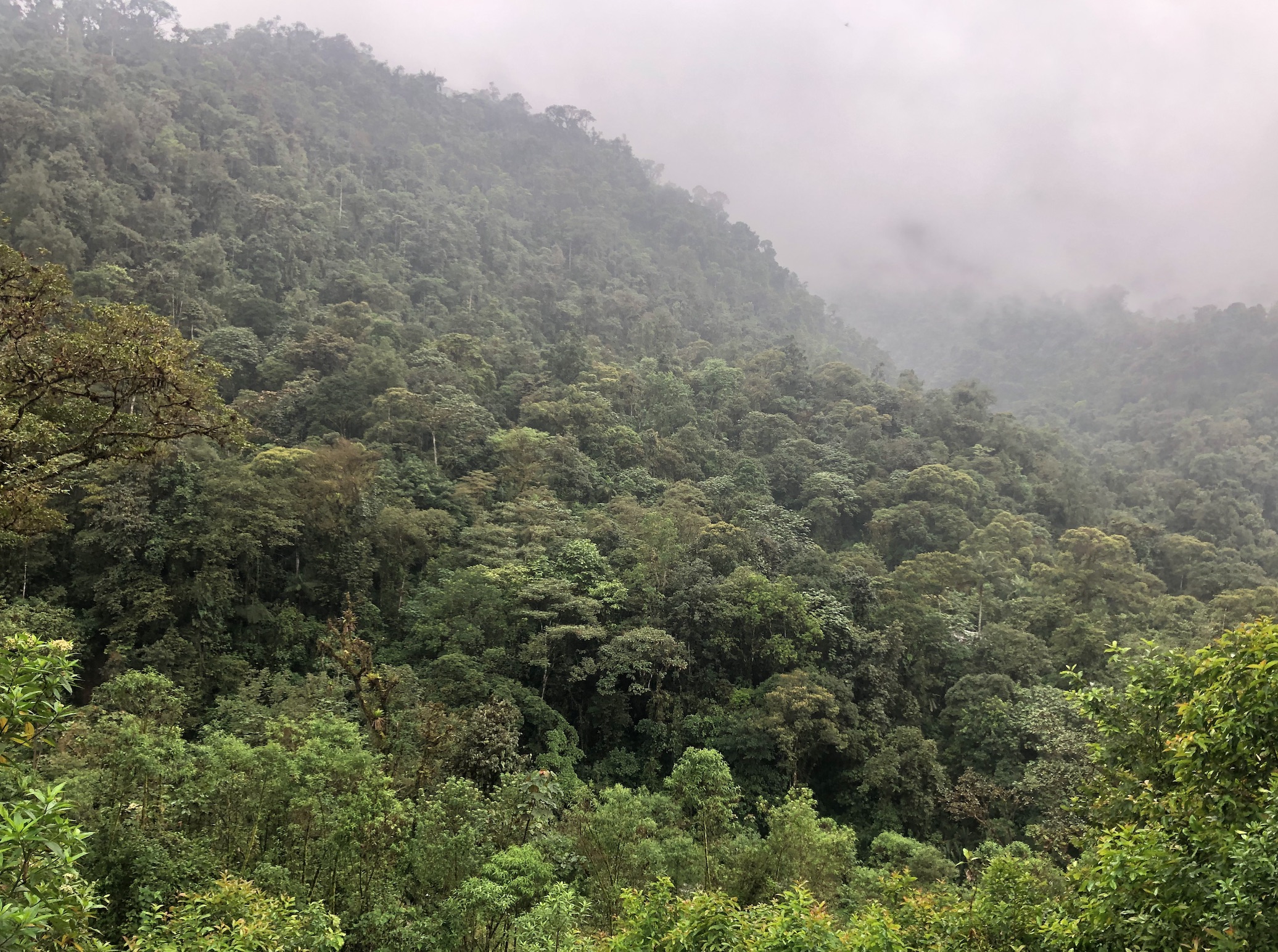
A Day in the Life at RLT
“Beep! Beep! Beep!” My phone’s alarm startled me awake. It took several seconds of fumbling in the dark before I managed to switch it off.
It was 5:00am, and our room was pitch black. My eyes wanted to close and let me fall back into the pleasant dream from which I had been so rudely awoken. However, remembering what we had in store for the morning, I took a final yawn and rolled out of bed.
Today was an ACOR morning. ACOR is the acronym for Andean Cock-of the-Rock, a large, quirky, bright red bird found in middle elevation cloud forest. Male ACOR gather at display sites where they vocalize and dance to attract females. This behavior is called lekking, and the Reserve is lucky to have the largest and most active lek site in the Mindo area. For almost two decades, the Reserve has collected data on these charismatic birds. Once a week, the Reserve’s managers make their way to the nearby lek to collect this data.
Within 15 minutes, Aidan and I were dressed and ready to go, each with a pair of binoculars. A light mist fell as we began our hike up the trail to the lek. Moths danced in the beams of our headlamps, attracted by the light. We had walked this same trail countless times and were familiar with each switchback and mud puddle along the way. However, the trail never felt quite the same twice, as we never knew what new animal or downed tree we would encounter.
Aidan was the first to hear it this morning.
“Cloud-forest Pygmy-Owl,” he said in a hushed voice, pointing into the darkness on our left. I cocked my head and nodded. We hadn’t been lucky enough to see an owl yet, but we often heard the persistent, high-pitched hoot of the pygmy owl on our early mornings. After about 20 minutes of hiking, we reached the lek. It was still dark, but we could see the shapes of trees beginning to appear around us in a dozen of shades of gray. Now all we had to do was wait for the birds to show up.
“Squaaaak!” we heard from the trees nearby. “Squaaak!” we heard from the other direction. The birds had arrived. Aidan and I lifted our binoculars, trying to catch a glimpse of the ACOR as they filtered into the display area. Many of the males were color banded, and we strained to see their legs to identify who had returned today. For the next hour and a half, we observed the ACOR, taking notes of who was there, who was where, and who was displaying with whom. Although we had surveyed the lek many times in the past five months, I couldn’t help but grin at their indignant, pig-like squeals and frantic dance.

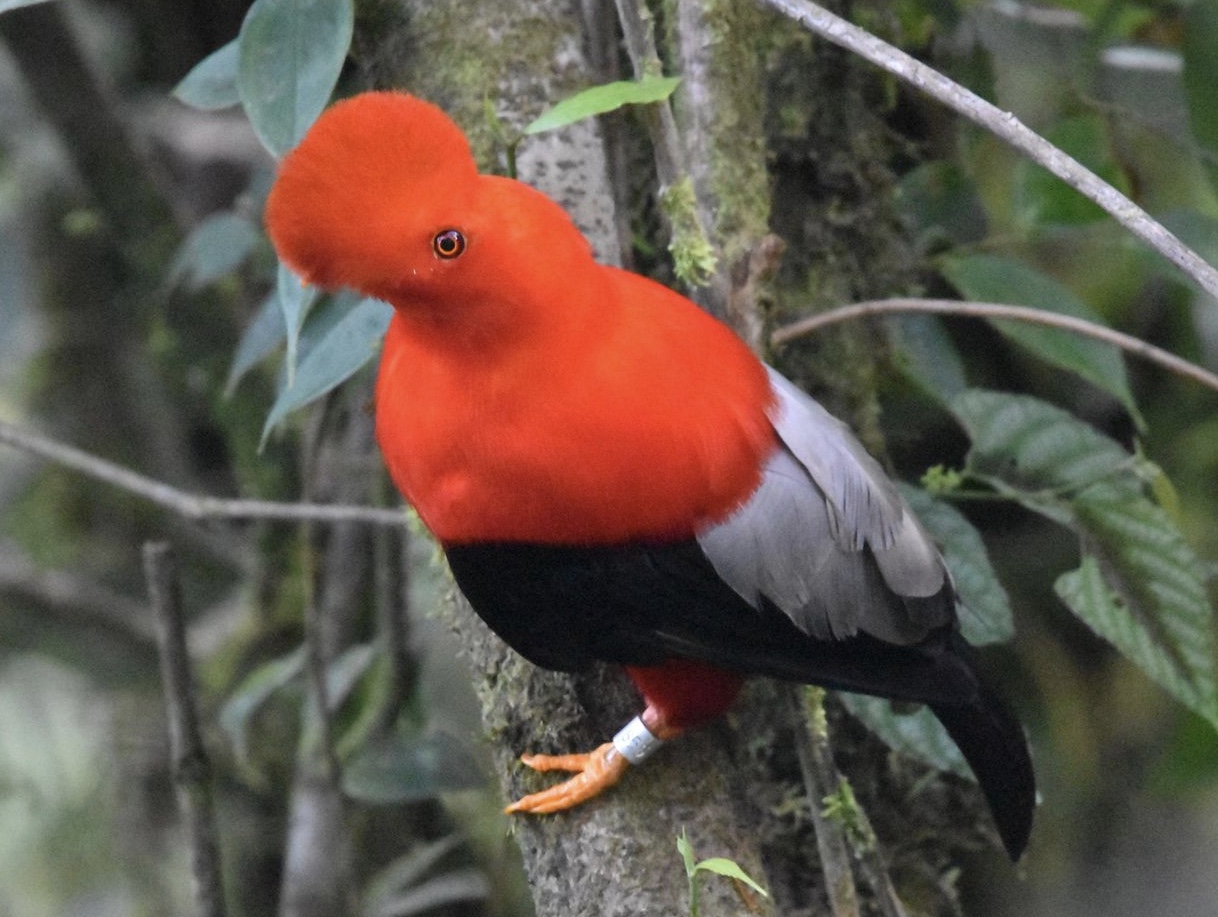
Andean Cocks-of-the-Rock, or “ACOR,” are quite stunning with their bright red plumage. This one is color banded with a green band on the left leg and an aluminum band on the right.
As their display drew to a close, the males began to depart, first leaving one by one, then in small groups. When we finally saw the last one disappear into the trees behind us, we packed up our data sheet and headed back to the cabin. We knew better than to pack away our binoculars, as mixed flocks appear most reliably when your binoculars are at the bottom of your pack or foolishly left at home. The morning’s fog had lifted, and warm rays of sun filtered through the thick canopy.
“French toast for breakfast?” asked Aidan, already knowing my response.
“Sounds good to me,” I replied. “We can even slice up that pineapple and make some fruit salad with the bananas and maracuya we bought yesterday,” I suggested. However, our breakfast mission was delayed when I saw a twig take a step forward on the branch next to me.
“Woah, look at that stick bug!” I exclaimed. “It’s huge!” And indeed it was. About 6 inches from nose to rear, the stick bug was almost a quarter of an inch thick, the largest we had seen yet. Aidan held out his hand and the bug made its way onto his forest-green jacket without hesitation, moving slowly with jolting steps.
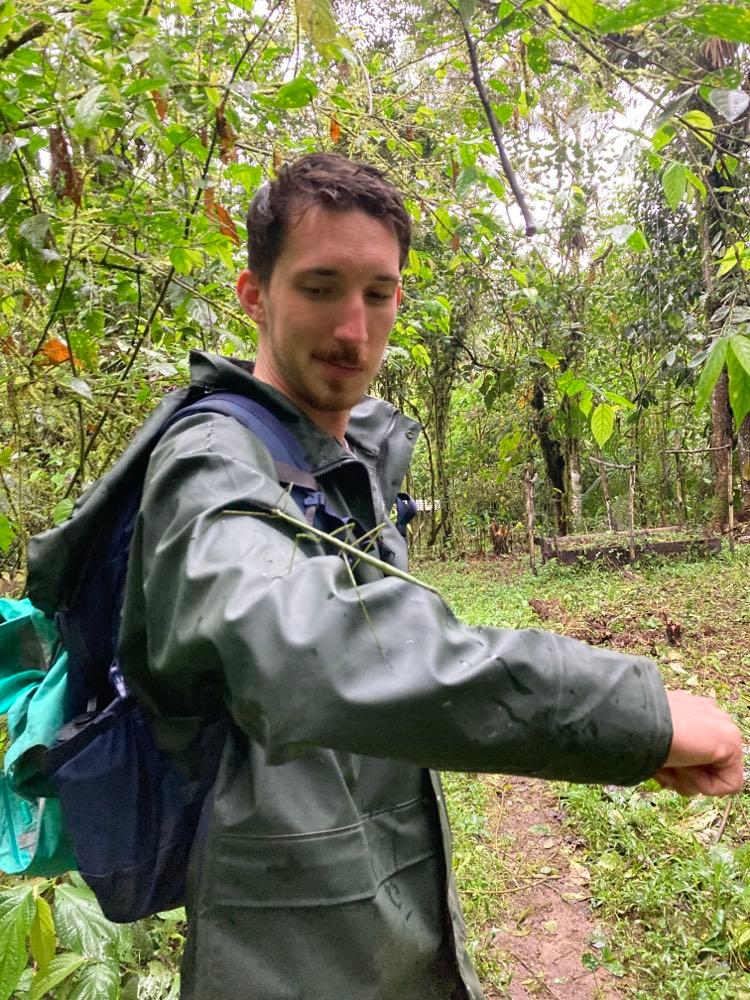
An especially large stick bug exploring Aidan’s arm.
After bidding our new friend adieu, we made our way back to the cabin to start breakfast.
It was almost nine o’clock, and both of us were hungry after our morning excursion. Aidan cracked some eggs into a bowl and started on the toast while I began the fruit salad. A highlight of living in the tropics was the fresh fruit, and on each trip into town we came home with as much produce as we could fit in our packs. Oftentimes there was no room left for a pineapple, so it was unceremoniously strapped to the outside of my bright red backpack, to the amusement of any tourists driving by.
Thirty minutes later we sat on the front porch, full and content. We watched as the hummingbirds zoomed to-and-fro, getting their morning sugar-water fix. From the front porch we also had a nice view of the hillside across the river, where we often saw flocks of toucans or guans swooping from tree to tree.
After cleaning up from breakfast, we started in on our first chore for the day: trail clearing. We regularly checked the Reserve’s trails for fallen trees and cleared any understory vegetation encroaching on the paths. The rainy season’s heavy precipitation had kept us especially busy this month, and we sharpened our machetes well before leaving. Although trail clearing could be hard work, it was also fun, as it gave us the opportunity to explore the Reserve’s many trails on a regular basis. Today we decided to clear Momotos, a trail named after the two motmot species regularly seen around the reserve.

A Broad-billed Motmot, one of the namesake species of the Momotos trail.
Although steep, the trail was one of our favorites. It started off along the river, where we had the opportunity to see White-capped Dippers foraging along the stream and Western Basilisk lizards napping on the rocks. Then it climbed through dense secondary forest and finally emerged close to the ridgeline where the trees opened up a bit and we often saw toucans and tanagers foraging in the canopy overhead. We made our way along the trail, Aidan going ahead to clear any large vegetation that had obstructed the path and me taking my time to cut back smaller plants that had begun to grow into the trail. As we left the river and began to make our way upward, we glimpsed a flash of pink in a tree nearby. Then another, and another. All around us, contrasted starkly against the dark forest around us, were enormous, bright pink flowers. They almost seemed to glow in contrast to the dark forest around us, and it felt a bit like being in the Avatar movie. I stepped off the trail to get a closer look at one and noticed smaller, more delicate purple flowers growing out of the main pink shaft.

The bright colors of pink quill bromeliad flowers stand out starkly in the dark forest.
“How beautiful,” I mused aloud to Aidan. This was one of my favorite things about the Reserve. With such an abundance of plant, animal, and fungi life, we were constantly seeing new things.
We finally emerged at the top of the trail and slowly made our way around Tucanes then down Barbudos, two more of our bird-named trails. Despite our large breakfast just a few hours earlier, we had worked up quite an appetite trail clearing and were excited for lunch by the time we made it back to the cabin. Today we decided on arepas. Aidan put the beans on to cook while I began mixing masa flour. One of our favorite new discoveries in Ecuador was the pressure cooker, which eliminated the usual soaking and long cook times required for beans. About 40 minutes later our food was ready to go and we sat down on the front porch to enjoy it. Without the convenience of appliances like a fridge, microwave, or toaster, many of our meals took a bit longer to cook than they would “in civilization.” However, with the ability to make our own schedules and access to abundant fresh produce, we enjoyed slowing down and taking the time to make fresh meals.
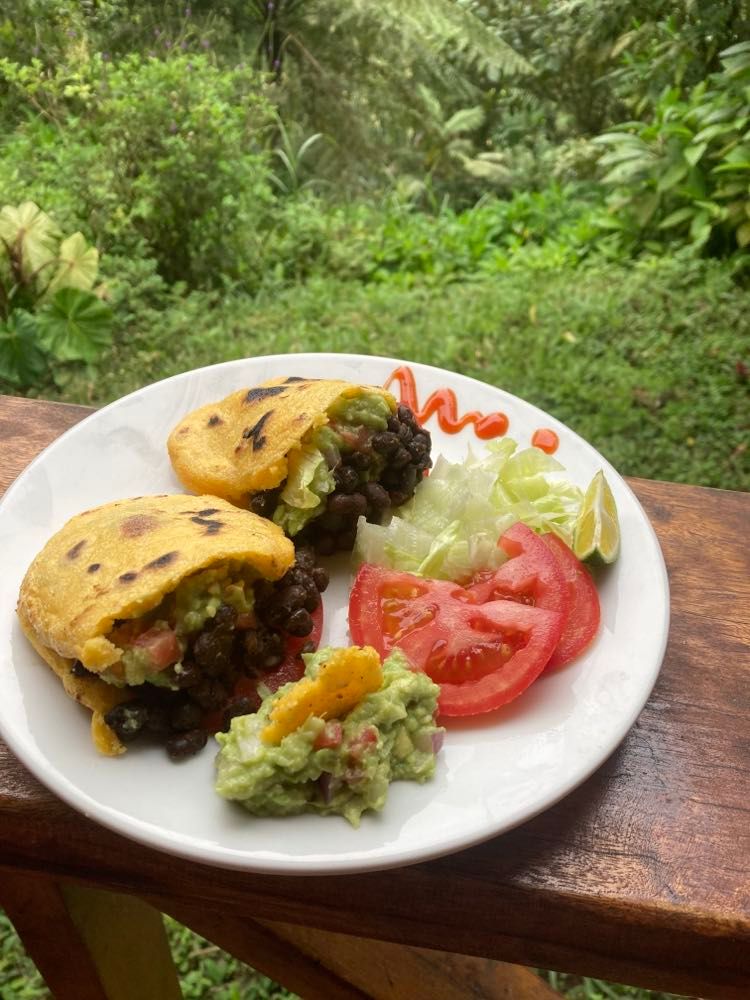
Ecuador’s fresh produce made for many delicious meals, like these arepas.
After lunch, Aidan went inside to wash dishes and I began on a hummingbird survey. For years, the Reserve’s managers have completed a one-hour-long hummingbird survey every day. During the survey, we watch the feeders and tally all hummingbirds we see, identifying the species and sex of each individual. This allows us to keep track of hummingbird abundance and shifts in species throughout the year. Although it might seem a bit tedious, we had both come to enjoy the survey as an opportunity to focus on the birds around the cabin. Today the usual suspects were all at the feeders: Green-crowned Woodnymphs, Purple-bibbed White-tips, Empress, Green-crowned, and Fawn-breasted Brilliants, and White necked Jacobins. We were also visited by a Purple-throated Woodstar female, a less reliable but still frequent visitor.

Purple-throated Woodstar female, one of the feeders’ cuter visitors.
By the time the time the survey was over it had begun to rain, and we were glad for an excuse to stay in for the afternoon. Luckily, we had plenty of indoor tasks to keep us busy. The Reserve’s cabin is made almost entirely of wood, and as it is exposed to the elements and constant humidity it takes lots of work to keep it in good condition. Our best tools in these efforts were sanding, disinfecting, varnishing, and waxing, which keep the wood mold-free and resistant to the cloud forest’s famously damp weather. Today we set about cleaning and waxing the living room floor. It was early evening when we finished, and we decided to call it quits for the day.
For dinner we had lentil soup with fresh bread from town, accompanied by our nightly game of cribbage. Without service and with limited electricity, life at the reserve was an involuntary media cleanse. We didn’t mind, and free from distractions like the daily news, social media, or Netflix, cribbage had become our nightly entertainment. Unfortunately, Aidan was on a four-night winning streak, but as I shuffled the deck I hoped my luck would take a turn for the better. It did not.
By 8:30pm we had finished washing the dishes, wiped down the counters, and were ready for bed. With nothing much to do after dark, we almost always had an early bedtime. A full day’s work behind us, we climbed gratefully under our mosquito net and into bed. The Reserve had a small library, and both of us had enjoyed reading several of its ecologically-themed books. At the moment, I was reading “Last Chance to See,” a book co-authored by Douglas Adams and Mark Carwardine. This book had none of the bizarre science fiction of the former’s famous “Hitchhikers Guide to the Galaxy” trilogy, but was full of his usual humor. The topic, however, was more somber. The book narrates, in an albeit entertaining and often hilarious way, the author’s travels to see some of the world’s most imperiled species. I picked up where I had left off the night before, following Douglas and Mark’s quest to glimpse China’s blind river dolphin, the Baiji. Before long, my eyelids began to droop, and I reached up to flick off my headlamp. As I rolled over and pulled our alpaca blanket closer around me, visions of the Yangtze river mixed with the sound of the Río Nambillo nearby, and before I knew it I was asleep.
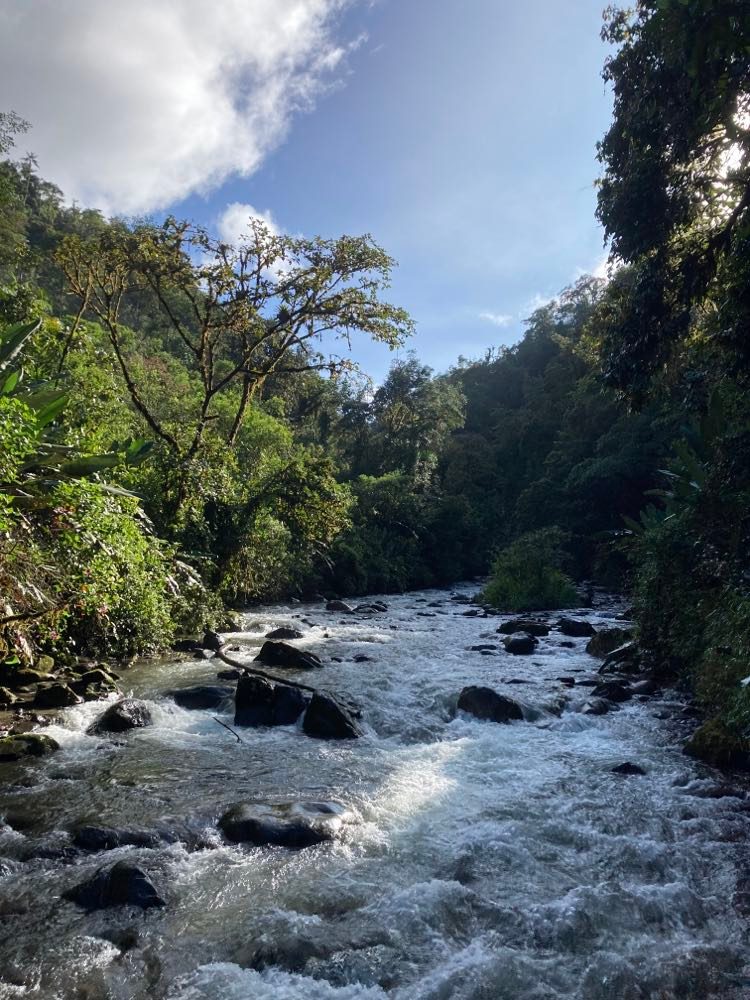
The white noise of the Río Nambillo makes for a wonderful night’s sleep.
A Break from Bird Blogs
Our Reserve is famous for its birds. However, there are many interesting mammals that make their homes here as well. Below I have outlined a few of our favorites (in no particular order).
Central American Agouti (Dasyprocta punctata) – Local name: guatusa. One of the most frequently seen mammals on the Reserve. Agoutis are large rodents, about the size of a jack rustle terrier, but with much longer legs and dainty lil’ paws. When alarmed, they thump their paws on the ground and make a series of grunts. Agoutis can jump about 6 feet horizontally, and when we startle them on the trails they often appear as a blur as they rocket themselves into the brush. As seed predators, agoutis will cache seeds when they find more than they can eat, making them important forest seed dispersers (Kritcher 1999). We regularly observe agoutis calmly foraging behind the Cabana without noticing us.

Ecuadorian White-Fronted Capuchin (Cebrus aequatorials) – A critically endangered species. Ecuadorian white-fronted capuchins are endemic to northern Peru and Ecuador and have lost 99% of their habitat in the last few decades. The lowland Chocó-Manabí region has largely been deforested and habitat converted to agriculture/ranch land. Large tracts of forested land are needed to sustain their foraging troupes as they have home ranges of 500 hectares (Abrams 2019). Occasionally, a troupe of capuchins will travel through the Reserve in the search for fruiting forest trees.
Southern River Otter (Luntra longicaudis) – In the past, these otters were intensively hunted for their fur and are not often seen (Emmons 1990). We were lucky and got to see an individual playing and foraging in the rapids at one of our favorite swimming holes. After it got out of the water, it sauntered past Mary without noticing her. While this was happening, I was running back to the cabana for my camera. By the time I returned to the beach, I was only able to get a blurred shot of it as it departed. Luckily, Mary took some good iPhone videos of the encounter. They are posted on RLT’s social media https://fb.watch/aVhl9dELo9/
Nine-banded Armadillo (Dasypus novemcinctus) – Mostly nocturnal, armadillos frequently forage for insects in the soil along our trails. They have poor eyesight, and it is sometimes possible to get a close look at them before they notice you. When startled, they jump straight up into the air, then trundle speedily into the undergrowth. Armadillos’ defense is their armored bands, not their stealth, so they often move very noisily through the bush. If you hear something crashing through the undergrowth beside you at night, it is probably just an armadillo. If there was a jaguar next to you in the bush, you wouldn’t hear a thing.
Squirrels – Belong to the order Rodentia, which is the largest order of mammals worldwide. Squirrels are seen frequently all over the Reserve. We have two species:
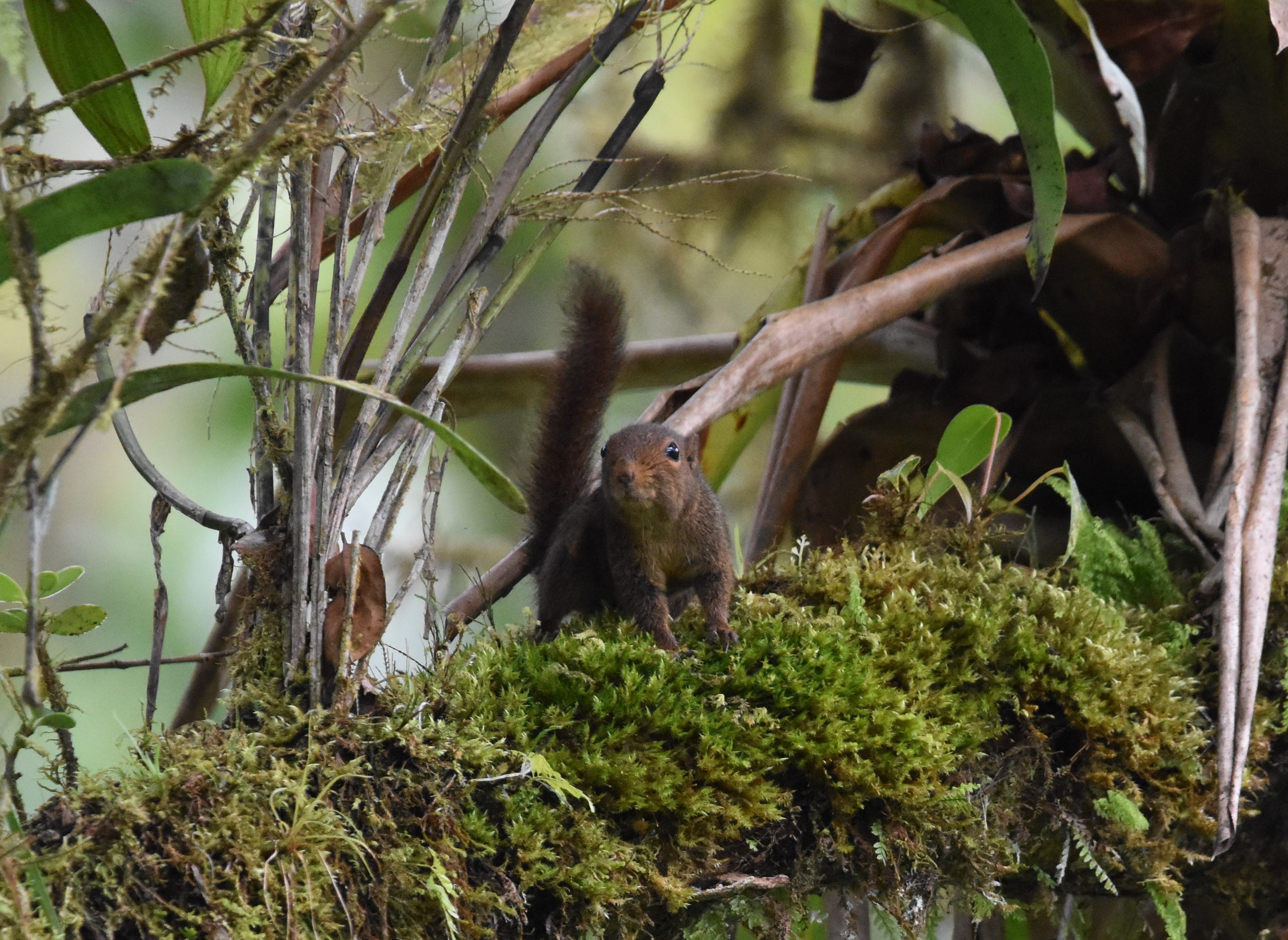
- Western dwarf squirrel (Microsciurus mimulus). Seen regularly around the Reserve, just cute as a button. I don’t have any interesting facts, I just wanted a reason to include a photo in the blog.
- Red-tailed squirrel (Sciurus granatensis). A larger and significantly less cute squirrel. No photo needed.
Bats – Belong to the order Chiroptera, the second largest order of mammals worldwide. Bats make up 39% of neotropical mammals. Bats are very beneficial to ecosystems, as they eat large quantities of insects and are important pollinators for many plant species including balsa, chicle, and calabash. In a given neotropical forest, there are likely as many species of bats as there are all other mammals combined (Emmons 1990). We see them frequently in low light, and it can be difficult to determine their species. We do have one very special bat that roosts near the toolshed inside our cabin. We’ve named the bat ‘squeakers’ and it uses a cardboard box to do its business.

Kinkajou (Potos flavus) –The largest arboreal mammals we have at the Reserve. Kinkajous are a member of the raccoon family (Procyonidae) and are nocturnal. One can find kinkajous with a bright flashlight as they have incredibly bright orange eyeshine that will reflect the light back to you. During the day you might see their tails sticking out of their dens high in a tree.
Spectacled Bear (Tramarctos ornatus) – Once ranging from California to the eastern seaboard and all of Central America, the spectacled bear now has a limited range in North-East South America. The spectacled bear has been hunted relentlessly and has lost much of its former habitat to deforestation (Kritcher 1999). Since 2014, spectacled bears have only been observed once at the Reserve. During Katie & Nick’s tenure (winter 2021), a mother and cub walked right up the back stairs of the Lodge. Sightings like these remind us of why it is so important to preserve large areas of tropical forest.

Sources
Abrams, Sylvie. Ecuadorian White-Fronted Capuchin. New England Primate Conservancy. Web 2019 https://www.neprimateconservancy.org/ecuadorian-white-fronted-capuchin.html
Emmons H. Louise, Neotropical Rainforest Mammals: A Field Guide. 1990, University of Chicago Press
Kricher, John. A Neotropical Companion. 1999, Princeton University Press
December 2021 Bird Banding Expedition
Usually Reserva Las Tangaras is a quiet place. At lower altitudes the dominant sound is the rushing of the river, while up on the trails the buzzing of insects and croaking of frogs provide a constant but soft white noise broken only by the occasional raucous mixed flock. This month was different. The quiet cabana and peaceful trails were bustling with the arrival of 13 visitors for the biannual Reserva Las Tangaras birding expedition.
First to arrive were five Ecuadorians to help run the project: two men experienced in local bird ID, mist netting, and bird banding, two wonderful cooks, and their six-year-old daughter who never failed to entertain us with her drawings, card games, and questions about our favorite colors and animals. Next arrived an enthusiastic, bird-savvy group of volunteers from North America led by Dr. Dusti Becker, Co-Director of Life Net Nature and the Reserve’s owner. Over the next two weeks the group would conduct standardized surveys and mist net and band birds in order to assess avian community composition around the reserve and contribute to the long-term dataset from previous years’ expeditions.
We jumped into work the very first day. After a classic Ecuadorian lunch of soup followed by rice and lentils, accompanied by fresh juice, we went outside to review the basics of mist netting and bird banding.
So, as you might have guessed by this month’s topic, it’s Mary writing this month’s blog (yes, I know, yet another post about birds). However, as bird banding has been a primary aspect of all my jobs over the past few years, I was excited to use this month’s expedition as an opportunity to write a bit more about bird banding and its importance to avian research. But before we jump into how mist netting and bird banding are used in avian research, let’s review the basics: what even are mist netting and bird banding?
Mist nets are a tool commonly used in avian field research to safely catch birds. Similar to a giant volleyball net, a mist net consists of two upright poles with a large net strung between them. The fine mesh of the net is difficult to see so birds fly into it and become trapped in its pockets. Once in the net, birds can be safely removed and banded. Bird banding involves placing a small metal ring on a bird’s leg. The metal bands are extremely lightweight and sized and placed so as not to be painful or cumbersome to the bird. Each ring has a unique combination of numbers so that individual birds can be identified if they are recaptured in the future. Along with receiving a band on its leg, captured birds are often measured (weight, wing length, bill length, etc.), checked for breeding condition or ectoparasites, and in some studies feather or blood samples are taken.

So great, now we’ve got a bird with a little metal band on its leg and we have some numbers representing the bird’s size, mass, and general body condition. However, given all the work involved in setting up and taking down mist nets (especially challenging on the muddy hills around Las Tangaras, as any of the volunteers would surely tell you!), extracting birds from nets, banding and measuring birds, and entering and managing data, what is the point of all this? Without a doubt, it’s an incredible experience to hold a bird in one’s hand and to see the wonderful details not visible from a distance. However, far beyond seeing pretty feathers up close, bird banding is a crucial tool in avian field research. Below are the primary ways in which bird banding is used in bird research:
- It may seem obvious, but a main point of bird banding is to provide us with basic information about birds. With a bird in the hand, we can take various body measurements, feather and blood samples, and check for ectoparasites. It is important to know this basic information about a species in order to understand its anatomy and physiology. Furthermore, blood and feather samples can tell us about energy sources and relatedness of individuals, which is important for understanding social interactions and energy needs.
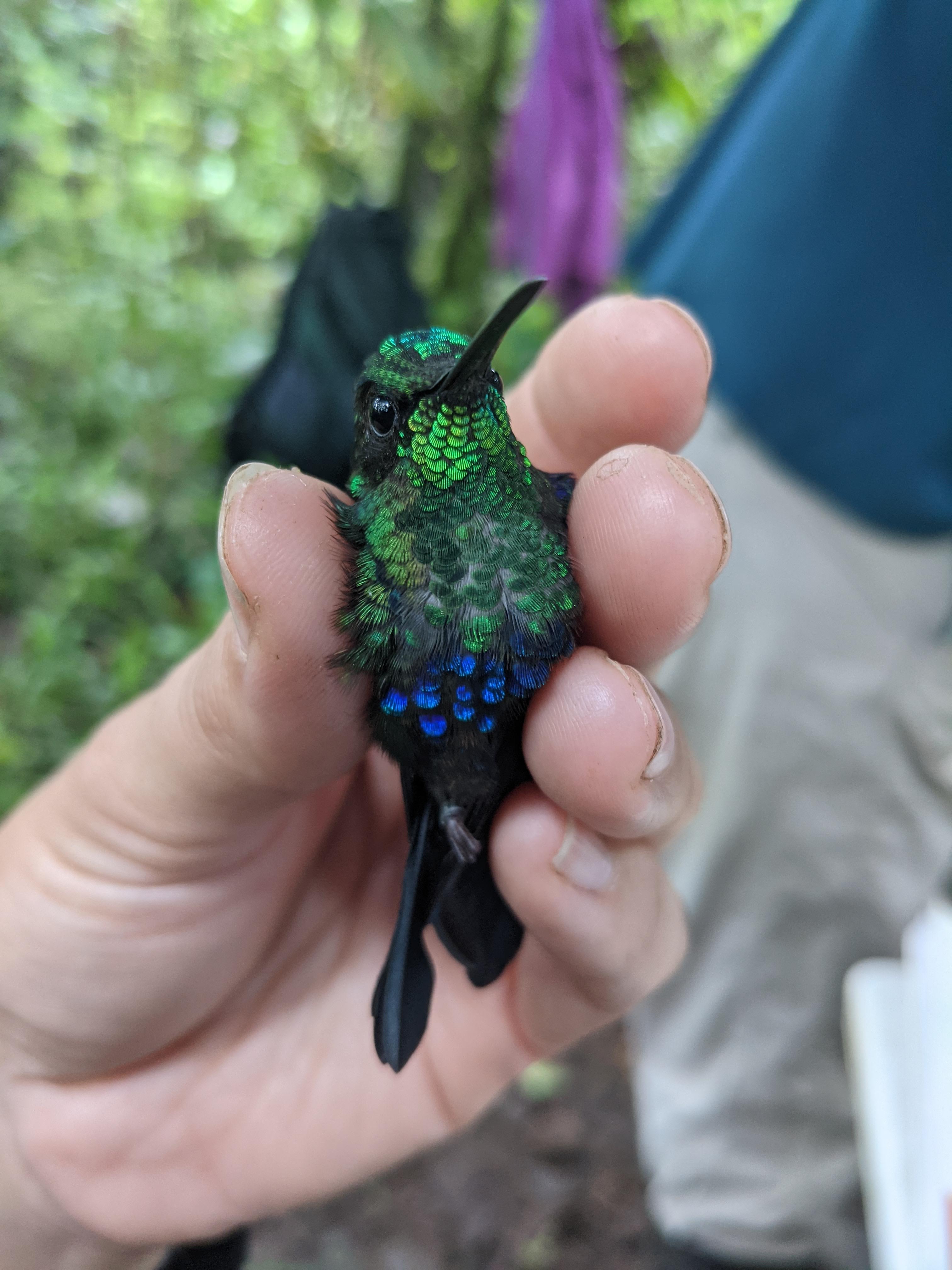
- Another purpose of banding is to understand species distributions. Mist netting is a valuable tool for determining what species are present in a given area. It can be especially helpful for detecting species that are quiet and rarely seen, thus less likely to be detected with other survey methods. For example, during our two-week expedition we caught a Plain Xenops, a species we haven’t yet seen or heard during our 2.5 months at the reserve. By capturing the Plain Xenops in the nets, we know this species is present in the area surrounding the reserve.

- Mist netting is also a great way to gather demographic data on bird populations. Recapturing a previously banded bird gives us information on how long birds of that species live. In addition, certain characteristics, such as plumage, skull development, and breeding condition, can help biologists determine a bird’s age and sex. Examining trends in age and sex ratios of a population can allow biologists to determine demographic trends and possible mechanisms of any changes. For example, if researchers have been collecting data at a given site for multiple years, they can determine a normal age ratio (number of juveniles compared to adult birds). Seeing changes in this ratio can give researchers an idea about where in birds’ life cycles these changes are taking place. Fewer juveniles can indicate a decline in reproductive success, which suggests more research conducted on the breeding grounds may reveal the cause of the decline. Fewer returning adults during spring migration may indicate problems on the species’ migratory route or wintering grounds. Such information can help researchers decide where to allocate research time and money.

- Mist netting is also a helpful tool for bird tracking efforts. Recapturing a previously banded individual, either at the same banding station or another location, lets us know where a bird is during that time of year. Mist netting is also valuable as a way of capturing birds to put tracking devices on them. Tracking birds is especially valuable for conservation because it gives us information on where a species goes during its full annual cycle. This is important for preserving habitat throughout a species’ range.
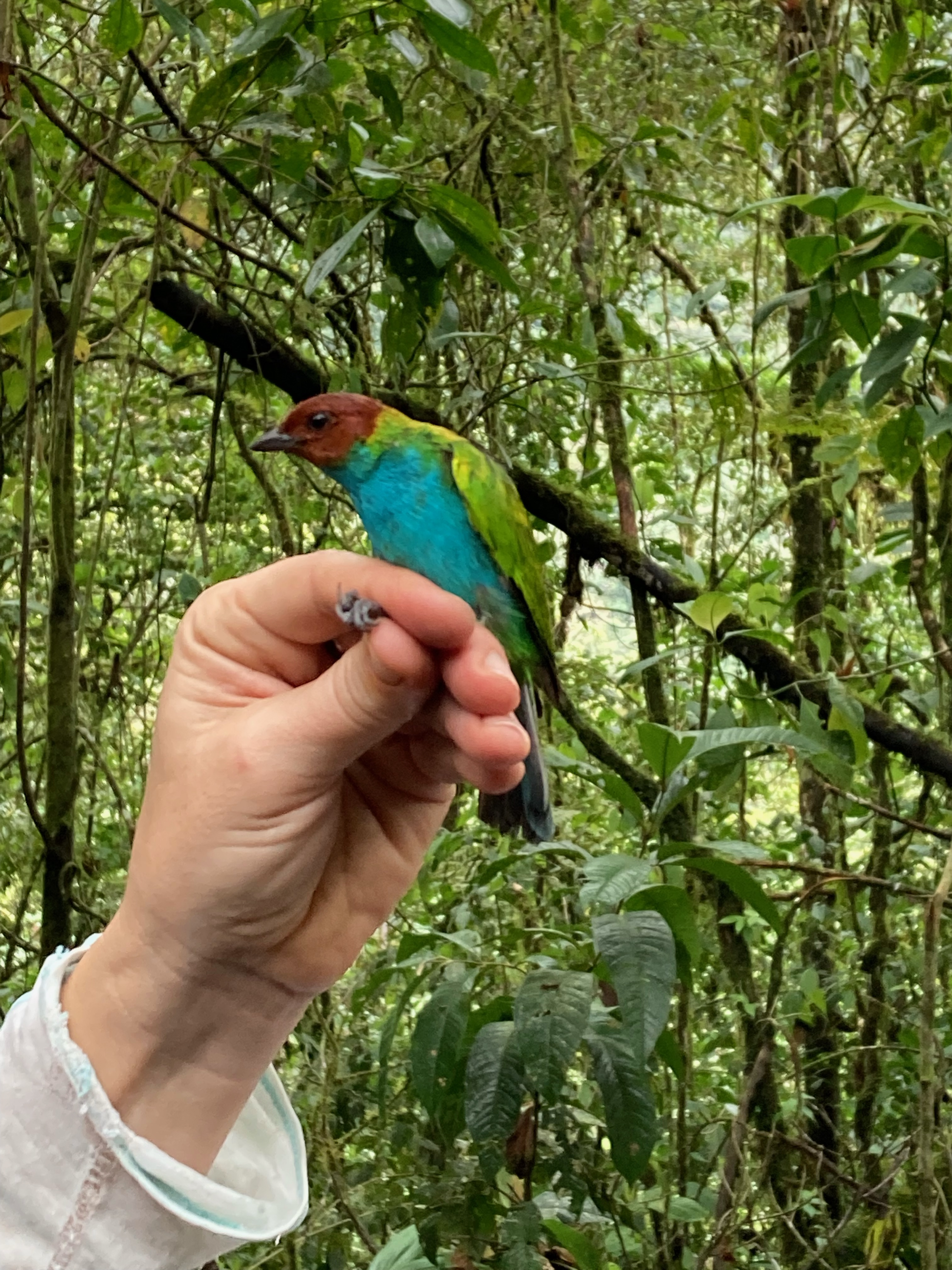
- Finally, bird banding is valuable as an educational tool. While seeing birds in their natural habitat is a great way to foster in people an interest in birds and the environment, seeing birds up close is a wonderful opportunity to educate people about aspects of bird anatomy that are not so easily seen from a distance. Seeing a bird in the hand, or getting the opportunity to hold and release a bird, can spark a whole new appreciation for these incredible feathered critters. From the beautiful details on individual feathers to marveling at how such a light animal can travel such huge distances, banding provides an opportunity to gain a new perspective on birds. Many banding stations are open to the public and provide a place for school field trips and scientists alike to learn about and appreciate birds and bird research.

Many of these valuable aspects are incorporated in the banding efforts at Las Tangaras. Through the Reserve’s research, we are collecting valuable biometric and demographic data on many tropical species. Not only do the Reserve’s banding efforts sample what species are present in the area around Las Tangaras, but by mist netting in different habitat types during the two-week project, we are sampling how avian community composition varies by habitat type. Capturing the same individuals multiple years in a row also gives us information on survival and site fidelity (that is, the likelihood of an individual to return to a previously occupied location). Finally, by incorporating volunteers, the banding project serves as an educational opportunity to teach people a valuable tool used in avian research.

From setting up mist nets on the first afternoon to participating in the Mindo Christmas Bird Count on the final day, this year’s expedition was a great success. During the two-week project, we detected a whopping 183 species. Furthermore, we are grateful for all that we learned from both the volunteers and Ecuadorian staff. It is inspiring and heartwarming to know that there are such talented, passionate people working to preserve the planet’s biodiversity.
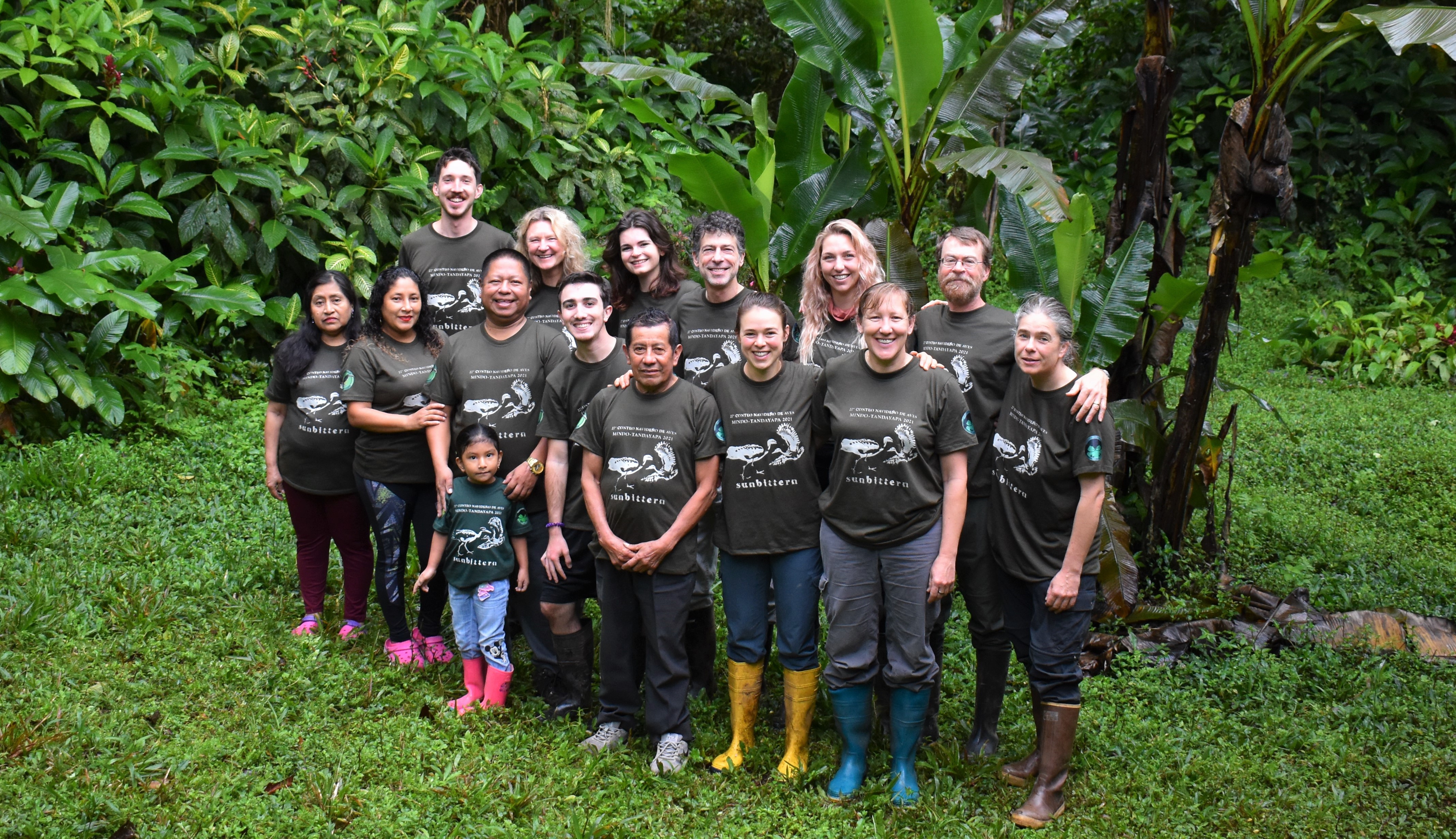
The Reserve is quiet again. The sound of chopping from the kitchen and conversation from the front porch have been replaced by katydids in the lawn and Three-striped Warblers in the bushes around the cabana. But some reminders of this December’s project remain. We frequently see banded birds around the cabin. Perhaps they will be caught in July during the next banding expedition, contributing just a bit more data to the long term dataset here at RLT.
Invasive Species and the Reserve
I wanted to write about something close to my heart for the November blog post, so I chose invasive species. Mary and I have been working on removing invasive species from around the lodge recently. However, before we get to that, let’s kick things off with some dry definitions and depressing statistics.
First off: what is an invasive species?
According to the Invasive Species Advisory Council (ISAC) the definition is “a species that is non-native to the ecosystem under consideration and whose introduction causes or is likely to cause economic or environmental harm or harm to human health” (ISAC 2006). That definition might sound a little vague, but the distinction of invasive species can have many nuisances. Most non-native species are not invasive. For example, you could bring a tropical houseplant that is native to Central America to Minneapolis, thus making it a “non-native” species. But if you release your houseplant into the winter of Minnesota, your houseplant likely will not survive long enough to do any harm. Many ornamental and agricultural plants fall under this umbrella of “non-native ” but not necessarily “invasive.” Let’s move on to an example of an invasive species: West Nile Virus (WNV). WNV was introduced to the US from its native range in Africa, therefore making it non-native. It also causes harm to humans and the ecosystem, making it invasive. That example is easy to understand because West Nile Virus causes direct harm to humans by making them sick and harm to the environment by killing native bird species. Other examples aren’t so straightforward. Many invasive plant species cause harm to the environment, but indirectly. Invasive plants can reduce forage for wildlife, outcompete native plants for resources, impact water systems, and change the ecosystem around them by altering soil chemistry, fire regimes, and biome type.
One example of an invasive species that is well known in the western United States is cheatgrass (Bromus tectorum). Cheatgrass is a cool-season annual that has invaded the Great Basin from its native range in Eurasia. It takes over sagebrush steppe and creates so much thatch that it increases the frequency of fires from every 70-100 years to every 3-5 years. Sagebrush is not able to reestablish within such a short fire regime, so cheatgrass effectively alters the ecosystem from sagebrush steppe to annual grassland (Knapp 1996). This is terrible news for biodiversity. Native birds that nest in sagebrush such as sage grouse and other sage-dependent species cannot survive in a cheatgrass monoculture. Native grasses and forbs are outcompeted for water and sunlight. Cheatgrass is unpalatable for wildlife and livestock after it dries out and its seed heads can cause infections in the eyes and mouth. Mammal and insect communities that rely on native plants cannot find food or shelter. Within decades, a once vibrant ecosystem that has been “invaded” can become increasingly biologically desolate, even if it still looks “natural.”

In the US, it is estimated that 42% of threatened and endangered species are at risk from invasive species (NWF). Globalization has already introduced many invasive species to high Human Development Index (HDI) countries. Within the next century, it is predicted that air travel/global trade, expansion of agriculture, and changes in native plant communities, due to climate change, will lead to many more invasions in low HDI countries (Early, et al 2016). So, what can be done?
As with many issues, prevention is the best option. On the national level, requiring agricultural inspections at all ports of entry, setting strict standards for horticultural and animal imports, funding early detection rapid response teams (EDRR), and sharing data and expertise internationally are some of the best prevention tools. When invasive species slip past prevention measures, then it’s time to look at your management options.
Oftentimes there are more invasive plant species to control than there is available funding so it is necessary to prioritize. A good prioritization scheme considers an invasive species’ potential to spread further, its risk to threatened/endangered species, human health, or agriculture, economic damage, and the chance to be successfully eradicated. Once you’ve ranked your invasive species, then you’re ready to select your control methods:
- Cultural. This means getting people to adjust their practices. Examples include only buying certified weed-free livestock feed or sanitizing heavy timber harvesting/wildfire equipment before going to a new worksite. Livestock and heavy machinery are common vectors for invasive species.
- Mechanical. An example would be a volunteer pulling up invasive species at a weekly volunteer event or a land manager mowing their field to stop an invasive mustard before it has the chance to go to seed.
- Biological. A biological control can be a fungus, insect, or an animal like a goat. This method often sounds frightening, since people often associate biological controls with such ecological nightmares as private individuals with the sugarcane industry releasing mongooses in Hawaii. However, biological controls are rigorously researched and only released if they will only impact the intended invasive species. Many non-native species have natural checks and balances in their native range that don’t exist in the introduced range. For example, in the 1940s, St. John’s Wort (Hypericum perforatum) covered over 400,000 acres of Northern California’s rangeland. St. John’s Wort induces photosensitivity in livestock when ingested and threatened the cattle/sheep industry. A beetle (Chrysolina quadrigemina) that fed on St. John’s Wort was found in its native range in Europe. After the beetle was put through extensive tests to see if it would damage crops or wreak ecological havoc, it was released in California. Within 10 years this beetle had reduced St. John’s Wort to just 1% of its original range, saving California an estimated $3,500,000 per year between 1953 and 1959 (Shelton, A).
- Chemical. Also a controversial control method, but if used correctly an invaluable tool in any ecologist’s toolbox. Many invasive species cannot be managed with cultural or mechanical methods, and no effective biological control agent has been found for them yet. Tree of heaven (Ailanthus altissim) is one of many such invasive species. It grows in dense monocultures and releases allelopathic chemicals, meaning it inhibits other plants from growing near it (Heisey 1990). If you simply try to cut one down, it will send up shoots all around the stump. The only viable method of controlling tree of heaven is called cut-stumping. Cut-stumping involves painting on a small amount of concentrated herbicide on the phloem of a freshly cut stump. This method will treat the invasive species without causing unintended damage to native plants.
Here at the Reserve
I am just starting to learn the native and non-native plants of the Ecuadorian cloud forest but one thing that struck me right away was how few invasive plant monocultures I saw at the Reserve. In the Bay Area or western Montana, one didn’t have to look too hard to see an invasive species taking over. At the Reserve, there is no shortage of plant life, but there are no monotypic stands of invasive plants that we have found. Except one. Many years ago, Brazilian red-cloak (Megaskepasma erythrochlamys), was planted around the lodge to attract hummingbirds. Despite the common name, it is a mid-sized shrub native to Venezuela. As with the introduction of most ornamental plants that become invasive species, it was done with good intentions. Unfortunately, Brazilian red-cloak is a voracious grower and has few natural checks to keep it from out-competing native plants. Simply cutting it down just spreads the plant. It can re-root from just about any piece of stem, even one that is just a few inches long. When Mary and I got here, we found that red-cloak surrounded the lodge to the depth of a few meters, and it was advancing into the forest. We have been working hard to get the Brazilian Red-Cloak under control and we are excited to choose native plant species with which to replace it.


So what can an individual do?
- Clean your outdoor gear. Especially your boots, socks, and bottoms of your pant legs and undercarriage of your car if you’re driving off-road. While this is a good idea when traveling locally, it is especially important before traveling long distances. Seeds can be very small, and travel in the soil or as burs stuck to clothing. Throw any seeds in the trash. It is also important to clean your waders and boat if you are traveling between water bodies.
- Plant locally native plants. They are often better adapted to local environmental conditions and provide food and habitat for wildlife. The Xerces society https://xerces.org/pollinator-conservation/pollinator-friendly-plant-lists will often have regional guides that focus on native plants that benefit pollinators. You might also be able to find local chapters of native plant societies. They can provide great information and often have native plant sales. Don’t plant anything from the internet called something like “native wildflower mix” unless it specifies to where specifically it is native.
- Manage invasive species on your own property. It is a good idea everywhere and some states like Montana you have a legal obligation to remove noxious weeds on your property.
- Write to your local city council and ask them to landscape with native plants. I linked a great podcast below about how urban forestry can create habitat for wildlife.
- “Burn it where you buy it” We hear the phrase all the time. It boils down to: don’t travel more than 30 miles with firewood. It can be an easy vector for invertebrates and plant pests.
- Never dump pets, the contents of an aquarium (including the fish), or houseplants in the wild.
- Volunteer with your local land management agency. All land management agencies from local parks to the National Park Service must do invasive species management. Many agencies are underfunded and unstaffed and really appreciate volunteers helping out.

Thank you for sticking around through the end. Something I didn’t get a chance to touch on was invasive pathogens. Sudden Oak Death (SOD), Rapid Ohia Death (ROD), White-nose syndrome, chytrid, and even the death of the American chestnut are all caused by invasive pathogens. Maybe I will do my next blog post about that. Hopefully, this blog post inspired you to plant some native species in your yard or volunteer with your local land management agency. Or hey, you could even volunteer here at the Reserve.
Awesome podcasts
- Radiolab Galapagos episode (https://www.wnycstudios.org/podcasts/radiolab/episodes/galapagos)
- In defense of plants urban tree episode https://www.indefenseofplants.com/podcast/2021/3/14/ep-308-the-street-life-of-trees
Work Cited
Early, R., Bradley, B., Dukes, J. et al. Global Threats from Invasive Alien Species in the Twenty-First Century and National Response Capacities. (2016) Nat Commun 7, 12485. https://doi.org/10.1038/ncomms12485
Heisey RM. Evidence for allelopathy by tree-of-heaven (Ailanthus altissima). J Chem Ecol. 1990 Jun;16(6):2039-55. doi: 10.1007/BF01020515. PMID: 2426400
Invasive Species Advisory Council (ISAC) Invasive Species Definition Clarification and Guidance (2006) https://www.doi.gov/sites/doi.gov/files/uploads/isac_definitions_white_paper_rev.pdf
Knapp P. A. Cheatgrass (Bromus tectorum L.) dominance in the Great Basin Desert: History, persistence, and influences to human activities. (1996) Global Environ. Change 6(1):37–52.
The National Wildlife Federation (NWF) Invasive Species https://www.nwf.org/Educational-Resources/Wildlife-Guide/Threats-to-Wildlife/Invasive-Species#:~:text=Invasive%20species%20are%20among%20the%20leading%20threats%20to,and%20economy%20cost%20billions%20of%20dollars%20each%20year.
Shelton, A. Eccleston, J. Successes in Biological Control. Cornell University https://biocontrol.entomology.cornell.edu/success.php
Migrantes neotropicales del tipo humano y tipo avifaunal
¡Saludos desde Reserva Las Tangaras! Y más específicamente, saludos de nosotros, los nuevos cuidadores voluntarios: Aidan y Mary. Estamos un poco atrasados, pero queríamos compartir nuestro blog de octubre con nuestra audiencia hispanohablante. Entonces, aquí está:
Este mes hemos disfrutado de la exploración de la reserva y nos hemos familiarizado con todo el trabajo necesario para mantener la reserva en buena condición. Empezamos con algunos días de entrenamiento de Jack y Meg, los amables últimos cuidadores. Ahora, estamos ocupados con todo el mantenimiento de senderos, conteo de colibríes, y aplicación de barniz a madera que requiere este empleo. Es mucho trabajo, pero tiene muchas beneficias: nadar en los pozos de bañar refrescantes, dormirse al sonido tranquilo de un coro de ranas, y distraerse cada vez que oímos una bandada mixta en el dosel sobre nuestras cabezas.

Este mes estamos tomando el blog como una oportunidad para introducirnos y, en honor de las aves espectaculares en la reserva, a cubrir uno de nuestros temas favoritos relacionado con las aves: la migración. (Mary aquí con un breve comentario extra: hemos decidido alternar quien escribe el blog cada mes. Este mes me toca a mi. Tengo que admitir que entre Aidan y yo, soy, la más obsesionada con las aves. Por ende, he tomado la libertad de dedicar mi primera blog a la avifauna increíble que hace Reserva Las Tangaras un lugar tan mágico. Ahora, un poco más sobre nosotros, pero no te preocupes, ¡pronto volveremos a las aves!)
Venimos a Ecuador desde los Estados Unidos. Los dos tenemos una pasión para la naturaleza y tenemos la suerte de trabajar en campos dedicados a su estudio y conservación. Aunque crecimos en el norte de California, hemos pasado los últimos años trabajando en varias posiciones de investigación científica en el oeste de los Estados Unidos. Más recientemente, Aidan trabajó como técnico científico en un refugio de vida silvestre en el suroeste de Montana. Entre otras responsabilidades, instalaba cámaras trampas para capturar imágenes de mamíferos, investigaba como los patrones de comer de las alces afectaban los sauces, y coordinaba el programa de control de las especies invasivas. Mary también trabajaba en Montana, pero ella estaba en las praderas del noreste. Pasaba sus días buscando los nidos de las aves y marcando algunas de las aves con localizadores de GPS. Fue exactamente esto, poner localizadoras pequeñas en las aves que les dan información a los científicos sobre donde van las aves a lo largo del año, que ella encontró la chispa que empezó con su interés en la migración de las aves. (Volvemos a esto pronto, ¡te lo prometo!).
Como es de esperar, mudar al bosque nublado de Ecuador fue un cambio grande de la vida en el estado del cielo grande, como lo llamen Montana en los Estados Unidos. Los ciervos canadienses y águilas calvas han sido reemplazados por los venados colorados y los tucanes, y en vez de ver bisontes por la ventana tenemos una guatusa que, aunque tímida, se ha convertido en una visitante frecuente. Fiel a su reputación como un centro de biodiversidad, el bosque nublado tiene vida silvestre increíble. Y de todo la fauna, destaca un grupo en particular. Sí, ¡las aves!
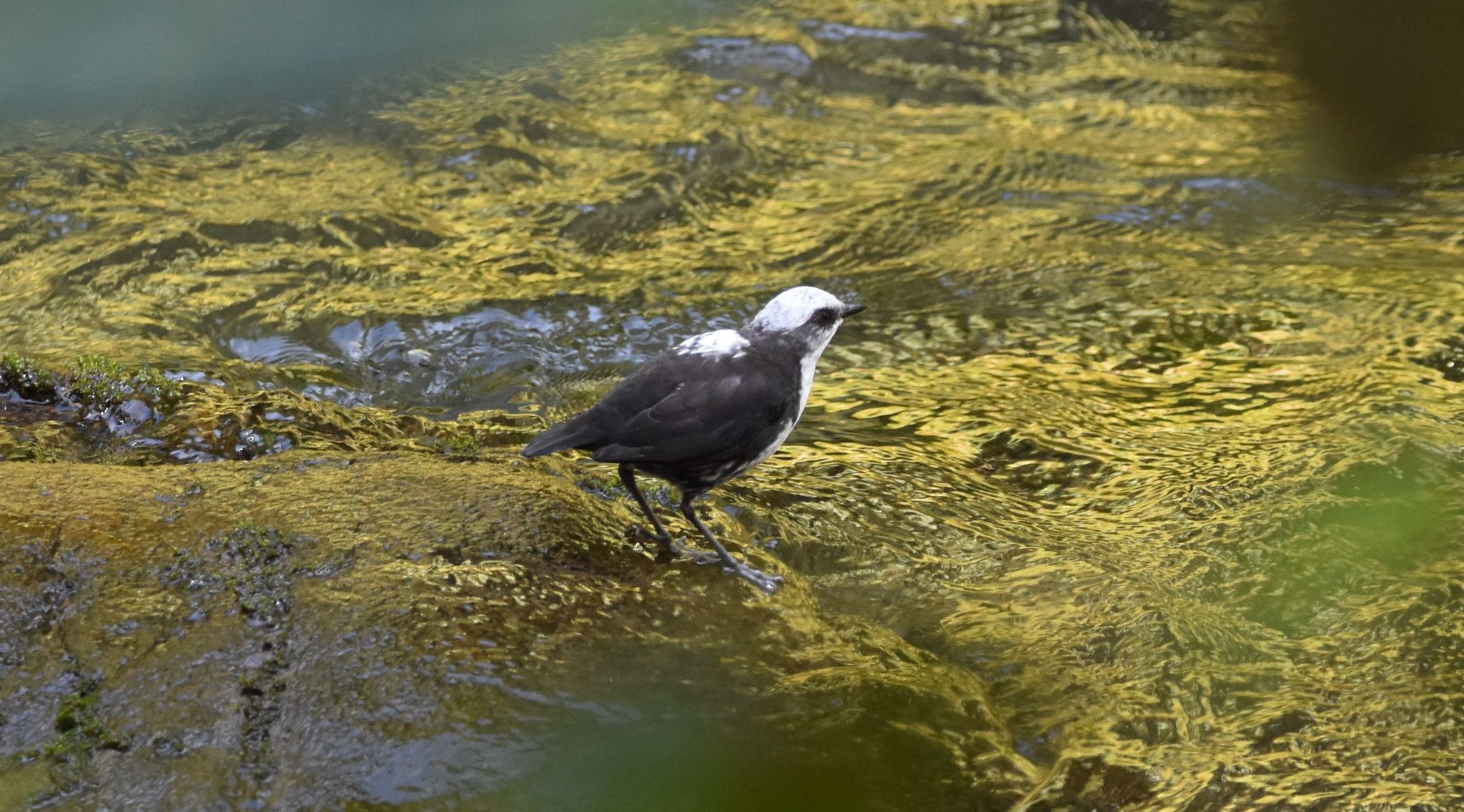
Como prometí, el blog de Octubre se trata de la migración. Específicamente, la migración de las aves. También se trata de la importancia de los lugares como Reserva Las Tangaras a este fenómeno tan impresionante, en lo que las aves vuelan hasta diez de miles de millas entre los lugares en los que reproducen y las zonas en las que la comida está más abundante. En nuestra primera mes en la reserva hemos visto aves increíbles: El colibrí estrellita gorjipúrpura diminutivo, cuyas alas, como las de una abeja, hacen un zumbido que se puede oír aun antes de que llega a los bebederos, los gallos de la peña tan extraños, cuyo plumaje carmesí y danzas de apareamiento entusiasticas los han hecho un favorito de tanto los locales como los viajeros internacionales, el Tucán del Chocó elegante, con un canto que resuena por todo el valle, y el mirlo acuático coroniblanco redondo, cuyos movimientos al lado del río son tan animados que las mismas rápidas burbujeantes. Ver todas estas aves, tan brillantes, tan exóticas, tan diferente de las a que estamos acostumbrados, ha sido muy emocionante. Sin embargo, no todas las especies que hemos visto son nuevas para nosotros. Hemos visto algunas especies de aves que también viven en Montana y California: los buitres americanos cabecirrojos, mosqueros negros, garcetas níveas y pibís boreales, para nombrar algunos. Aunque algunas de estas aves simplemente son individuos de las mismas especies que viven en un parte diferente del mundo, otras son las mismos individuos que tenemos en los Estados Unidos. Aves como el pibí boreal, zorzalito de Swainson, y reinita gorjinaranja, todas estas son migrantes neotropicales. Cada primavera, individuos de estas especies migran a América del Norte donde reproducen. Al fin del verano, los mismos individuos, junto con muchos juveniles que salieron del cascarón esta misma primavera, vuelan al sur a la zona neotropical. (Nota: la zona neotropical se refiere a una región que incluye el parte tropical del sur de México, junto con Centroamérica y Sudamérica. Así que un migrante neotropical es una especie que viaja entre la zona donde reproduce en Norteamérica hasta su hábitat de invierno al sur).

Para Aidan y yo, nuestro viaje fue alimentado por el combustible de avión y galletas: combustible para los aviones y galletas para nosotros mientras relajábamos cómodamente en nuestros asientos mirando más películas sucesivas que nos gustaría admitir. Al mismo tiempo, billones de aves hacían el mismo viaje al sur. Sin embargo, sus viajes eran alimentados por acumulaciones de grasa corporal adquirido en las áreas de reproducción y sitios de descanso: insectos, moras, y crustáceos convertidos en energía preciosa para la migración otoñal. Es difícil comprender cuán pequeñas son estas estas aves en comparación con los 400,000-500,000 libras de un Boeing promedio. La más pequeña, el colibrí gorjirrubí, es tan ligera como un centavo, con un peso de un poco más que tres gramos. Las aves migratorias no tienen el lujo de cerrar la contraventana para excluir un poco de mal tiempo. Durante su viaje increíble, las aves viajan cienes hasta miles de millas enfrentando tormentas, depredadores, y la extenuación hasta que, por fin, llegan al lugar donde pasan el invierno.
Esta es donde entran los lugares como Reserva Las Tangaras. Cada año en Norteamérica, se gastan grandes cantidades de dinero y muchísimas horas en el campo para investigar las aves en los áreas de reproducción. Los científicos hacen todo lo que pueden para cuantificar cada aspecto medible de la reproducción de las aves en un intento de entender la biología reproductiva de estos animalitos con plumas. A través sus esfuerzos, muchos biólogos esperan ganar información que les ayudara parar y reversar los descensos masivos que tantas especies de aves han experimentado en las últimas décadas. Aunque proteger las aves y su hábitat de reproducción es increíblemente importante, las especies también requieren rutas de migración y hábitat de invierno seguros. Reserva Las Tangaras provee exactamente esto. Desde 2002, las 51 hectáreas de Reserva Las Tangaras han existida protegida del desarrollo. En la reserva, con mucho hábitat, comida, y poco disturbios de actividades humanos, la vida silvestre puede prosperar. La diversidad de aves, insectos, mamíferos, y herpetofauna se debe en gran parte al hábitat saludable que ofrece la reserva. Muchas aves llegan al sur para encontrar que una sección del bosque que una vez servía como un lugar seguro para pasar el invierno ha sido demolido y se ha convertido en un parqueadero para un nuevo edificio de apartamentos. Tal vez estas aves gastan energía valiosa buscando un nuevo lugar para pasar el invierno. Tal vez no sobreviven.

Lugares como Reserva Las Tangaras aseguran que los migrantes neotropicales tienen un lugar seguro para vivir durante el invierno. Aunque las aves enfrentan muchos otros retos (algunos naturales, como los depredadores, otros, como el cambio climático, causado por los humanos) tener hábitat intacto para pasar el invierno es crucial para la persistencia de las aves migratorias. Por eso estamos tan emocionados cuando vemos la cara dorado de una reinita gorjinaranja bailando entre las hojas y cuando oímos el bip agudo de un pibí boreal desde el dosel. Estas aves han hecho un viaje increíble para llegar aquí. Nosotros estamos felices de que tienen un lugar como Reserva Las Tangaras para pasar el invierno.
Neotropical migrants of the human and bird varieties
Greetings from Reserva Las Tangaras! And more specifically, greetings from us, the new managers: Aidan and Mary. This month we’ve had a wonderful time exploring the reserve and becoming familiar with the work required to keep this place running. We started with a few days of training from Jack and Meg, the wonderful previous managers. Now we’ve jumped right into the trail clearing, hummingbird counting, wood varnishing, etc. that being a manager here entails. It’s lots of work, but has so many wonderful perks: refreshing dips in the swimming holes, being lulled to sleep by a chorus of frogs, and becoming wonderfully distracted every time we hear a mixed flock start to move through the canopy above our heads.

This month we’re taking our blog post as an opportunity to introduce ourselves and, in honor of the spectacular birdlife at the reserve, to cover one of our favorite bird-related topics: migration. (Mary here with a quick aside: we’ve decided to alternate who writes a blog post each month. This month is my turn. Between Aidan and myself I am admittedly the more bird-obsessed of the two, and have taken the liberty of dedicating my first post to the incredible avifauna that makes Reserva Las Tangaras such a magical place. For now, a bit more about us, but don’t worry, we’ll get back to the birds soon!).
We come to Ecuador from the USA. We both have a passion for the natural world and are lucky to work in fields dedicated to its study and preservation. While we both grew up in Northern California, we’ve spent the past few years working various field jobs in the western United States. Most recently, Aidan worked as a biological science technician at a wildlife refuge in southwestern Montana setting up trail cameras, completing moose browse surveys, and running the refuge’s invasive species management plan, among other tasks. Mary’s most recent job was also in Montana, but she was stationed in the prairies of the state’s northeast where she spent her days nestsearching for birds and fitting some of them with trackers. It was doing just that, putting tiny tags on birds that would allow researchers to know where the birds went throughout the year, that her interest in bird migration was sparked. (Again, I promise we’ll get back to that soon). As one would expect, moving to Ecuador’s cloud forest was a big adjustment from the Big Sky State. Elk and Bald Eagles have been replaced by red brocket deer and Choco Toucans, and instead of bison out our back window we have an agouti who, although shy, seems to have become a reliable backyard visitor. True to its reputation as a biodiversity hotspot, the wildlife in Ecuador’s cloud forest is incredible. And of that fauna, one group has been especially exciting. That’s right, BIRDS!
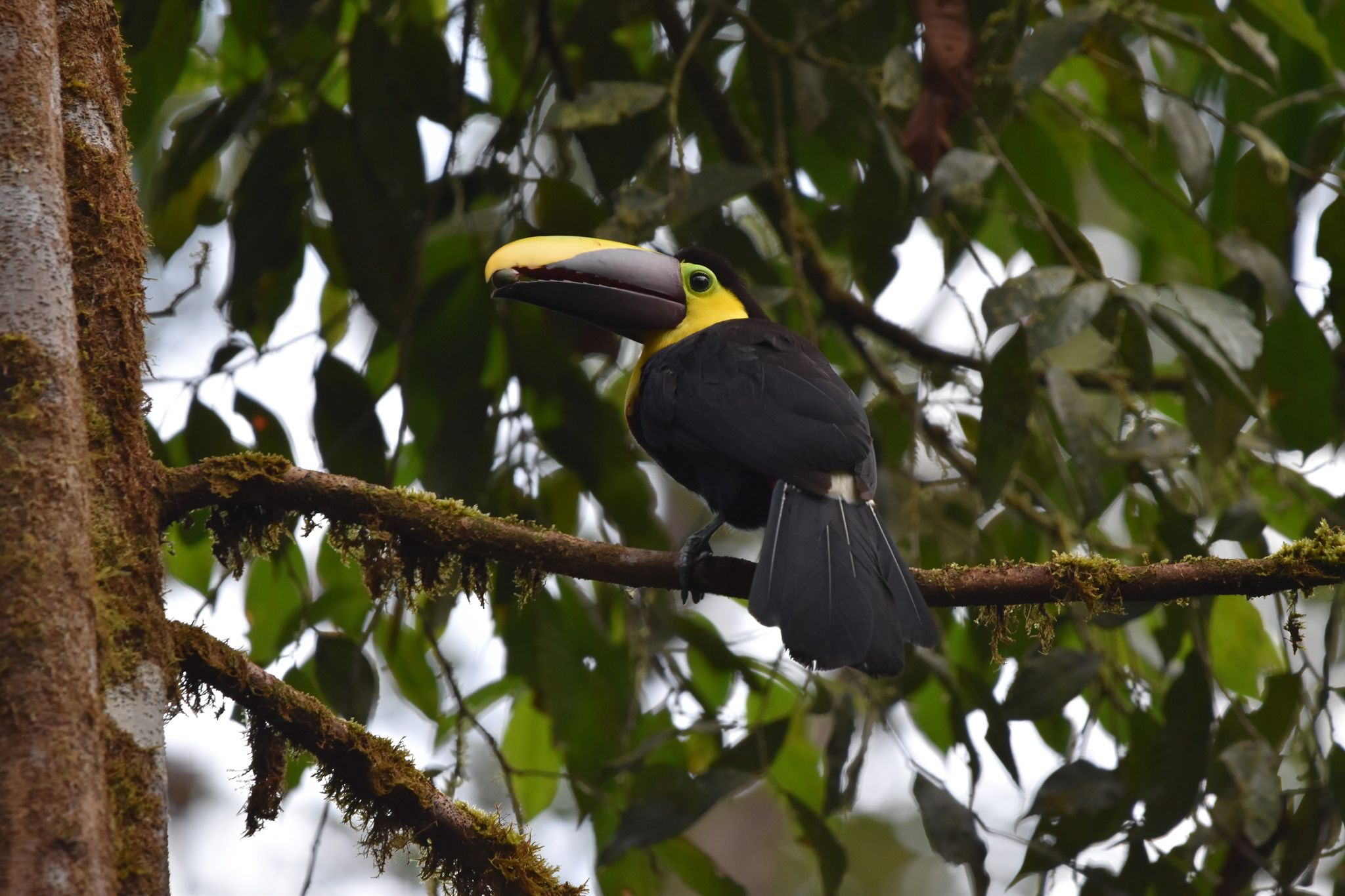
As promised, this week’s blog is about migration. Specifically, bird migration. It is also about the importance of places like Reserva Las Tangaras to this incredible phenomenon, in which birds fly up to tens of thousands of miles in a year to travel between breeding grounds and areas where food is most plentiful. In our first month at the reserve we have seen incredible birds: the tiny Purple-throated Woodstar hummingbird, whose buzzing bee-like wingbeats alert you to their presence before they arrive to the feeders, zany Andean Cocks-of-the-rock, whose striking crimson plumage and lively mating displays have made them a favorite bird of locals and international travelers alike, the stunning Yellow-throated Toucan, with an echoing song that resonates across the valley, and the rotund White-capped Dipper, whose playful movements along the water’s edge are as spirited as the bubbling rapids themselves. Seeing all these birds, so colorful, so exotic, so different from what we’re used to in the States, has been incredibly exciting. However, not all the species we’ve seen here are new to us. We’ve seen and heard a few species that live in Montana and California as well. Turkey Vultures, Black Phoebes, Snowy Egrets, Olive-sided Flycatchers, to name a few. While some of these birds are simply individuals of the same species that live in a different part of the world, others might be the exact same individuals that we see in the United States. Birds such as Olive-sided Flycatchers, Swainson’s Thrushes, Blackburnian Warblers, all these are neotropical migrants. Every spring, individuals of these species migrate to North America where they breed. At the end of the summer those same individuals, as well as many young birds that hatched that spring, fly south to the neotropics (Note: the neotropics is a region encompassing the tropical part of southern Mexico as well as Central and South America. Hence, a neotropical migrant species is a species that travels between its breeding grounds in North America and its wintering grounds to the south).


Aidan and my trip here was powered by jet fuel and pretzels: jet fuel for the airplanes and pretzels for us, as we sat comfortably in our seats watching more back-to-back movies than we’d care to admit. At the same time, billions of birds were making the same trip south. Their journeys, however, were powered by precious fat stores accrued on the breeding grounds and at stopover sites: insects, berries, and crustaceans turned into precious fuel for fall migration. These birds are unfathomably small compared to the approximately 400,000-500,000 pounds of an average Boeing. The smallest, the Ruby-throated Hummingbird, is as light as a penny, weighing just over three grams. Migrating birds don’t have the luxury of closing the airplane blind to shut out a bit of bad weather. During this incredible journey birds travel hundreds to thousands of miles pushing through bad weather, predators, and exhaustion until they finally reach their wintering grounds.
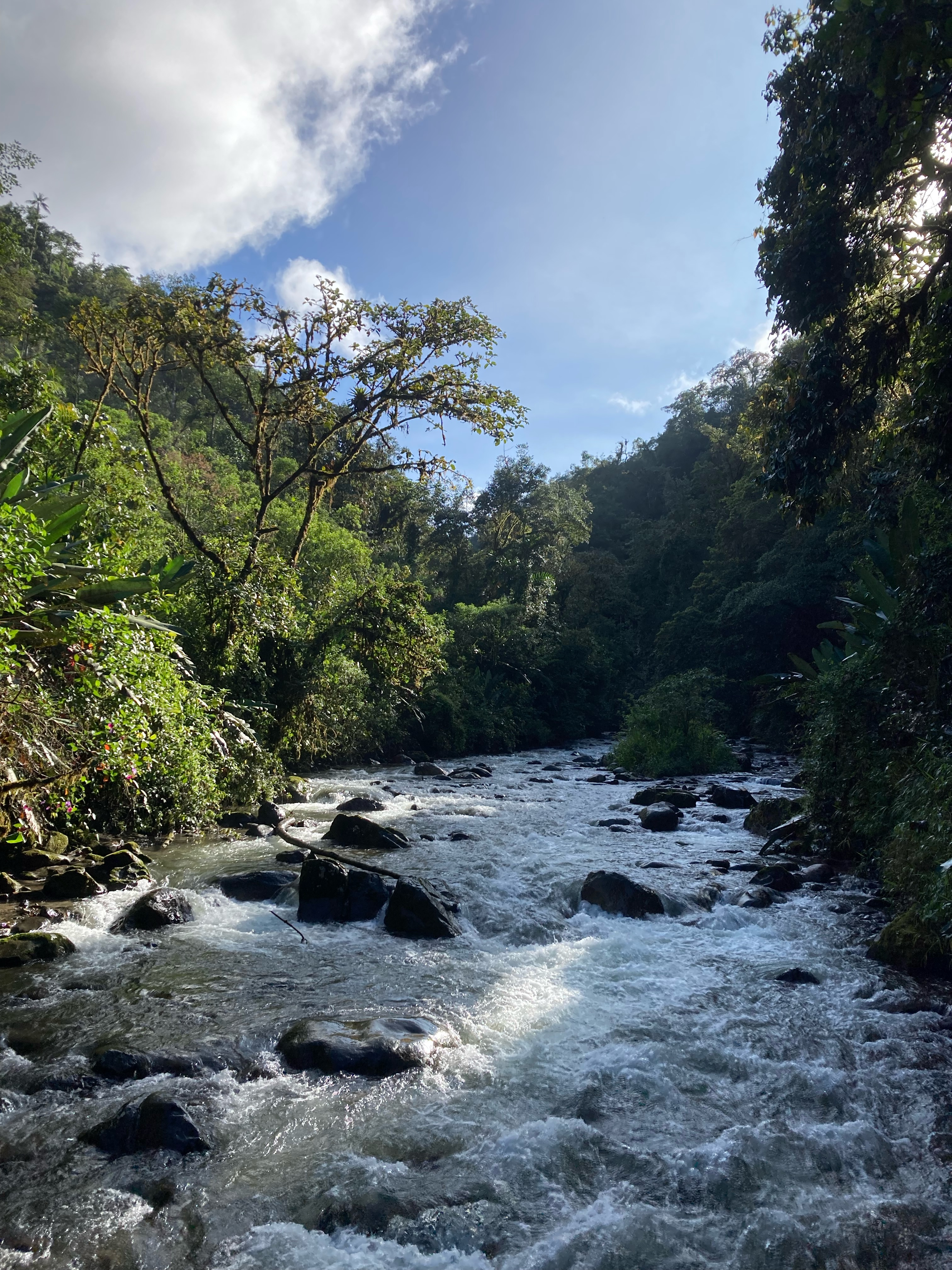
This is where places like Reserva Las Tangaras come in. Every year, large sums of money and many field hours are spent studying birds on the breeding grounds. Scientists do their best to quantify every measurable aspect of avian reproduction, striving to understand the breeding biology of these feathered critters. In doing so, many biologists hope to gain information that will help to stop and reverse the mass declines so many bird species have experienced in recent decades. While protecting birds and their habitat on the breeding grounds is incredibly important, species also require safe migratory corridors and reliable overwintering habitat. And Reserva Las Tangaras provides just that. Since 2002, Reserva Las Tangaras’ 51 hectares have been allowed to sit, virtually unaffected by development. While some of the reserve is primary forest, part of the reserve was used for agriculture in the past. To an untrained eye like mine, it’s difficult to believe this land has been anything other than rainforest. Now, the clean water of the Río Nambillo and its tributaries rushes through the bottom of lush valleys walled by towering trees and flowering understory plants of enough species to stump even expert botanists. The trees themselves are their own microecosystems, their trunks and branches laden with bromeliads, orchids, and countless other plant and fungus species. This wild state, this lush vegetation, clean water, and perhaps some other ingredients that our clumsy human senses can’t quite detect, provides invaluable habitat. While other parts of the cloud forest nearby may be developed for ecotourism, agriculture, or housing, the goal with Reserva Las Tangaras is to leave it in an undisturbed state. On the Reserve, with plenty of habitat, food, and little disturbance from human activity, wildlife can thrive. The incredible diversity of birds, insects, mammals, and herpetofauna on the reserve are in large part owed to the healthy habitat which the reserve boasts. Some birds may fly south only to find that a patch of forest that once served as a reliable wintering site has been bulldozed and is now a parking lot for an apartment building. Perhaps these birds waste valuable energy locating a new wintering site. Perhaps they don’t make it at all.
Places like Reserva Las Tangaras ensure that neotropical migrants have a safe place to live for the winter. While birds still face myriad other threats (some natural, like predation, others, like climate change, human-caused), having intact habitat to spend the winter is crucial for the persistence of migratory birds. For that reason we’re so excited to see the golden face of a Blackburnian Warbler dancing among the leaves and to hear the sharp pips of an Olive-sided Flycatcher from the treetops. These birds have made an incredible journey to arrive here. And we’re glad they have a place like Reserva Las Tangaras to spend the winter.
La Fuenta de Agua
“We forget that the water cycle and the life cycle are one.” — Jacques Yves Cousteau

The trials and tribulations of living off-grid are the challenges that make one appreciate many of the things that we take for granted in the modern world. With the average household in the West using 1000+ litres of water a day, such a vital resource can pass through our taps, toilets, showers, washing machines, dishwashers, and mouths, without a moments thought or contemplation. Transparent, tasteless, odourless, its no wonder its so easy to forget about. Yet we are surrounded by it. Made of it. Depend on it. No more so does this become apparent to those that become custodians of Reserva Las Tangaras. With a water system that is gravity fed from a local tributary, it is a “free” resource. That being said it does not come without its challenges and remains the bane of all managers lives here at RLT. A storm, a drought, a landslide can all decide whether or not that day the water will flow when you turn on the faucet. It is humbling to be at the mercy of the elements, but it can also be frustrating. As seems to be human nature, we have innovated and tried to adapt to these conditions (or fight them).
Our most recent, and arguably most triumphant addition to the Reserve has been installing a back-up water tank. A simple system utilising two tanks, one that acts as the “main” body of water which then feeds into a smaller reservoir (see diagram below). This provides us with a number of benefits. Firstly, sediment is collected in the first tank meaning that water heading to the cabin is cleaner and puts less strain on the filter. Secondly, it gives us an early warning when the source is disrupted. This is due to the fact that the smaller tank is fed from a higher level and will only fill if the water in the back-up reservoir is at a height equal to or greater than that of the other. Therefore if the water level drops in the first tank it will stop filling the second. Thirdly and most importantly, should something happen up stream that stops the flow of water, we simply turn the valve and our reserve chamber will see us good for 2-3 days of normal use, that means hot showers, clean dishes, and drinking water!
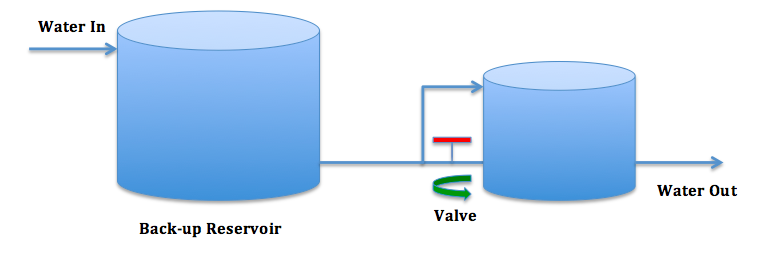
Whilst its nice to think we have an unlimited supply of (free) water its worth treading with an air of awareness when using it. There are a number of simple steps, which can have you saving water in no time, steps which we employ here at RLT and will transfer to our normal lives back in the UK.
In the bathroom:
- Half of all water usage takes place in the bathroom.
- Turn off the tap while shaving or brushing teeth.
- Showers use less water than baths. A hot shower is one of our greatest luxuries at RLT but it’s worth keeping an eye on how long you’re in it for.
In the kitchen:
- Plug up the sink or use a washbasin if washing dishes by hand.
- Use a dishwasher—and when you do, make sure it’s fully loaded!
- Scrape your plate instead of rinsing it before loading it into the dishwasher.
- Keep a pitcher of drinking water in the refrigerator instead of letting the faucet run until the water is cool.
In the laundry room:
- If it’s not dirty don’t wash it! It can be customary to wear an item of clothing once and assume it needs washing – this is not true! Albeit we have been known to take this to extremes… a natural musk is nothing to be ashamed of!
- Wash only full loads of laundry
- Try use a biodegrable, planet friendly detergent if possible – the majority of our water at the reserve goes back into the local water cycle.
- A great natural alternative to commercial laundry detergents is soap nuts – these little guys contain a natural surfactant, saponin, which breaks the surface tension of water to penetrate the fibres in clothing to lift away dirt and stains. Soap nuts can be re-used multiple times, they are non-toxic and sensitive-skin friendly, and most importantly they don’t pollute the water cycle like chemical detergents!
It’s also important to stay on top of leaks; small household leaks can mount up to gallons of lost water every day!
When we take water from its source we invariably alter it in some respect. Phosphates from cleaning products, microplastics, and cooking oil all contribute to water contamination. Water used in agriculture can hold onto residues from fertilisers and pesticides even after being extensively cleaned and treated. Even air pollutants can make their way into rivers, lakes and seas. Why is this important? The Earth’s water system is constantly recycling itself. Whether it is evaporating from the ocean or sublimating from ice and snow into water vapour, water is being circulated around the atmosphere at all times. Chemicals and microplastics that make their way into the cycle negatively impact, not just human health, but also all organisms that live in or use Earths water. Human activity also impacts the distribution of it. Water taken from one body of water can sometimes find itself transported to the other side of the world. What begins as a local resource and thus presents local environmental issues should be seen as part of a bigger picture, a global body of water, that we all draw from and that we are all custodians of.
This is the final instalment from Jack and Meg as our tenure here draws to a rapid close. Living at Reserva Las Tangaras has been instrumental in more ways than one and an experience we would urge anyone to take. It has taught us humility and a greater appreciation of the natural world that surrounds us. We wish the next volunteers the best of luck and hope that they enjoy their time here as much as we have.
A Late Introduction..
We have been here living la vida loca since the start of May. It feels like no time at all, but soon we’ll be leaving this magical place and passing the baton to the next stewards. It’s only now that we’ve realised we neglected to fully introduce ourselves!
So! We are Jack & Meg, a couple from the UK. Meg is a Wildlife Researcher, showing itself in her day-to-day life, practically all of her hobbies and her kindle. Show me an animal that she hasn’t attempted to watercolour. She recently returned from India where she was studying bat bioacoustics and otter behaviour. Jack jestingly describes himself as ‘a man of the world’ but Meg would agree. He’s a dab hand at knocking up a water system and a dinner to rival the very best. He spends his spare time here playing guitar and fixing things.

We thought we’d use the next two blogs to blather on about things that are close to our heart. I’ll begin today, and next time Jack will be writing of one of his passions… compost toilets (actually building them, but you get the idea).
With the IPCC 2021 Climate report coming out last month and various ‘we’re doomed’ articles having been published worldwide, I’m sure that climate change and species loss are no stranger to any readers of this blog. BUT before you wearily sigh and scroll to exit the page, instead of discussing already vastly-addressed and miserable facts and figures, I’m here to present you with a positive and innovative solution, a technique that has recently been creating huge waves in the conservation world, and better yet – in most cases it takes minimal effort to achieve maximum results. Sounds too good to be true, right?
One of the reasons I was so eager to work here was that the reserve is such an example of this methodology. Rewilding. Letting nature do it’s own thing by relinquishing overbearing management. Reserva Las Tangaras was once livestock-heavy pasturage, used mainly to breed cows to sell for meat in Quito. The short-cut grazing of the cattle will have meant that minimal vegetation could subsist there, and the wildlife that did inhabit areas surrounding the pasture would have been restricted by fences, specifically designed to prevent creature entry or exit. LifeNetNature saw the rewilding potential for the 50-hectare farmland and sought to purchase it. Now after 20 years, this once-farmland is a bustling mix of primary & secondary forest, on one side neighboured by 20,000 hectares of the protected forest ‘Bosque Protector Mindo Nambillo’ and thus, teeming with life. Any boundaries were removed to let wildlife move freely through the surrounding landscape. For years now, steward’s (such as ourselves) jobs have been to protect the space and the abundance of species therein, from harm or extraction. This removal of control has allowed natural processes to take over throughout the reserve and thus restored food webs, natural dispersal and resilience to disturbances.
As a result of this thriving Wildlife Sanctuary, LifeNetNature and teams of volunteers are able to utilise the Reserve twice a year to study the abundant and diverse birdlife and the impacts that different environments have on their diversity. Sharing this space with likeminded visitors, and the sheer authentic wilderness it provides them, gives proof that if nature is given chance to heal, it can bounce back.
In evidence of the bounce-back here at the reserve, we recently found a ‘Blue-groin Rain Frog’ on one of our trails that explores secondary forest. Secondary Forest is a woodland area that has regrown after human disturbance, and is usually characterised by a minimal canopy structure, less diversity and smaller trees. It was particularly exciting as this specific rain frog has historically been closely tied to Primary Forest (pristine, untouched forest that still exists in its original condition) on account of that habitat’s complexity. Finding the Blue-groin Rain Frog in this new area is definitely something to celebrate as it shows the development of our Secondary Forest and it’s progression to more complex systems.
In the Reserve’s case, the rewilding has come without much effort. The Bosque Protector forest spread quickly onto this land once fields had ceased to be cleared for cattle, with its seeds dispersed by birds or the wind, from which followed small mammals like Neotropical Squirrels and Nine-banded Armadillos attracting the larger predators such as Pumas and Ocelots, whilst the freshly grown vegetation attracted the larger vegetarians like the Spectacled Bears and White-tailed Deers. Seemingly simple. However, the tools that are employed to rewild can range widely in scale and from place to place. They can be applied incrementally over years, or solely once but they are expressed differently everywhere as different countries have different ecological histories, cultural attitudes towards nature, conservation traditions and thus different approaches for achieving the best results.
Nevertheless in 2016, a general classification of the four main rewilding approaches was formed to give a synthesis of acquired information and a light framework from which to work upon 1, namely:
Trophic Rewilding
This is defined as ‘restoring big wilderness areas based on the regulatory role of large predators’. In a number of ecological cases it has been shown that if the carnivores at the ‘top of the food chain’ are reintroduced or preserved into degraded habitats, then their large impact will cause smaller positive impacts to trickle down the food chain (this is called a trophic cascade) and therefore benefit a broad assemblage of genera, producing a healthy and functioning ecosystem.
Yellowstone National Park is a key example of this rewilding initiative; in the mid-1990s Grey Wolves were reintroduced into YNP after many decades and showed startling effects on the area. Before this, the over-grazing of elk was causing the decline of upland woodland habitats and coyote populations were increasing exponentially which resulted in the decline of many smaller species, their prey. The beneficial impacts of the wolves were almost immediately evident – elk populations were controlled which allowed declining species of tree to recover such as cottonwood, aspen and willow. The recovery of willow lead to the recovery of the park’s dwindling aquatic ecosystems. This, in turn, supported the resurgence of beavers which had similarly become extinct in the region. The new wolf pack also displaced many coyotes, allowing red foxes who shared the same prey base to recover. Furthermore, the elk carcasses that the wolves discarded were found to benefit an extensive range of scavenger species such as cougar, wolverine, grizzly bear and raven. This shows the far-reaching impact that one species can have.
——
LifeNetNature are currently trying to protect the YNP wolves, by lobbying for a safety buffer area to prevent the trophy hunting and trapping that is occurring as the wolves occasionally leave the boundaries of the National Park. If you would like more information on this, don’t hesitate to contact https://lifenetnature.org/
Pleistocene Rewilding
This type of rewilding describes the efforts to restore the ecological potential of ecosystems that existed before the demise of megafauna (animals of more than 45kg that lived during the Pleistocene) 10,000-15,000 years ago (which suspiciously coincides with the expansion of Homo sapiens and our carnivorous diets…). This type of rewilding is typically carried out by introducing relatives or ‘equivalent’ species of the extinct megafauna species. You might have heard of the potential to recreate the Woolly Mammoth using unearthed DNA.. yeah, rewilding isn’t advocating those extremes just yet – this only means using large wild cattle species to replace the magnificent aurochs which used to roam the plains of the world. The large cows would have a similar ecological impact as the Aurochs on the environment (specifically in terms of variable grazing, earth compaction and disturbance) and thus allow the ecosystem which many other species are ultimately and historically evolved for, to flourish.
Translocation Rewilding
This is defined as ‘reintroducing extant (surviving) species to restore dysfunctional ecological processes’. This method is for locations that have lost species that still exist in other areas of the world. A good example of this is currently underway here in South America, where they are reintroducing species such as Giant Anteater, Tapir, Peccary and Jaguar, which have been wiped out from regions by hunting.
Passive Rewilding
This is defined as ‘the release of ecological processes through reducing human control of landscapes.’ This is what is occurring at the moment at Reserva Las Tangaras and spontaneously in many other regions of the world, through abandonment of cultivation land, small farming and traditional herding practices. This method inspires the inherent natural resilience that nature was so famed for.
To conclude, they are the four main schemes that are being explored right now, but not all of us have enough space to begin releasing wolves, beavers, lynx or woolly mammoths into our back gardens… the best part is that every little goes a long way.
Here are a few examples of rewilding that you can contribute, at home in your garden or in your daily life which make a difference:
- Only planting native flowers in your garden / sew a wildflower mix
- Let the weeds grow! (Who decided they were weeds in the first place?!)
- Ensure there are wildlife corridors in gardens, such as small hedgehog-sized holes underneath your fences to promote wildlife dispersal
- Create a log pile or an ‘insect hotel’ for bugs and spiders to enjoy
- Get educated! There are many wonderful books on the subject which I will include in the notes
I seriously had to cut this blog down, and I wish I could have rambled on forever. There is a booklist below if you wish to explore the topic further. I hope this blog has given you a small insight into this new and exciting prospect and inspired you to look into it yourself! Thank you and hasta la proxima,
Meg
“Rewilding is also about the way we think. It is about understanding that we are one species among many, bound together in an intricate web of life that ties us to the atmosphere, the weather, the tide, the soil, the fresh water, the oceans and all of the living creatures on this planet.”
Global charter for rewilding the earth
- Feral – George Monbiot
- Wilding: The Return of Nature to a British Farm – Isabella Tree
- Rewilding: The Radical New Science of Ecological Recovery – Paul Jepson & Cain Blythe
- Rebirding: Rewilding Britain and its Birds – Benedict Macdonald
- Grazing Ecology and Forest History – Frans Vera
- Rewild Yourself: 23 Spellbinding Ways to Make Nature More Visible – Simon Barnes
- 1 – Rewilding is the new Pandora’s box in conservation. D Nogués–Bravo, D Simberloff, C Rahbek, NJ Sanders. Current Biology 26 (3), R87-R91, 2016.

 Reserva Las Tangaras