Confessions of a Las Tangaras Camera Trap
As there is no electricity at Las Tangaras, the sun defines our days. The sun rises and wakes us, lights our journey through the day and then when the sun disappears, it lets us know that it’s time to relax and unwind. During the day, while we go about our daily chores, we a privy to a huge amount of avian, mammalian and herpetological species and we are constantly kept in a state of wonder with each new encounter. You would think this would be enough for us…. But you would be wrong. We needed to know what was prowling the darkness after the doors of the lodge were firmly closed. So, with the help of our trusty camera trap, we delved into the Las Tangaras nights. This is the result of our first 2 weeks camera trapping.
Central American Agouti (Dasyprocta punctata)
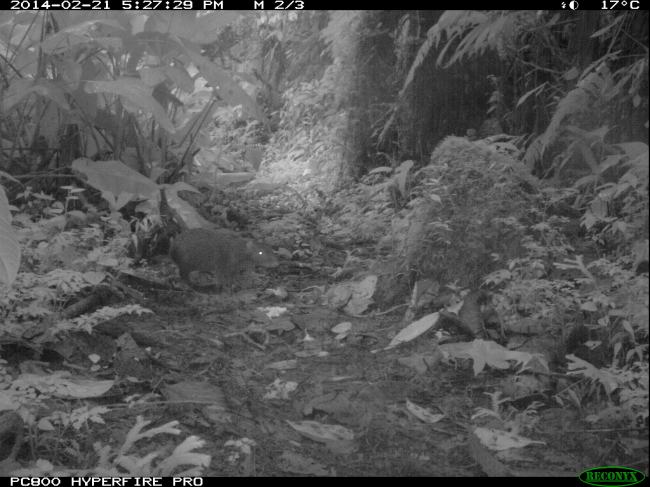
Although we have an Agouti that regularly visits our back yard, so regularly in fact that we have named him Frugal, we had no real idea of how many Agoutis were occupying Las Tangaras and in what habitats. Based on our preliminary photo trapping we have found Agoutis to be numerous and widespread throughout the Riparian and Secondary Forest habitats. Most of our camera trapping records are from between the hours of 4.30pm and 6pm with the addition of occasional daytime observation.
This species of Agouti is the most widespread in the Americas, distributed from Mexico down into northern South America.
Oncilla (Leopardus tigrinus Spp. pardinoides)
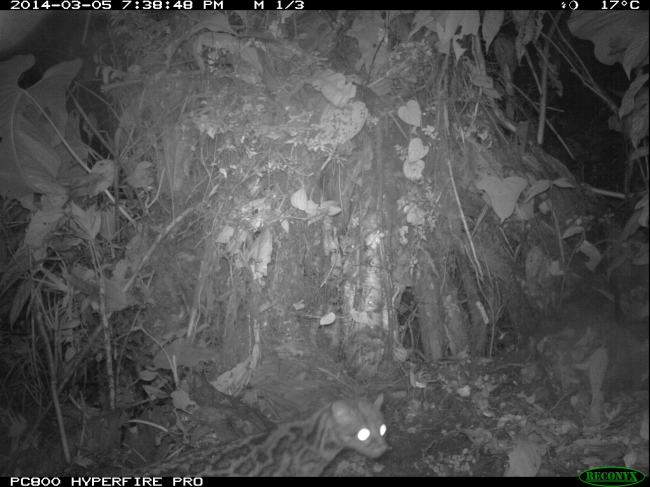
By far our favorite and most exciting camera trapping result is this one of a small Oncilla. This tiny jungle cat was photographed in Secondary Forest cautiously coming in to check out the cows digestive tract that we were using as bait. Given that this species is known to have a territory of only 2km squared it is safe to assume that the majority of this animal’s territory, if not the whole thing, is contained within Las Tangaras.
Footprints for this species were also found a day after this photograph was taken only 50m from the house. These tracks measured less than 5cm in length which gives you some idea of how small these cats actually are. This cat is know to eat small mammals, lizards, birds, eggs, invertebrates, and the occasional tree frog which is good… because there is an abundance of all of these within Las Tangaras. Oncillas are typically distributed from Costa Rica through to Northern Argentina, and show a strong preference for montane forest.
This species is listed as Vulnerable on the IUCN Red List.
Paca (Cuniculus paca)
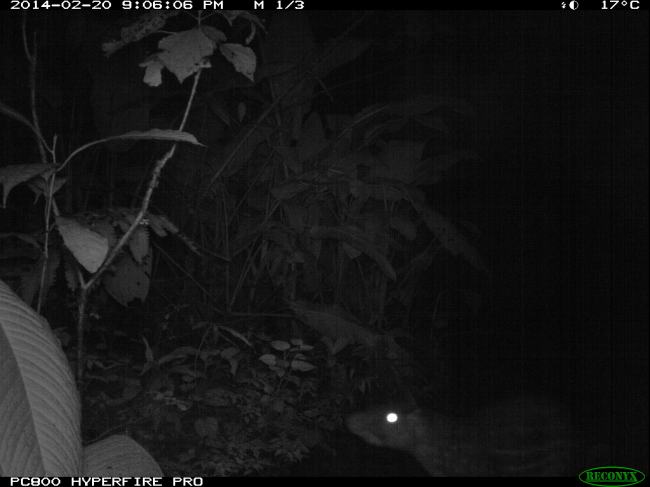
Although they look rather similar, with the obvious exception of the stripes, the Paca is not as common as the Aguti within Las Tangaras. In fact, this is the first of 2 we have observed here. This animal was photographed in Riparian habitat, attracted by the bait of egg and banana that we were using at the time.
Interestingly, Pacas originated in South America and are one of the few mammal species that successfully emigrated to North America after the Great American Interchange 3 million years ago. Their similarities with Agutis mean that they were formerly grouped with the agoutis in the family Dasyproctidae, subfamily Agoutinae, but were given full family status because they differ in the number of toes, the shape of the skull, and coat patterning.
Black Eared O’Possum (Didelphis marsupialis)

The scavenger of the forest, the O’Possum has appeared in every single trapping period in which we used meat in the Secondary Forest habitat. Wherever present, they increase the survey effort required by us because they come in and eat all of the bait in the first few hours, therefore removing the incentive for other species to come in to the camera trapping site. Although frustrating at times, this is still the first time we have seen a wild O’Possum on our Journey so it was still pretty exciting.
This opossum is found in tropical and subtropical forest, both primary and secondary, at altitudes up to 2200 m.
Stay tuned for more Confessions of a Las Tangaras Camera Trap.
A Wild Life at Las Tangaras
50 hectares isn’t considered very large by global conservation standards. To put it in relative terms, its only about 112 football fields (give or take) or 14.6% of the size of Central Park in New York. But it is important when it comes to conservation to not confuse quantity with quality. The biodiversity that we have observed on Las Tangaras in the 2 short weeks we have been here has been astounding, and proves that this area is an important piece of the Ecuadorian and, ultimately, global conservation effort. To date we have observed more than 35 species of bird, 7 species of mammal, 5 reptile and 6 amphibian… and they are just the ones we have been able to confidently identify (the number of amphibians will increase significantly one I retrieve a recording database of their calls from Quito next week).
Among these encounters there have been a number of particularly notable ones including potentially one Critically Endangered primate (The Ecuadorian White Fronted Capuchin – Cebus albifrons aequatorialis), one Endangered frog, a few vulnerable/near threatened frogs and reptiles and a number of regionally iconic species.
The reason I say “potentially” in reference to the Capuchin is the fact that Cebus albifrons aequatorialis is a sub-species of Cebus albifrons, a species that we are very familiar with and that is common throughout parts of South and Central America. The Capuchins that we observed moving through the property looked allot different from those that we have seen in the past and got us digging. Based on our online research into their appearance and distribution (limited to the west of the Andes mountain range) we are tentatively confident that these monkeys are in fact the Critically Endangered aequatorialis sub-species.
So after getting a little off track with my excitement about the Capuchin thing (a species we have not yet got photos of), let me now share a few of our favourite photos from those that we have taken of the wildlife of Las Tangaras to date:

Pinocchio Rain Frog (Pristimantis appendiculatus)
This juvenile was heard making a single call from his perch in a clump of moss about 1.3 metres above the ground. Although locally common, this species is relatively cryptic and was a good find. He is listed as Near Threatened due to his relatively small distribution.

Broad–billed Motmot (Electron platyrhynchum)
Although this guy was recently shared by the previous managers, we think he is a spectacular bird and couldn’t help showing him off again. This photo was once again taken from the front porch of the lodge.
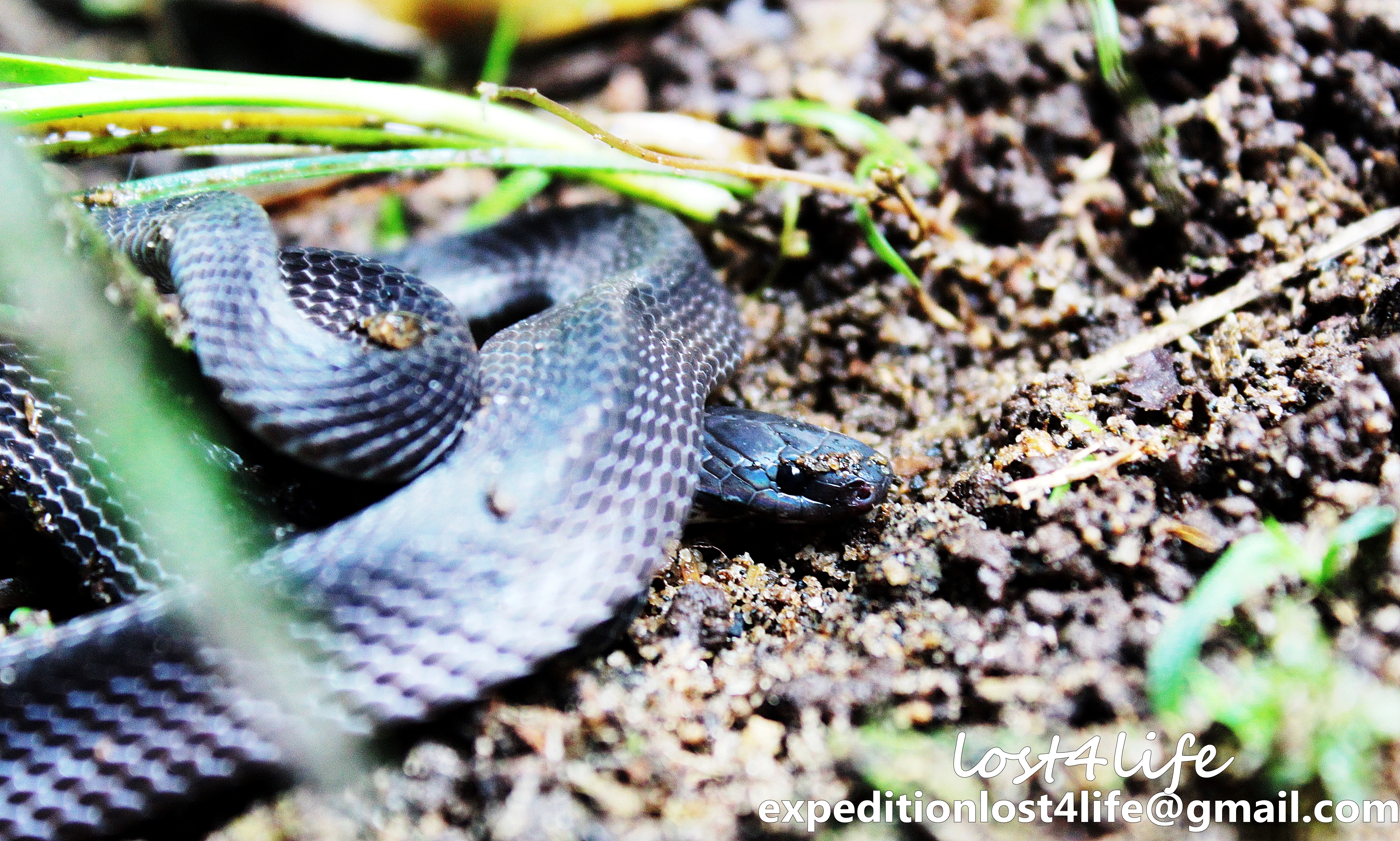
Variable Coffee Snake (Ninia atrata)
Sleeping beneath a tarp in the orchid was where I disturbed this small and somewhat docile snake. Although he lacked the full whitish nuchal collar, a feature that is a usual identifier but may be variably present, I was able to identify him via his keeled dorsal scales (19 at mid body) and split prefrontal scales. This snake is Near Threatened due to a limited distribution and the vast deforestation of available habitat within it.

Spring Rain Frog (Pristimantis crenunguis)
Firstly, let me apologise for the poor camera work here. The cloud forest is a hard place to operate when its overcast but due to the significance of this species we thought we would still like to share. I came across this juvenile while walking up to the Andean Cock of the Rock Lek. I was able to identify him (after a painstaking amount of assessment using a microscope) based on his heavily vermiculated iris and marbled underbelly. He is of significance due to his listing as Endangered. Listed as such due to the fact that he limited to an area of only 4,794 km2 across an elevation gradient of 366 m.
As you can see we are excitedly discovering all of the hidden wildlife wonders of Las Tangaras. This is just a small taste of what we have encountered to date but stay tuned for many more exciting discoveries including (we hope) some photos of the resident but rarely seen Capuchin monkeys.
Corey and Niki
Las Tangaras
Cambio de Las Personas
I know it’s a little stereotypical for a pair of gringos in a South American country to kick things off with a horribly strained and mispronounced “Hola”, but since we are gringos and are lucky enough to find ourselves in the beautiful Spanish speaking country of Ecuador….. what the hell? We will play our part. Hola.
First, let us begin by introducing our selves. Our names are Corey and Niki and we will hence forth be the captains of the good ship Las Tangaras. Well, for the next 4 months or so anyway. And let us follow this with a fond farewell to the previous managers Ryne, Jen and their jungle baby Cyprus. Now that the introductions are done, we are excited to be able to share with you our first thoughts about where we now find ourselves.
The beauty and tranquillity of Reserva Las Tangaras hit us immediately. We couldn’t put our finger on it initially. It wasn’t necessarily the sound of dozens of small waterfalls trickling or the mixed flocks of Tanagers foraging together in the canopy…. It wasn’t even the beautiful wooden lodge tucked away in the valley that we now call our home and its swarms of Humming Birds that greet us every morning. It was the Cloud Forest its self. It’s like the entire forest welcomes you all at once in a big, warm (and somewhat moist) Hug. It’s almost as if, both knee deep in mud and rain soaked, it was excited to meet us as we were to meet it. And since that initial moment, things for two budding naturalist adventurers have only got better.
As ecologists with particular interests in Mammals and Herps we will venture into semi-unknown territory in the Reserve by exploring the variety of species from these groups of animals that live here in Las Tangaras. Stay tuned for tales of our adventures and misadventures in this realm, as well as adventures and misadventures in regards to the Reserves ongoing Avian research and infrastructure maintenance. Our first week has been amazing with lots of Jobs to do, wildlife to encounter and a visit from a great couple of adventure minded individuals. We are really looking forward to what the future has in store.
Broad-billed Motmot
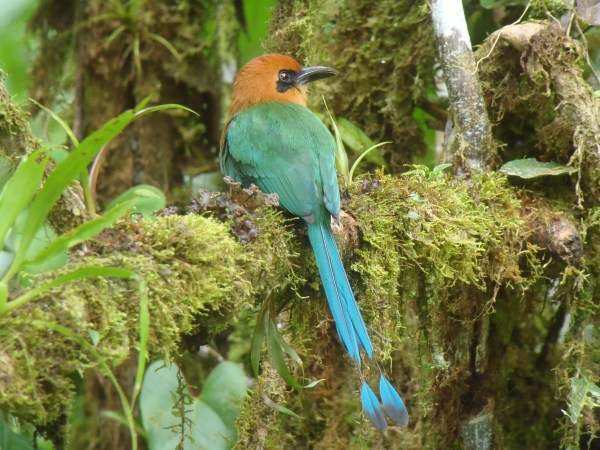
Seen right from the lodge porch!
Bustling with Bird Diversity
With already 3+ weeks gone on our stay here, it’s already going by way to fast! We had a strong push of visitors through the end of December, but perhaps the incessant rains are keeping them away now. Despite the lack of people here to enjoy the rainforest, this place has not stopped bustling with biodiversity. I’m still seeing different species of birds on nearly every walk I take out into the forest and I’ve already seen nearly 200 species since arriving on December 12th, all within walking distance of the reserve. Whenever I run into bird watchers I town, I tell them about this place and several of them have shown up later and been mightily impressed. I have been many places around Mindo and this is undoubtedly the best place I have birded. Not only do we have the best Andean Cock-of-the Rock lek around and 12-15 species of hummingbirds at the feeders everyday, but many uncommon and hard to find species also occur here. Here is a list of some of the unusual and hard to find birds I’ve seen at the reserve: torrent duck, fasciated tiger heron, bicolored hawk (seen on same perch daily), black and chestnut eagle (the locally famous guide Marcelo Arias told me he has seen this bird once in his life), white-throated quail dove, white-capped parrot, little cuckoo, green-fronted lancebill, wedge-billed hummingbird, velvet-purple coronet, barred puffbird, ringed kingfisher, crimson-bellied and powerful woodpeckers (both large and spectacular), streak-capped treerunner, uniform antshrike, rufous-rumped antwren, esmeraldas antbird, ochre-breasted antpitta (I got an incredible long long at this very shy species!), narino tapaculo, pacific and fulvous-breasted flatbills, caerulean and canada warblers, glistening-green, rufous-throated, beryl-spangled and white-shouldered tanagers, black-winged saltator, chestnut-capped brush-finch, olive finch, buff-rumpled warbler, white-throated spadebill and thrush-like schiffornis. Slaty-capped flycatcher is apparently a new species for the reserve. Other wonderful species that can be found here on a regular basis include: golden-headed quetzal, toucan barbet, strong-billed woodcreeper, white-capped dipper and yellow-collared chlorophonia. We also have a club-winged manikin lek and their bizarre display can be viewed every day!
New Managers
We are Ryne, Jenny and Cypress, the new managers of Reserva Las Tangaras. We are excited to spend the next 6 weeks taking care of the lodge and exploring the precious rainforest that surrounds it. We arrived here December 12 when Dusti and her crew of volunteers were here to participate in the Christmas bird count and also to band birds! We shocked everyone by arriving with a baby in the dark, but quickly meshed with this fun and conservation minded group. Well over 300 birds were banded during their stay here. Their research, which they graciously donated their time and money to make happen, will broaden our knowledge of many rare little known species. Many thanks to all!
On December 14th the biggest event of the year in Mindo occurred, the annual ChrIstmas bird count! Out of all the Christmas bird counts in the world, this one routinely has one of the highest counts. Our team (8 volunteers, Dusti and Ryne) alone had 139 species all within a short walking distance of the reserve! Although the numbers are not in yet this count can get around 500 species for one day all within 15 miles of Mindo!
Since their departure we have been graced with the company of several interesting guests which are keeping us busy!
A day in the life
Well our time here at Las Tangaras is sadly drawing to a close. We feel lucky to have been given the opportunity to manage this place and all the beauty it contains and will miss it very much. For our last blog post, we thought it might be nice to give a rough idea of what daily life is like out here.
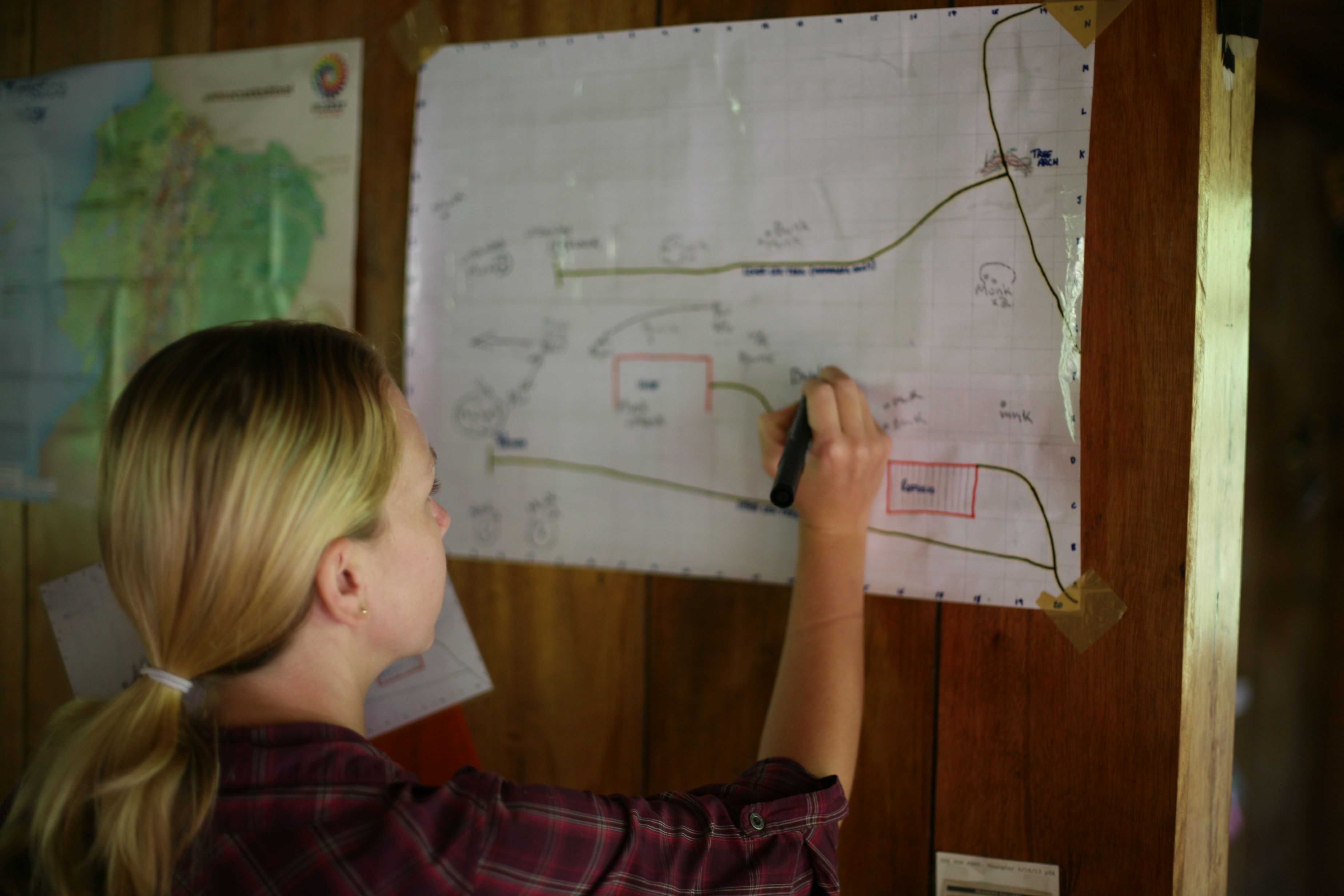
Most our days start at dawn when the birds start singing, but once a week (sometimes twice) we get up just before 5AM to get to the Lek for the Cock-of-the-Rock data collection. The mornings up there are really unique, beautiful, and peaceful. Previous manager Tom Lord created a new mapping system for monitoring the displaying males´ locations, which Emme is adding to below.
Recently we have had some help on our avian front! Las Tangaras has had a volunteer whose excitement and knowledge of birds combine to create a very motivated and valuable lady! Nikki spent a little over a week with us and we very much enjoyed having her help, excitement and expertice around. Thanks Nikki! Check out Nikki¨s blog http://onehealth47.blogspot.com/ to read more about her time at Las Tangaras, see pictures of the lodge, delicious food, birds, the property and lek as well as her work in Conservation Medicine.

After the lek has been visited it´s time to pay attention to our other, much bolder avian friends, and feed the hummingbirds. This gets combined with recording their numbers and eating breakfast which ends up equaling potentially the nicest and most relaxing “job requirement” either of us can really remember having, so on slow days we like to put in a moment of overtime on this one.
When breakfast and hummingbirds finish, we start the mornings work. Although we´ve been blessed with an unbelievable stretch of clear weather in November (over 15 days without a rainstorm!) we are still in the habit of expecting afternoon showers so try and get the work away from the cabin finished before that happens. Our mornings thus get filled with lots of work on the trails and property. This work doesn´t lend itself very easily to being photogenetic but here is a picture of Andrew clearing out the orchard (the care and preparation of which has been a fairly big priority for us during our time here)

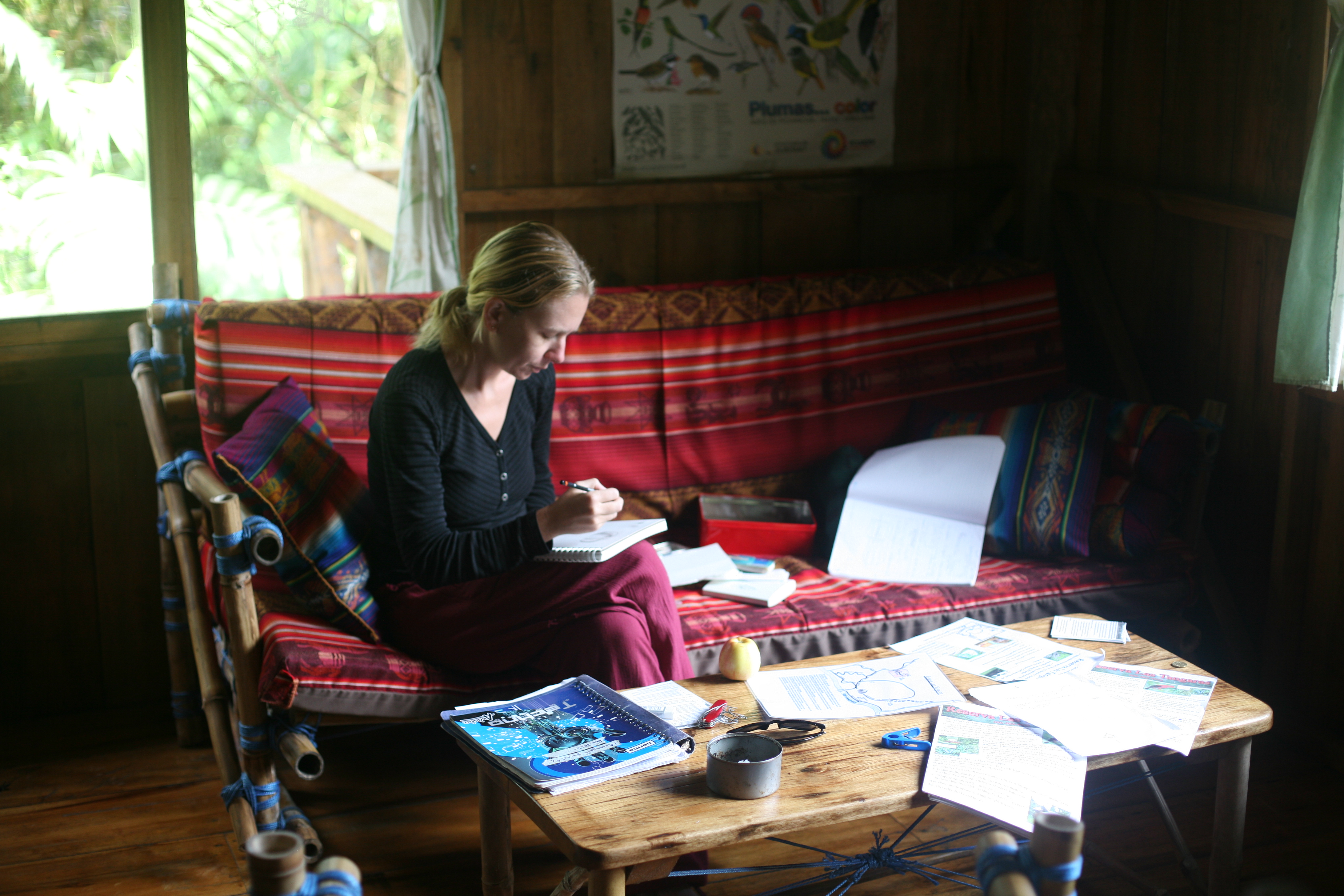
A huge part of living on the Reserve is finding personal hobbies that can keep your mind a bit challanged. We often take time for this during the afternoon rains. Andrew has been keeping up with his Spanish Studies, making his way through language textbooks as well as Ecuadorian Readers to get a better understanding of the country we are living in. Emme has been working hard on botanical illustration, practicing her watercoloring of various species and techniques as often as possible. We thank the pace of life at the Reserve to give us time to enhance our skills! Below Emme sketches an apple before painting.

A post lunch swimming break
It would not exactily be a full day without taking advantage of the abosolutely beautiful Rio Nambillo and its many swimming holes. We have explored up and down this river, but often find it helpful to take a post lunch dip to get the blood flowing again. And by this we mean, Andrew likes to take a dip… a little too cold for Emme.
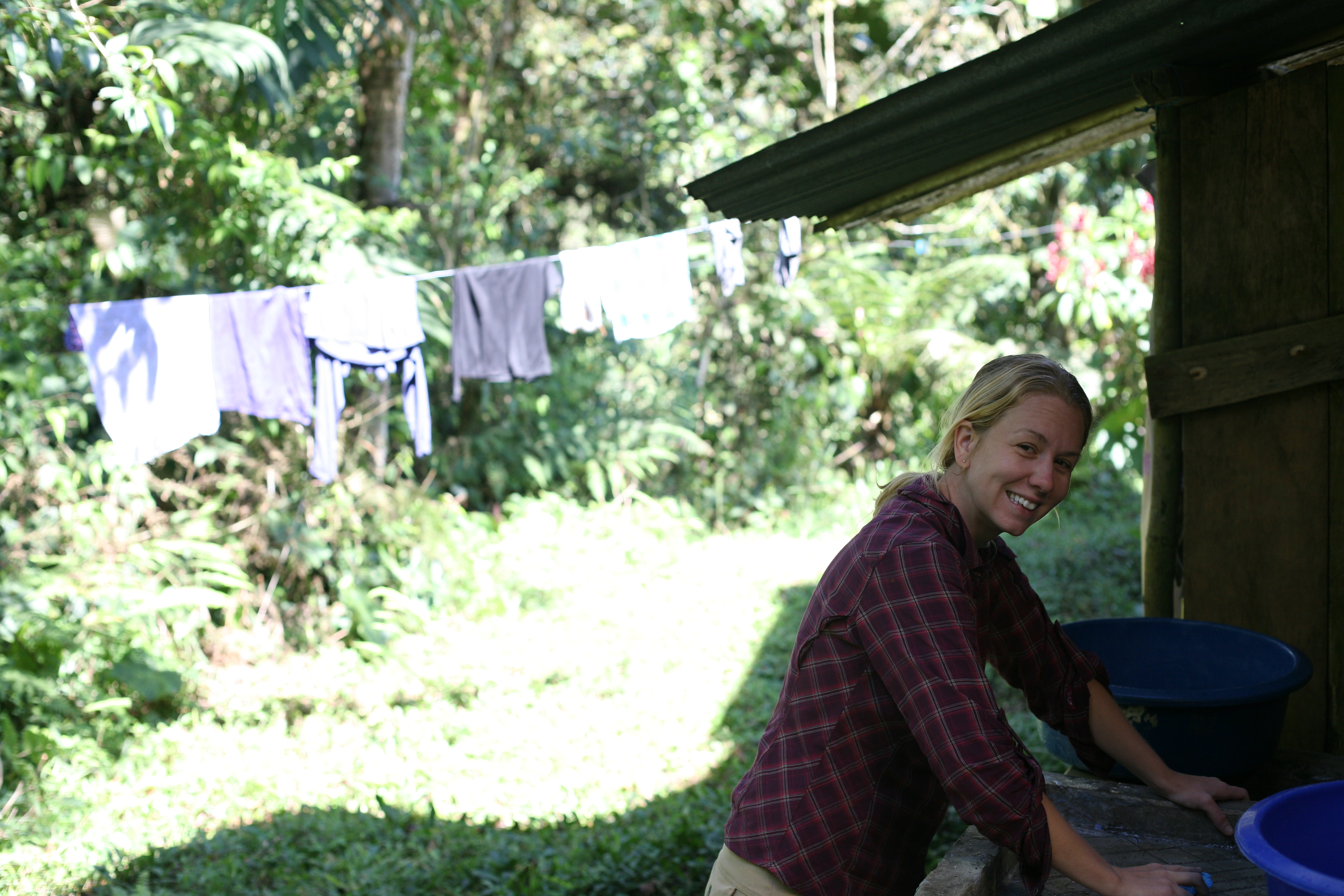
We feel it would not be right to skip a mention about a task we dedicate many hours to… washing laundry. We have both lived in quite a few places that require handwashing laundry, but this place is by far the most luxurios. Fresh, extremly clean water right at our finger tips from a stream far up hill on the property helps to get our laundry sparkling clean. A woman in India once told us that she believed she could get laundry cleaner than a washing machine, and this was using water from a muddy creek… with our water here at Las Tangaras, this statement just might be true!
After the afternoon comes to a close, we enjoy the resurgence of all the hummingbirds feeding on the porch, while listening to the evening sounds of the cloud forest. Life out here does not sound half bad does it? And for this reason, we are sad to leave, but thankful for our time here. Thank you Las Tangaras! We hope you find the time to come visit this very special place.
Until next time,
Andrew and Emme
If a tree falls on our bridge, and no one is around to hear it…..
 Well… it definitely makes our job here a bit tougher when a tree falls on the bridge. In reality, not as bad as it sounds or might look, but it’s definitely a reminder of humility out here. Fortunately, with the help of the reserve’s friend Artemio, the bridge is already back online and will be back to 100% normal very soon.
And besides slight surprises like that, life and work here on the reserve are going along very well and without problems. We’ve been blessed with a few more overnight guests which have been very welcome and some really enthusiastic day visitors as well. The rains are picking up and we are seeing different bird species more regularly.
Also, because the rains have been picking up (and it’s only the start of the rainy season) we have decided to focus on tasks which should be finished before the full wet season arrives. Specifically that means getting more native plants into the garden area and focusing on trail maintenance.
Regarding the native plant garden area we have planted, here are a few of what we have so far:
 “totora” Cyclanthaceae Aslundia
Young leaves edible, taste similar to asparagus.

Gesneriaceae Gasteranthus
Gaster-anthus literally means “stomach flower”; used as astringent.

Very young “Naranjilla, Lulo” Solanaceae Solanum Quitoensis
Native and cultivated for edible fruit. Used to make jams, jellies, juice, etc.
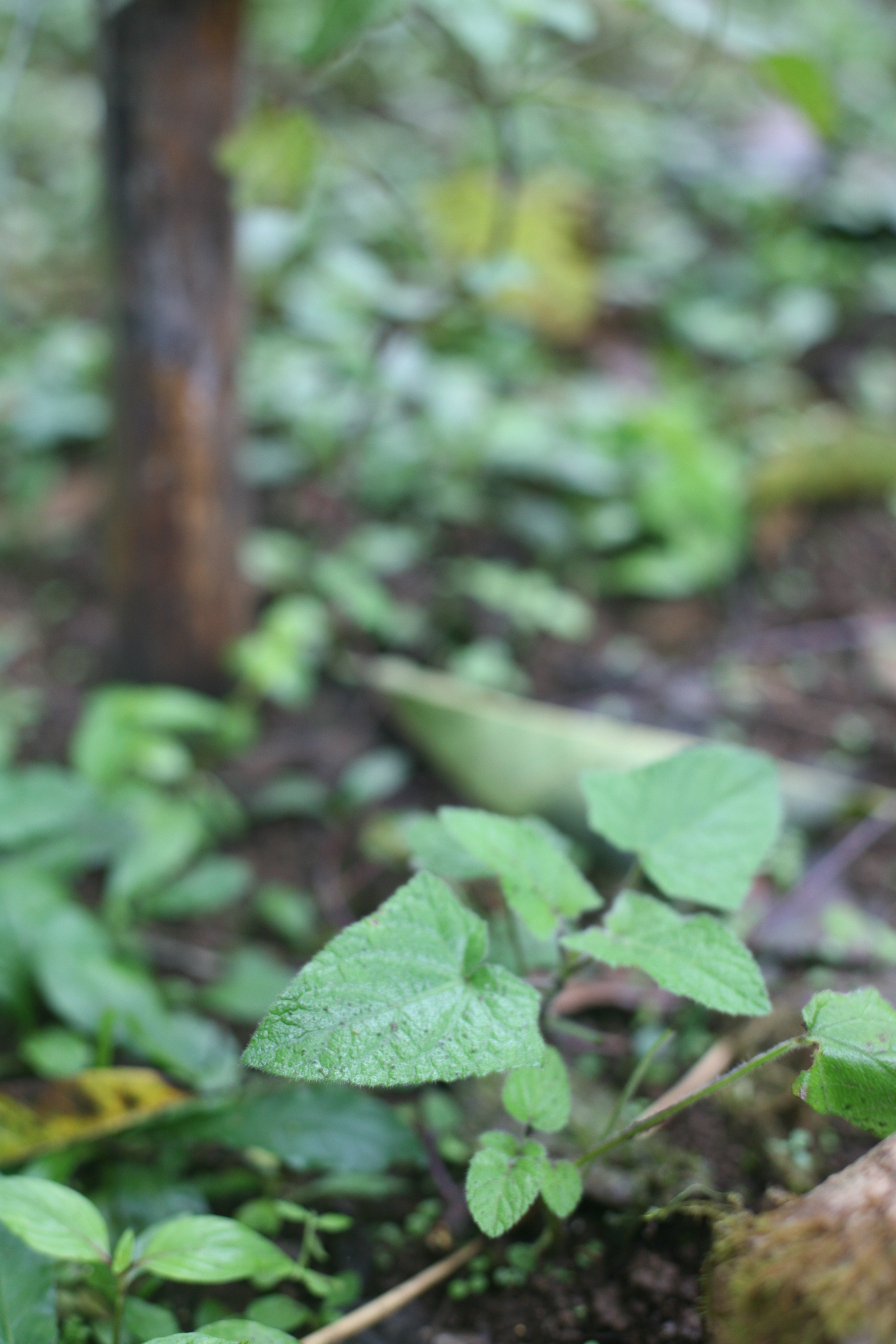
“Salvias, Sage” Lamiaceae Salvia Scutellarioides
Stimulant, tonic, and an anti-spasmodic
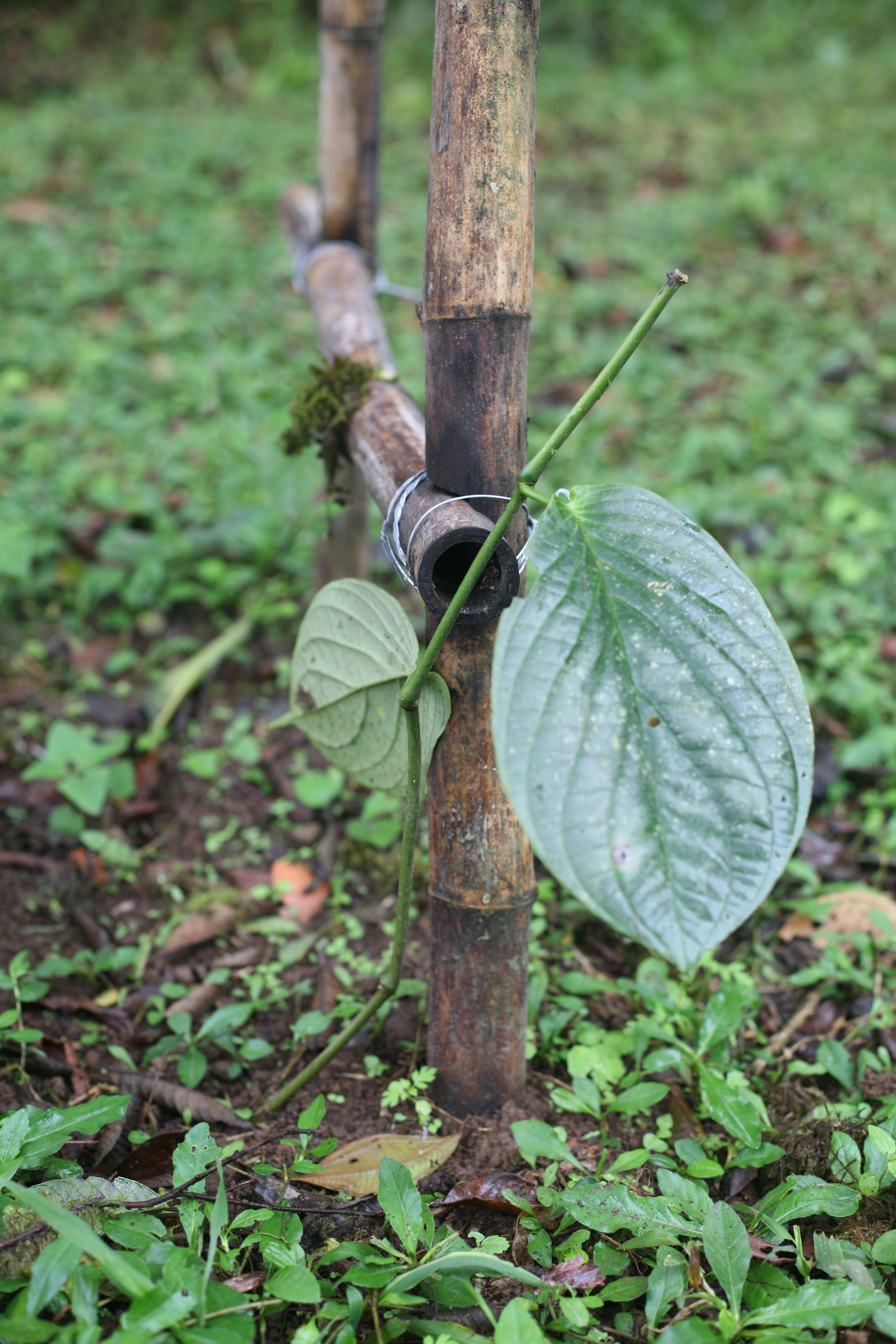
“Guaduca” Piperaceae Sarcorhachis Sydowii
Used to make tea for upset stomach and/or for flavor. Smells and tastes similar to black pepper.
So we’re very excited about the progress with the native plants!
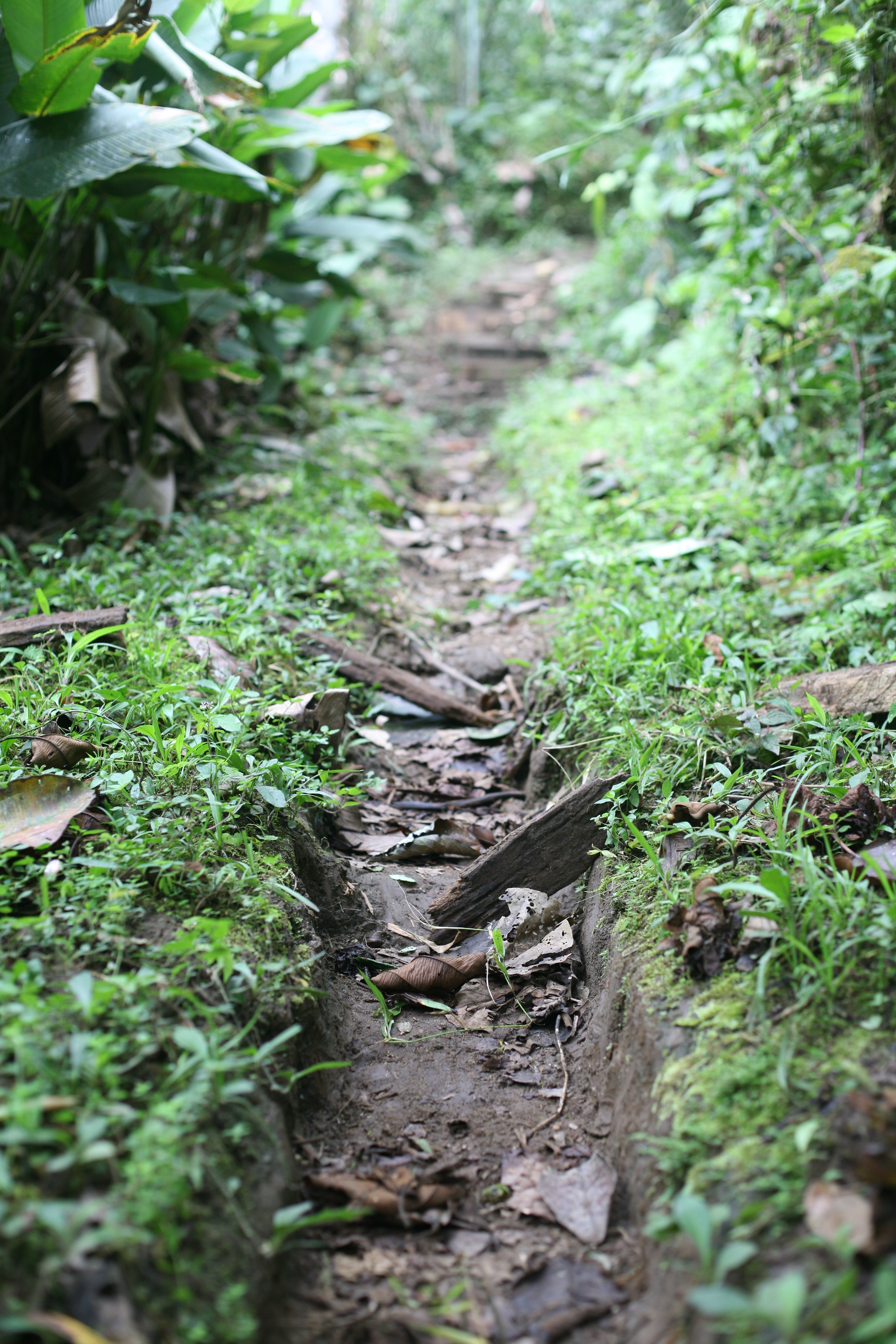
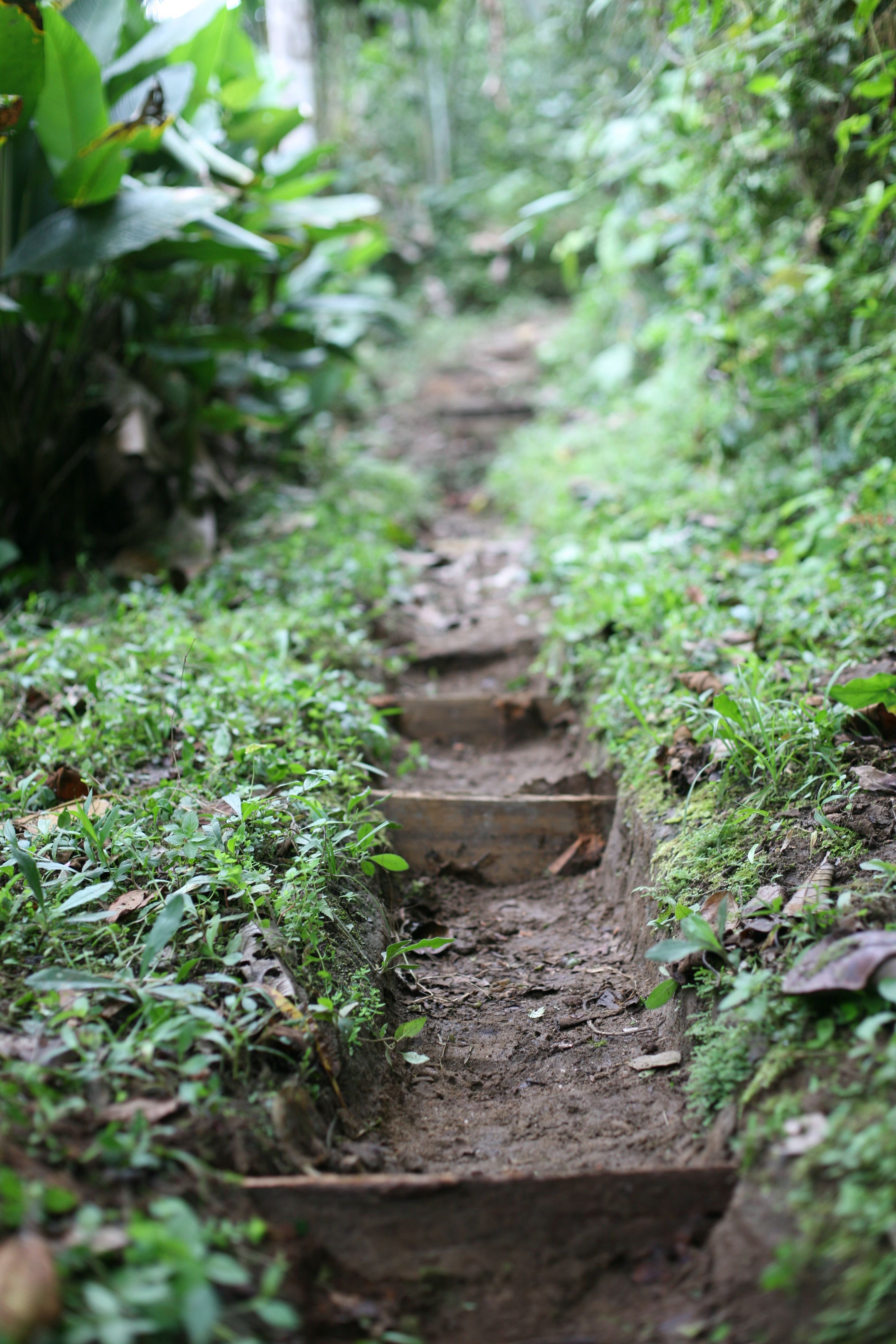
Trail maintenance has also been a focus recently, and we’re proud to report that not only are the trails under regular upkeep but we’ve also begun improvements including stairs, drains, erosion control, and path widenings. To date we’ve managed to add or repair 31 different steps (small example below), add 5 drains to prevent pooling, and dig back the backslope in 2 main areas to widen the trail. We’re really hoping it will help to reduce the overall work load for future managers regarding the trail system.
And finally, we’re very happy to report our most recent addition to the reserve: a separate information/welcome kiosk. The information is rotational and can be changed, but currently it focuses on the reserve itself, Life Net Nature as an organization, our trail system, and a separate section for the Gallos de la Peña. We thought it would be a good idea to have information more accessible to visitors, especially when we’re away from the cabin working.

Beautiful Places Pt. 1
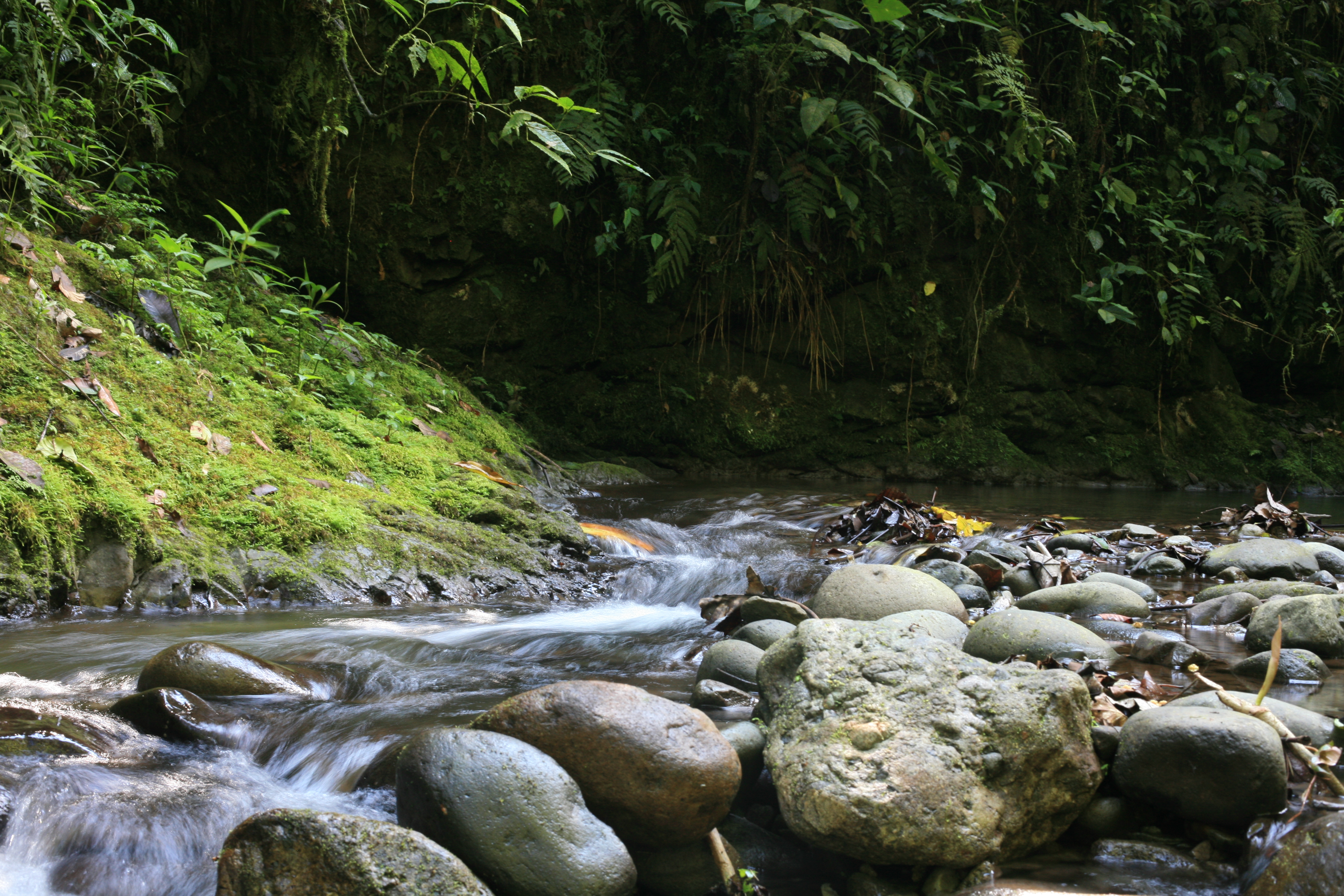
Buenos dias todo. Well it is a bit hard to believe, but it is already nearing our 1 month anniversary here at the reserve! We´re still working away on our projects and have been fortunate to have a few guests stop in. For this blog entry however, instead of giving a work update, we thought it´d be nice to share some places on the property in pictures. Obviously there are tons of beautiful places, but here are a few of our favorites…..

_


And just for suspense, here is a little sneak peak at our next update…..


New Manager Introduction
Hello everyone! We are the new managers here at the beautiful Reserva Las Tangaras. After a really helpful orientation from outgoing extraodorinaires Tom and Freya we´ve spent our first week brainstorming, planning, and getting started on the projects we´d like to create and contribute to during our time here. We just wanted to post a quick introduction to both ourselves and our projects. Updates will be following!
Our first task was putting up the lovely new sign for the reserve that Tom and Freya created. Here´s a look at the new sign and us (the sign is better looking)
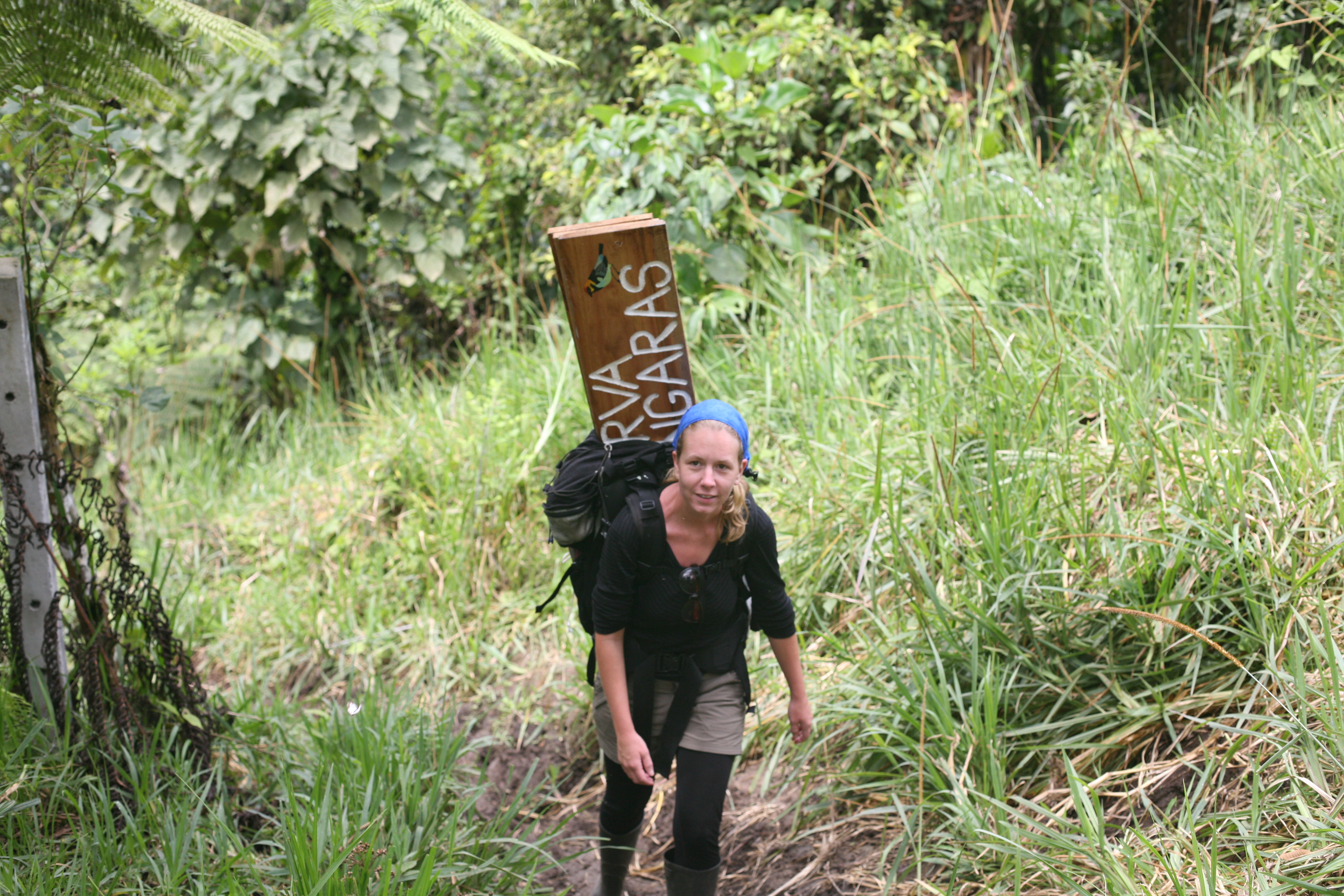
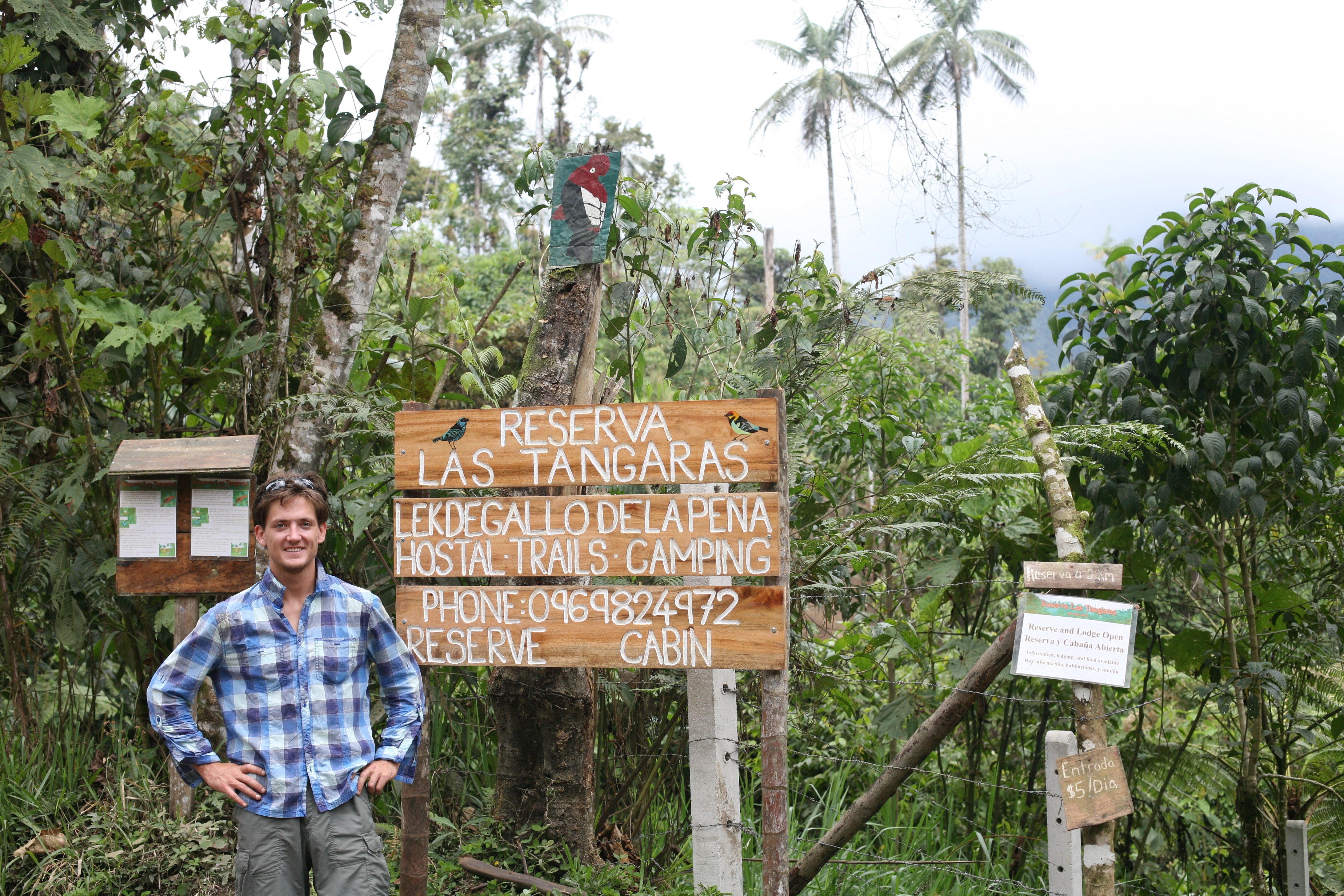
We also spent a fair bit of time creating and distributing new flyers (not featured) for the reserve around town focusing on our accomodations. Andrew and I have both worked in international eco-friendly and conservation minded tourism in the past and are hoping to increase awareness of the efforts and research of the reserve.
Our first personal undertaking, and one that we´re most excited about, has been to identify some of the native plants in the reserve. With her experience and interest in native plant conservation and education, Emme, with Andrew´s help, will be trying to accomlish three goals:
– First, add drawings and information of more plants to the existing reserve manual.
– Second, create signage and identifiers for various species along the reserve´s trails so that guests can view them as they walk.
– Third, create a native plant garden focusing on useful, edible, and flowering plants.
Here she is identifying:
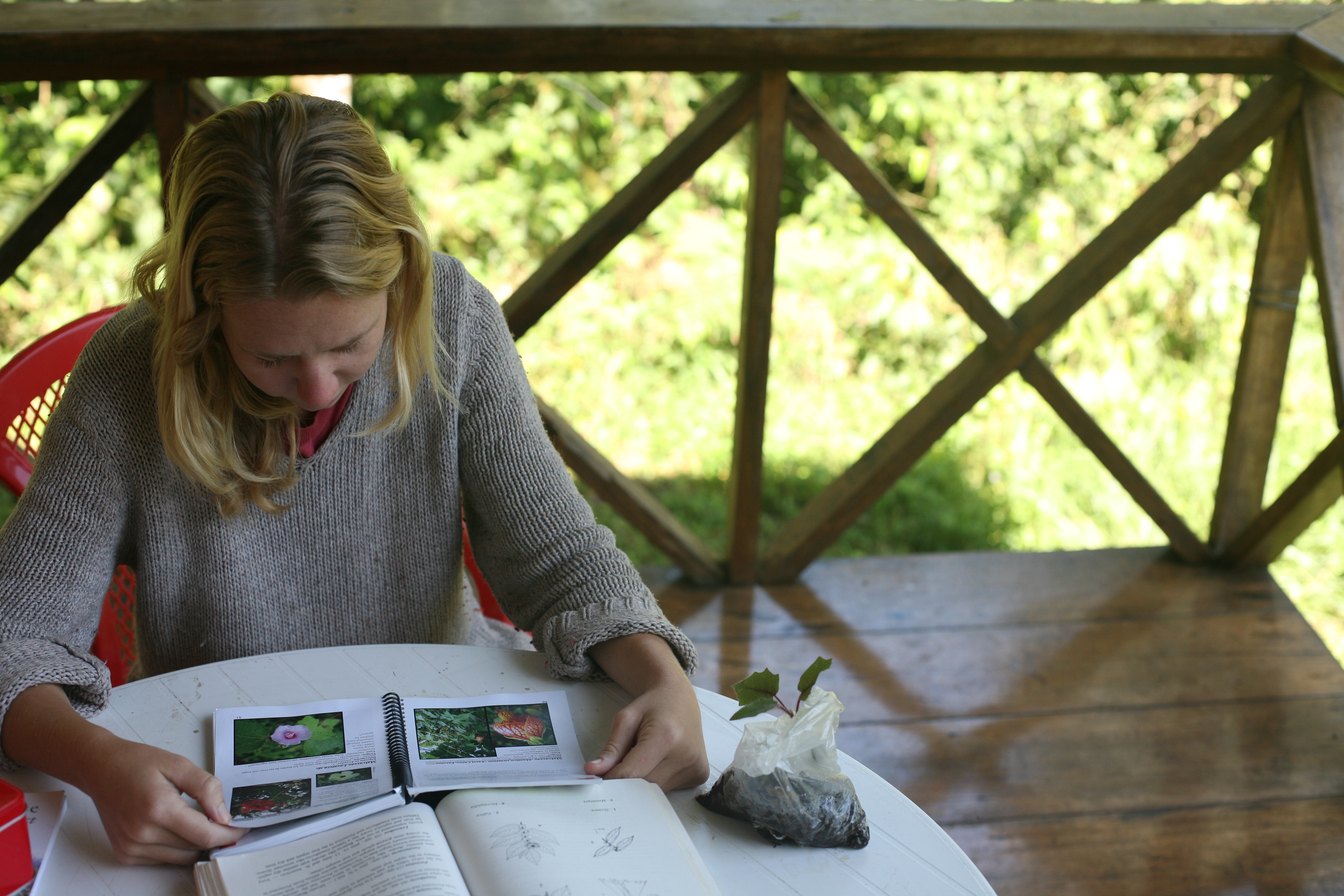
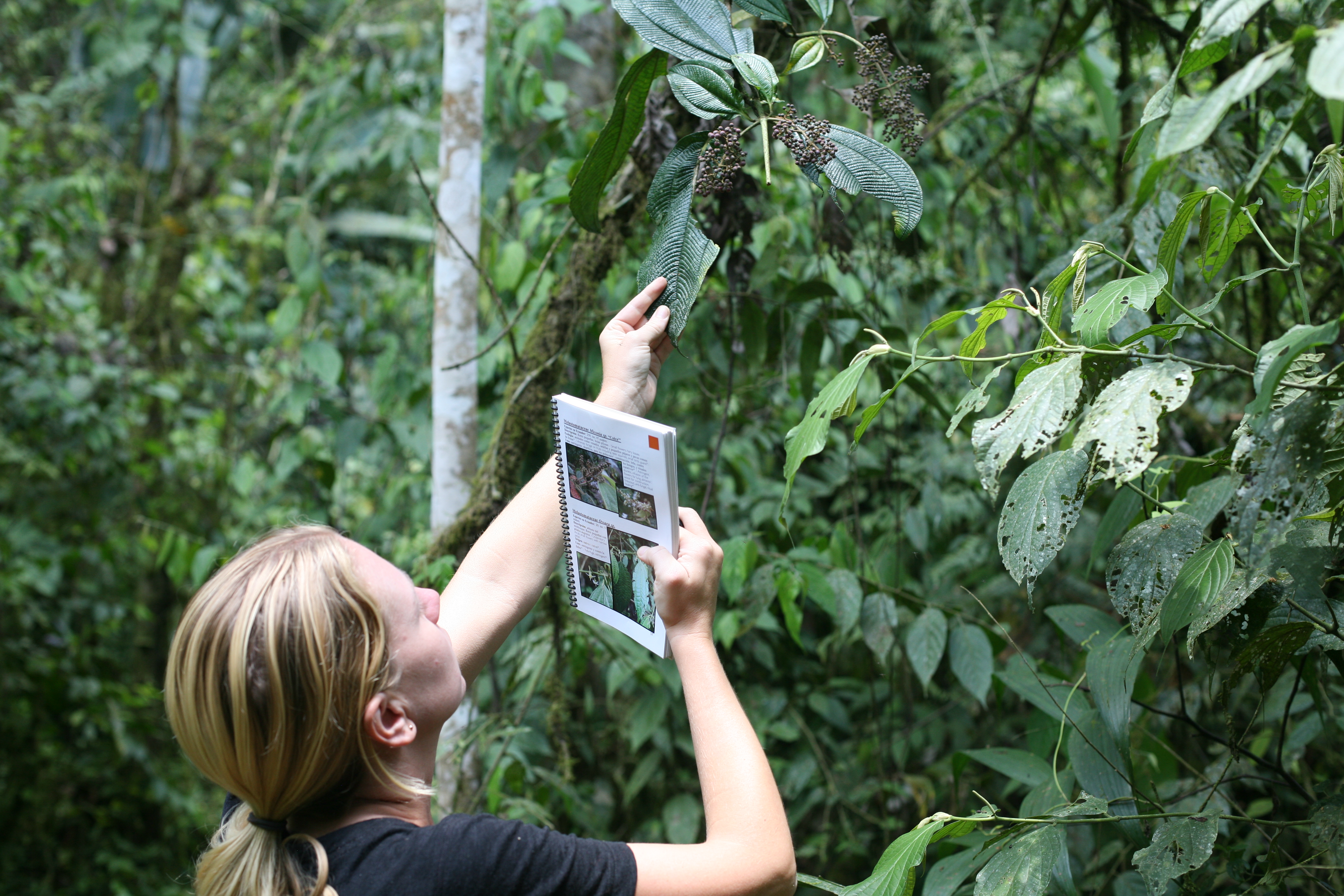
Another main project we´re hoping to do is some overhaul on the existing hiking trails for the reserve. Prior to being here Andrew was part of a trail crew in the US maintaining and creating different trail systems throughout Arizona, so we´re hoping to put some of his knowledge and experience to use.
Other than these projects, we also have plenty of ideas for smaller scale improvements we can add to the reserve. Two things we have started on are improving the orchard (botanical sprays, nutrient mulch, ground growth clearing, etc.) and creating a new covered information booth at the entrance to the reserve in front of the lodge. Here we hope to have copies of bird lists, information about the reserve and the Cock-of-the-Rock Lek, trail guides, etc. to make information more accesible to visitors.
As always there is lots of work just in the upkeep of the lodge, hosting of guests, and avian data collection, and we are sure to have many more ideas for future projects.
Further updates to come!

 Reserva Las Tangaras