Solar Power at Reserva Las Tangaras
A part of the charm of Reserva Las Tangaras comes from the remote location and off-grid aspect of the cabin. Here you are removed from the noise of cars, dogs barking, and roosters crowing. You fall asleep to the sounds of frogs calling and the river flowing, and wake up to the chorus of songbirds in the forest just outside. Dinner is eaten by candlelight, and evening activities and chores carried out by the light of headlamps or flashlights when necessary.
Despite the romantic and tranquil atmosphere that comes from being off-grid, a certain amount of electricity is necessary in order to keep the reserve functioning well. Managers need to keep laptops charged for data entry, cameras for documenting species sightings, and the reserve cell phone in order to communicate with potential visitors.
Previously, all of these tasks and more were accomplished using an efficient gasoline generator. While the generator will still be necessary to run power tools, all other charging tasks can now be accomplished via solar power!

The first successful phone charge via solar power!
We were able to install a 120 watt polycrystalline solar panel on the roof of the cabin. This panel, connected to a charge controller, deep cycle battery, and inverter, supplies noiseless and environmentally friendly power to meet most of the needs of the reserve. The panel can even produce power in cloudy conditions and during light rainfall (though at a lower rate).

The newly installed 120 watt solar panel, soaking up some sun.
Installing solar power is the newest of several sustainability efforts that are ongoing at Reserva Las Tangaras, including maintenance of a fruit orchard, composting biodegradable waste, recycling and reusing a variety of materials, and encouraging a sustainable level of tourism to the area. We are happy to have been able to contribute to these efforts, and though we are sad to be leaving we hope future managers and guests enjoy harnessing the power of the sun here at the reserve!
A Nature Walk Through Las Tangaras
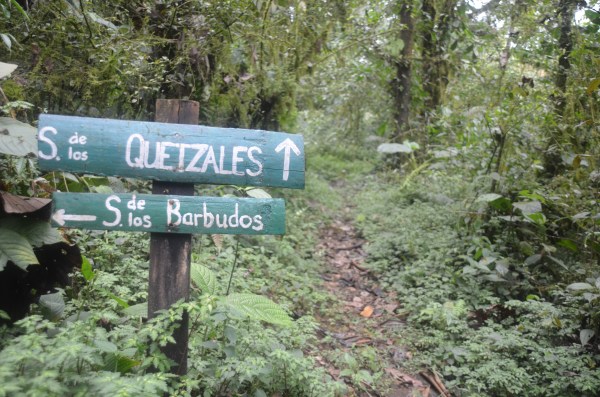
We would like to take you on a trek at Las Tangaras Reserve through one of our most popular trails: Sendero de Quetzales! The trail is 1.0 km in length climbing from 1330 m elevation to 1440 m along the ridge behind the lodge and through old growth forest. So put on your hiking boots and get ready to see some cool plants and animals.

Right off the bat an agouti leads the way to the trailhead. Agoutis are some of the more commonly seen mammals on the reserve. By foraging for fruits and nuts, and sometimes burying their food for later, they serve as an important seed dispersal mechanism for native trees. This guy was in a hurry to get back under the cover of the understory!
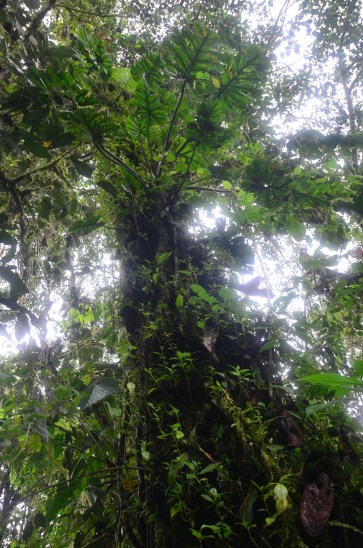
It’s easy to become overwhelmed by the enormous diversity of plant life in the tropics. Hiking through the cloud forest you’re surrounded by plants of every shape and size. In fact, there are so many plants and so little space that they often grow right on top of each other! Many plants, called epiphytes, are structural parasites that use the trunks of larger trees as a kind of ladder to climb up and reach a sunnier elevation than the forest floor. Often these epiphytes don’t directly hurt their host plant, but a branch (or even a whole tree) can become so heavy with them that it can break and fall.
The family Araceae are a large group of flowering plants with many representatives along this trail. Check out the “elephant’s ears” growing as epiphytes. These are common houseplants in temperate zones.


This next part of the trail leads us up to the highest point in our hike where we cross a small stream and have opportunities for views out and over the forest canopy so keep your eyes peeled for cool wildlife!
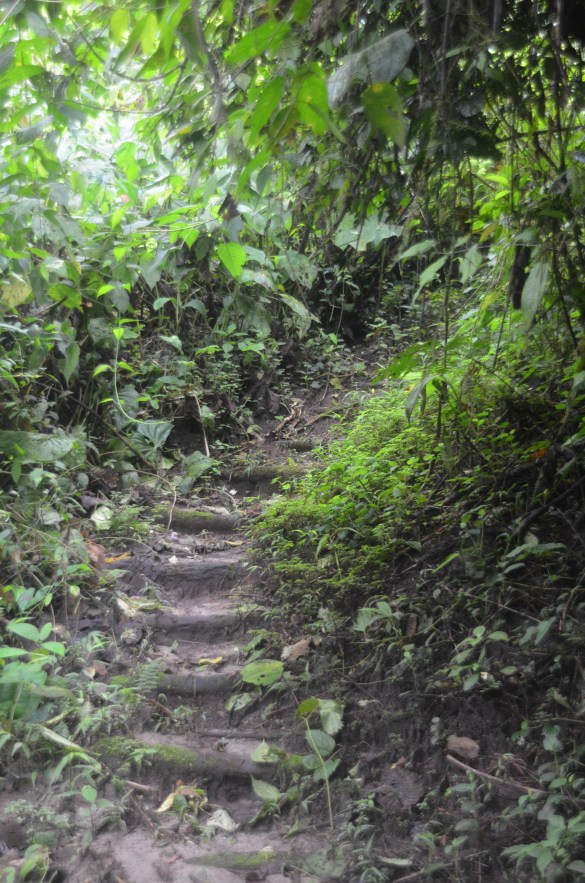
Check steps and other trail features are maintained by managers to help reduce erosion and mark the trail. Make sure you stay on the trail to reduce your impact on the environment!
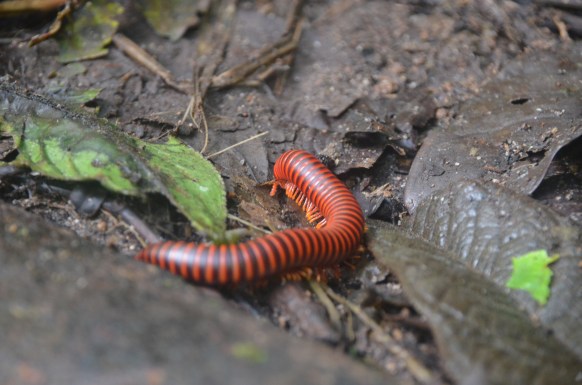
Although not everybody’s idea of cool wildlife, insects abound in the leaf litter on the forest floor and along the trail. Millipedes in particular are important detritovores, helping break down organic material and return the nutrients to the soil.

Look quickly before it flies away! Toucans such as this Choco Toucan and the nearly indistinguishable Chestnut-Mandibled Toucan are common on the reserve but don’t always stay still long enough for a picture. They use their large bills to reach fruit and seeds but have been known to predate eggs and nestlings of other birds, and even eat smaller adult birds if they happen to be in the same fruit tree!
Eyes back on the trail now or you might miss one of the most common types of plants we encounter on Reserva Las Tangaras: the fern! Ferns reach their height of biodiversity in the tropics. As a group they are characterized as vascular plants that reproduce by spores.


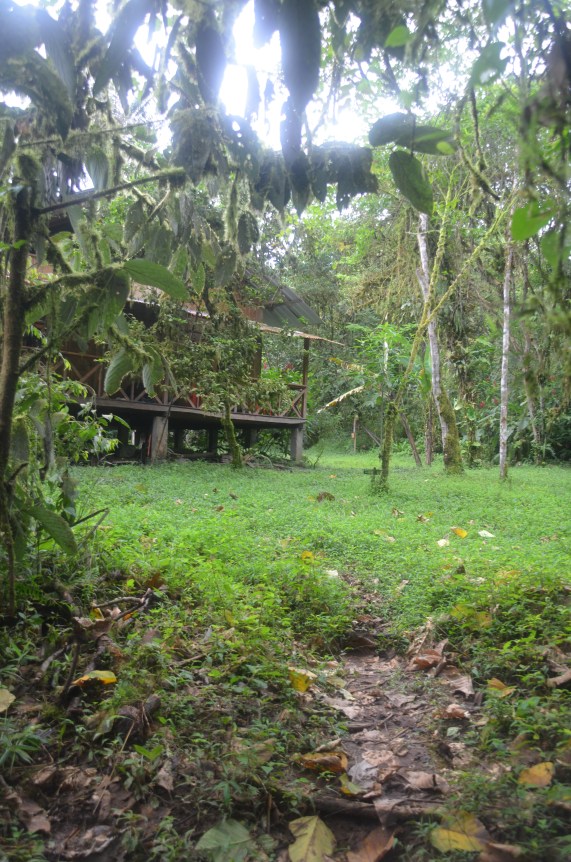
You made it around the whole loop and back to the house, but the adventure isn’t over yet! Our yard creates an ideal habitat for a few small creatures you might not find under heavy canopy cover.

A huge variety of grasshoppers can be found on a casual stroll through the yard. They, along with other insects, serve as an important food source for lots of cloud forest animals such as rain frogs which are abundant here too.
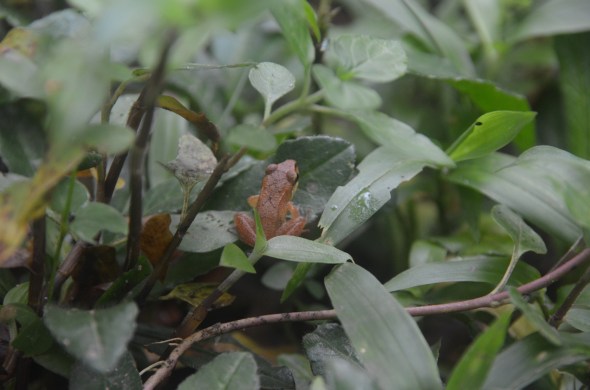
Rainfrogs are the most diverse family of tropical frogs with over 900 species throughout the Americas with over 200 in Ecuador alone. Small rainfrogs such as this Pastures Rainfrog (Pristimantis achatinus) don’t require standing water in which to lay their eggs. Instead, they are deposited in moist soil under leaf litter and undergo direct development to emerge as miniature adults, skipping the tadpole stage we so commonly associate with frogs!
We hope you enjoyed your hike around Las Tangaras! There are many more species than we could fit in this one post, so you’ll just have to come out and see them for yourself!
*While it is possible and likely to see all of these species in one trek our photos represent a collection taken over a series of hikes*
A Dynamic Landscape

Hello, we are happy to introduce ourselves as the new reserve managers at Las Tangaras! We are Heather and Costi most recently from Phoenix, Arizona and glad to escape the desert heat for the most opposite climate we could think of – the rainy cloud forests of Mindo!
One of the most striking things about the land here is just how mobile it is. You might hike a trail one day and then find it completely different the next. The most usual and likely catalyst of change in the rain forest is water; whether it’s a thunderstorm, over flowing river, constantly flowing runoff or our personal favorite: the landslide. Interestingly, the local word for landslide is “rumba” which is a synonym for “fiesta” making us wonder what kind of ground-shaking parties we’re missing out on!
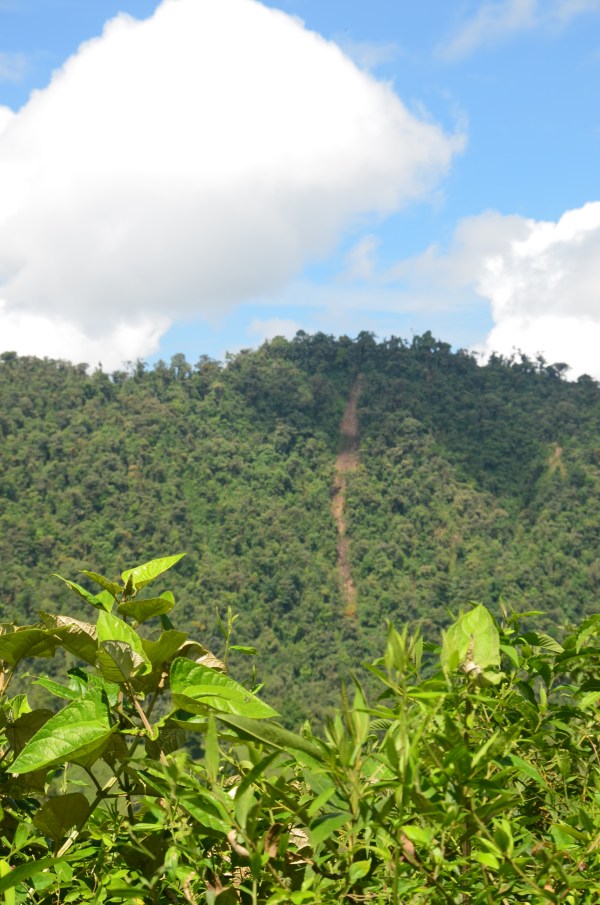
Evidence of a landslide on a neighboring ridge
So far during our stay here “rumbas” have been a common event – they have knocked out our water system , which required a re-route of the Aqua de Fuente Trail, destroyed part of the entrance trail (now fixed, feel free to come visit!), and successfully blocked the private road that sometimes allows us to transport heavy items closer to the reserve. We have even heard the distant rumbling and crashing of landslides happening on other parts of the reserve while working to clear damage on the trails.
In addition to keeping us busy with trail maintenance, landslides serve an important ecological purpose. In the dense cloud forest sunlight is a resource subject to heavy competition. Tall canopy and sub-canopy trees and shrubs shade out smaller herbaceous plants growing in the understory, leading to the preponderance of the distinct growing habits of vines and epiphytes. No need to grow thirty or fifty feet tall if you can just grow on top of the tree that already managed that height! When a landslide occurs it opens up a patch of bare dirt and sunlight ready to be colonized by new plants and pioneer species. It creates a new habitat type for birds and animals and may help maintain biodiversity.

Vegetative growth in a post-landslide area
Recently a more terrifying natural occurrence reminded us again how mobile the land here is. A 7.8 magnitude earthquake shook Ecuador on April 16th. Fortunately here at the reserve we only experienced a shaking house and items fallen from shelves. The earthquake originated off the coast of Bahia de Caraquez approximately 150 miles from Mindo. Though landslides and earthquakes may cause tragedy and inconvenience for us, we try to remember that we are simply visitors to this amazing ecosystem and we’re humbled to be here to witness the biodiversity maintained by the moving ground.
Long Wattles and Goodbyes
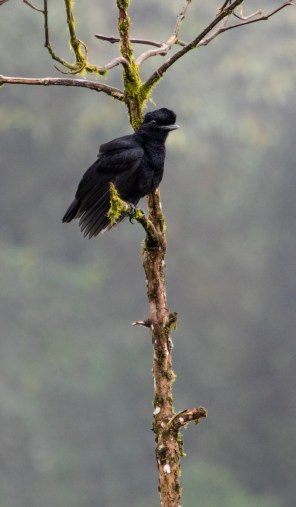
Long-wattled Umbrellabird found at Reserva las Tangaras on March 3rd, 2016. Photo by Zak Pohlen.
We have seen some amazing birds during our time as reserve managers, with the Yellow-throated Vireo being the cherry on top. However, if you ask either of us what our second favorite bird found was, we’ll both unanimously say: “Long-wattled Umbrellabird”. On March 3rd we found a lone Long-wattled Umbrellabird moving with a group of Collared Aracaris (Pale-mandibled). This is the first record of this species for the reserve and an exciting record for the area, as they are a rare species often difficult to see outside of known lek locations. Two well-known leks can be seen at Recinto 23 de Junio, located west of Mindo near San Miguel de los Bancos.
Like the reserve’s poster child, the Andean Cock-of-the-rock, the Long-wattled Umbrellabird is a part of the continga family—a diverse group of passerines found throughout Central and South America. The Long-wattled Umbrellabird is only found in the ‘Choco’ region, a 100,000 square kilometer area of humid forest in western Columbia and northwestern Ecuador home to many endemic birds and other endemic species. Within Ecuador the Long-wattled Umbrellabird is listed as endangered, due to both habitat destruction and hunting pressure. Like the Andean Cock-of-the-rock, male Umbrellabirds form leks where they display with the help of their long, pendulum-like, feathered wattle, and fog-horn-like call. Listen to the song and wing noises below.
http://www.xeno-canto.org/275500
Though not an adult male, it was still an unforgettable moment seeing this bird pop up out in the open, and we were especially lucky that it stayed long enough to get a few photos. Another amazing experience at Reserva las Tangaras! To learn more about research and conservation of the Long-wattled Umbrellabird and the unique Choco region, visit the Center for Tropical Research’s Website, a part of UCLA’s Institute of the environment and sustainability.
Unfortunately, it is time for us to say goodbye to the reserve. Most of all we will miss the incredible avian diversity and all the amazing guests we were so lucky to have met. We feel honored to join the long list of “past managers”, and we are happy to welcome Heather and Costin to their new home for the next three months. Thanks to everyone who made our time at the reserve so special, and thank you Reserva las Tangaras!
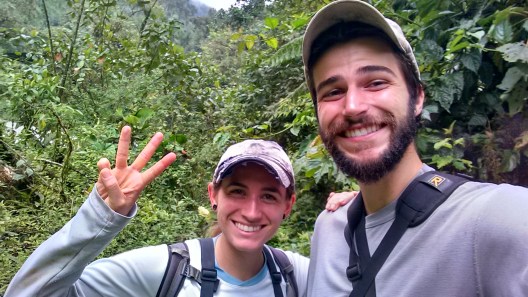
Happy to snag 3 new species for our reserve list, including the Long-wattled Umbrellabird.
Cheers!
Callie Gesmundo & Zak Pohlen
A Lost North American Traveler
On February 2nd, 2016 on a quick trip to Mindo, Zak and I spotted a bird silently foraging overhead just down the road from the entrance trail to the reserve. Fortunately for us, the bird was being quite conspicuous and we were able to quickly identify it, and knowing its rarity, snap some quick documentation photographs before watching it move out onto an exposed branch and fly over our heads. Low and behold, a fellow traveler from the North, a Yellow-throated Vireo! We spent some time trying to relocate the bird to no avail.

Ecuador’s 4th Yellow-throated Vireo, and the 1st for Pichincha Province. Photo by Zak Pohlen
According to the Ecuadorian Ornithological Records Committee (CERO), this bird represents the 4th ever recorded in Ecuador, and the 3rd with photo documentation. This is also the 1st record of Yellow-throated Vireo for the province of Pichincha. The first record in Ecuador came in 2008 in Napo province, with subsequent records in 2011, and 2012 in Esmeraldas and Imbabura provinces respectively. For more information on these sightings, feel free to visit Aves Ecuador.

A Yellow-throated Vireo banded in Michigan during its migration south. Photo by Zak Pohlen
Yellow-throated Vireos are uncommon breeders in the eastern United States and migrate south in the fall to spend their winters from southern Mexico and the Caribbean to northern Columbia, with few records south of Bogota.
Cheers,
Callie Gesmundo & Zak Pohlen
New Year and New Managers
Hola from your new lodge managers, Callie and Zak!
We have had a busy first month at Reserva las Tangaras, with many overnight guests and day visitors. We hosted a group of photographers from California looking to experience our amazing display of hummingbirds at our feeders, and have had multiple fellow biologists and bird watchers come to enjoy our impressive and intimate Andean Cock-of-the-rock lek.
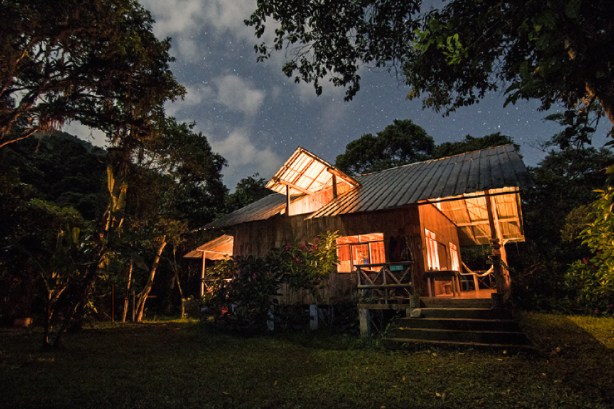
Reserva las Tangaras lodge under the stars. Photo by Zak Pohlen
Many travelers and campers have come looking to get away and to enjoy a relaxing few days in Ecuador’s cloud forest. Nobody has been disappointed!
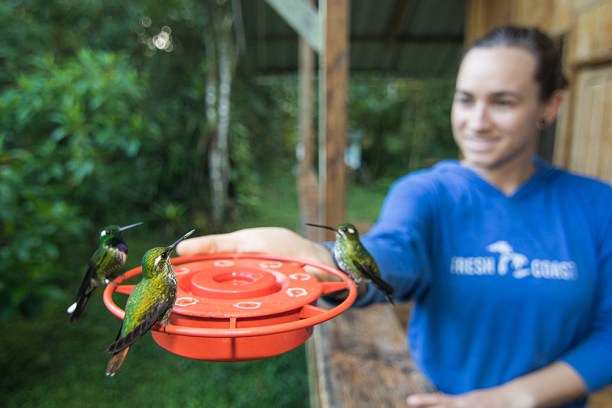
Purple-bibbed Whitetips eager for their morning sugar water
While the lodge has been bustling with guests, the biodiversity experienced at the reserve has been superb. From orchids to glass frogs, snakes and monkeys, and some of Ecuador’s more memorable birds, travelers have it all at Reserva las Tangaras.
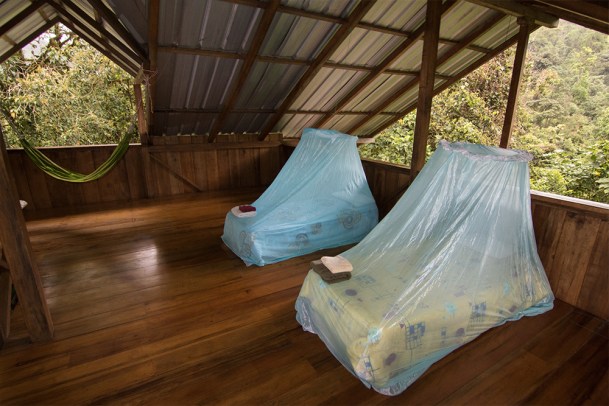
Reserva las Tangaras upper level sleeping quarters
In-between hosting guests and general maintenance around the lodge, we have been getting acquainted with the lovely town of Mindo and searching for some of the areas beautiful bird-life.
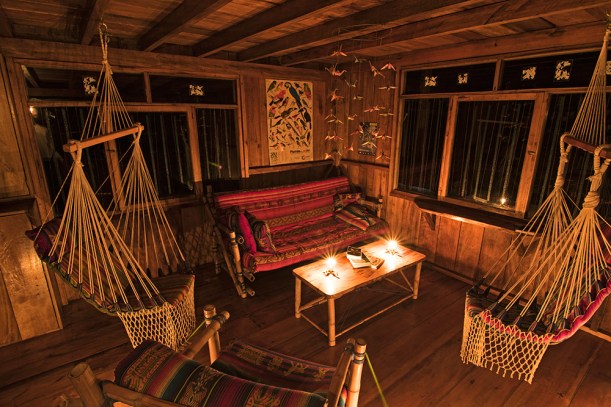
Reserva las Tangaras’ cozy lounge lit by candlelight
We are very excited about our next 2 months at Reserva las Tangaras. We look forward to enjoying more time with the many different travelers that come to experience this special property and we hope to discover more of the impressive biodiversity this reserve has to offer!
Cheers!
Zak and Callie
Mindo Christmas Bird Count, 2015
Hola from Reserva Las Tangaras!
This year’s Mindo Christmas Bird Count was an incredible experience, and we even saw a few new species at the Reserve! Not only is it great fun, the Count is an excellent opportunity to collect valuable data about avian diversity at the Reserve.
We counted a total of 116 species at the reserve, three of which were only documented on our route! These three were the Russet Antshrike, Rufous-rumped Antwren, and the Streaked Saltator.
Here are a few photo highlights from the day. From left to right: Beryl-spangled Tanager, White-capped Dipper, Violet-tailed Sylph (female), Golden Tanager, Broad-billed Motmot, Clubwinged Manakin (male), Flame-faced Tanager, Ornate Flycatcher, Booted Racket-tail (male), and Chestnut Mandibled Toucan.


We really enjoyed birding with our friends from Un Poco del Choco, another nearby biological station, as well as our two friends from Mindo who hiked into the reserve at 5 AM to help count all day!
It was a tremendous effort, and a job well done!
The day after the count, we went to Mindo to participate in the “desconteo,” the post-count meeting. Mindo recorded over 467 species, which is at least 2 more than last year! Such a high number is impressive given that the area experienced inclement weather in the afternoon.
We are very glad to have had the incredible opportunity to participate in the Christmas Bird Count before ending our term as Managers at Reserva Las Tanagaras! In all, managing the reserve has been a life-changing experience that we are extremely grateful for. Las Tanagaras is one of those special places that are becoming even more few and far between. We hope that everyone can visit at some point and experience it. We are excited for the next managers, Callie and Zak, who are already doing a fantastic job!
Cheers,
Amanda and Daniel
Visitors at Reserva Las Tangaras
¡Hola! Daniel and Amanda, the reserve managers, here!
One of our greatest joys working at Reserva Las Tangaras is spending time with the visitors who journey here from all over the world, near and far, and for many different reasons. Everyone who visits the reserve is someone who loves exploring the natural world and has a sense of adventure! They love spending time outside surrounded by the sight, sounds, and smells of the cloud forest and enjoying the tranquility and excitement of the wilderness.
People all over the world share a great love of beautiful and intact wilderness areas inhabited by a plethora of plants, animals, fungi, and other species. Nature has the great power to unify us, and the reserve reveals this to us in many ways!
The reserve is an exciting and fantastic gathering place to meet travelers and local people who share a similar love of nature. Many find themselves engaged in lively conversation about a variety of different topics, providing a great opportunity to learn from the diversity of knowledge and experiences of others.
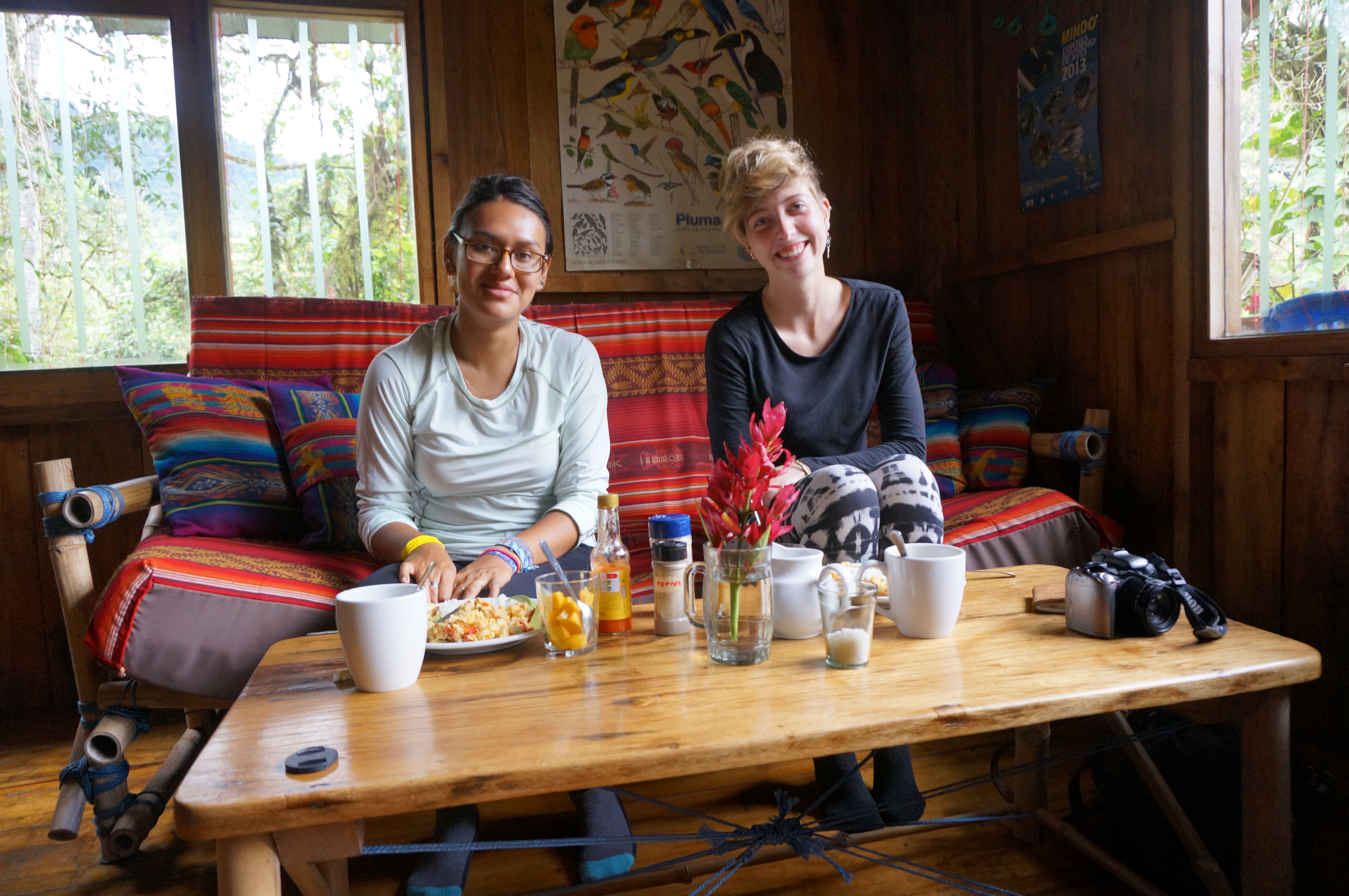
When we’re not involved in these exciting exchanges, the hummingbirds enchant us all, no matter where we are from! You can find yourself on the porch with others from around the world and find similar looks of wonder on their faces while gazing at these amazing birds.

Here you can meet other environmentalists, scientists, photographers, writers, artists, chefs, farmers, yoga instructors, guides, non-profit organizers, doctors, nurses, and teachers, just to name a few of the kinds of people who join us here. We even met one family traveling around the world in their RV. Check out their blog! http://glob3trotters.canalblog.com
One of our most exciting and favorite activities for visitors is visiting the Andean Cock-of-The-Rock (ACOR) lek. We rise at five am for a pre-dawn hike up steep slopes to the lek, where the ACOR males gather for courtship displays. Hot coffee, fresh bread, and a banana snack definitely help get you going! All around us, frogs chirp and sing while the forest prepares for sunrise. As we sit up in the hide, the first light of morning peeks in through the canopy and the magic unfolds as the first ACOR male arrives in a flurry of bright red feathers and with a high rattling “heeeoooowoop.” It’s now time for their most exciting part of the day, too! I won’t tell you anymore, you will just have to come see for yourself how amazing these fellows, and occasional gal, really are. Though not normally as active as the morning lek, the afternoon lek offers visitors another opportunity to see the ACOR in action!
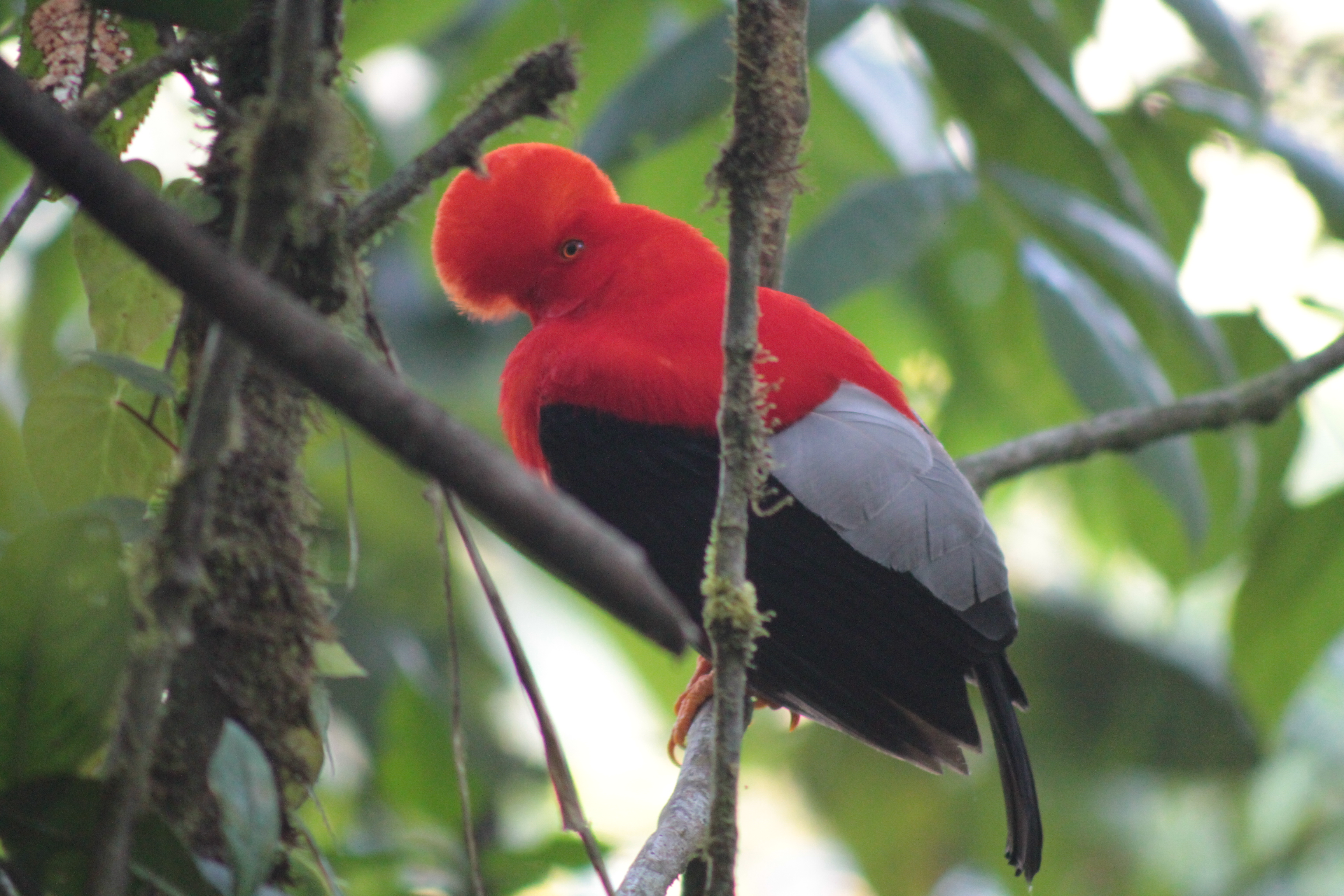
Visitors also love learning about the research at the reserve. Those who visit the lek with us understand why we study the fascinating social dynamics between the males. Some even spend time learning the hummingbird species so they can help with our daily hummingbird observations. If you are a scientist interested in conducting research at the reserve, let us know! We have also been enjoying going on some great hikes with visitors and learning about the many plant and animal species here!
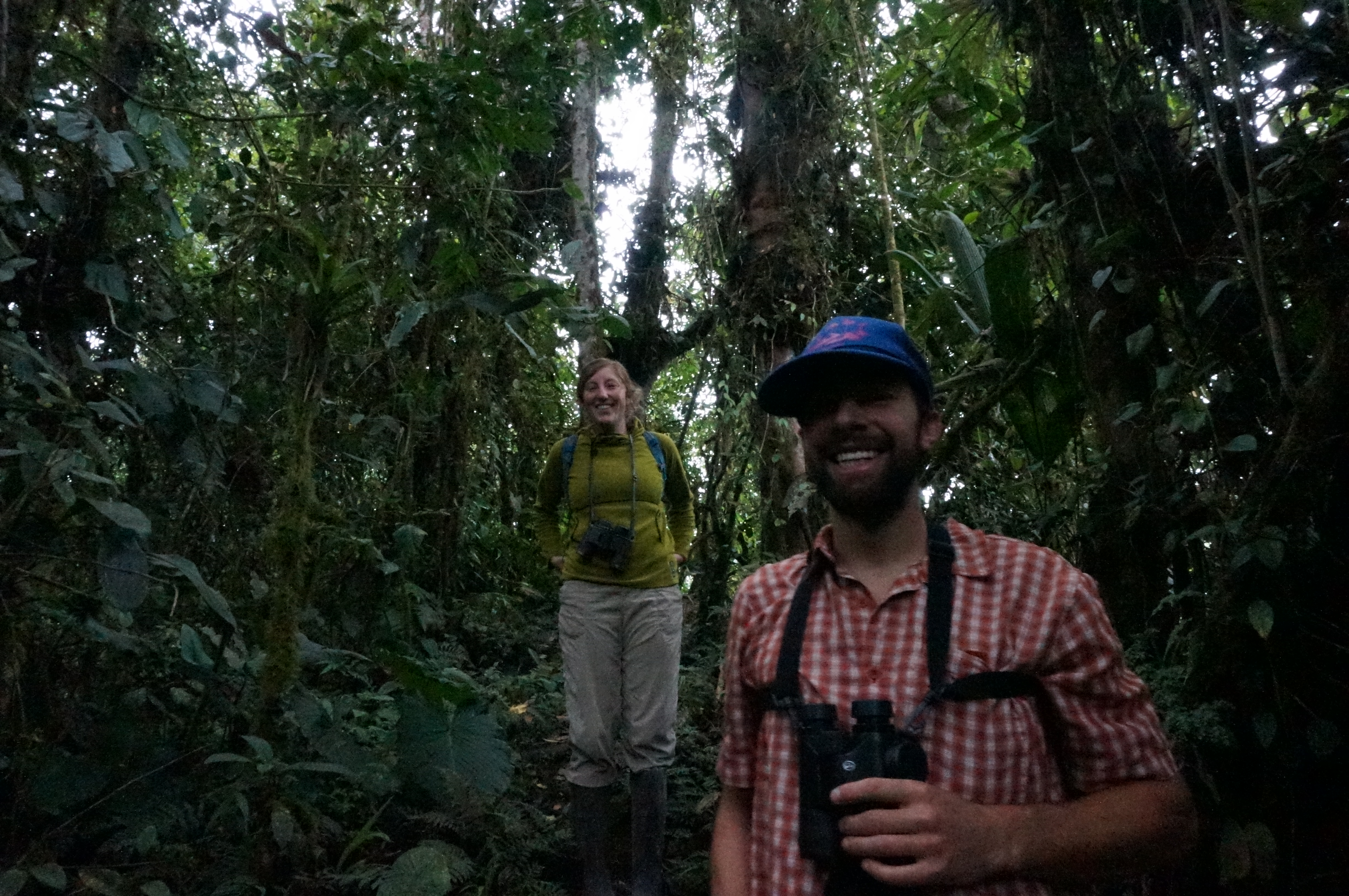
The reserve is also a great place for volunteers to contribute to a meaningful project while learning new skills, knowledge, and the ins-and-outs of running a nature reserve. It is an incredibly rewarding and enriching experience!
Most visitors wish they could live and work here like us. We wish you would stay longer as well! We feel very lucky indeed to be here in our cloud forest home! Come visit us!
¡Hasta luego!
Amanda and Daniel
Administradores Nuevos!
Greetings!
We are Amanda and Daniel, los administradores nuevos, or new managers, as we are known by at least a few folks in Mindo. We are thrilled to be here at Reserva Las Tangaras until early January 2016! The diversity and beauty of this area is stunning! We have only been here three days, but we already feel immersed in life at the reserve (we have a running list of fun jobs to start and birds to see)! Sometimes is takes weeks to feel settled in a place, but here we felt quite at home within hours after arriving! Everyone we have met so far, in Mindo and at the reserve, has been very friendly and welcoming.
The reserve offers incredible opportunities to see amazing plant and animal life. In addition to our maintenance tasks, we have been studying the hummingbird species seen here and becoming familiar with the trails on the reserve. There is so much to see, and so much to do, both at the lodge and around the reserve!
Here we are doing some birding right outside the lodge.

It is very exciting when a mixed-flock descends upon the trees, giving us a chance to see multiple species at once!
We are very excited to learn all we can while we are here, and to welcome visitors from around the world to this remarkable place, Reserva Las Tangaras!
‘Til next time,
Amanda and Daniel


It´s a plant grow on plant world…
Epiphytes are plants that grow on other plants. Usually they are smaller plants taking advantage of trees to get closer to the sun or escape ground dwelling herbivores. Some common examples are vines such as lianas, mosses and the famous bromeliads (the pineapple plant although not an epiphyte is the best known example of a bromeliad). A tropical forest wouldn’t be complete without a host of epiphytes. Really everywhere you look in the cloud forest, there are epiphytes, bedecking almost every branching, hanging in mid-air and even epiphytes covering the surface of other epiphytes.
The Neotropical Companion quoting (Perry 1984) claims an estimated 15,500 epiphyte species in the whole of South America. According to a field guide to plant families of Ecuador by Sylvia M. Seger we have at the lodge, there are over 2000 species of bromeliad, 16 genera in Ecuador alone.
Orchids are another familiar example, most but not all of them being epiphytic, with about 3200 species in Ecuador (Sylvia M. Seger).
Ephiphytes can range from mosses, liverworts, lichens to cacti and the afore mentioned bromeliads and orchids. Usually epiphytes cause only small problems for the host tree, other times they become a fatal threat. Strangler figs are one of the most interesting epiphytes. Initially a fig seed is dropped, perhaps by a passing bird or a troop of monkeys. The seed may land in the crotch of a tree and take root, sprouting perhaps in the moist bed of already established living mosses. As the fig grows, it initially resembles a vine, slowly wrapping the host tree. Eventually as the fig wraps its host it becomes like a net, each time it crosses itself fusing together. The slowly forming net reaches the ground and establishes its own root system. Over time the fig expands and chokes off all access to light from its host tree, which dies and is replaced by a newly formed fig tree.
One of the smaller problems that most epiphytes cause their host is quickly absorbing any nutrients from rain or animal (bird, monkey, etc.) droppings higher in the tree before they reach the ground. Some trees deal with having nutrients preemptively stolen by developing aerial roots that stick into the mats of epiphytes and pull nutrients from them. Because of the high amounts of rain in most tropical forests, nutrients are either quickly leached out of soils or pulled up by plants, (little nutrients remain in the soil) nutrients are very important resources for neotropical plants.
There are plenty of epiphytes found at Las Tangaras, the high humidity in the air and high precipitation rates allow a diversity of plants to grow on trees where they only have access to small amounts of soil trapped in roots clinging to branches. These plants in turn become their own microcosms, leaves catching small pools of water become tiny ponds for frogs, breeding grounds for insects. A lizard can live in the canopy of trees it’s whole life, gathering water trapped by epiphytes and eating insects also supplied by epiphytes. Canopies of trees are actually their own microhabitat, still being explored not just in the tropics but through out the forests of the world. Below are some pics of epiphytes I’ve taken at Las Tangaras.

-
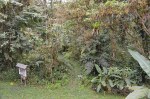
- A view from our lodge window, you can see the nearest tree absolutely dripping in epiphytes.
-
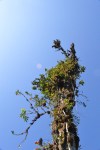
- A tree covered in epiphytes

-
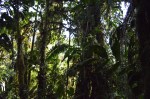
- Vines
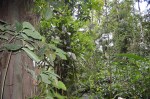
-
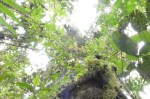
- A view of a tree looking straight up from the forest floor. You can see the many epiphytes.
-

- A bromeliad on a tree
-

- A gorgeous bromeliad


