Visitors at Reserva Las Tangaras
¡Hola! Daniel and Amanda, the reserve managers, here!
One of our greatest joys working at Reserva Las Tangaras is spending time with the visitors who journey here from all over the world, near and far, and for many different reasons. Everyone who visits the reserve is someone who loves exploring the natural world and has a sense of adventure! They love spending time outside surrounded by the sight, sounds, and smells of the cloud forest and enjoying the tranquility and excitement of the wilderness.
People all over the world share a great love of beautiful and intact wilderness areas inhabited by a plethora of plants, animals, fungi, and other species. Nature has the great power to unify us, and the reserve reveals this to us in many ways!
The reserve is an exciting and fantastic gathering place to meet travelers and local people who share a similar love of nature. Many find themselves engaged in lively conversation about a variety of different topics, providing a great opportunity to learn from the diversity of knowledge and experiences of others.
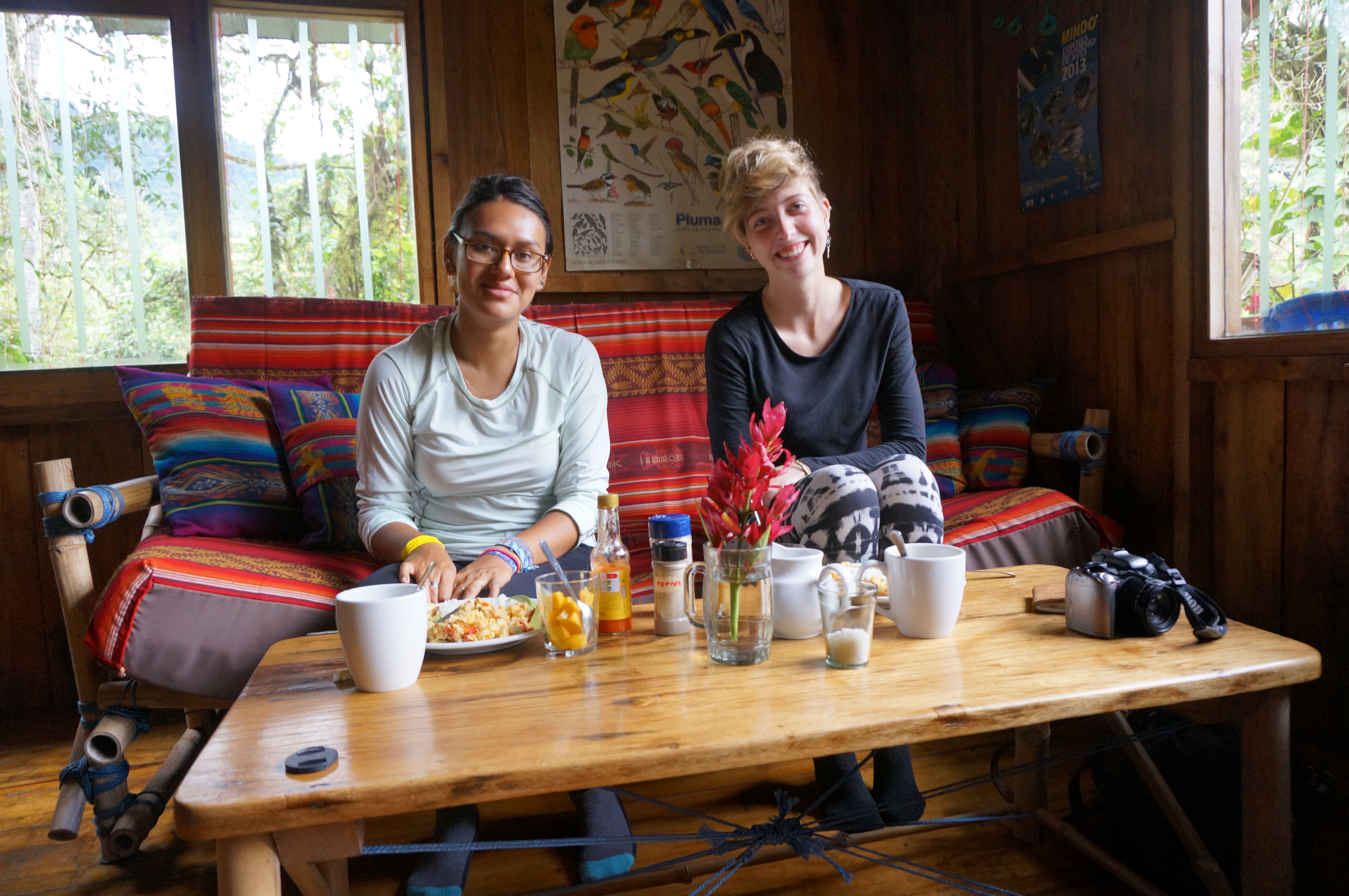
When we’re not involved in these exciting exchanges, the hummingbirds enchant us all, no matter where we are from! You can find yourself on the porch with others from around the world and find similar looks of wonder on their faces while gazing at these amazing birds.

Here you can meet other environmentalists, scientists, photographers, writers, artists, chefs, farmers, yoga instructors, guides, non-profit organizers, doctors, nurses, and teachers, just to name a few of the kinds of people who join us here. We even met one family traveling around the world in their RV. Check out their blog! http://glob3trotters.canalblog.com
One of our most exciting and favorite activities for visitors is visiting the Andean Cock-of-The-Rock (ACOR) lek. We rise at five am for a pre-dawn hike up steep slopes to the lek, where the ACOR males gather for courtship displays. Hot coffee, fresh bread, and a banana snack definitely help get you going! All around us, frogs chirp and sing while the forest prepares for sunrise. As we sit up in the hide, the first light of morning peeks in through the canopy and the magic unfolds as the first ACOR male arrives in a flurry of bright red feathers and with a high rattling “heeeoooowoop.” It’s now time for their most exciting part of the day, too! I won’t tell you anymore, you will just have to come see for yourself how amazing these fellows, and occasional gal, really are. Though not normally as active as the morning lek, the afternoon lek offers visitors another opportunity to see the ACOR in action!
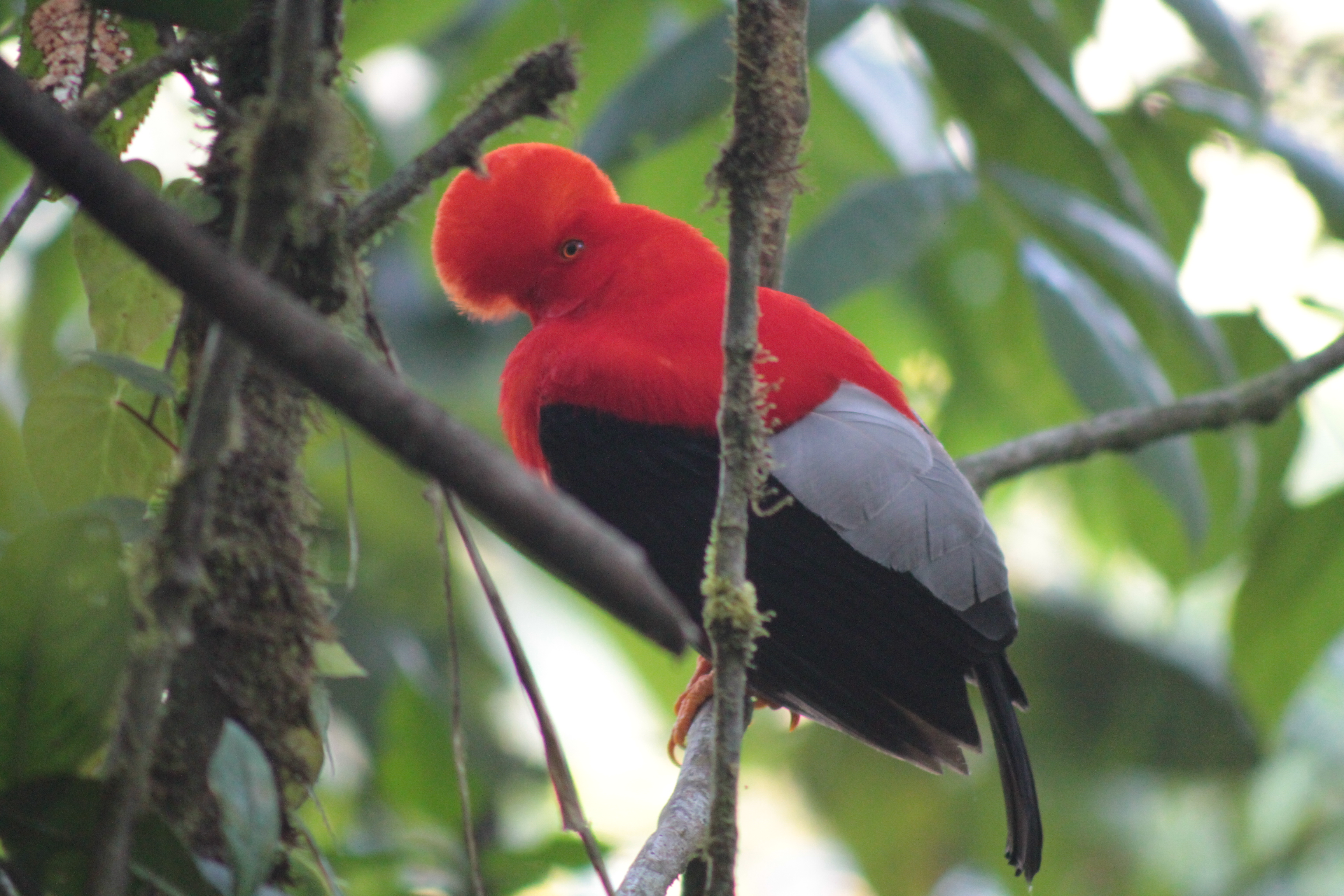
Visitors also love learning about the research at the reserve. Those who visit the lek with us understand why we study the fascinating social dynamics between the males. Some even spend time learning the hummingbird species so they can help with our daily hummingbird observations. If you are a scientist interested in conducting research at the reserve, let us know! We have also been enjoying going on some great hikes with visitors and learning about the many plant and animal species here!
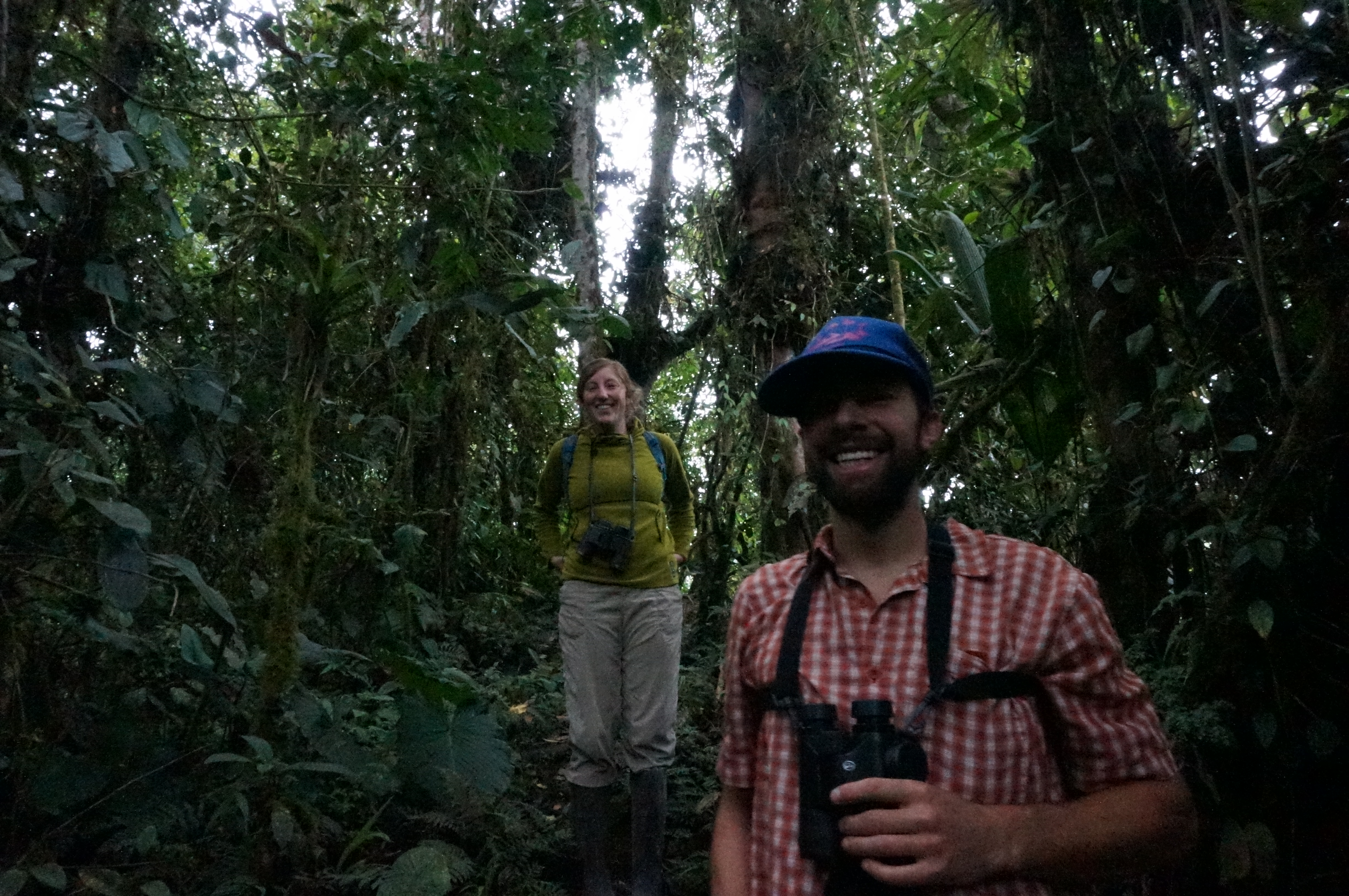
The reserve is also a great place for volunteers to contribute to a meaningful project while learning new skills, knowledge, and the ins-and-outs of running a nature reserve. It is an incredibly rewarding and enriching experience!
Most visitors wish they could live and work here like us. We wish you would stay longer as well! We feel very lucky indeed to be here in our cloud forest home! Come visit us!
¡Hasta luego!
Amanda and Daniel
Administradores Nuevos!
Greetings!
We are Amanda and Daniel, los administradores nuevos, or new managers, as we are known by at least a few folks in Mindo. We are thrilled to be here at Reserva Las Tangaras until early January 2016! The diversity and beauty of this area is stunning! We have only been here three days, but we already feel immersed in life at the reserve (we have a running list of fun jobs to start and birds to see)! Sometimes is takes weeks to feel settled in a place, but here we felt quite at home within hours after arriving! Everyone we have met so far, in Mindo and at the reserve, has been very friendly and welcoming.
The reserve offers incredible opportunities to see amazing plant and animal life. In addition to our maintenance tasks, we have been studying the hummingbird species seen here and becoming familiar with the trails on the reserve. There is so much to see, and so much to do, both at the lodge and around the reserve!
Here we are doing some birding right outside the lodge.

It is very exciting when a mixed-flock descends upon the trees, giving us a chance to see multiple species at once!
We are very excited to learn all we can while we are here, and to welcome visitors from around the world to this remarkable place, Reserva Las Tangaras!
‘Til next time,
Amanda and Daniel


It´s a plant grow on plant world…
Epiphytes are plants that grow on other plants. Usually they are smaller plants taking advantage of trees to get closer to the sun or escape ground dwelling herbivores. Some common examples are vines such as lianas, mosses and the famous bromeliads (the pineapple plant although not an epiphyte is the best known example of a bromeliad). A tropical forest wouldn’t be complete without a host of epiphytes. Really everywhere you look in the cloud forest, there are epiphytes, bedecking almost every branching, hanging in mid-air and even epiphytes covering the surface of other epiphytes.
The Neotropical Companion quoting (Perry 1984) claims an estimated 15,500 epiphyte species in the whole of South America. According to a field guide to plant families of Ecuador by Sylvia M. Seger we have at the lodge, there are over 2000 species of bromeliad, 16 genera in Ecuador alone.
Orchids are another familiar example, most but not all of them being epiphytic, with about 3200 species in Ecuador (Sylvia M. Seger).
Ephiphytes can range from mosses, liverworts, lichens to cacti and the afore mentioned bromeliads and orchids. Usually epiphytes cause only small problems for the host tree, other times they become a fatal threat. Strangler figs are one of the most interesting epiphytes. Initially a fig seed is dropped, perhaps by a passing bird or a troop of monkeys. The seed may land in the crotch of a tree and take root, sprouting perhaps in the moist bed of already established living mosses. As the fig grows, it initially resembles a vine, slowly wrapping the host tree. Eventually as the fig wraps its host it becomes like a net, each time it crosses itself fusing together. The slowly forming net reaches the ground and establishes its own root system. Over time the fig expands and chokes off all access to light from its host tree, which dies and is replaced by a newly formed fig tree.
One of the smaller problems that most epiphytes cause their host is quickly absorbing any nutrients from rain or animal (bird, monkey, etc.) droppings higher in the tree before they reach the ground. Some trees deal with having nutrients preemptively stolen by developing aerial roots that stick into the mats of epiphytes and pull nutrients from them. Because of the high amounts of rain in most tropical forests, nutrients are either quickly leached out of soils or pulled up by plants, (little nutrients remain in the soil) nutrients are very important resources for neotropical plants.
There are plenty of epiphytes found at Las Tangaras, the high humidity in the air and high precipitation rates allow a diversity of plants to grow on trees where they only have access to small amounts of soil trapped in roots clinging to branches. These plants in turn become their own microcosms, leaves catching small pools of water become tiny ponds for frogs, breeding grounds for insects. A lizard can live in the canopy of trees it’s whole life, gathering water trapped by epiphytes and eating insects also supplied by epiphytes. Canopies of trees are actually their own microhabitat, still being explored not just in the tropics but through out the forests of the world. Below are some pics of epiphytes I’ve taken at Las Tangaras.

-
- A view from our lodge window, you can see the nearest tree absolutely dripping in epiphytes.
-
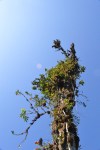
- A tree covered in epiphytes

-
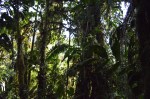
- Vines
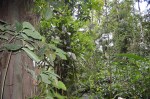
-
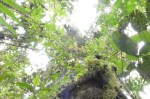
- A view of a tree looking straight up from the forest floor. You can see the many epiphytes.
-

- A bromeliad on a tree
-

- A gorgeous bromeliad
Arachnids of Las Tangaras
I thought I’d use this blog to talk about the different arachnids we have at Las Tangaras and the area around Mindo. I hope I will also impart a bit of the wonder and natural curiosity I feel when I see them. Arachnids seem to have somehow burrowed into the human subconscious during our evolution, often startling us with pains of fright. Still, spiders, let alone arachnids have been around for about 140 million years before our ancestors’ evolutionary scurry from scaly reptile to furry mammal. So arachnids have stood the test of time almost as well as plants and are nearly as omnipresent as insects. To me, this alone should justify looking closer at our eight legged friends, not as enemies but fellow citizens of the planet.
Everyone knows that spiders are arachnids and most people know that scorpions are arachnids. Less people know that ticks and mites are not insects or some uniquely hellish order all of their own but in fact arachnids.
Even less people know about the other stranger orders of arachnids:
There are the strange pseudoscorpions, tiny creatures resembling scorpions but without the stinger. Some pseudoscorpions can be found riding under the outer wings of harlequin beetles in the neotropics. Pseudoscorpions are incredibly small, and it’s lucky finding one at all. I’ve spent days in caves, a habitat they often frequent on my knees, peeping into cracks, turning over rocks without ever seeing a single one.
There are a few other orders in the class arachnidae but I really only want to talk about a few more that I have seen since arriving at Las Tangaras. Namely, Amblypygi and Opiliones . The scorpion-spiders (neither spider or scorpion, confusing common name) and the Harvestmen.
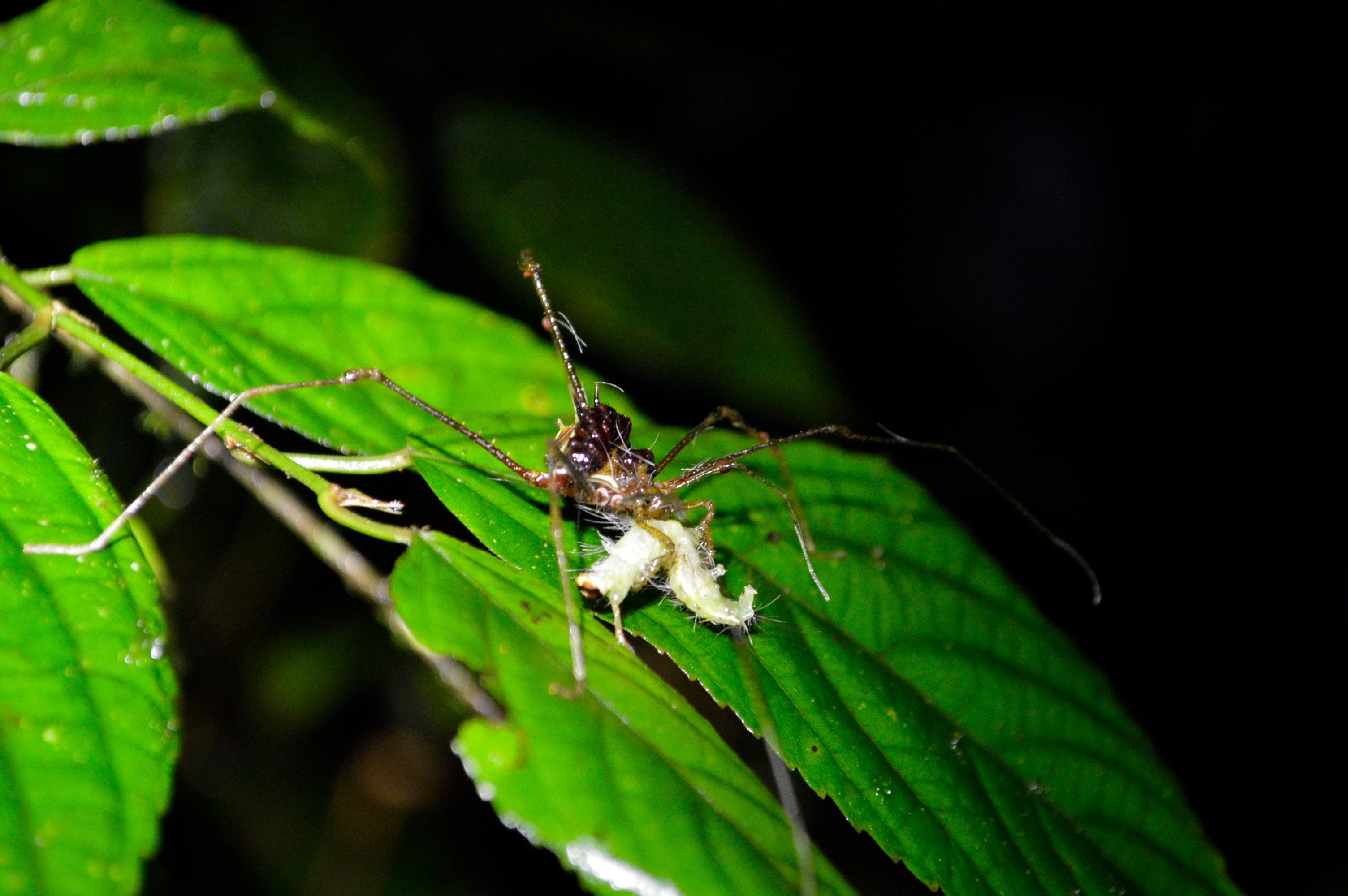
Most people have seen harvestmen and if you’re like me, you even have warm, fuzzy childhood memories of watching them trundle along and even across your open hand, knowing their harmless. Most people have seen these arachnids quite often in fact, without realizing their not spiders. You’ve most likely heard of them referred to by their common name, “daddy long-legs” and learned perhaps among other bits of mis-information and urban legends that they’re the most venomous spiders in the world but that their mouths are too small too bite a human. Not only is this not true but most daddy long-legs aren’t even spiders. I say most because there are some look-alikes that are actually spiders. Confused? Let me explain. Harvest men or Opilionids often have long, spindly legs, which is where the common name, “daddy long-legs” comes from as every child can tell you. However, this is not the diagnostic feature to separate them spiders (as few people outside of arachnology labs and spider clubs can tell you). The true way to tell a harvestmen from a long, spindly-legged spider is to look closely at the body segments the spider has two clear body segments but the Opilionid has only one. Harvestmen also don’t make webs like spiders and roam about the forest usually at night, using their extremely long appendages like antennae to find and quickly subdue any unwary prey. We’ve seen several Opillionids since arriving at Las Tangaras, always at night, ranging from the tiny and plain to the large and ornate. A few days ago I was even lucky to get a photo of one eating a caterpillar as I accompanied a Chilean tourist on a night hike.
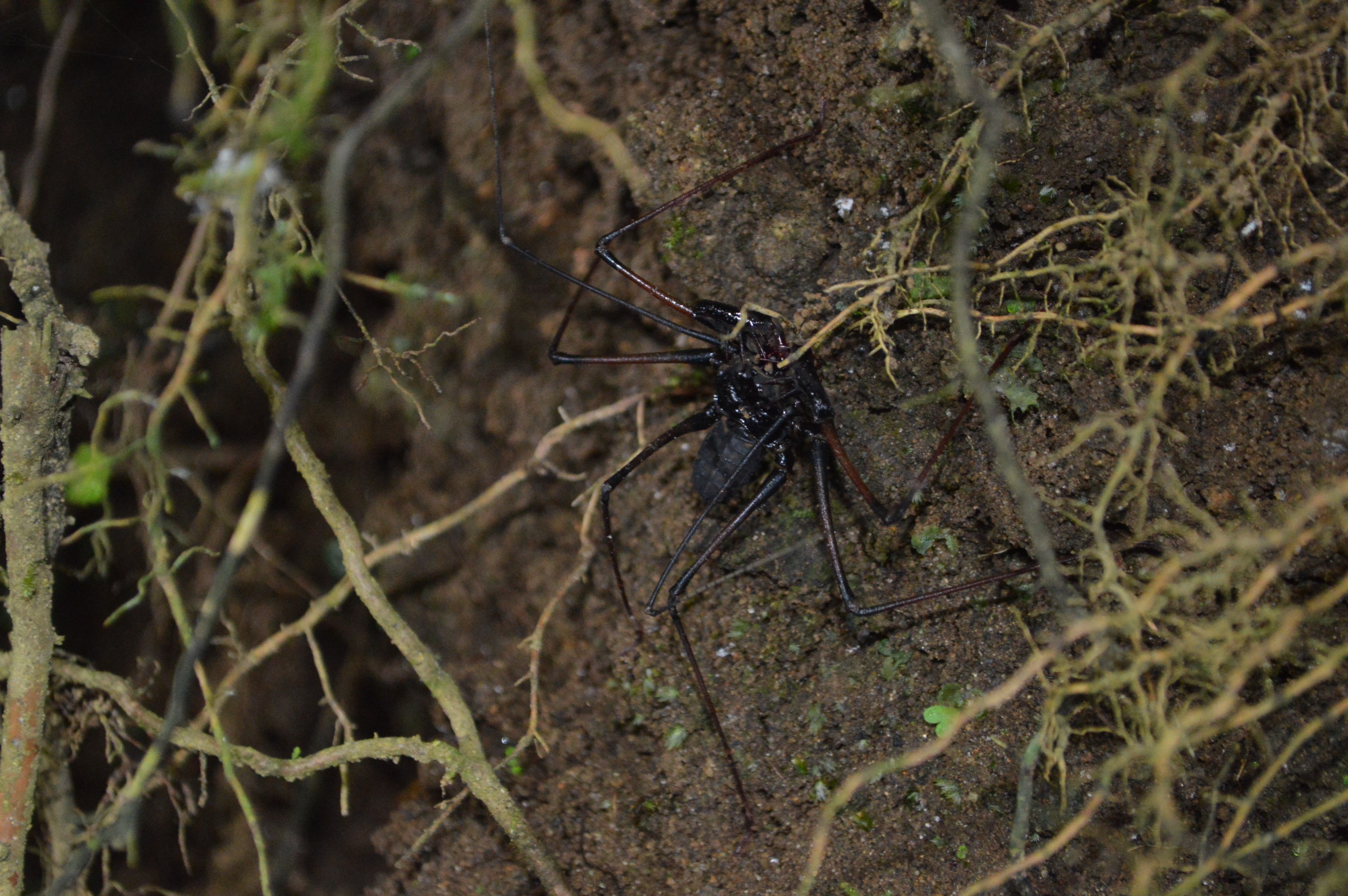
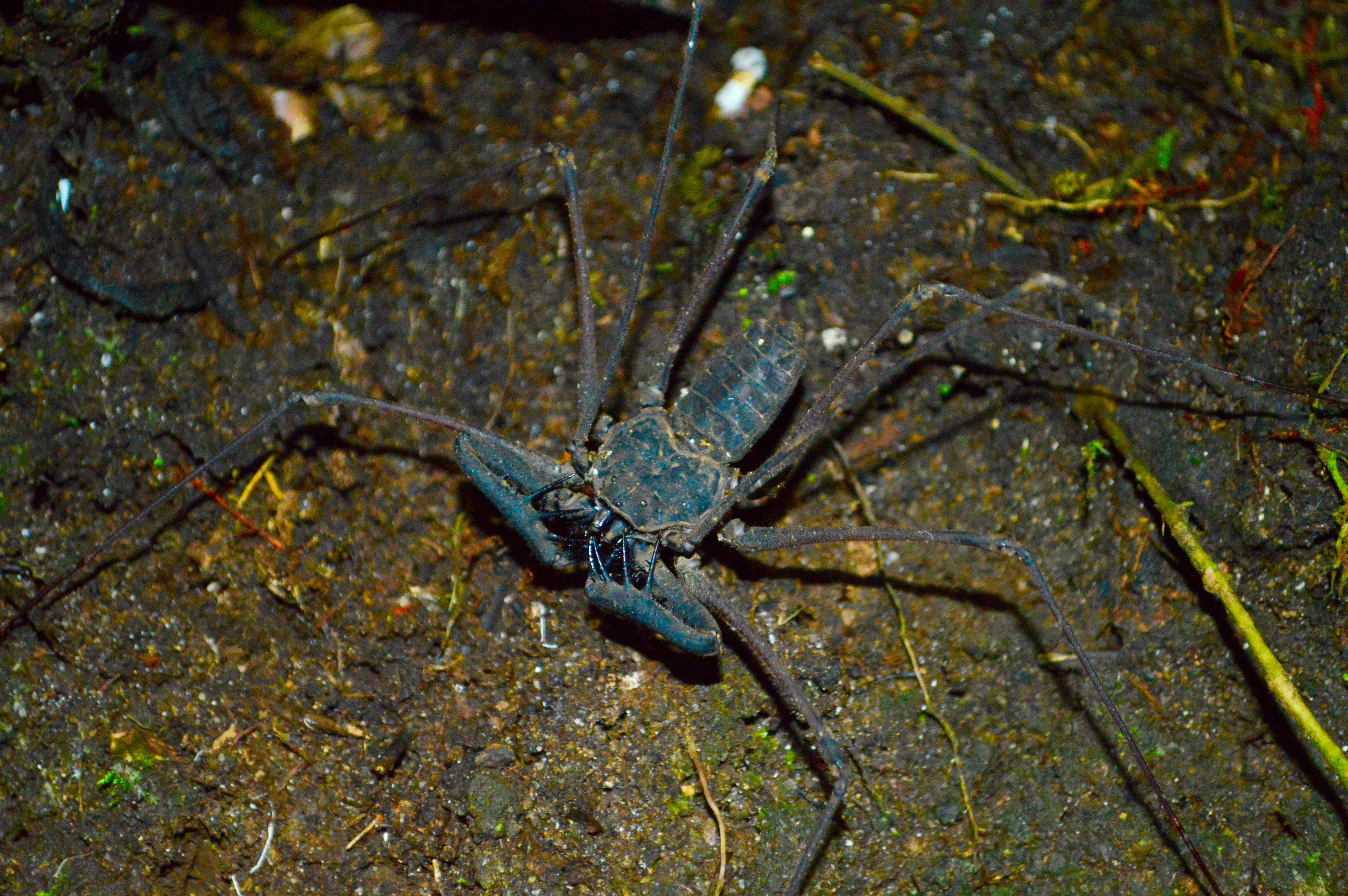
There’s also the Amblypygians, the “Scorpion-spiders” an entirely tropical order. I’ve heard stories of caves in Mexico filled with millions of these climbing on the walls, ceilings, floor, everywhere. Although that’s probably a little bit of an exaggeration, they are mainly nocturnal, living in forest or hiding in caves. They also seem to have the rudiments of social structures and I know of a research project in Puerto Rico looking at the evolution of social behavior in them. For most people one of these creatures, much less an entire cave full of Scorpion-spiders is a terrifying thought. It’s useful then to remember, much like the Opilionids, Amblypygians are completely harmless to people (in less you have a weak heart). To the untrained eye, Scorpion-spiders look like giant spiders straight from the scariest parts of The Hobbit, now in flesh. They’re not spiders though and unless the Shire is more tropical than I always imagined, they couldn’t set mandible there. They have long appendages, as with the harvestmen an adaptation for living in dark caves or hunting forest floors at night. Unlike the harvestmen or spiders with their round, plump abdomens, they have flattened “pancake-like” bodies. Also Amblypygians appear to have ten legs (Maybe encouraging you too love this one will be harder than I thought), in reality scorpion-spiders like all arachnids have only eight legs. What appear to be a fifth set of “legs” are actually modified mouth parts, made to shoot out, grab and subdue prey for eating. Like the Opilionids, Amblypygians don’t use webs to capture their prey and instead roam about, using legs like antennae and attacking prey items with their raptorial appendages (those large modified mouth parts).
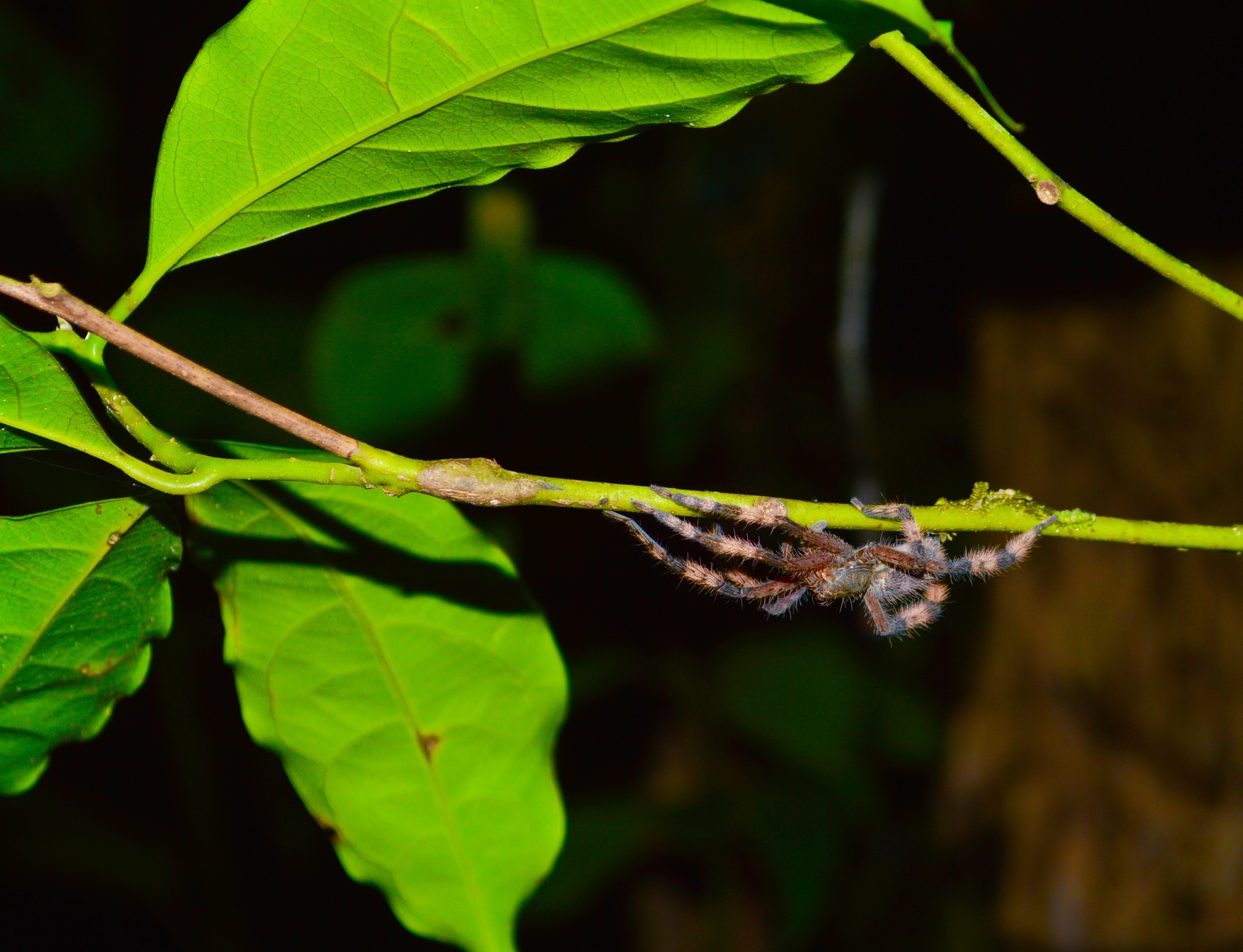
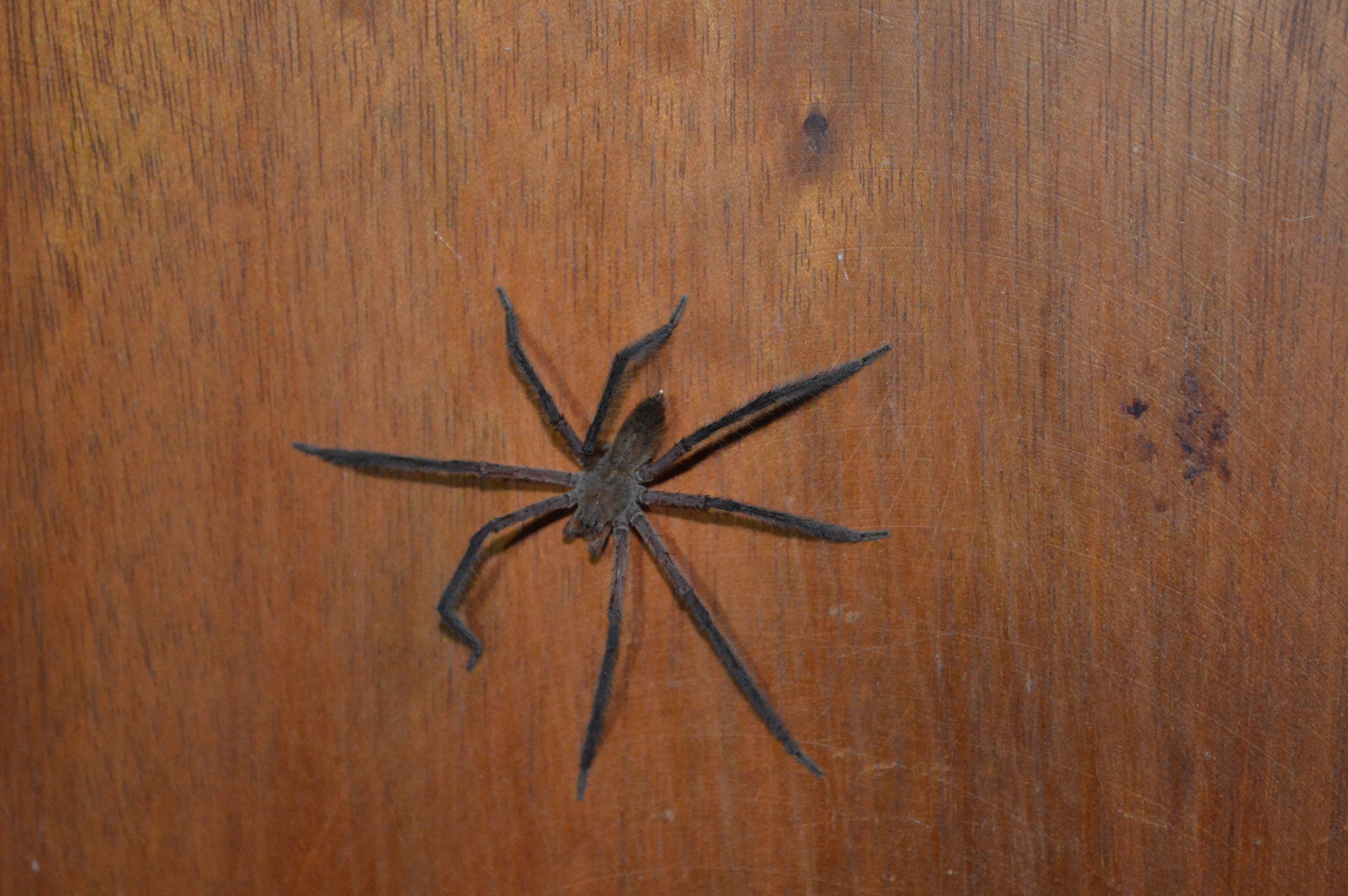
There are other arachnids I could talk about, such as the camel spiders who had their hey-dey as deceptive pictures and overblown stories spread from soldiers in Iraq across the internet. Or vinagaroons that look similar to scorpions but shoot vinegar out of their posterior as a defense. I haven’t seen any of these since I’ve been at Las Tangaras though. I have seen spiders almost every night though, large furry, completely harmless wolf-spiders (possibly tarantulas but I’m pretty sure their wolf spiders). We see these come out at night to hunt as well. It seems a little creepy to many people to be completely surrounded by arachnids all the time but in reality unless you’re living in Antarctica, we all live with these creatures. If you’re adventurous and want to see different arachnids, come to Las Tangaras and see what bizarre treasures are living in the tropical night. Otherwise, if you’re lucky enough to live near an empty field full of plants (in could be “weeds” or crops or wild flowers, it doesn’t matter) wait until there’s an early morning and everything is covered in sparkling dew. Walk through the field and see the hundreds of spider webs glowing in the morning light like strings of jewels and think. Imagine how different our wonderful planet would be if their weren’t spiders secretly spinning millions of webs, or scorpions, or opilionids or any of the rest of them. Like it or not, they are part of the land like all creatures and so in a very real way, a part of us as well.
Meet Erin and Zach
Erin and I have been settling into Las Tangaras as new reserve managers quite nicely the only problem is that three months seems like far to short a time to spend somewhere so beautiful and peaceful.
Let me begin by introducing us to those of you out there reading our blog. My name’s Zach, I went to school at Colorado Mesa University for biological sciences and took a field biology course in Ecuador, which made me fall completely in love with the country, the tropics and field biology. Since then I’ve participated in field biology work all over the world. I spent a summer on Middleton Island, Alaska working with sea birds, a summer on Abaco in the Bahamas working with parrots, five months working with leatherback sea turtles in Equatorial Guinea. I’ve also participated in a few expeditions for cave biology in Northern Arizona and Colorado, surveying bat colonies and collecting cave arthropods. Then there’s the five months I spent in Madagascar working on a reforestation project and met Erin. Erin had the much more exciting job of tracking radio collaredVareciaVarigata, (the black and white ruffed lemur) through the forest and collecting data on behavior. I spent most of my time working with locals in the hot sun far from the fragmented forest, collecting compost, planning and planting trees (and sweating a lOT). Erin went to SUNY ESF where she studied conservation biology and did research on Martens, she’d also worked with wolves in Indiana and had experience working with Canada geese back in New York and lots of time spent working with animals in a vet clinic. She’s also spent a year in Korea teaching English. We hit it off and Erin eventually moved to Colorado to be with me after we came home to the US. Since then I’ve been working at a place casting fossil replicas for museums while Erin worked at a veterinary clinic. Our true passion is conservation and living closer to the land, spending plenty of time out doors. So when we saw the Las Tangaras position, we jumped at the chance to work with birds in Ecuador’s cloud forest and contributing to the protection of one of the world’s great biodiversity hot spots.
So far we’ve seen white fronted capuchins early in the morning hooting angrily at us from the tree tops, swam in gorgeous swimming holes that look as if they’re from a movie set and spent a lot of time collecting data on hummingbirds.
We’ve been out at night on a few hikes and seen plenty of frogs, katydids and a Nightjar near a stream watching us blurry eyed from our headlamps. There’s been a large blue morpho butterfly that keeps flitting around the house and toucanettes that we saw early one morning in the forest. In fact there’s been so much wildlife easily spotted that it’s almost unbelievable. As dense as this forest is, it’s hard to imagine how much animal life is actually out there that we don’t even see hiding among the plants.
We also discovered a burrow on one of the trails and I set up a camera trap to see what’s living in it. You’ll have to wait until next post to see the pics, if they come out. I’m hoping it’s an armadillo, an amazing animal I have never seen in the wild.

-
- A swimming hole at Las Tangaras!
Reptiles and Amphibians at Reserva Las Tangaras
At Reserva Las Tangaras, there is a great diversity of reptiles and amphibians. Frogs are more likely to be heard at night and can be spotted with a flashlight at night as many are nocturnal, while reptiles are most likely going to be basking or seen as a quick movement as you walk along the trails. For us the greatest species diversity observed has been in snakes, with 10 species observed on or near the reserve. Almost every snake observed has been a different species.
Pasture’s Frog Pristimantis achatinus
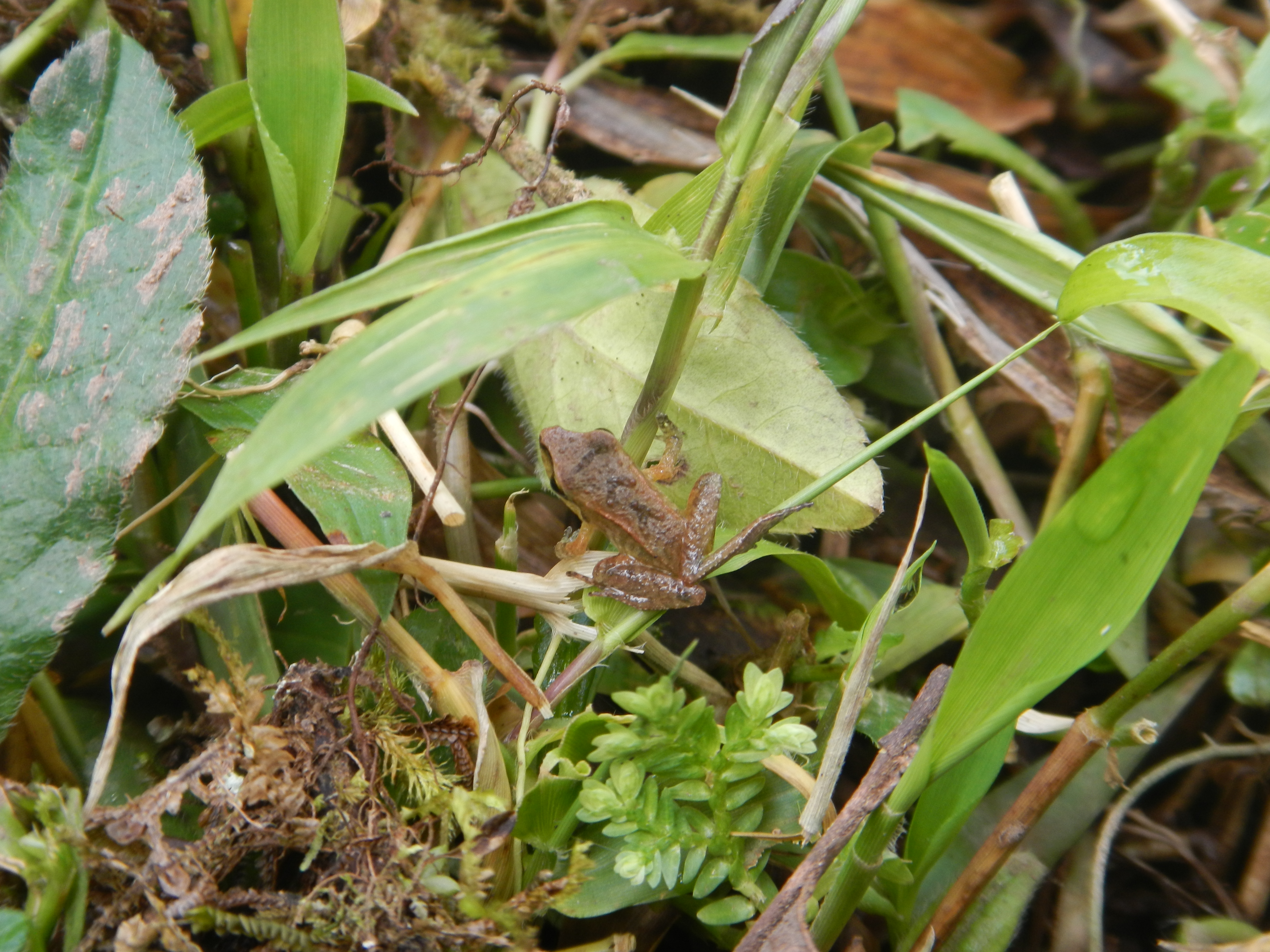
Rainfrogs are the most diverse family of frogs in the area with 23 species. Most are nocturnal and arboreal. However with the Pasture’s Frog, the tiny juveniles are diurnal and terrestrial and can be spooked as you walk through the yard and along trails here at the reserve. They are likely the most common frogs at the reserve. They are small, brown, and have distinctive V markings on their backs. We see them in mostly disturbed sites, like grassy areas, trails, and even in the cabin. Only the juveniles are diurnal, but at night the larger adults can be seen on their arboreal perches.
Cane Toad Rhinella marina
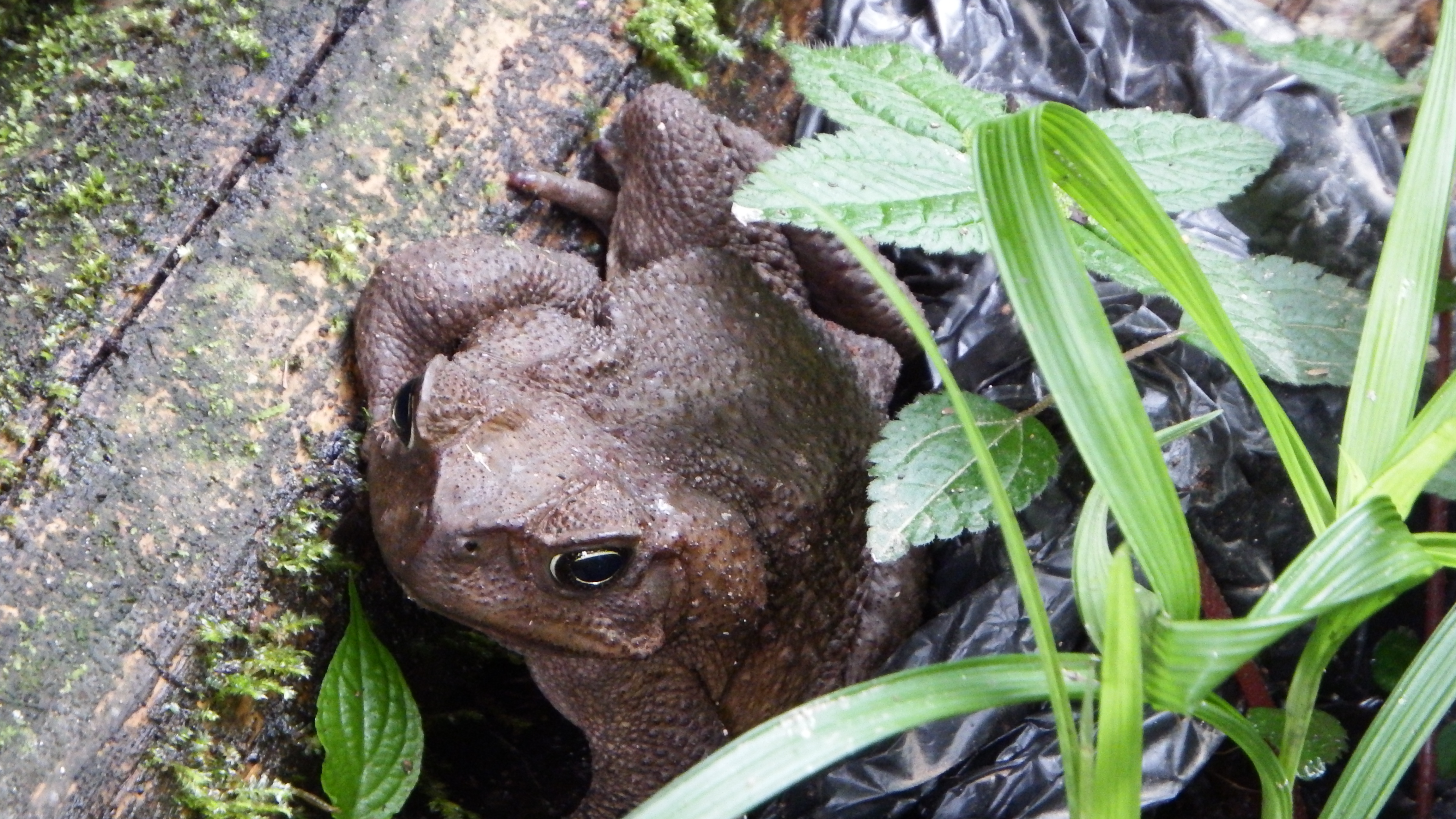
This large toad is the most common toad and likely only toad here at the reserve, as the 3 others that occur in Mindo are very rare. Found in areas such as under the cabin and edges of forest. This pugnacious species can grow up to 2.5 kilograms and 24 centimeters in length. As an ambush predator, the cane toad hides and waits to swallow its unsuspecting prey which is anything that it can fit its mouth around. Native here, this toxic toad has become highly invasive in places such as Australia, as few organisms can eat it.
Andean Snail Eater Dispsas andiana

There are a variety of snakes that occur here at Las Tangaras ranging from pencil sized to up to six feet. They range from terrestrial to arboreal, and nocturnal to diurnal. Most snakes that are seen are terrestrial and are seen slithering away as you approach on the trail. However, on a warm sunny day or a cold morning, you may find one basking in the warm or sluggish from the cold.
The Andean Snail-Eater, a nocturnal snake is an example of one of these snakes. Pictured is a juvenile who found itself too sluggish to move from its nighttime hunting grounds during a cool morning. This small juvenile can grow up to 84cm and actively forages exclusively on mollusks. The Andean Snail-Eater is one of three Snail-Eaters and one of 23 colubrids or harmless snakes that occur in Mindo.
Ecuadorian Toadhead Bothrops campbelli
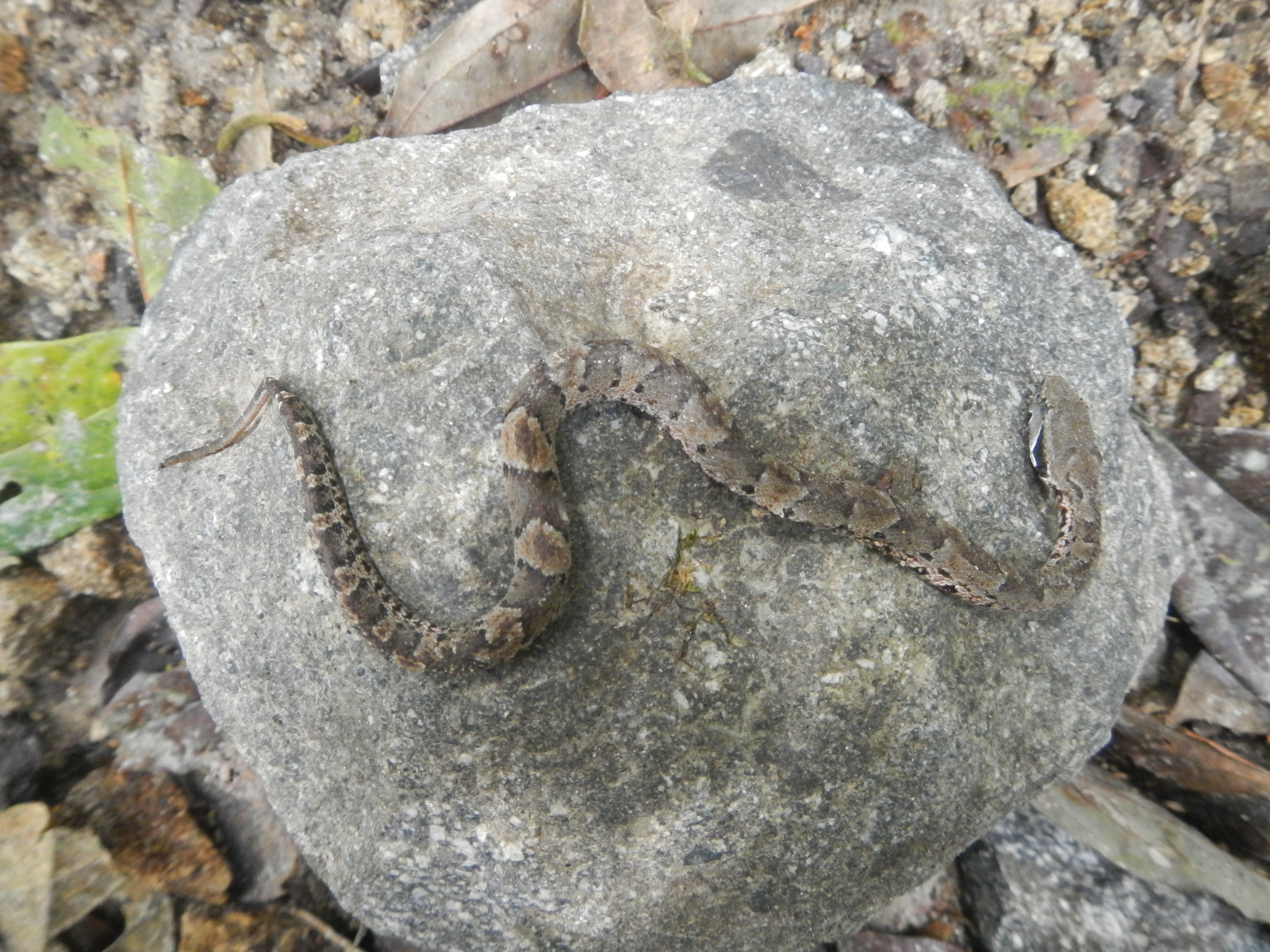
Luckily there are few dangerous poisonous snakes at the reserve. There are one coral snake and four vipers. These snakes are rarely sighted, but one should be aware of their existence. One of these snakes which we have observed is the endangered Ecuadorian Toadhead. Unfortunately, this individual was dead on the the road near the entry trail, however it more than likely could be found at the reserve. Vipers are highly venomous and can be recognized by their triangular heads. According to “The Amphibians and Reptiles of Mindo”, the Ecuadorian Toadhead is somewhat docile and tries to escape rather than bite. However the more common Terpiocelo Bothrops Asper is similar in appearance and is extremely venomous and aggressive.
Ocellated Riama Riama oculata
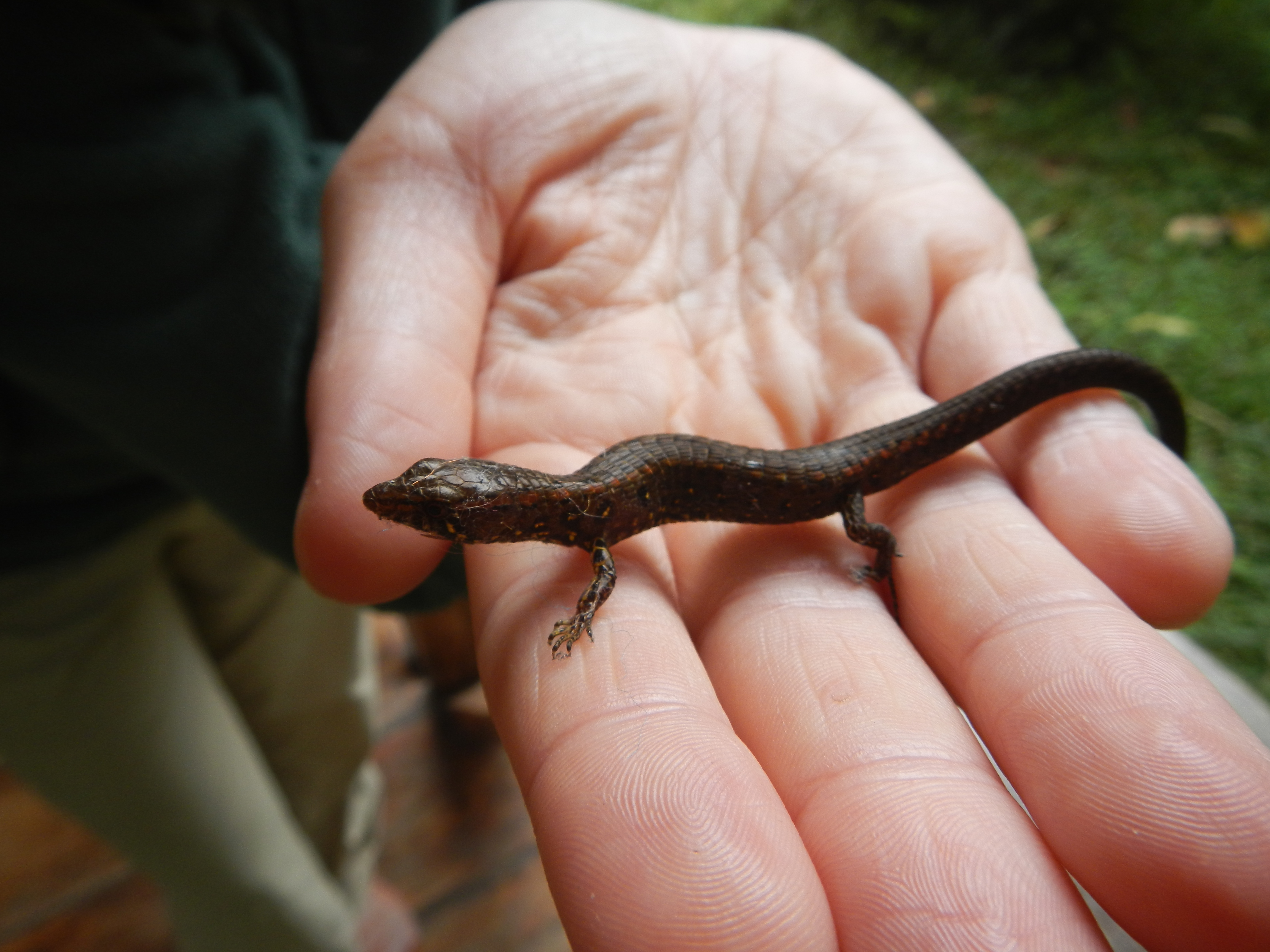
There is great potential for the diversity of lizards at the reserve with 16 species occuring in Mindo, but for us these creatures have been the most elusive. Most encounters have been brief, and they are gone before we can register any field markings. The Ocellated Riama is a relatively large brownish terrestrial to arboreal lizard often found in moist shaded areas as it is susceptible to overheating. It can be identified by its spear shaped head, short limbs, and shiny scales. The one pictured is a small juvenile that found its way into the lodge.
Source:
The Reptiles and Amphibians of Mindo
Arteaga A., Bustamante L., Guayasamin J.
2013 Universidad Tecnologica Indoamerica
Common Mammals of Reserva Las Tangaras
Although we regularly see dozens of bird species here at the reserve, mammals are more elusive. Others have seen mammals and their sign, ranging from otter to coati to even spectacled bear (tracks). While our experience with mammals here has been confined to just a handful of species, we enjoy the peculiar relationship we have with each one.


Central American Agouti
Guatusa
Dasyprocta punctata
The agouti is certainly the most commonly seen mammal at the reserve, as it regularly ambles through the yard to graze. This red-brown rodent is slightly larger than a hare. It has small ears, a very short tail, and slender legs. Apparently agoutis are hunted and can be wary of people, but at the reserve they are very comfortable with us and often eat the over-ripe fruit that we toss to them. I write “them” because agoutis are monogamous, but a pair shares their territory. So although we only ever see one individual at a time (they are not gregarious), I believe we probably see both members of the pair.
“Mamíferos del Ecuador” says that a mother agouti digs a separate burrow for her young and calls them out to nurse. After a few weeks when they have outgrown their burrow, the female moves them to another, larger one. At four to five months old, they are able to leave the burrow to forage with their mother.

Paca
Agouti paca
This larger, nocturnal cousin of the agouti is reddish brown but has rows of white spots on its back. We have seen a paca twice, roaming through the yard in the evening, and have caught a video of it on our game camera. “Neotropical Rainforest Animals” says that pacas are much like agoutis in that they mate in monogamous pairs and share a territory. They den up in burrows as well, and also feed on fruit, tubers, and herbaceous vegetation.

Red-tailed Squirrel
Ardilla de Cola Roja
Sciurus granatensis
This is one of two squirrels that occur at the reserve, and is the more commonly seen one. It is brown above with a rufous underside, and bushy red tail. Like North American squirrel species, it is often heard before it can be seen, chattering admonishingly at hikers. “Neotropical Rainforest Mammals” mentions that the red-tailed squirrel feeds chiefly on nuts, fruits, and fungi. Apparently they are discerning diners: we have seen one in a firewood tree outside of the cabin picking and dropping down fruits. Each fruit only had a small nibble taken out of it, so they were presumably not ripe (or tasty) enough.

Geoffroy’s Long-tongued Bat
Murciélago longirostro de Geoffroy
Anoura geoffroyi
Although Chiroptera is the world’s second largest order of mammals, bats are one of the most difficult species to really see. They fly rapidly through the dark, never giving one the opportunity to see more than a pair of wings. At the reserve, when we have arrived back from town in the dark on occasion, we have surprised several bats enjoying the hummingbird feeders after hours. They are quite fearless, still flying in for another sip at the feeders, even as we carry them inside. We have been able to get a few photos, allowing us to determine that one of the common bats at the reserve is Geoffroy’s long-tongued bat.
“Mamíferos del Ecuador” says that this bat feeds primarily on nectar and pollen but will supplement its diet with insects and occasionally fruit. It is most commonly seen in disturbed areas. A. geoffroy can be identified by its dark fur, small triangular ears, long narrow muzzle, small triangular leaf-shaped nose, and lack of tail.
We often encounter bats on the trail when we are walking in the dark. They swoop in very close, right through the beam of our headlamps. Maybe they are catching insects that are attracted to our lights? If so, these bats could be one of a number of species. Four different families of bats occur in Ecuador: Sheath-tailed bats; Leaf-nosed bats; Mastiff or Free-tailed bats; and Vespertilionid bats. Sheath-tailed bats are aerial insectivores, as are Vespertilionid bats, and Mastiff bats. Within the Leaf-nosed bats, there are four sub-families that occur here: Spear-nosed bats are carnivorous and insectivorous; Short-tailed bats are frugivorous; Long-tongued bats feed on nectar; and Neotropical Fruit bats are, as their name implies, frugivorous.
Sources
Tirira, D. 2010. Los Mamiferos Del Ecuador.
Emmons, L. 1997. Neotropical Rainforest Mammals A Field Guide. University of Chicago Press.
Medicinal Plants at Reserva Las Tangaras
The cloudforest of Ecuador is situated between the Andes Mountains and the low expanse of the Amazon. It has traditionally been a hostile place to those who were not born there, and consequently have not been swaddled in its mist, suckled on the damp of its rainy season, and weaned on dust in its dry summer months. To outsiders, the tropical forest has been a thing to be conquered, cleaned, and used to our own purposes. This trend is an obvious one, starting with conquistadors who exploited not only the forest, but the native people who they saw as part of it, and is being carried on with rubber plantations and more recently natural resource extraction.
What lies at the bottom of our disregard for the tropical forest? What is the cause of our feud, and where is the cure? Maybe, as Jose Eustasio Rivera writes in The Vortex, our apparent hate is derived from fear of the unfamiliar:
“No cooing nightingales here, no Versaillian gardens or sentimental vistas! Instead the croaking of dropsical frogs, the tangled misanthropic undergrowth, the stagnant backwaters and swamps. Here the aphrodisiac parasite that covers the ground with dead insects; the disgusting blooms that throb with sensual palpitations, their sticky smell intoxicating as a drug; the malignant liana, the hairs of which blind animals; the pringamosa that irritates the skin; the berry of the curuju, a rainbow-hued globe that holds only a caustic ash; the purging grape; the bitter nut of the corojo palm.”
Perhaps instead of giving into irrationalities and fright, the traveler should learn what leaf is tonic to his snakebite, and to seek out the bark that is an antiseptic to his wound. In this vein, I have selected five medicinal plants that grow on the reserve, and given short descriptions and photographs of each.
Clusia sp.
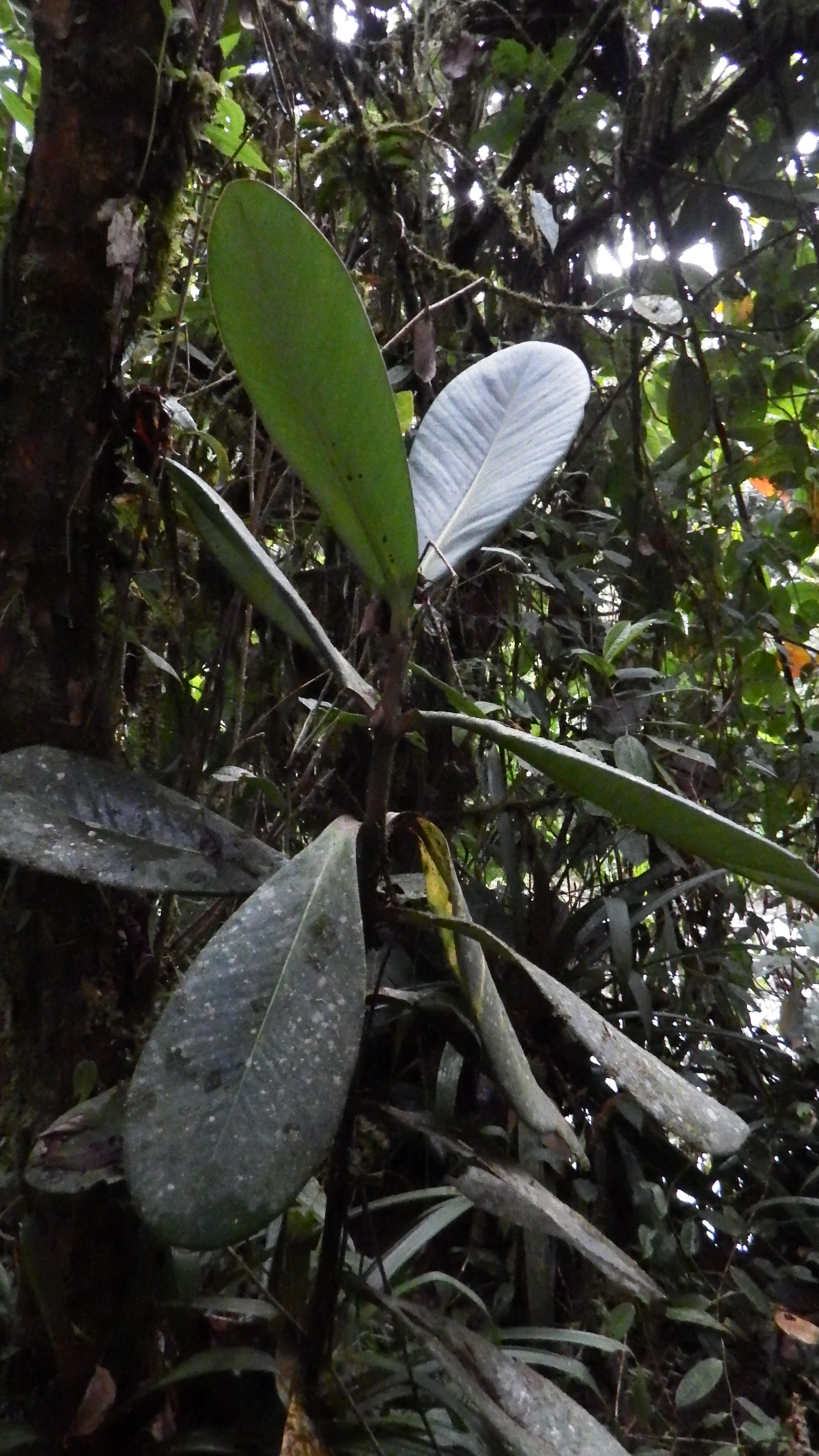

This sprawling native epiphyte can be found along trails near the cabin. It has large, simple, opposite leaves which are used as an astringent. Its fruit is an edible star-shaped capsule. According to Tobias Policha in Plants of Mindo, there are 63 species of Clusia in Ecuador, five of which are endemic. The species that we see at the reserve has a white, almost fleshy sweet-scented flower.
Piper sp.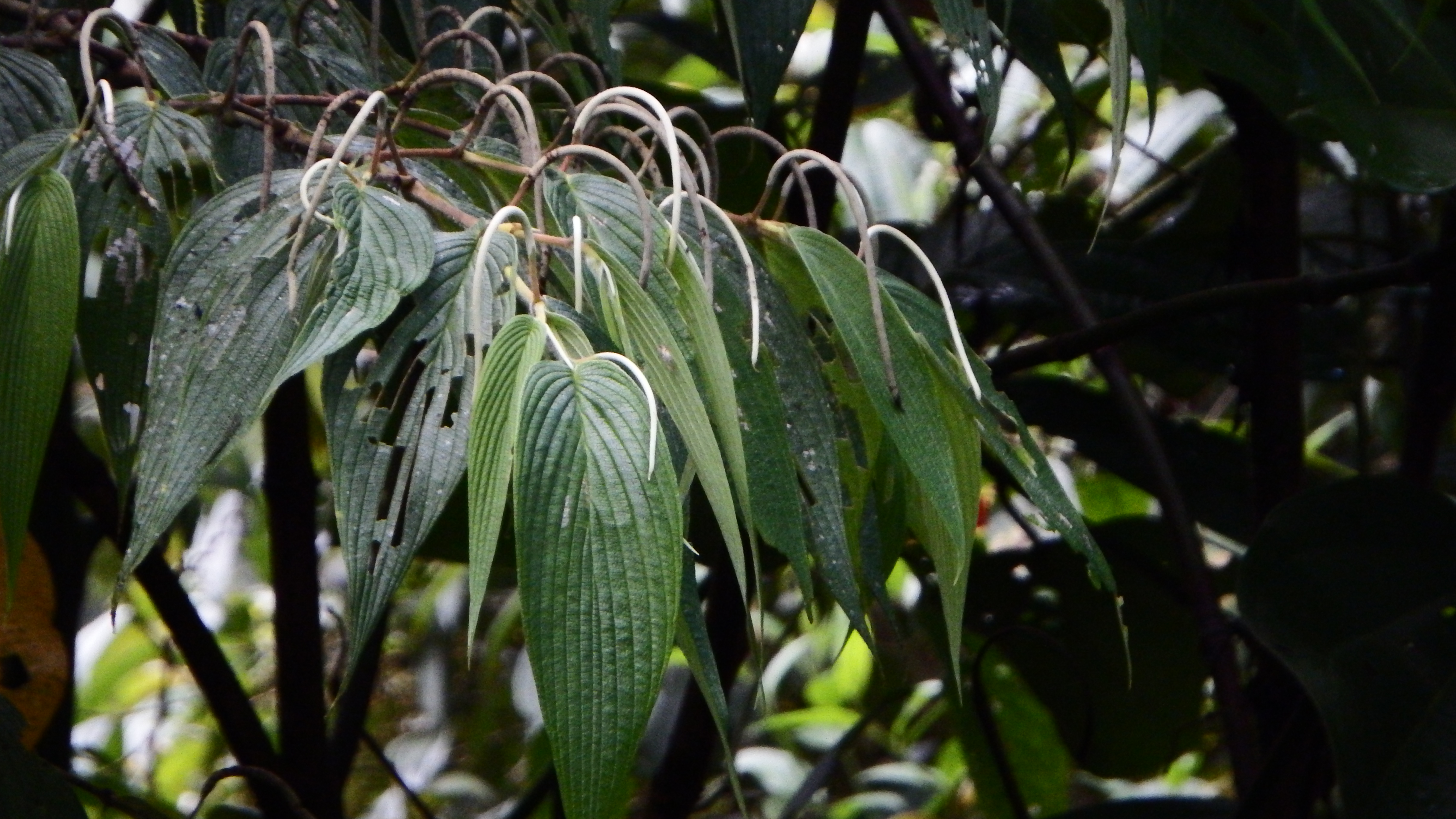
The dangling pointed leaves and flower stalks of Piper sp. are easily seen along the entry trail to the reserve. According to Castner, Timme, and Duke in A Field Guide to Medicinal and Useful Plants of the Upper Amazon, the roots are used as a remedy for kidney stones. Piper sp. is also used for lower back pain, toothaches, and to aid healing in women who have just given birth.
Cecropia sp.
As you make your way into the reserve, you might trample over some large palmately-lobed leaves. Upon looking up, you would see Cecropia trees. This species is a valuable source of food for birds, bats, and other animals, especially as it is a pioneer species. It is easily found on the entry trail to the reserve, which traverses an old pasture. According to Policha, Cecropia is used as a diuretic, and its bark as an emollient and for making hammocks.
Begonia parviflora
This is another native plant with large distinctive leaves. The sweet-scented white flowers are five-merous, and borne on a panicle. Policha writes that B. parviflora is used to treat inflammation, mastitis in cows, and as an antiseptic.
Psidium guajava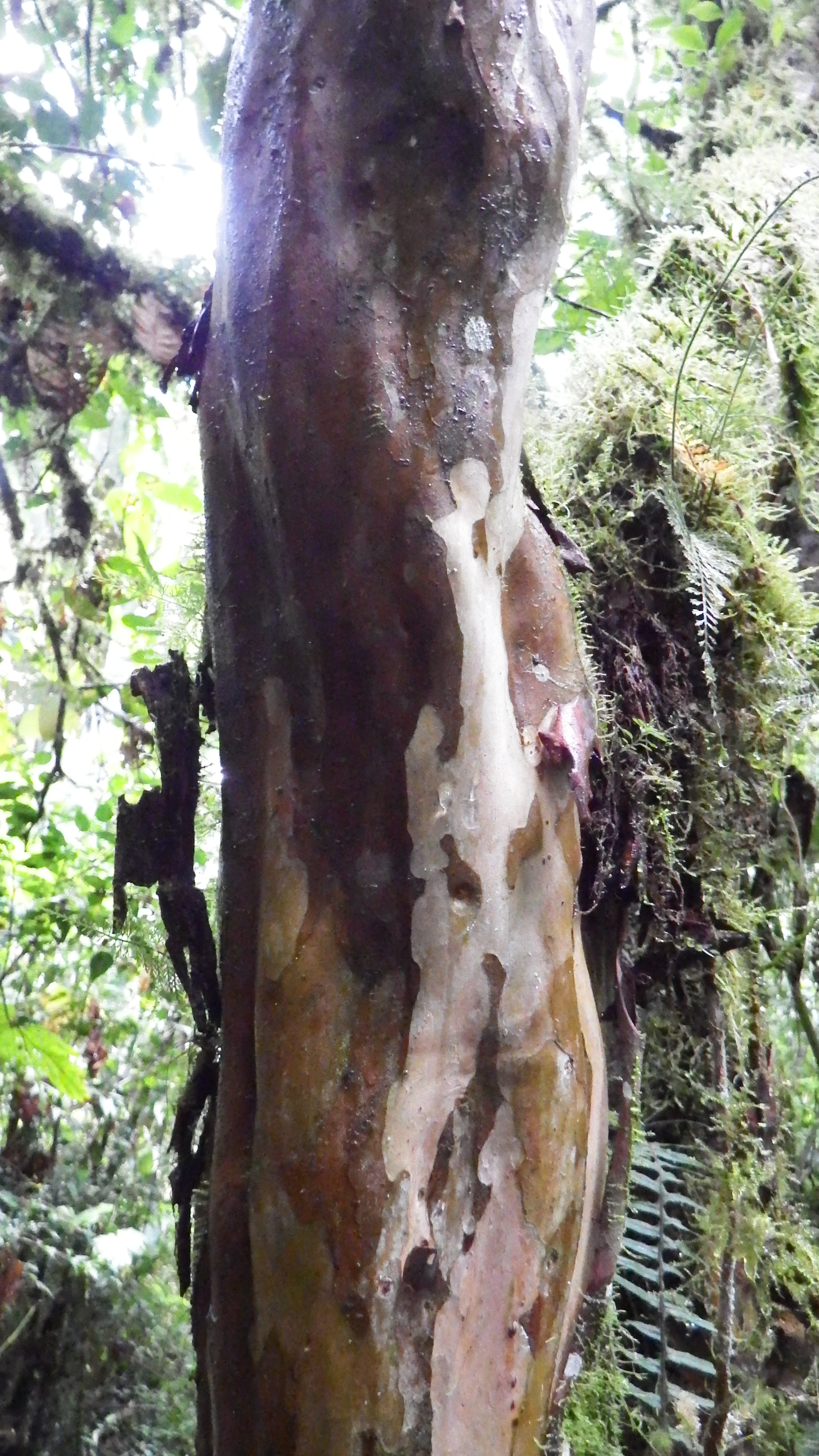 Psidium guajava is a native tree which grows right outside of the cabin at the reserve. Its most distinctive characteristic is the thin flaky bark that curls back to expose knotty, almost rippling wood. However it is most recognized at the bearer of the guava fruit. This plant is edible and very high in vitamin C and A. All parts of this plant are useful. Castner, Timme, and Duke write that Psidium guajava leaves are used for treating mouth sores and and the bark can relieve dysentery. Its flowers can help regulate menstrual periods. Policha writes the fruits are anti-diarrheal as well.
Sources
A Field Guide to Medicinal and Useful Plants of the Upper Amazon
James Lee Castner, Stephen Lee Timme, James Alan Duke
1998 Feline Press, Inc.
Plants of Mindo: A Guide to the Cloud Forest of the Andean Choco
Tobias Policha
2012 American Herbal Dispensary Press
Tropical Rainforests: Latin American Nature and Society in Transition
Edited by Susan E. Place
1994 Scholarly Resources Inc.
This Is Our Home
It’s 5:00 a.m., another dark and dewy morning at Reserva Las Tangaras. We stand in the candlelit kitchen with a hot cup of coffee and an apple to charge ourselves for the trek up the steep mountain we call our backyard. Headlamps on, data sheet and binoculars in our pack, we slip on our muck boots and begin another day. There is nothing like a hike through the jungle at 5:30 in the morning. All you can hear is the hum of the river and the harmonious symphony of frogs echoing from giant leaves and bromeliads. All you can see is the dense mist that fogs your way along the muddy path.

Andean Cock-of-the-Rock – allzinfo.com
At 5:50, we have arrived at our destination, the lek of the infamous Andean Cock-of-the-Rock. This is one of the most peaceful times of the day. Drops of dew splatter from canopy to soil, the peeping of the frogs becomes less and less, the chirping of awakening birds becomes more and more, the hum of the river down in the valley stays steady, all while the clouds hanging over the mountain tops begin to glow with the greeting of the morning sun. Just when we are hypnotized by the tranquility of the Cloud Forest, it explodes to life with the sudden call of the first Cock-of-the-Rock swooping in to claim his perch. Another male arrives and they greet each other with bobbing heads and flapping wings, squawking in a ritualized fashion. After only a few minutes, the lek is blessed with the presence of at least fifteen males. We spend our time collecting data and admiring their bright-red plumage and their fascinating display.
We stay as quiet and still as possible, but we know we don’t go unnoticed. This is proven true when you happen to make direct eye contact with the Cock-of-the-Rock. Although we’ll never know exactly what he’s seeing through his piercing eyes, we hope he’s only seeing another product of Mother Nature, another creature of the forest. This view is contrary to the perception that many humans possess – that we are separate from the rest of the natural world when in reality, we are all an integral part of it.
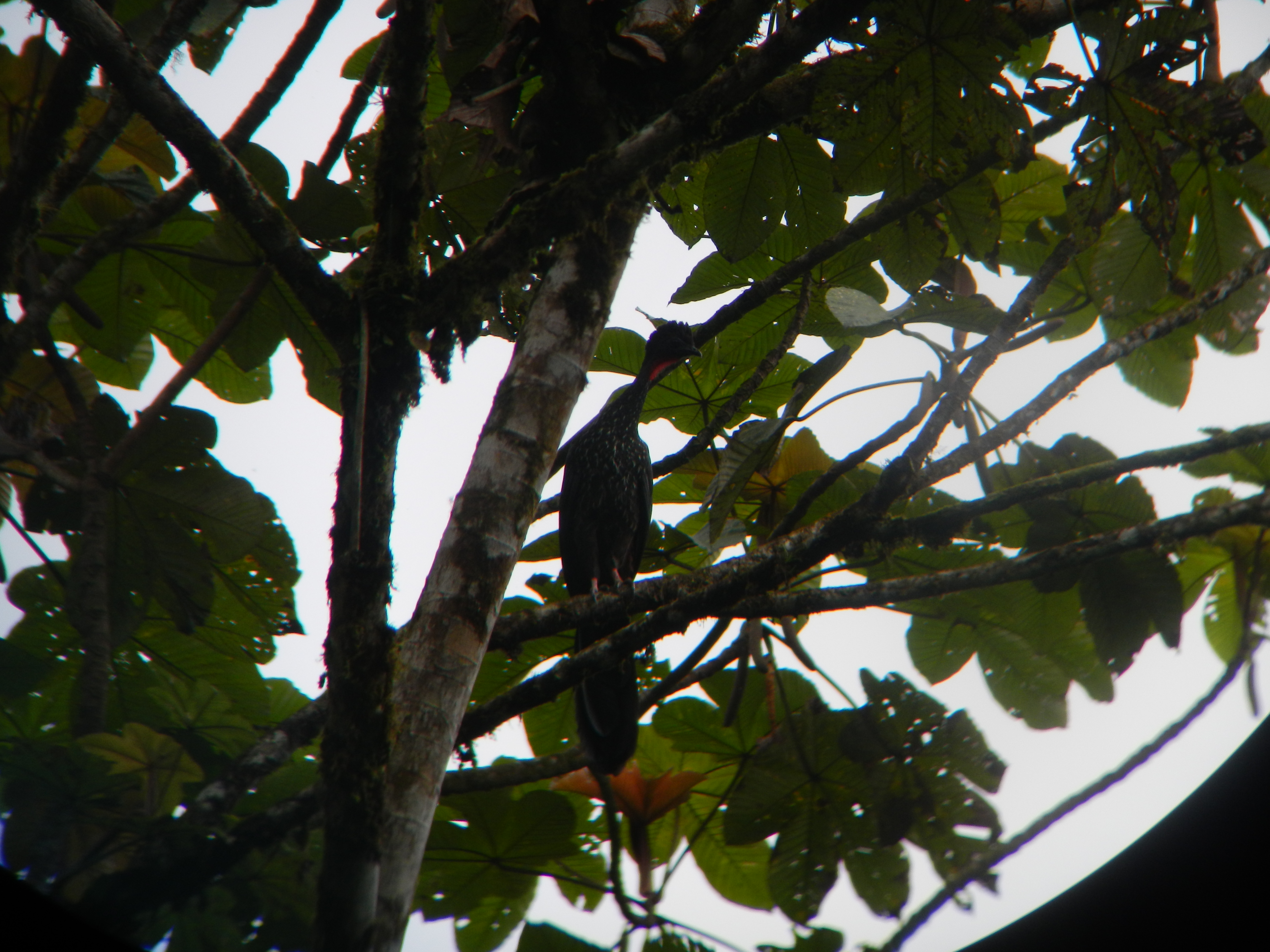
Crested Guan
It’s 9:00 a.m. now, and we are descending the mountain after an epic morning. Suddenly, raucous squawks erupt from the canopy of a nearby tree. It’s a large bird, looking almost dinosaur-like, with its long tail, sharp beak, spotted chest, bright red dewlap, and its crown feathers raised up in alarm; it’s a crested guan. We realize there are three of them, all releasing a prehistoric-sounding call before they depart to find solitude again. We comment on the excitement as we continue on our way.
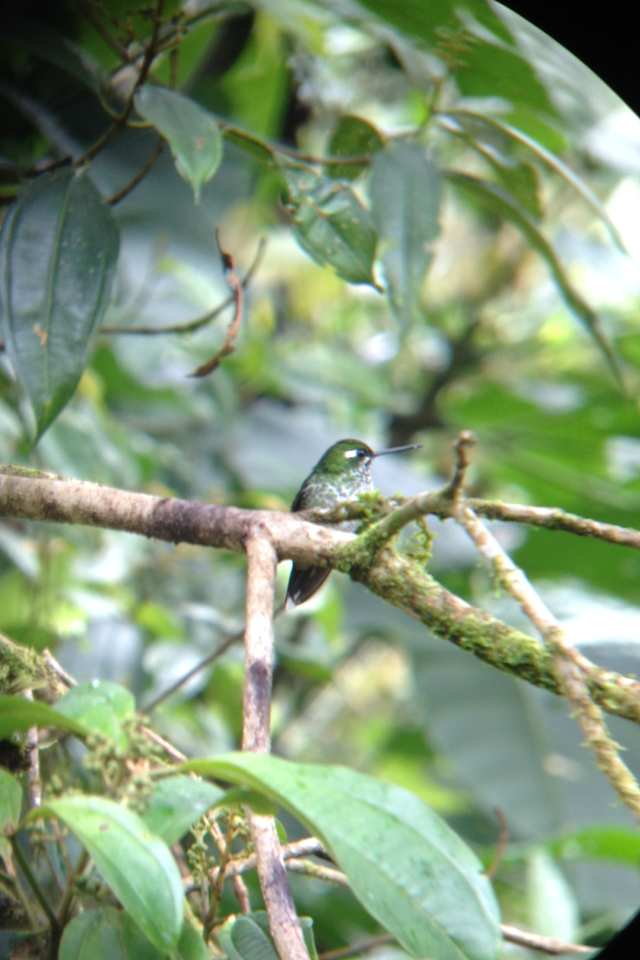
Purple-Bibbed White Tip… one of our favorites at the reserve
As soon as we are back at the cabin, we are eagerly greeted by a purple-bibbed white-tip and her hungry friends. They don’t hesitate to let us know that it is well past the time we usually put out their hummingbird feeders. Once the hummers are pleasantly indulging in their sweet treat we begin our work tasks. It isn’t long until we are interrupted by the shrill distinct call of the chestnut-mandibled toucan. Though we see and hear these neighbors of ours often, we never take their presence for granted, so we run upstairs with our binoculars to get a better view. Sure enough, our toucan friend is perched on a branch high in the canopy, thrusting his beak in the air to cast his song far over the hills, showing off his beautiful yellow neck, glossy black body, and red rump plumage. After about ten minutes, the toucans fly away, large beaks leading their flight, and we return to our duties.
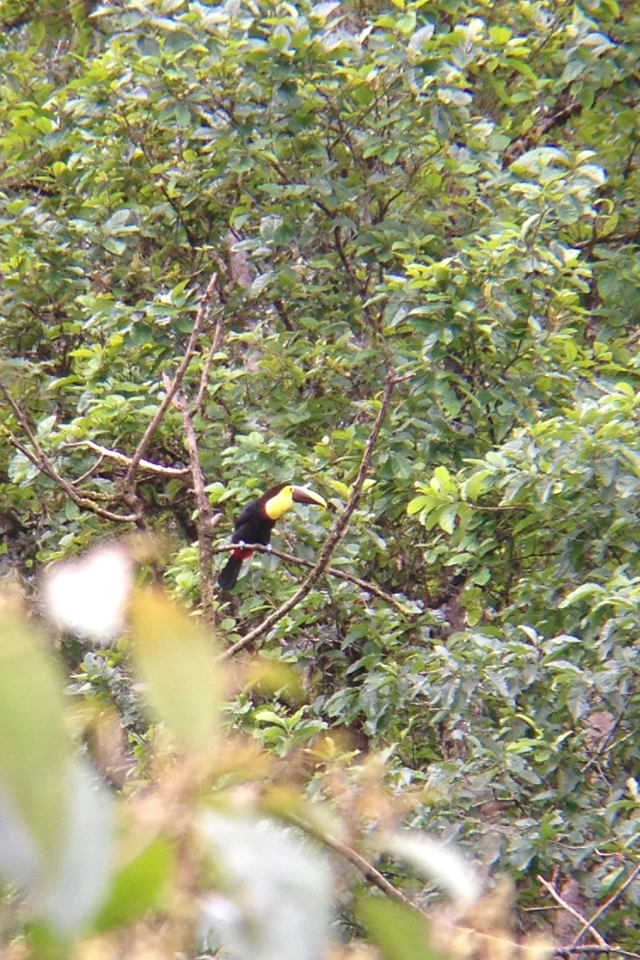
Chestnut-Mandibled Toucan
Around midday, the usual rains begin. For now, it’s a light drizzle, an ideal invitation for a small mixed flock of birds to play in the trees that surround the cabin. They jump from branch to branch like acrobats searching for their lunch. A golden tanager and a yellow-throated bush tanager hop around in the limon tree. A three-striped warbler pecks at the moss on the branches of a myconnia, while a spotted woodcreeper snacks on a beetle below on the trunk. An orange-bellied euphonia and a tropical parula dance around the guava tree. Each bird releases its own distinct song, chatter, and tweet – as Bob Marley would say “a melody pure as gold.”
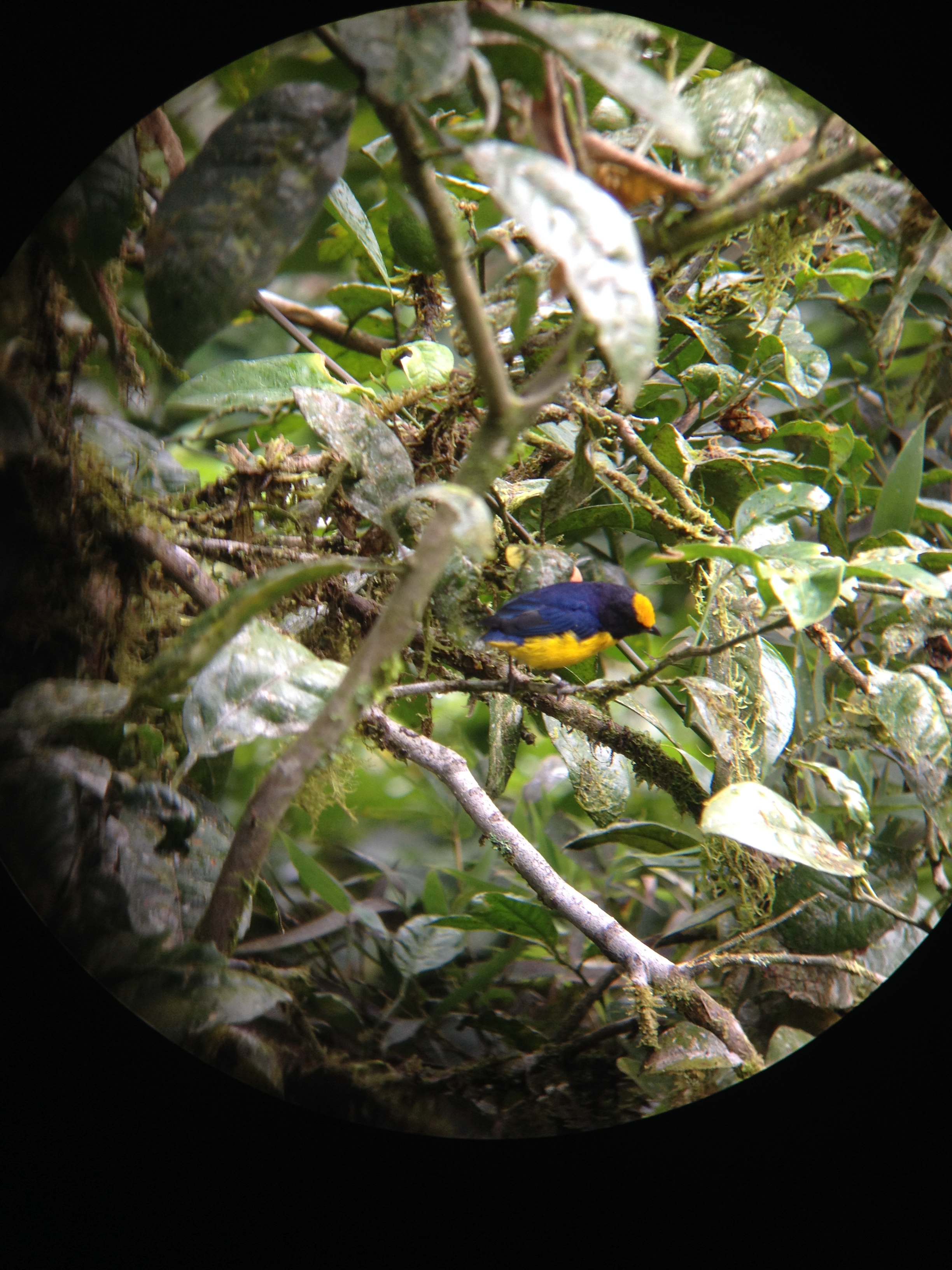
Orange-bellied Euphonia
Our day’s work has been completed and we set out for an evening stroll along the Rio Nambillo, hoping to see some more birds. We arrive at our usual spot by the river to find that we are not alone. They stand perched on a mid-stream boulder, male and female, hunting an eddy. They are the true masters of air, water,and land – torrent ducks. We can’t believe our luck. We watch them for over an hour, diving into the swift-flowing river, running up rapids. They gracefully explore the river through every familiar route with their knowledge of every eddy. We admire their spectacular plumage, the male’s white and brown stripes, the female’s golden belly and chest. Eventually, the ducks take flight and we are left alone at the river to ponder on their incredible abilities.
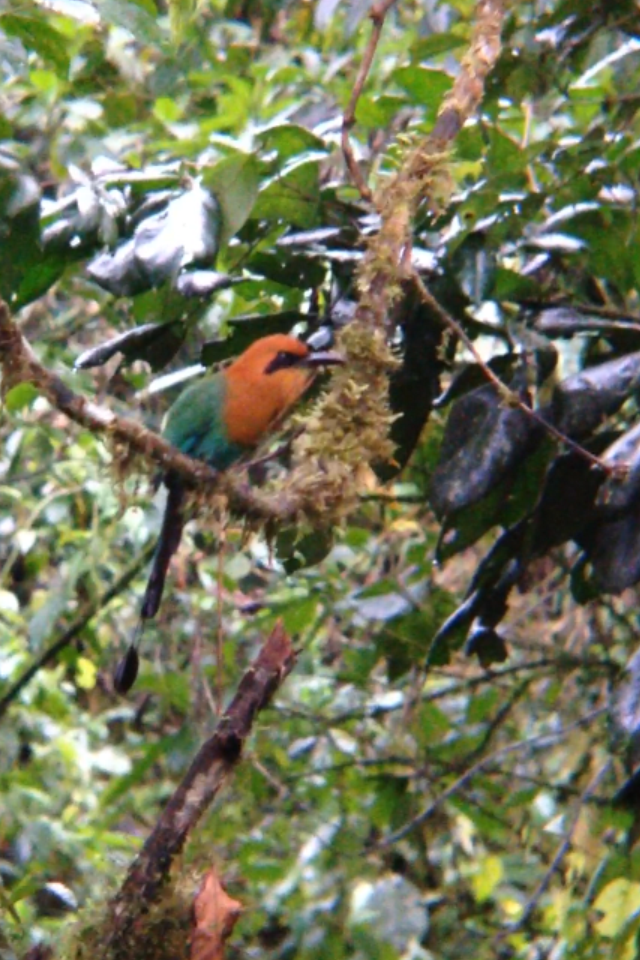
Broad-billed Motmot
It’s 6:00 p.m. now, as we relax on the deck, relishing the day’s excitement. We notice, once again, that we are not alone. Two broad-billed motmots perch in a tree in the front yard, their rufous breasts stuck out, tails switching side to side like a cuckoo-clock. They take turns swooping through the air to catch their dinner, which reminds us, we better get started making our own dinner. And so our magical day with our fellow citizens of the Cloud Forest comes to a close.
It’s funny how a day of going out, in search of birds, really brings us in. In to our natural world where we belong. In to the home that we share with so many others. The experiences we share with these captivating birds encourages us to reflect inwardly on our own place on this planet and how we are similar to the other living organisms around us, in that we share this land and its precious resources. It’s been over two centuries since Darwin and Wallace’s revolutionary visions enlightened humans about our place on earth as just another organism in geologic time, simply newcomers, with much left to learn about our dynamic and ever-changing world. Two centuries passed, and many humans continue to build a barrier between themselves and our fellow species. We all call this planet home, but not all of us realize it yet. It’s time for a change, don’t you think?
– Amber & Tom
Batten Down the Hatches…
…the rainy season is back at Las Tangaras!
There are few things better to sooth the soul and ease the mind than a walk through the cloud forest in the rain. The lush, noisy forest seems to come alive as the rain begins to fall. As you place one foot in front of the other in a meander underneath the misty canopy, with all senses tuned to the vast world around you, one can truly focus on the here and now. Thousands of frogs echo in a symphony of calls. The clicks and pops of rain splashing off of orchids quickly makes the mind forget the clicks of clocks or pops of engines in the world outside of the reserve. Such enchantment is a typical day at Reserva Las Tangaras.
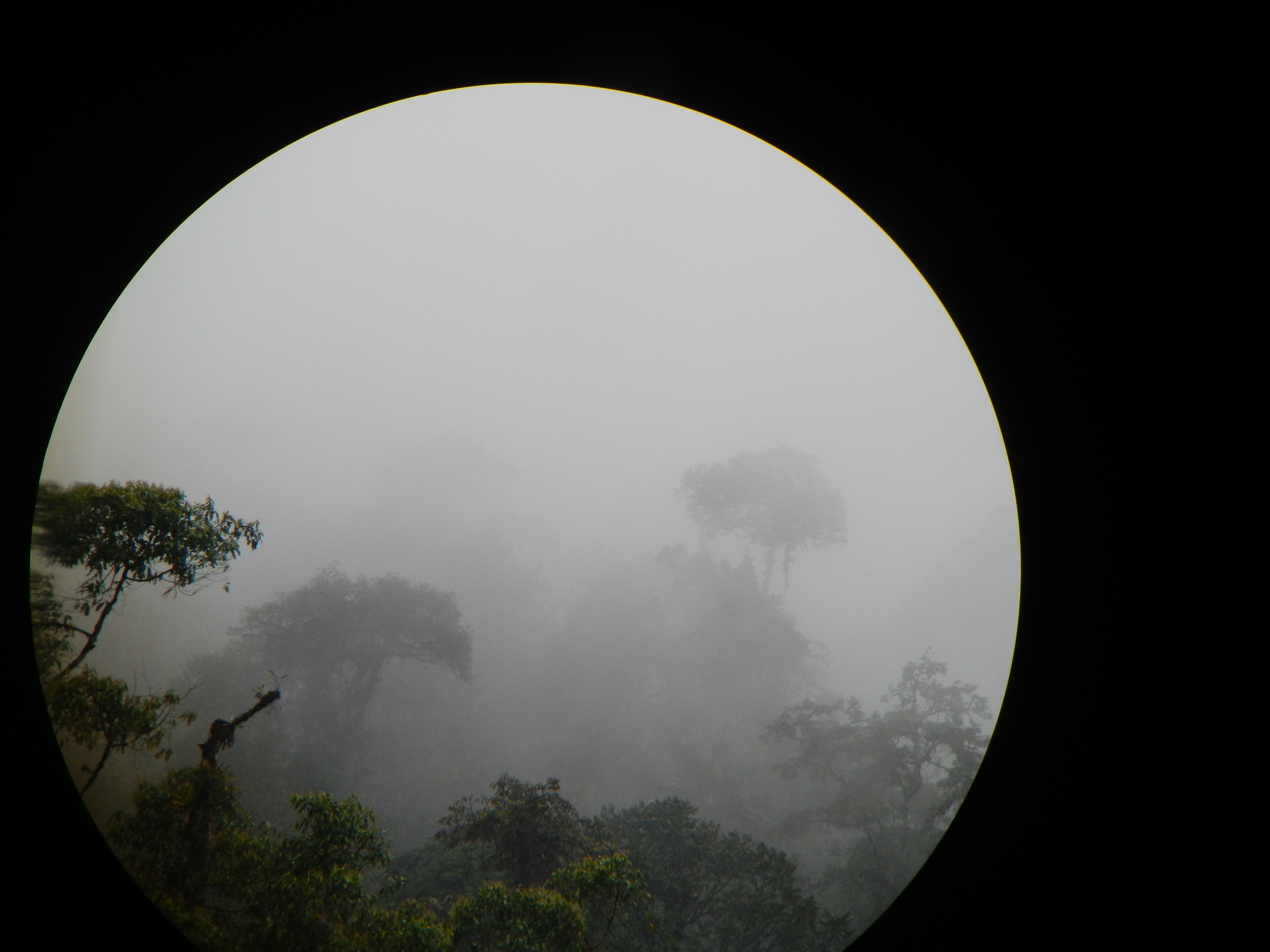 We are Tom and Amber, the newest generation of managers at Reserva Las Tangaras. As we made our first trek into the reserve with the previous managers, Parks and Alexia, it only seemed fitting that we experienced it in a downpour, for the rainy season had arrived in Ecuador. As we crossed the swing bridge over Rio Nambillo to enter the reserve, we were welcomed home by millions of raindrops, and the smiles on our faces could not have been bigger. It did not take long to be captivated by the beauty and tranquility of Las Tangaras.
Something inside us draws us to remote places, rich with a bounty of peace and tranquility, as far from the city as one can travel. For other like-minded folk out there, you know what we are talking about. Perhaps it’s the feeling of serenity you get when you stand on a river bank and feel the cool wind howl up the river, thrusting forward a torrent duck in its gust. Perhaps it’s the challenge of the wilderness experience, where you are constantly tested and often succumb to mistakes which only make you wiser. Perhaps it’s the exhilaration you feel at 6:00AM when the first Andean Cock-of-the-Rock comes screeching in to its lek for its daily mating display. Or perhaps it’s the feeling of living in the present, deep under the canopy of a dense cloud forest which seems to engulf you in its non-judgmental and complex atmosphere. For many of us, these things are in our blood. We have a burning desire, not only to live experiences such as these, but to conserve such processes so that our grandchildren, and all life on Earth for that matter, can have such experiences for years to come. It is at places like Reserva Las Tangaras where such magic is happening.

Misty morning at Las Tangaras

Sunlight through the canopy after a heavy rain
Much like a rain drop, Reserva Las Tangaras is a relative small element on a vast planet. However, one must not be fooled by its size, because its influence extends far beyond it’s borders. The area in which Reserva Las Tangaras lies, at the meeting of Ecuador’s lowland jungles and Andean cloud forest, is among the most diverse terrestrial environments on our planet. The bounty of life is astounding; one tree alone seems to harbor hundreds of species including different plants, insects, birds, amphibians, and mammals. Unfortunately, this diversity is under threat by exploitation of humans. At the coast, over 90% of Ecuador’s once vast mangrove forests have been replaced by shrimp farms and towns. Moving inland, the lowland jungles have been rapidly replaced by ‘biological deserts’ of banana plantations and many of the once rich forests at the elevation of Las Tangaras have been clear-cut for agriculture. The Valley of Volcanoes to the east of Las Tangaras has been overwhelmed by urban areas and highways. Even further to the east, in the lands of the Amazon, oil and mining has had detrimental environmental repercussions for the forests, the rivers, and all of its inhabitants, including humans. Of course, such issues are not characteristic of only the small country of Ecuador, but they are happening all over our planet as the population of humans explodes and our anthropogenic impact on the world becomes more intense. Places like Reserva Las Tangaras are critical in conserving the natural systems of our planet that we all depend upon in every aspect of our lives. 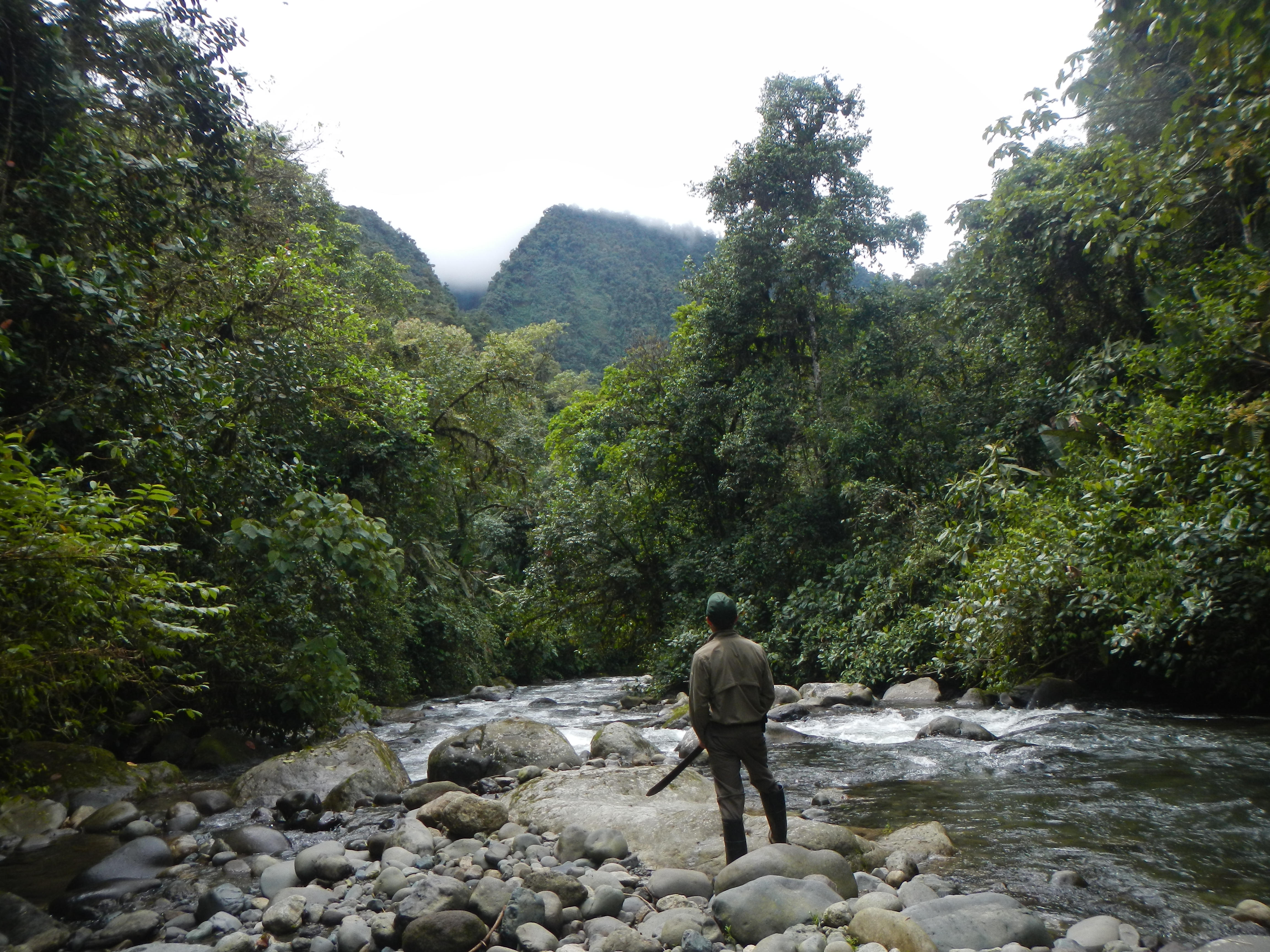
A single raindrop may do little to change the water level of a stream; however a hundred thousand rain drops, together, can change a still water to a raging current. The same can be said for small tracts of protected land that, together, act as a web to connect isolated and fragmented ecosystems and function as buffers to larger protected areas so that migration of wildlife is possible between habitats and the resiliency of our natural systems are preserved. Reserva Las Tangaras is another vital piece of this web. As long as the rain continues to fall, Reserva Las Tangaras will serve as a sanctuary, welcoming all forms of life to enter and be sheltered from the world beyond.

Thousands of rain drops, together, caused Rio Nambillo to flood!

 Reserva Las Tangaras