November in the clouds
We´re the new managers at Reserva Las Tangaras, Armando y Tita, and here´s what we´ve written!
An excellent way to attract hummingbirds is to wear a red t-shirt. Up on the high Mirador trail at Reserva Las Tangaras, the forest expresses its duality. On a windy day, overcast by the encroaching mass of a chilly cloud, a sound of branches trembling and cracking can evoke the hopeful, but equally terrifying idea of a spectacled bear or perhaps some large cat. This time, it’s only a squirrel foraging in the understory. On a different day, when the sun has just risen above some wayward puffclouds, its spears of warm yellow light, thickened by pollen and exhaled steam from the trees, illuminate the mind and warm the nostrils. It was on one of these days that a male violet-tailed sylph confronted me, nervously twitching as it hovered before my red t-shirt and noticeably disappointed at the lack of nectar. Then, it’s gone. Off in an arbitrary direction, into the depths of a thousand leaf shapes, and you are left under a billion different hues of green.
Descending down the slope, the gentle roar of Rio Nambillo’s fast flowing waters indicate the research cabin is near. Here, several hummingbird species zip past each other, propel themselves to infinity, dive-bomb their neighbors and hover before a plastic receptacle containing sugar water. These are some of our research subjects. Both interspecific and intraspecific aggression are obvious within a minute of observation, and we hope to document any patterns related to this. Are certain species more aggressive? Do they ‘target’ some species over others? Is this related to phylogenetic or morphological relationsips? In our ‘methods’ section we’ll be sure to include the part about sitting down at a table and comfortably sipping some of Mindo’s freshly ground coffee. “Is it bad for a human being to want to sit around all day, watch hummingbirds and drink coffee?” Tita asks.
Yes, this research is easy on the feet, but we are often mesmerized by our subjects and having our brains teased to bits by our findings. The view from the front deck is the opposite slope to the river, where a jillion tree species form a crisp skyline. Alwyn Gentry comes to mind, and his immense undertaking to document the woody plants of South America. E.O. Wilson wisely called him a researcher who “succeeds in order to do science,” and not the other way.
Despite the intoxicating tranquility of the front deck, the forest is relentless in its effort to recapture the cabin. Its minions take the forms of wasp nests, crawling vines, cute roosting bats, tarantulas in our towels, mold and general weed growth in the garden and trails. The reserve is kept in order for visitors, which have been coming regularly thanks to the thorough flyering of Mindo by Jaime and Bex. We’ve also been getting to know shop, restaurant and hostel owners in the all too hospitable and sleepy town down slope from us.
Much of our forest time is spent gazing at the multitude of birds. Tanagers hop around in the canopy; furnariids tumble in the understory and creep up trunks. Flycatchers patiently perch, quetzals slowly move their head about like they’ve been drinking, and toucans are simply toucans. But of course, our star is the Andean Cock-of-the-rock, for which we are collecting behavioral data for an ongoing study. These big, bright red puffballs gather at dawn in order to flap, scream, and snap bills at each other all in hopes of impressing a passing female. This is the main attraction for visitors to the reserve and a fitting symbol for Andean biodiversity. Its fantastic appearance, absurd vocalizations, and perplexing behaviors would make it a good character in a Lewis Carrol story. I wonder how often a hummingbird pokes at a male cock-of-the-rock only to find that it too, does not provide nectar.
development.

MINDO
In conservation circles development is a cuss word. Make it tourism development and people start throwing things. Nonetheless, we´ve spent the last 3 months ´developing´ecotourisim at Reserva Las Tangaras, Mindo, Ecuador.
Through simple things like putting up posters in hostels and talking to locals about the reserve and conservation i have learnt a lot. I have met locals passionate about conservation, about Mindo, cloud forest and their towns spot as a premier birding location.
But as time went on i met more and more locals disenfranchised with what they´ve created. Their little paradise has been found – tourist developers and big tourist dollars mean a constant fight against development. I met people tired of battling new developments and tired of lack of help from local authorities. I caught the end of a public meeting discussing the management plan for the Mindo Nambillo Bosque Protector, the cloud forest reserve that surrounds this little town. The meeting was a free for all of impassioned pleas, excellent points, irrelevant points, personal gains and extended rants while the ministry for the environment guy tried to get a word in edgewise. The guy caught me chuckling at the back of the meeting and gave me a knowing smile.
For me, these frustrations are not a sign of conservation ground to a halt or a loosing battle to big business. They are in fact signs of how good a job locals are doing with conservation. The fact these conversations, meetings and discussions are taking place is a great thing – despite their frustration. I wish i could show these people a public meeting on conservation in New Zealand (undoubtably a world leader in conservation). They are largely a free for all of impassioned pleas, excellent points, irrelevant points, personal gains and extended rants while the ministry for the environment guy tried to get a word in edgewise.

El Rio Nambillo, Reserva Las Tangaras
Through a truly remarkable community effort Mindo has saved large tracts of primary forest and replanted surrounding pasturelands. They have turned their town into a birding hotspot -and it has been recognised by Birdlife International as an IBA (important bird area) the first in South America. Tourists now flock to mindo for the nature and wildlife and locals are confronted with the other side of conservation – one im sure many lifenet member know well. The fighting development, the planning authorities, the action plans and public meetings. My sincere hope is that locals can put the same strength into these things, protecting what they have created as they have in planting trees. With fantastic organizations such as Lifenet and research data from Reserva Las Tangaras and other sites to add power to their punch in the fight to keep mindo so fantastic.
Meanwhile there are still FANTASTIC efforts going on locally in a variety of areas, and our own small efforts in tourism hope to achieve 3 things;

- Reserva Las Tangaras gets a small income (ecotourists pay a donation to visit or stay at the reserve)
- The local community makes money out of a 100% sustainable ´development´. Through this locals value (with heart and back pocket) local conservation projects.
- Visitors, both gringo and Ecuadorian have a great understanding of the importance, fragility and awesomeness of these habitats.
So a message for Mindo, (and for us all?) – dont let the bad overshadow the good . Keep up the good fight as what you have is worth saving.
Reserva Las Tangaras aims to attract a light level of visitation by ecological minded people. Ecotourists can visit the reserve for the day or stay overnight in the research cabin. For more info see the blog ´visit las tangaras´.
Equator pace
“We´ll arrive at 5.30, in time to see the birds at dawn” the guide tells me. It´s good news. I´ve been trying for a few weeks to encourage some locals to come up and see the reserve before finding Danny – who works with a group of local guides. He´s bringing a group of local guides up to see if it would be a suitable place to bring tourists to see the cock of the rock. It will mean a few more visitors for the reserve and a way for locals to make some money from sustainable conservation efforts in their community.
I spent the evening tidying the cabin and making sure things were in order. But now, as i sit on the deck in the light of dawn, glancing up at the still empty entry trail, i feel slightly beaten. My watch says 6.15, no sign of the group. I go inside for my 3rd cup of coffee but change my mind instead and go for a walk. After all, despite my frustrations, it is dawn in the Ecuadorian cloud forest and the birds are singing. On a high branch, getting the days first sun, two chestnut mandabilled toucans are singing. I walk along Sendero Guillermo, following above the river and chuckle about my morning – duped again. You see this is not the first time I´ve been fooled. “We´ll be down in the morning”, “meet me here at 2”, “we´d love to, see you tomorrow” etc..
Maybe it´s the heat? There are amazing pineapples to be eaten and excellent coffee to be drunk. I suppose it´s no wonder people don´t get around to things. But is one of the cultural differences which we are having to get used to.
Don´t get me wrong, the slowdown of life is great. To get away from towns and people and traffic and hurrying around to get things done. Six weeks ago we ´hurried´to get the bus to Quito. that was the last time i remember looking at my watch out of anything more than interests sake. Mindo is excellently sleepy most afternoons. Last week i went tot he veggie shop in the main street, got 2 pineapples, bannanas and was starting to bag some tomatoes before the Senora woke to take my money and give me a few sweet potatoes – “for the soup” (?)
By the time i get back from my walk i´ve decided to chill out. I need to start living at equator pace. What´s the hurry? I shall meander, loll and laze in the best Equatorian fashion. Let things happen when they happen.
I just wish they wouldn´t not happen at 5.30am…
Down by the river Nambillo. A sweet new campsite…

Down by the river Nambillo (nam-bee-yo), by where it turns back on itself in a nice wee swimming hole we found a nice wee flat bit – big enough for a few tents. We took to it with the machetes and hacked back the vines and regrowth and cleared just enough space for a few tent, leveling them out with the spade and getting rid of roots and rocks. As we dug, big blue morph butterflies wafted about, feeding on the purple berries fallen from the tree above. One morning as we headed down to the campsite to start work, we interrupted a Tayra, a large member of the mustelid family – essentially a weasel a meter long…
We´ve put up a bit of a shelter to cook in, huddle under during downpours or even sling a hammock and mossie net for the night. A picnic table in the sun for breakfast by the river and a longdrop toilet with a view out over the forest round out he facilities.
And what more could you want really?
To fall asleep to the river nambillo and wake up to the toucans calling.

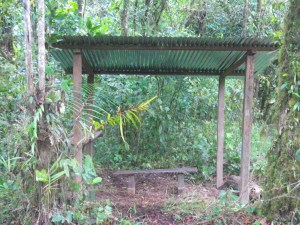 Want to camp at Reserva Las Tangaras?

Camping is $ USD per night plus entry to the reserve ($5)
No tent? accommodation is available in the research cabin – see our blog ´visit las tangaras´for full details or call the reserve on 069824972
Reserva Las Tangaras is reached via a 45 minute walking trail. It is well marked but sometimes muddy. The trail starts 3km from Mindo, along the road to the Cascadas Nambillo – between the canopy and the cascadas. From Mindo, walk or taxi ($6) to the trailhead.
Buglife


Beetle Larvae
“This product will dissolve certain types of plastic” reads the label on the back of the DETAN ROLL ON – an Ecuadorian brand of repellent in the shops here – under the casual title ´precautions´. The active content is a longish chemical chain (interestingly no deet) which seems to be suitable vile as to put most, but no all, mosquitos, flies, midges and other bugs off their dinner. If there´s an aspect of jungle life you can´t ignore its the bugs. And despite going through a bottle of Detan Roll On a week, we are both littered with bites in various states of scratchedness.
But as well as the wicked are the wonderful. The diversity of insects here is amazing. Antlines a meter wide, legions of hairy catapillers, of furry caterpillars, swarms of butterflies and moths of every colour and pattern and all sorts of other amazing bugs (I wont mention the spiders).
Down by the river at night, the fireflies (actually a family of beetle with a luminous patch) are like a meteor shower happening around you with their larvae glowing in the pools at the river’s edge. Huge beetles romp, yet even on the smallest of bugs you can see even tinier mites at work.

I have posted a few photos here we´ve managed to get – for more photos, painstakingly categorized into family see Amanda Brown´s (a previous manager at Las Tangaras) link https://picasaweb.google.com/108895004808976967463/InsectsOfLasTangarasMindoECUADOR?authkey=Gv1sRgCPXm0seph7iS8AE#
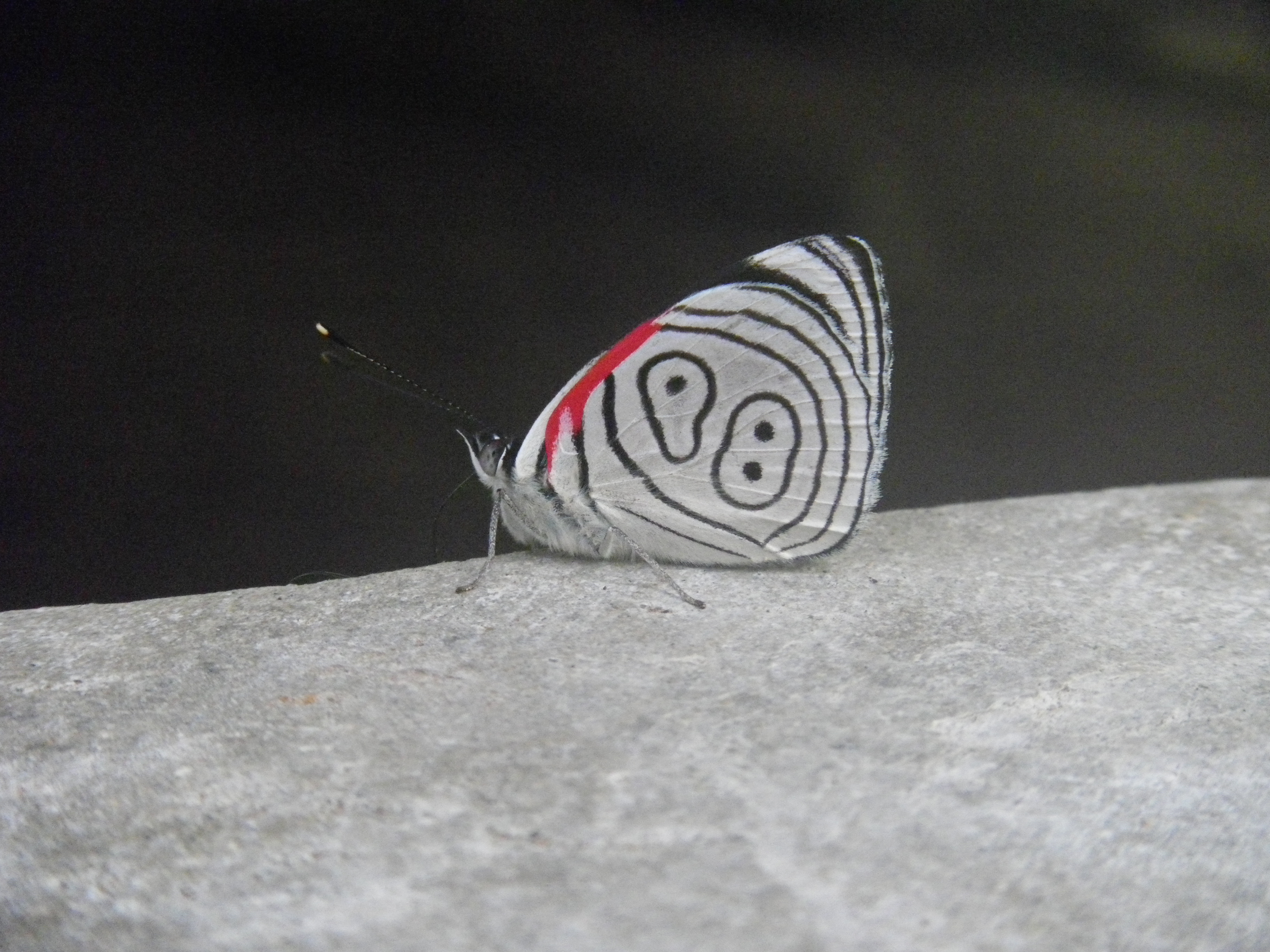

Life at Las Tangaras
WORK
On the normal day we get up around 7 or 7.30. Time for a Coffee and some breaky on the balcony. As the sun comes up it burns the mist off from the valley, the last little bits holding on in the shade down by the river. We normally get a start on things quite early, before it gets too hot. We´ve got a few projects on the go. Building a new camping area down by the Rio Nambillo, maintaining trails and putting stairs into steeper, slippery bits, revarnishing the cabin, as well as making signage and putting it up. As well as this we have been maintaining some data collection for ongoing studies. We keep a daily list of Hummingbird´s coming to feeders at the cabin (usually around 10 species a day out of about 20 locally present). This is not hard work – once you´ve learnt who´s who, it involves sitting on the deck (see ´coffee´ section below) and watching these amazing birds. Still very enthralling, saw a new species for the first time yesterday. We also are adding to the data collected on the Andean Cock of the Rock. A few times a week we go up to the ´Lek´(area where males congregate to display and try attract a mate) and observe which birds are there (most birds have colour bands for id) and try to record what behaviour leads to successful mating. They are amazing birds, and it is a unique feeling to be sitting amongst 15 or so birds squawking and hopping about in the half light of dawn… We normally fit in a few mo re hours pottering in the afternoon (or sitting in the hammock…) depending on the rain. It gets dark around 6ish (we´re very close to the equator – so it’s almost exactly 12 hours of daylight) so after a few hours by headtorch and candles we turn it by about 8 or 9.

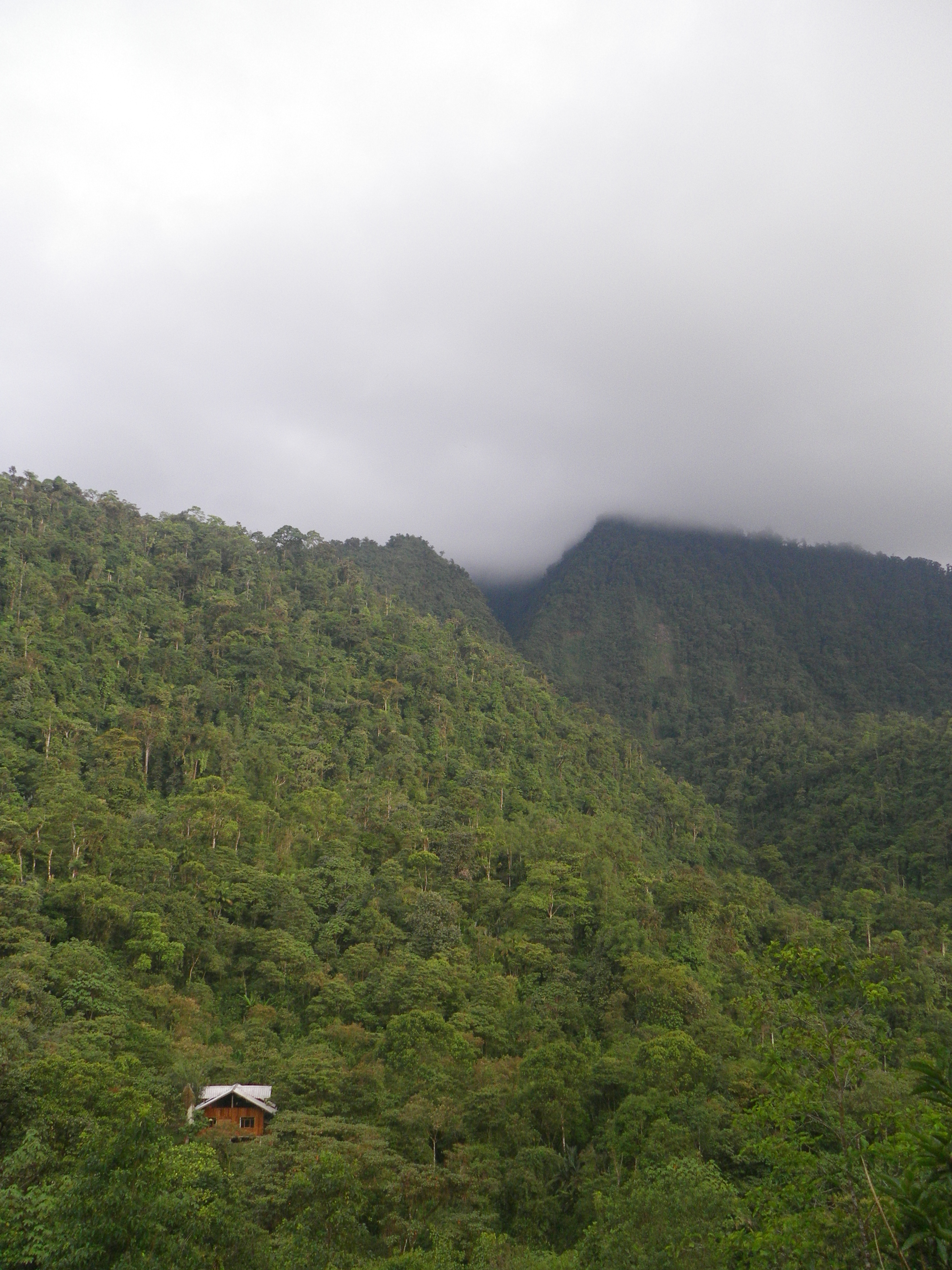
The research cabin at Reserva Las Tangaras, with the stunning cloud forest of cordillera nambillo in the clouds behind
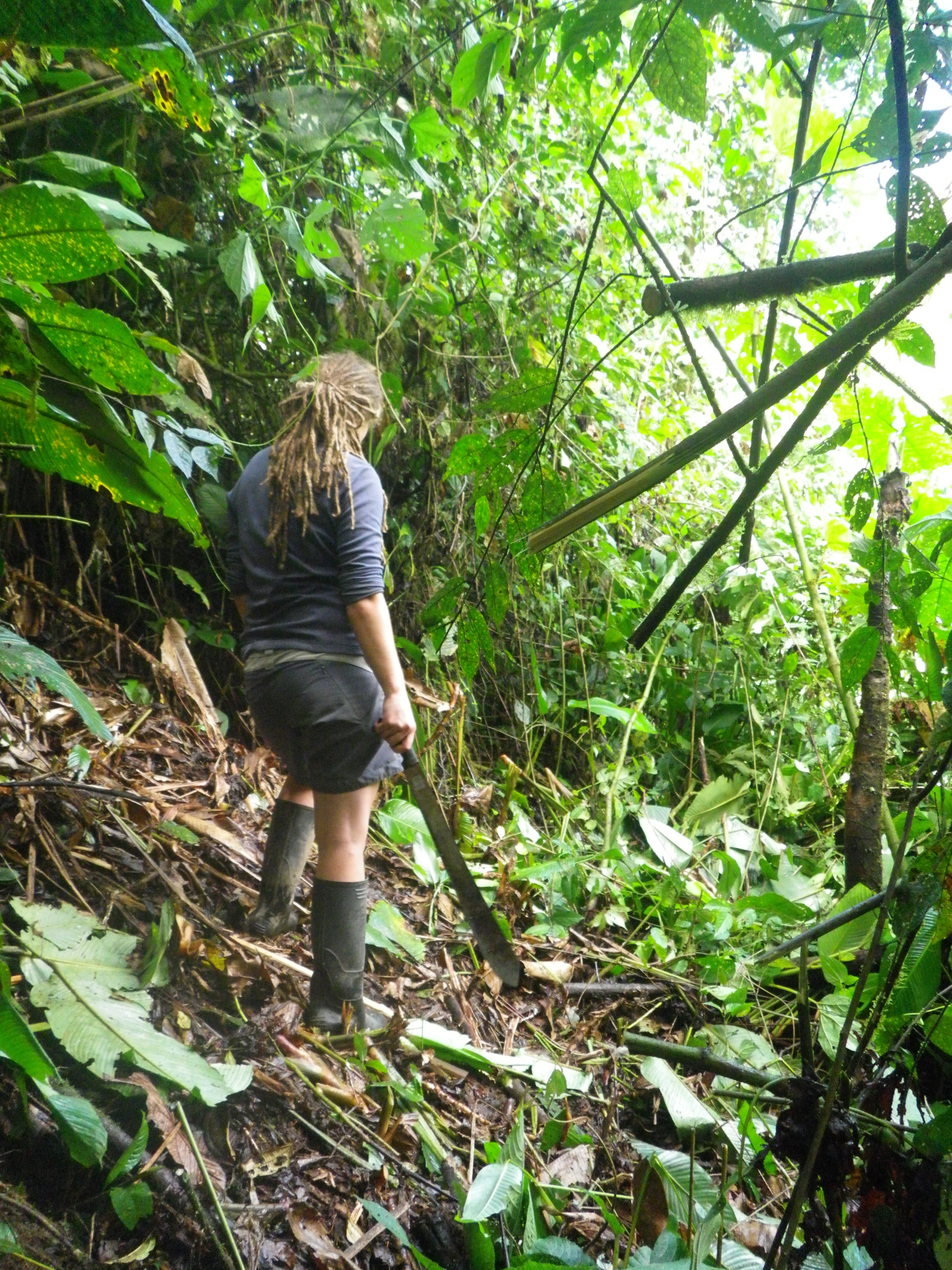
Clearing a site for a toilet at the campground.
FOOD
Breaky is normally porridge or bread if we have it – we get bread whenever we´re in town, and have been baking a few loaves too. Fresh tomatoes, avocados and pineapple are cheap as they´re normally on the menu too. Coffee grown round the highlands and roasted locally (on the street) in Mindo is excellent, strong and tasty, although havn´t been able to find it in large grinds yet, so far its always very fine grain for filter coffee. Travelling through Chile before we got to Ecuador we got used to having lunch as our main meal, so we usually stop for a few hours in the middle of the day to cook up a feed. This works great as the middle of the day is often too hot and humid to get much done. Because we are cooking for ourselves we´ve been eating pretty western food. Fresh fruit and veg are cheap so we´ve been eating heaps of them, only downside is they´re heavy to pack in! When we go to town we normally get Almuerzo, a sort of set menu lunch. Normally about 2.50US its always a soup with meat or chicken (read; bones), veges, and rice or barley, usually with some corn and yuca (a starchy root), then comes the main (al seco) which is usually a tasty meat stew served with rice, pinto beans and a fried banana. Normally comes with a fresh juice (mango, pineapple, papaya, passionfruit) to wash it down. normally its pretty good, although always pretty much the same. In the evening we normally have a light “once” of some bread or leftovers, sometimes rice…
Weather
When I asked Pascual, the Ecuadorian guy looking after the place before us about seasons, he said “August is summer, it doesn’t rain much, the rest of the time it rains”. So far it has been relatively dry, but we got our first taste of real rain the other day with about 50mm in 12 hours, a good test for the new guttering we put up the week before, but still nothing in terms of rain. (The month before we arrived Dusti recorded 210mm in 24 hours! We hardly got that much in our first month!) The temperatures so far have been pretty much the same everyday – lows of about 14, highs of about 23. (celsius) Although the very high humidity makes it feel much warmer. It´s very strange for us folk from New Zealand to have the same weather every single day, and not all four seasons in one day. Generally it has been sunny in the morning then from about 2 pm it starts to cloud over and will sometimes rain in the late afternoon.
Conserving Tourisim?
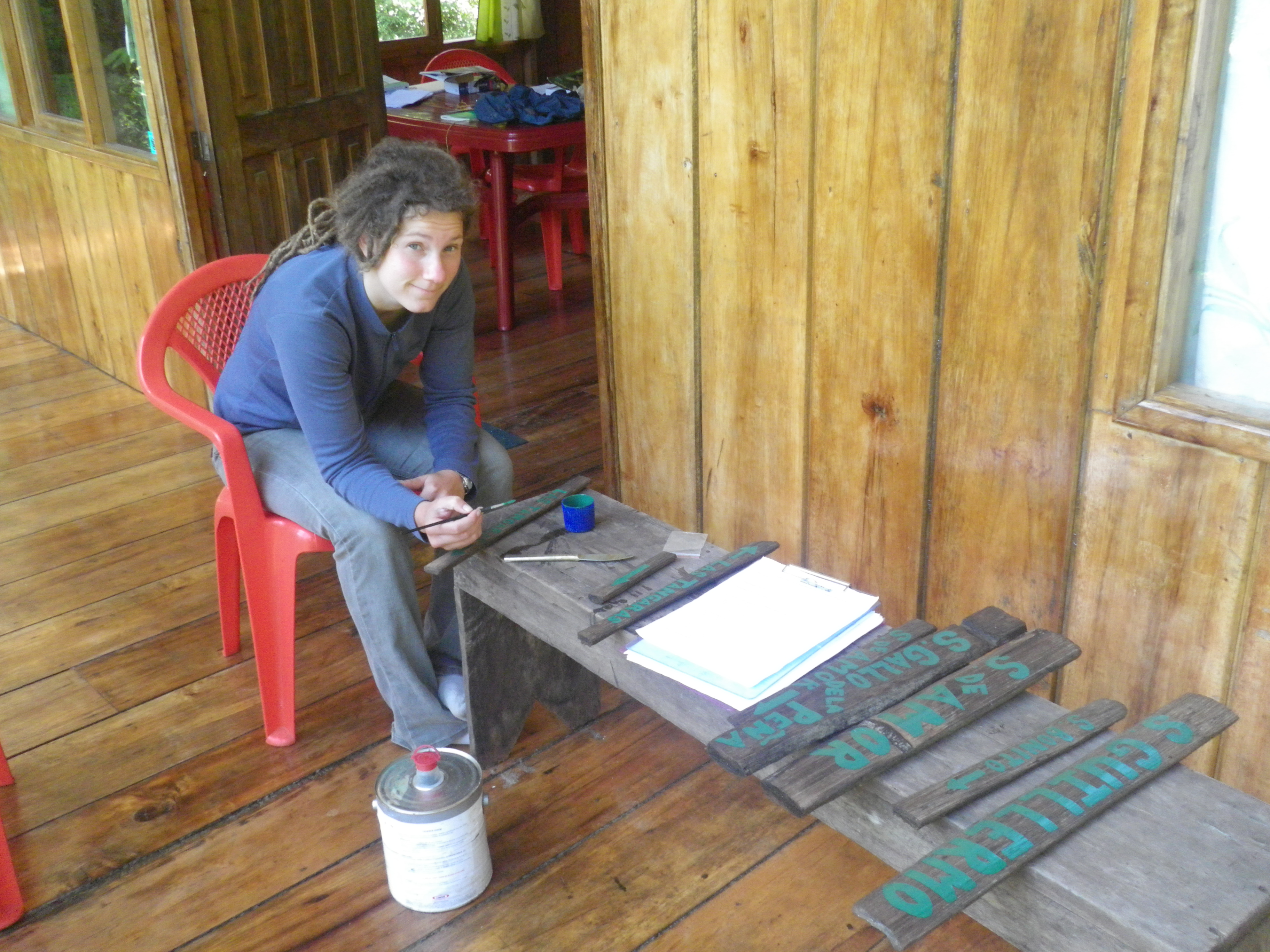
Bex making trail signs for the trails at Reserva Las Tangaras

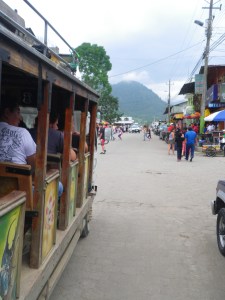
Local Taxi.
Mindo has been found. It´s in the lonely planet, and it´s on the gringo trail. Binocular clad, zipoff pant-wearing 50-somethings stroll the main street purposefully while rambling groups of 20 somethings loiter in hostal gardens. On weekends and holidays, throngs of domestic tourists from Quito, (2 1/2 hours away, Ecuador’s 2nd largest city) flock to mindo, en masse. It´s a popular wee place, and the locals know it. Everywhere you go there´s new development. Its seems every new street you stroll down there´s another cluster of hostals, hotels and the like. And, like every self-respecting tourist town there´s the ´Reggae Bar – open 24 hours´. There´s plenty for tourists to do in Mindo, you can ra
ft the rivers, swim in waterfalls or ´zip´through the canopy on kilometer long flying foxes. You can rent bikes, horses, even quad bikes and there are (excellent) bird guides a plenty. The scenario is one that is repeated in a thousand other tourist spots, from Thailand to Tijuana, along with the same problem. Does the development that goes along with the tourist flocks destroy the reason they actually come here. If they clear the canopy trees for more hostals and Bob Marley bars, then what will they zip through? Who will be swimming in the murkey pool with plastic bottles and human waste? …etc…etc…etc… I don’t claim to have done extensive research into the topic but on the face of it Mindo seems to be overcoming many of the hurdles that come with a tourist rush quite well. There´s recycling efforts and a community development association. Many hostals have large gardens with tropical plants, to attract hummingbird. Most of the tourist activity is based around the environment and locals seem to truly value the economic activity it brings. Not in a Koh Phi Phi “look at the beautiful coral we´re destroying” way, but they seem to value the longterm, sustainable economic benefits it can bring. A nice attitude to see in a major oil producing nation – (Diesel is 25 cents a litre here). Bex and I have spent a lot of time since we arrived at the reserve trying to start bringing a few of these tourists down to the reserve. Lifenet´s (www.lifenetnature.org) goal for the reserve is “to maintain a small research facility and ecotourism location that is NOT widely marketed… and encourage a light level of visitation by ecologically minded people”. We´ve put up signage at the gate, marked trails and made posters. In the last week I´ve walked all over wee Mindo, visiting hostals, putting up posters and talking to locals about the reserve, where it is and whats it aims to do. I´ve been asking locals what things the reserve could do to help the local community, how conservation and tourism can work together to ensure that tourism doesnt destroy the very thing that attracts tourists in the first place. (quite a workout for the spanish – try discussing how a low-level of tourism, if treated right, can have positive effects on conservation and community….phew….) But what I´ve found in talking to locals is overwhelmingly pleasing. People passionate about their town and cool things happening here. People protective of their sustainable cash cow. I have learnt a lot over the last week. And so far we have had 7 guests. Enough entry fee donations to pay for the posters and a few materials for maintaining trails. And for Mindo another few hotel nights, taxi rides and meals. The value for the environment of people going home with a fond memory of those bright red birds they saw in the Ecuadorian cloud forest? Who really knows…
Hummingbirds
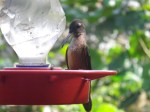
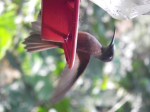
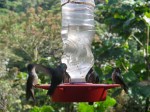
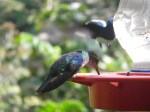
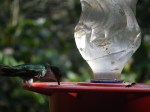
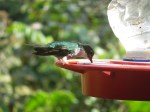
Humnmingbirds would have to be the ultimate test for a wee point and shoot camera.. Luck they are very close.
I thinks the best part is some of the names… Fawn breasted brilliant, booted racket tail, sparkling violeteer, whitebellied woodnymph etcetc…
Will post the ellusive ín flight´shot as soon as i get it…
Enjoy.
Visit Reserva Las Tangaras.

Las Tangaras is an ecological reserve run by Life Net, a non profit conservation organization. Set in the spectacular cloud forest near Mindo (100km from Quito), it provides habitat for native plants and animals and prevents illegal hunting and collection of species. As a buffer property on the edge of the Mindo-Nambillo Bosque Protector, Las Tangaras provides wildlife with more habitat at elevations typically deforested for agriculture. Our main goal is to protect native species on the property and maintain a small research facility and ecotourisim location that is NOT widely marketed.
We want to encourage a light leve of visitation by “ecologically minded” people such as birdwatchers, photographers and conservation-minded students. Monetary contributions from visitors are required and are used to maintain the reserve.
We offer;
- Access to the Cock of the Rock lek, with up to 18 cocks displaying at any one time.
- A network of trails, with camping area and swimming holes easily reached from the research cabin
- A large diversity of birdlife, including 14 species of hummingbird regularly visiting feeders around the cabin.
- Self catering kitchen, hot showers, flush toilets.
Prices (2011)
Day pass – $5 – includes access to all trails, outside bathroom, swimming areas etc.
Overnight at cabin – $12 (plus entry $17)
Camping – $2 (plus entry $7)
This is a remote location, without electricity and basic sleeping arrangements. Visitors are provided with a mattress, blankets and mosquito net but must bring their own sheets, sleeping bag or sleeping bag liner.
Call 06 9824972 for more information and reservations.
The reserve is reached by a sometimes challenging 45 minute trail, starting 3 km from Mindo along the Mindo Nambillo road. From Mindo, walk or taxi ($6) to the trailhead.
Reserva Las Tangaras.
Saw some monkeys this morning. It was just after dawn and I was up at the Cock of the Rock breeding site. A strange feeling, in the half light watching bright red C.o.R. swooping under the canopy, below the monkeys perched in the trees.
However, the monkeys (capuchins) wern´t as excited to see me as I was to see them. They had young with them and the adults came right up confronting me, staring and shaking trees. After a good look with the binos I let them be and went back to the birds – (also pretty awesome). At dawn every morning the “cock of the rock” (name of the bird) get together in a lek, where the female chooses a mate. The males are hopping about, squaking, fluffing and carrying on as us blokes do, 10 or 20 all at once making a big ruckus. A pretty special feeling to witness this in the early morning light, as the mist rolls down the valley below me.
We´ve been here a month now, and I thought it would be cool to roll out a blog. For those who have been to Las Tangaras, this will keep you in the know on whats happening, for those who havn´t been, it should make you suffenciently jealous to start planning a trip.
Life is everywhere here. Yesterday we dug some post holes for a small structure we´re building at the camping area, this morning we had 2 rainfrogs and 2 skinks in our impromtu pitfall traps. Last night we watched as a click beetle crossed back and forward across the floor, 2 bright yellow spots glowing on its back like eyes! All manner of other cool creatures and critters around (saw a “tayra” earlier in the week, its a 1 meter long mustelid!) Other than observing the crazy wildlife around, this is what we´ve been up to.
- Clearing and rediscovering the “lost garden” that had been overtaken by jungle, got it ready and planted coriander, squash, cabbage, tomatoes, capsicum and more!
- Clearing and leveling tent sites for a campsite down by the river, an amzing spot just before the swimming hole with big blue butterflies the size of my hand.
- Clearing and rebenching parts of the tracks, starting to put some steps into the slippery bits.
- Making signs for the trails, front gate and entry trail.
- Making and putting up posters round town to attract visitors to the reserve – had our first couple this week!
- Taking daily hummingbird observations and Cock of the Rock observations a couple of times a week.
…And theres been hours of sitting in the hammock watching hummingbirds, listening to the river, and relaxing… Life is good.


