Hummingbirds
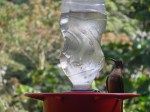
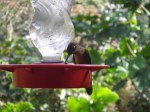
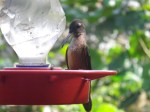
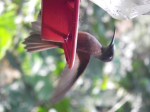
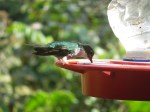
Humnmingbirds would have to be the ultimate test for a wee point and shoot camera.. Luck they are very close.
I thinks the best part is some of the names… Fawn breasted brilliant, booted racket tail, sparkling violeteer, whitebellied woodnymph etcetc…
Will post the ellusive ín flight´shot as soon as i get it…
Enjoy.
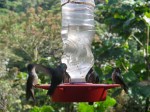
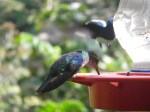
Visit Reserva Las Tangaras.

Las Tangaras is an ecological reserve run by Life Net, a non profit conservation organization. Set in the spectacular cloud forest near Mindo (100km from Quito), it provides habitat for native plants and animals and prevents illegal hunting and collection of species. As a buffer property on the edge of the Mindo-Nambillo Bosque Protector, Las Tangaras provides wildlife with more habitat at elevations typically deforested for agriculture. Our main goal is to protect native species on the property and maintain a small research facility and ecotourisim location that is NOT widely marketed.
We want to encourage a light leve of visitation by “ecologically minded” people such as birdwatchers, photographers and conservation-minded students. Monetary contributions from visitors are required and are used to maintain the reserve.
We offer;
- Access to the Cock of the Rock lek, with up to 18 cocks displaying at any one time.
- A network of trails, with camping area and swimming holes easily reached from the research cabin
- A large diversity of birdlife, including 14 species of hummingbird regularly visiting feeders around the cabin.
- Self catering kitchen, hot showers, flush toilets.
Prices (2011)
Day pass – $5 – includes access to all trails, outside bathroom, swimming areas etc.
Overnight at cabin – $12 (plus entry $17)
Camping – $2 (plus entry $7)
This is a remote location, without electricity and basic sleeping arrangements. Visitors are provided with a mattress, blankets and mosquito net but must bring their own sheets, sleeping bag or sleeping bag liner.
Call 06 9824972 for more information and reservations.
The reserve is reached by a sometimes challenging 45 minute trail, starting 3 km from Mindo along the Mindo Nambillo road. From Mindo, walk or taxi ($6) to the trailhead.
Reserva Las Tangaras.
Saw some monkeys this morning. It was just after dawn and I was up at the Cock of the Rock breeding site. A strange feeling, in the half light watching bright red C.o.R. swooping under the canopy, below the monkeys perched in the trees.
However, the monkeys (capuchins) wern´t as excited to see me as I was to see them. They had young with them and the adults came right up confronting me, staring and shaking trees. After a good look with the binos I let them be and went back to the birds – (also pretty awesome). At dawn every morning the “cock of the rock” (name of the bird) get together in a lek, where the female chooses a mate. The males are hopping about, squaking, fluffing and carrying on as us blokes do, 10 or 20 all at once making a big ruckus. A pretty special feeling to witness this in the early morning light, as the mist rolls down the valley below me.
We´ve been here a month now, and I thought it would be cool to roll out a blog. For those who have been to Las Tangaras, this will keep you in the know on whats happening, for those who havn´t been, it should make you suffenciently jealous to start planning a trip.
Life is everywhere here. Yesterday we dug some post holes for a small structure we´re building at the camping area, this morning we had 2 rainfrogs and 2 skinks in our impromtu pitfall traps. Last night we watched as a click beetle crossed back and forward across the floor, 2 bright yellow spots glowing on its back like eyes! All manner of other cool creatures and critters around (saw a “tayra” earlier in the week, its a 1 meter long mustelid!) Other than observing the crazy wildlife around, this is what we´ve been up to.
- Clearing and rediscovering the “lost garden” that had been overtaken by jungle, got it ready and planted coriander, squash, cabbage, tomatoes, capsicum and more!
- Clearing and leveling tent sites for a campsite down by the river, an amzing spot just before the swimming hole with big blue butterflies the size of my hand.
- Clearing and rebenching parts of the tracks, starting to put some steps into the slippery bits.
- Making signs for the trails, front gate and entry trail.
- Making and putting up posters round town to attract visitors to the reserve – had our first couple this week!
- Taking daily hummingbird observations and Cock of the Rock observations a couple of times a week.
…And theres been hours of sitting in the hammock watching hummingbirds, listening to the river, and relaxing… Life is good.

 Reserva Las Tangaras