Prodigal Winter
Subtle changes are the pulses that fuel the rhythmic beating of life on the reserve. Being part of the Western Andean cloud forest ecosystem, nestled just below the equator, it may seem that seasonal changes are like suggestions rather than defined calendar events. And while it is true that vast stretches of forest do not alight in autumnal fury, it is wrong to assume that this very special ecosystem does not expand and constrict with life like a beating heart. Now, at the zenith of the rainy season, these changes make apparent the cadence of life within the forest.
Unlike ecosystems further from the equator, many tropical climes are often at the behest of the rain, rather than the temperatures and daylight that control the temperate regions. In the cloud forest, it is no exception, with a rainy season stretching until May, a marked “winter’’. March is infamous for its heavy rains, which we experienced at the start of the month, with one 24-hour total at 121mm. So it may seem like no coincidence that March is also a month for reproduction, where the flora and fauna are using the bounty brought by consistent rains to their advantage.
This timing of plant and animal life cycle events is the study of phenology. Coming from the Greek “phaino” meaning to show or appear, phenological events are often the indicators that we use to define our seasons, for example the arrival or departure of migratory birds, the emergence of spring flowers, and the start of a fruitful breeding season. In the midst of the Andean cloud forest’s winter, it takes a careful eye to monitor these changes.
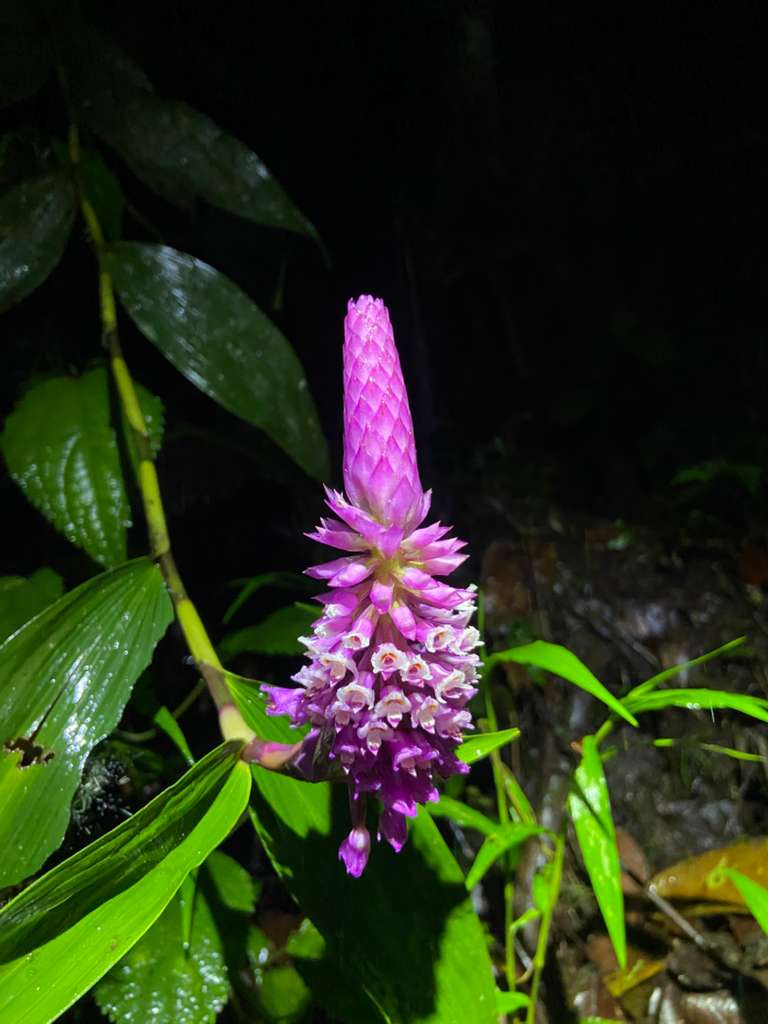
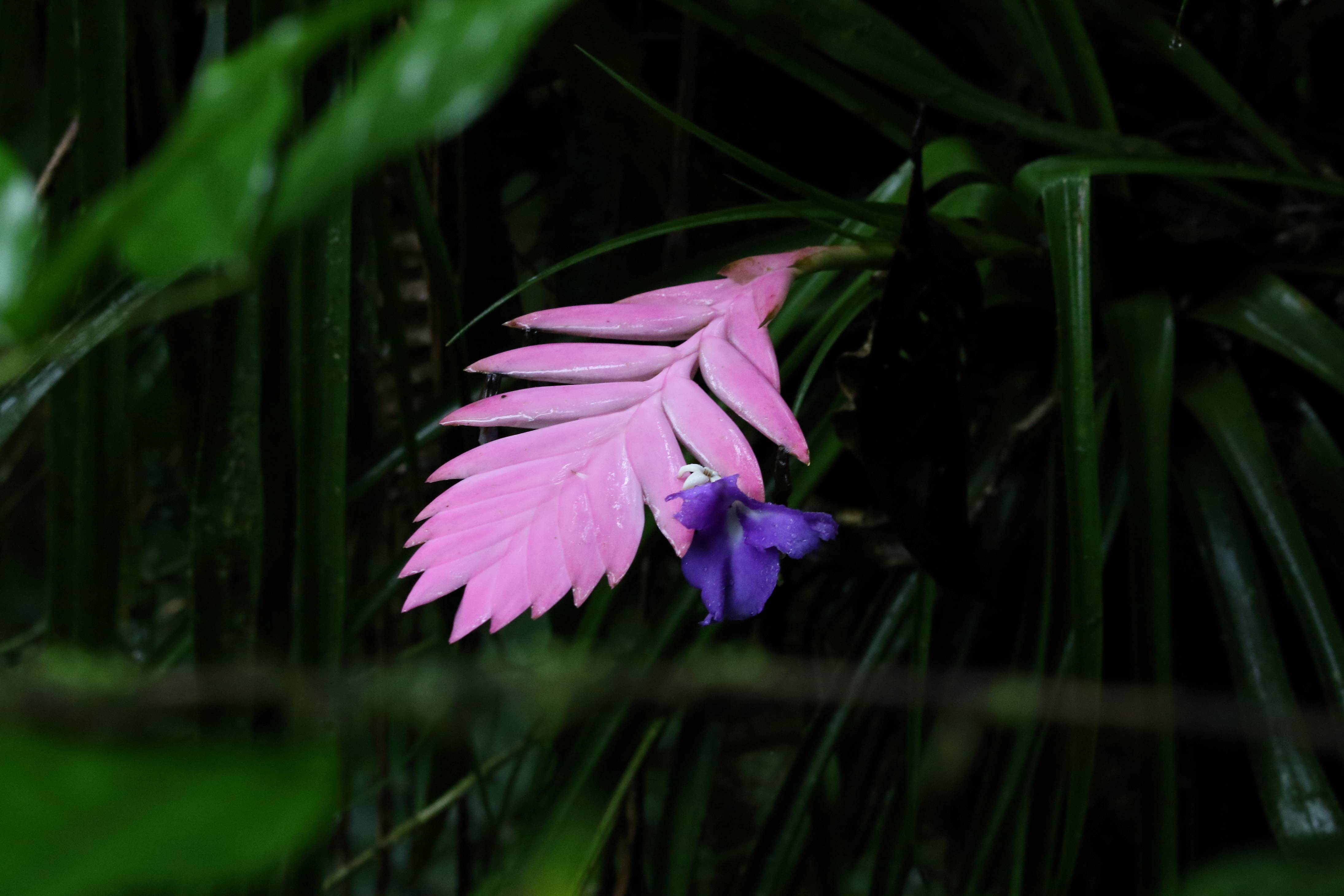
It started, seemingly to my untrained eye, with bright splotches of purple decorating all levels of the forest. Two different species of epiphytic plants began flowering at the start of the month, one an orchid (Elleanthus sp.), the other a bromeliad (Wallasia sp.). The orchids grew outward, slowly opening each individual flower into a cone of bright purple. The bromeliad flowers sprung up almost overnight, like fuschia colored ferns unfurling to give way to deep violet petals at the tip. In subsequent haste, different pinks began to pop up all over the forest, providing the fast-moving hummingbirds with ample nectar to keep their hearts beating fast and their heads full of pollen.
Some of the hummingbirds, aware of this advantage, have become overwhelmingly more frequent during our daily counts. Crowned woodnymphs no longer reign kings at the feeders, with brown violetears and white-necked jacobins vying steadily for the throne perched in the tree-tops. Fawn-breasted brilliants have become lackluster in attendance. The purple-throated woodstar and the purple-crowned fairy will sometimes bless us with their impressive sizes and inexplicable grace.
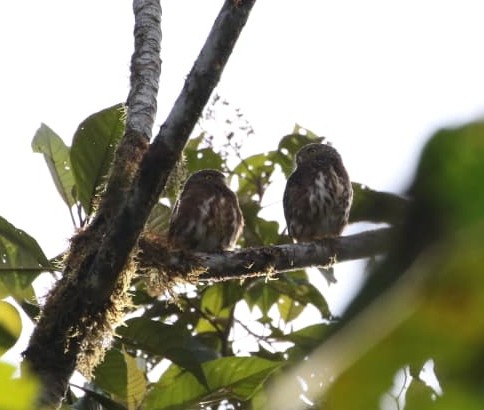
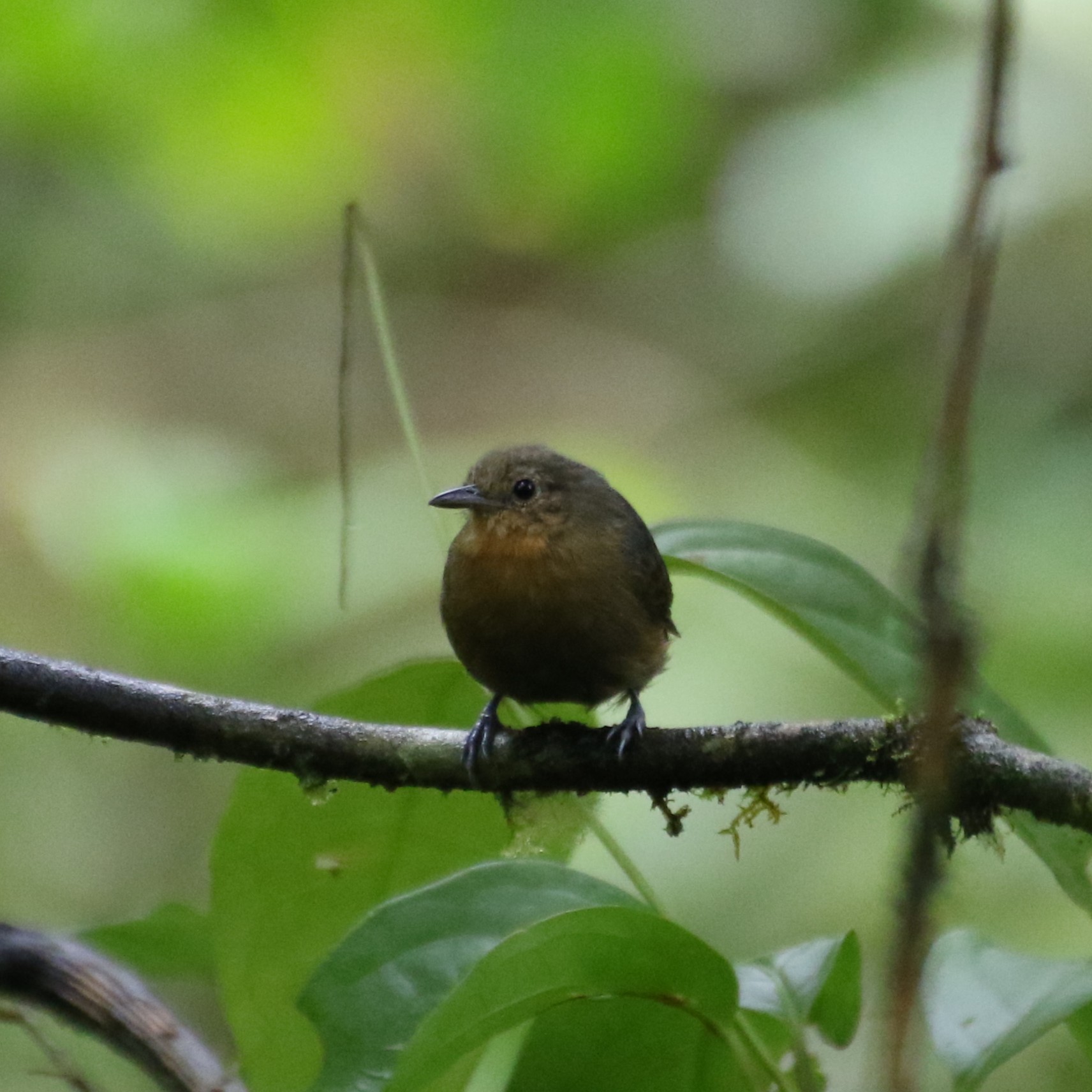
As for the other birds, small hints have woven themselves into everyday interactions. Bay wrens tote around grasses in their beaks, flame-rumped tanagers collect mosses, and lineated foliage-gleaners make alarm calls when I approach their mossy nursery. The slaty-antwrens chase and flit through the brush, females calling, and fleeing when approached by males. The squirrel cuckoo has taken residence on the ridge behind the cabana, sending off wanton notes into all hours of the day. A pair of cloud forest pygmy owls travel in unison, facing the dizzying bombardment of other birds together, as four bright yellow eyes instead of two.*
As for the inconspicuous Andean-cock-of-the-rock (ACOR), the lek remains rife with impressive activity. If the cacophony of twenty screaming ACORs was not enough, the piercing whines from the lekkers when a female visits may be audible on the other side of the Andes. So cryptic are their visits that noise is often the only indication, sometimes followed by a coffee brown blur of departure.
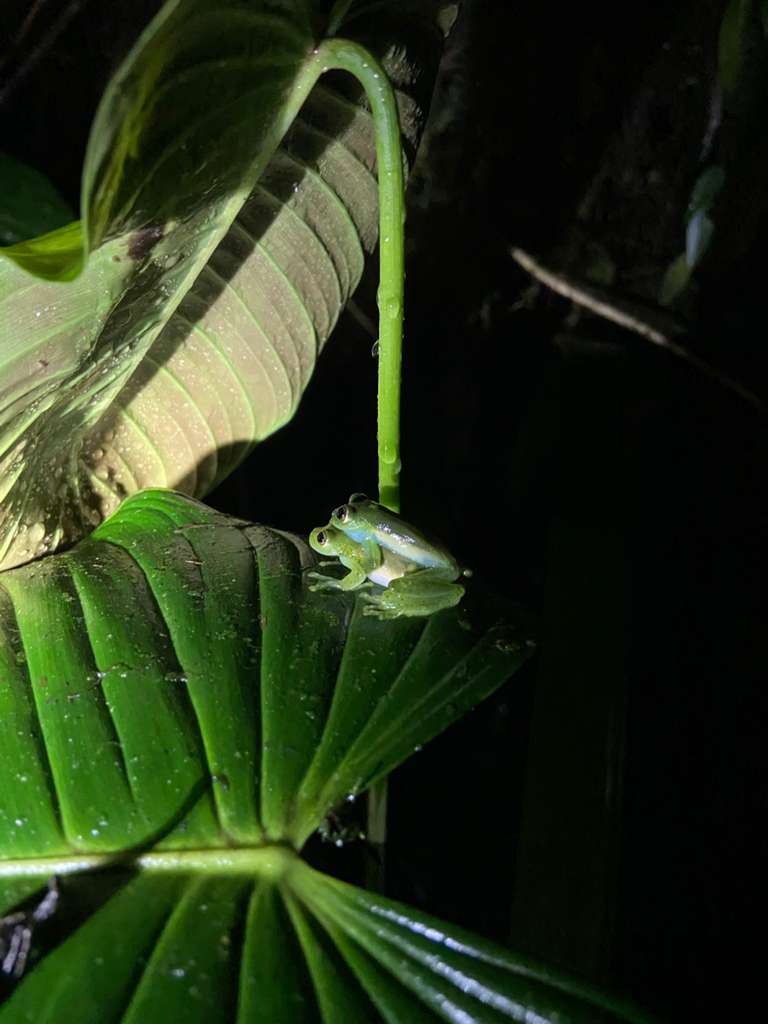
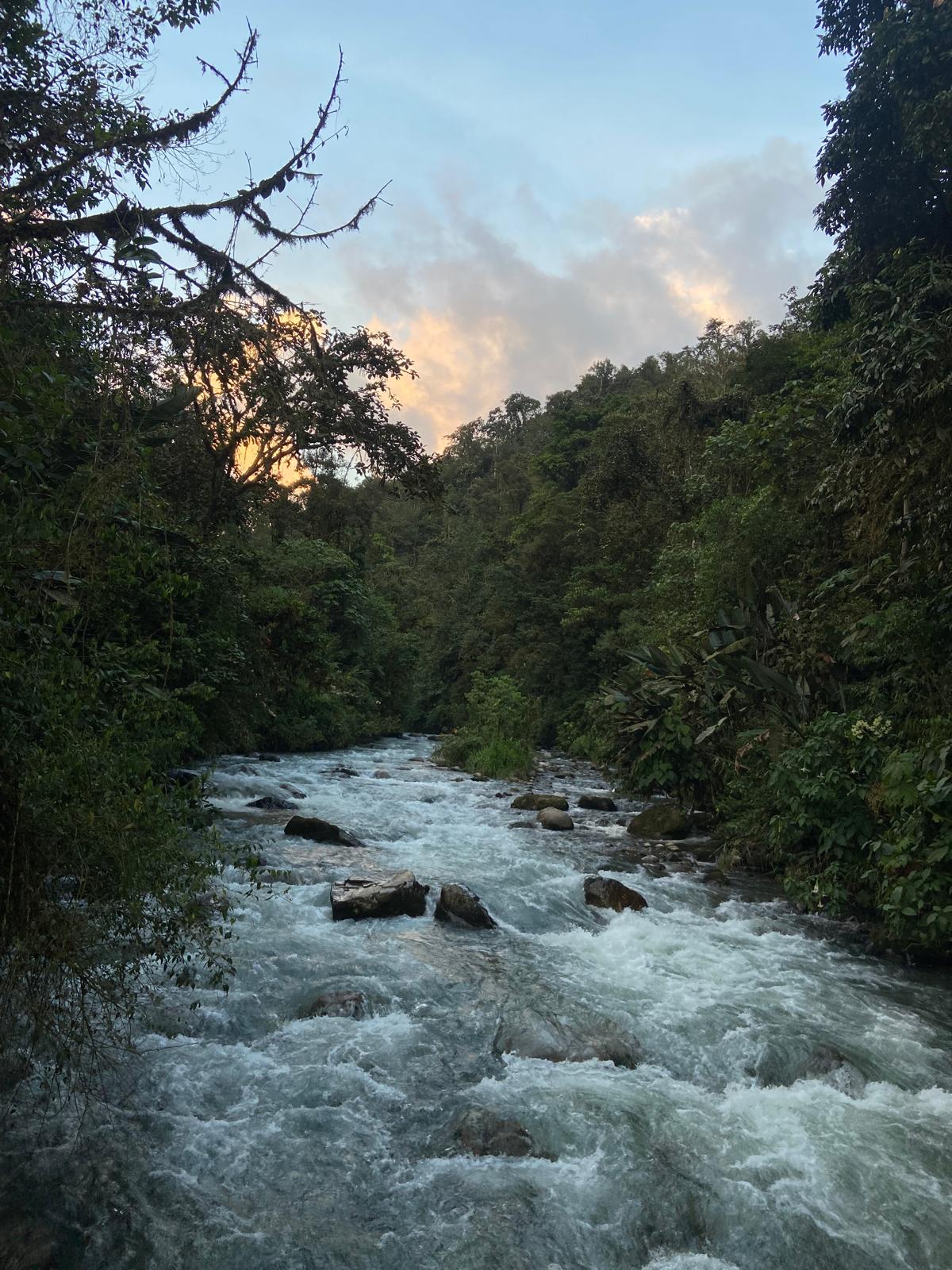
Just as the seasons change, the gradient of day to night offers new cacophony of sounds, with frogs maintaining the overwhelming majority. Despite this being the season of rain, we experienced a drought for over a week, much to the chagrin of the amphibian life that thrives in the moist cloud forest. However, after two days of consistent rain, a trip down to the river revealed some reveling in the return to normality. About a dozen Emerald glassfrogs were perched on leaves overhanging the Rio Nambillo, some expanding in size to produce metallic calls and others caught amplexing for the future generations.
The seas of emerald do not stop at the frogs, as the forest itself has become more obscure, with new leaves emerging like runners fumbling over themselves at the start of a jam-packed race. The so-called ‘mossy tree’ in front of the cabana one day disappeared under a cloak of light green. Once barren spires that rose up behind the cabana became softened by the roundness of foliage. A tree I have looked at everyday for four months, dominated by large bromeliads, now has tiny orange buds adorning its branches. Of all the organisms who are in the business of appearing, the most sneaky are the plants, whose presence changes with simply the blink of an eye.
*There is a phenomenon where smaller birds (hummingbirds, songbirds) will be seen mobbing owls, which is thought to be a form of active defense against an owl’s predatory behavior.

 Reserva Las Tangaras