Snakes, Snakes, Snakes
Mindo is a paradise for nature lovers, specifically birders. The past few months we’ve learned more than we thought possible about the bird life here. With around 611 species already being spotted this month in the Pinchincha region (eBird), make no mistake, birds are king. However, sometimes they’re a bit out of touch. Always flying away, perching high up in the branches of trees, mocking you with their cackles. The shining stars of the past few weeks have really been those that skulk, camouflage, and slither on the forest floor: snakes!
While avian lovers may be remiss with this topic change, I encourage my fellow herpers to buckle up for this barrage of serpents, big, small, and venomous.
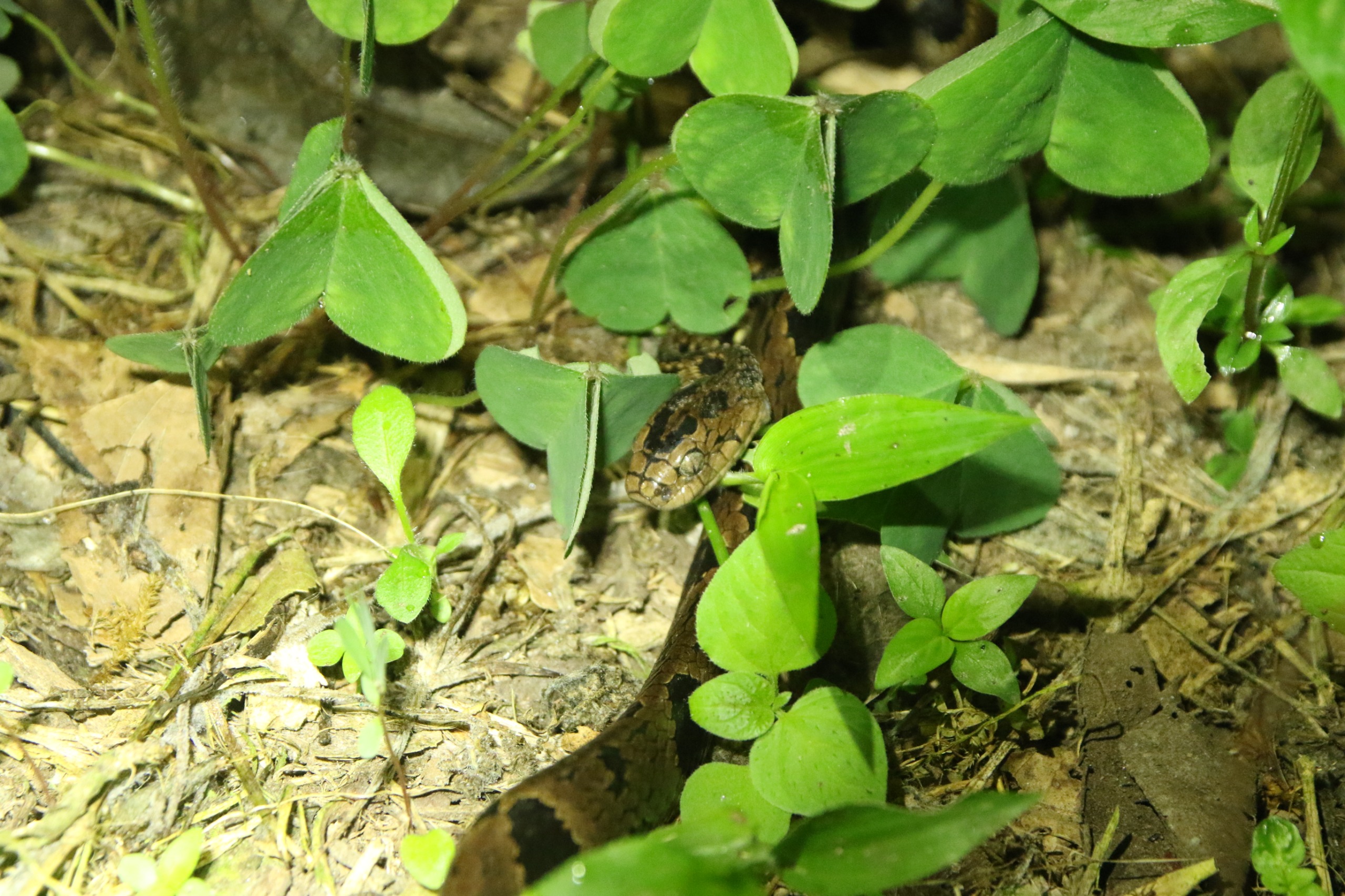
One of our most surprising finds was the Andean Snail Eater (Dipsas andiana), which was found foraging behind the cabin on a rainy night during a compost run. They don’t only eat snails as the name suggests, but will also eat a slug or two (close enough). These guys have a distinct blackish U-shape on their heads and very blunt snouts. Despite being vulnerable, they can be found quite frequently (every few nights) in Mindo during the rainy season.¹
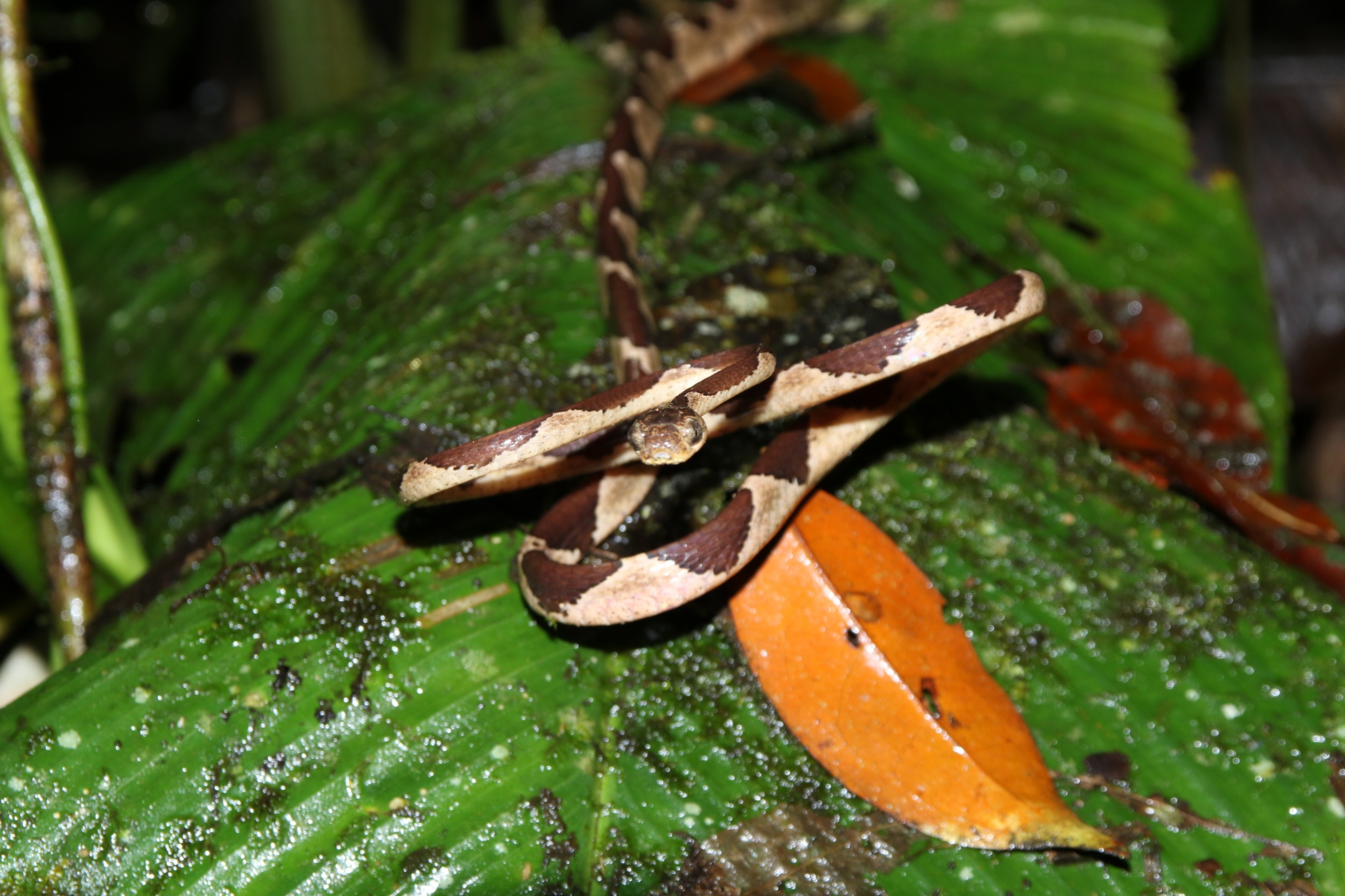
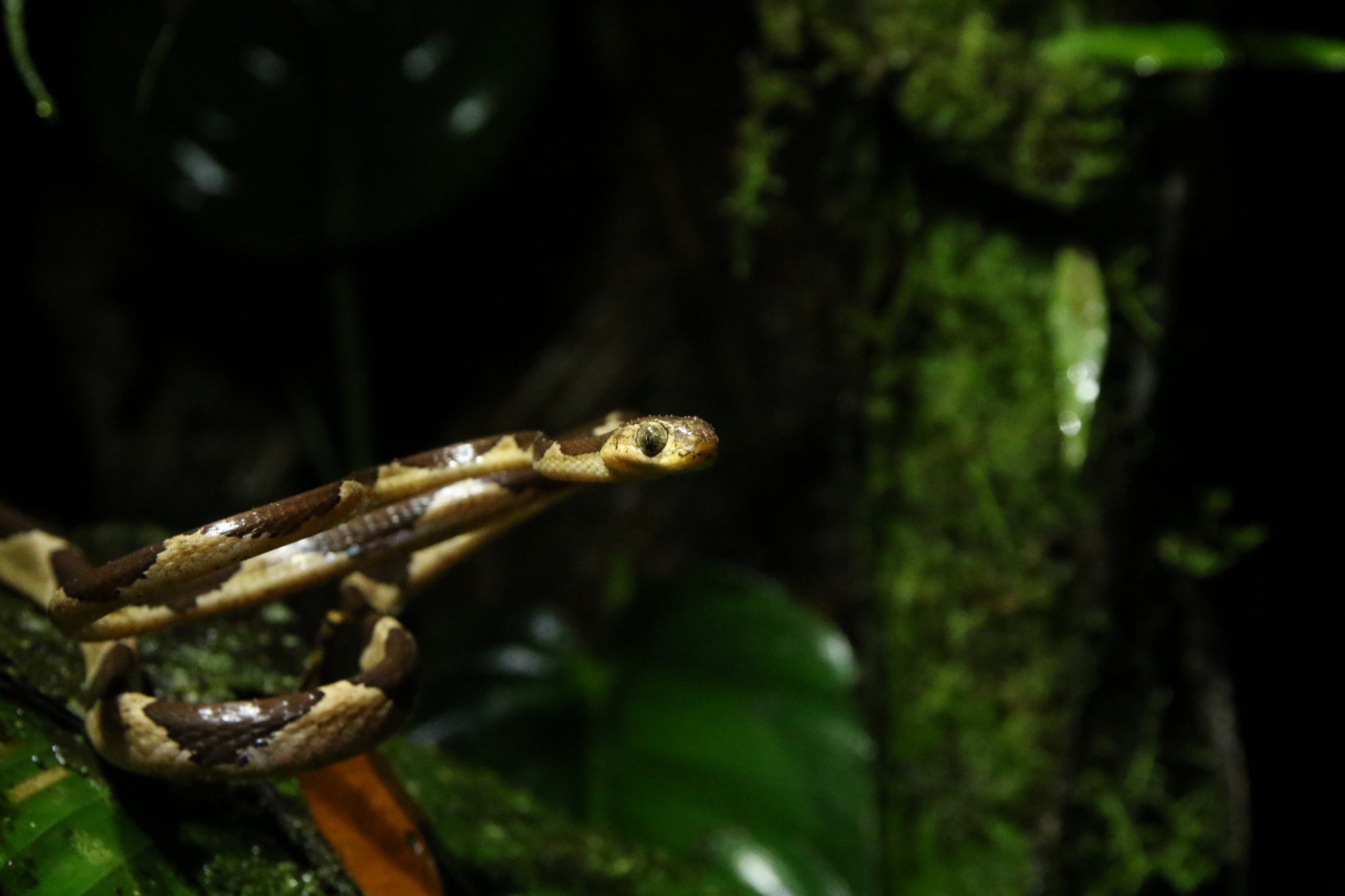
If you thought the snail-eater had a certain weird energy that could not be beat, the Common Blunthead (Imantodes cenchoa) will give you a run for your money. This is the pug of snakes, with its bulging eyes taking up to 25% its head space. Of course it manages to impressively eat lizards (primarily Anolis), frogs, and eggs of other herps with its impressively small head and thin body.² We have only seen it once, but it is a common arboreal snake in Ecuador, which you may have discerned from its “common” name, given the strangeness of its appearance.
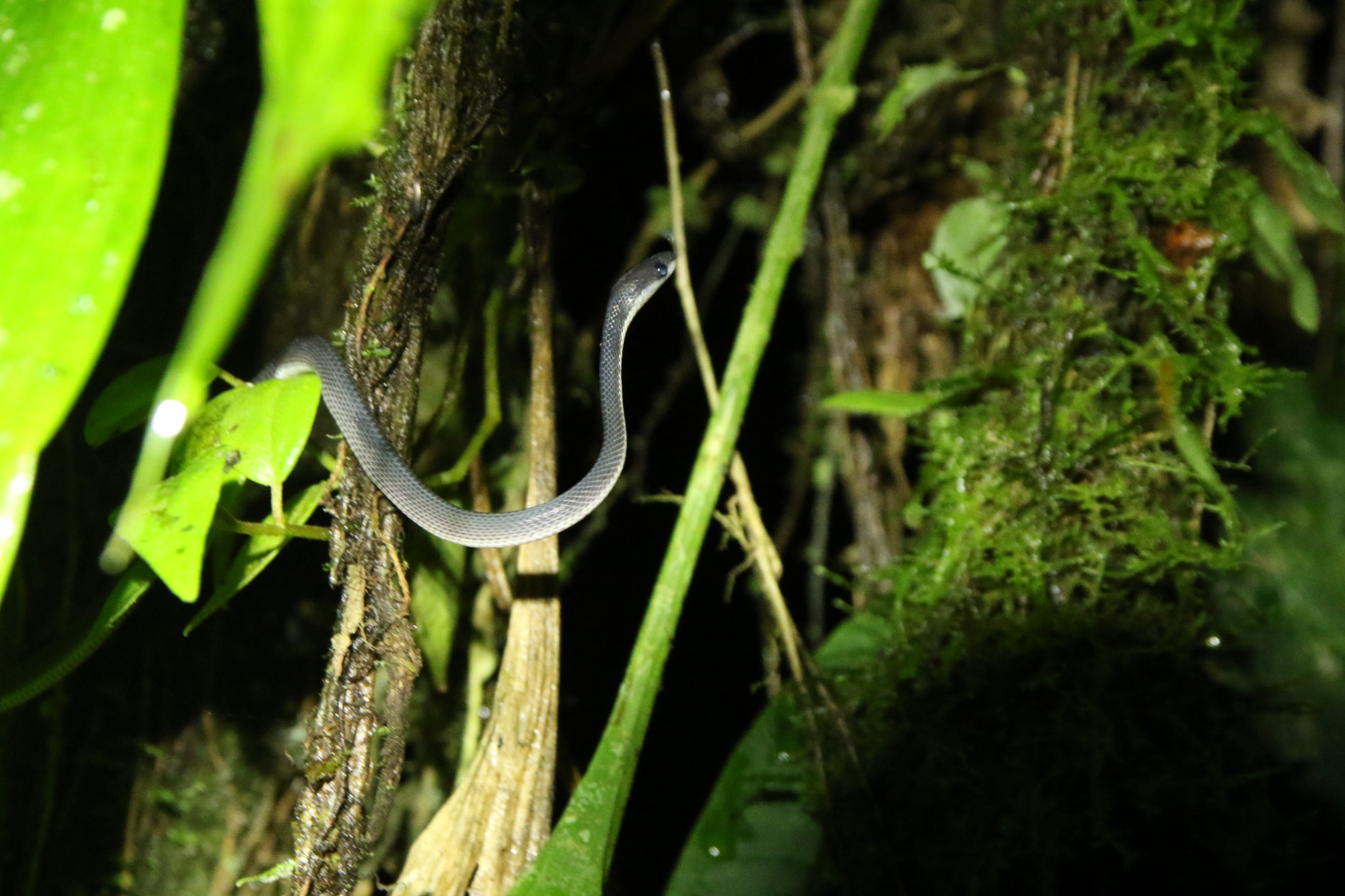
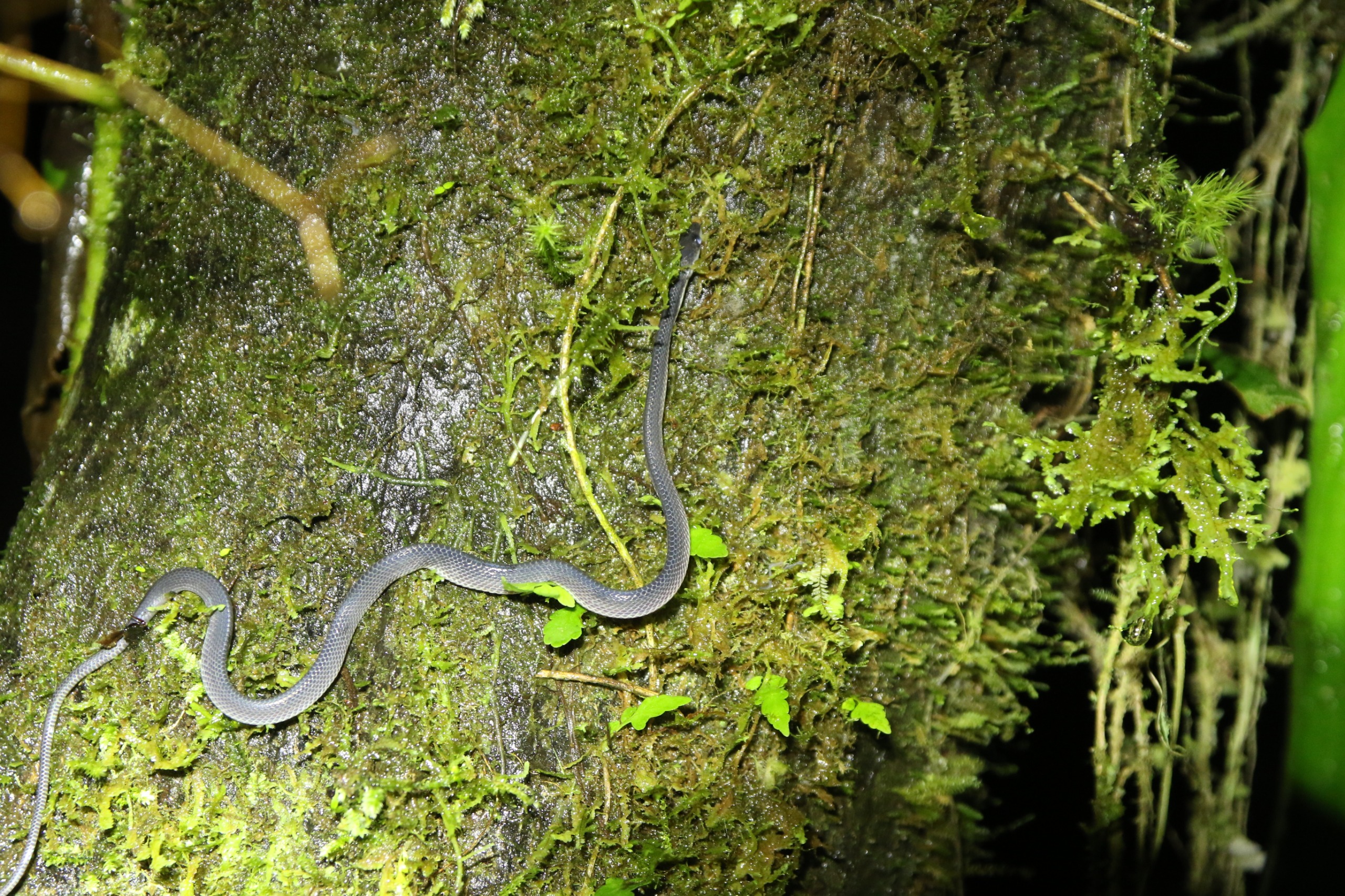
Up until now we’ve only seen the previous snakes once, however, the next snake we have seen twice now, three weeks apart. That would be the Humpback Shadow-snake (Diaphorolepis wagneri), which is normally seen at a rate of once every few months. Why this cryptic beauty graced us with its presence twice, we will never know. So cryptic it is, that scientists are not even certain what it eats, however they presume lizards!³
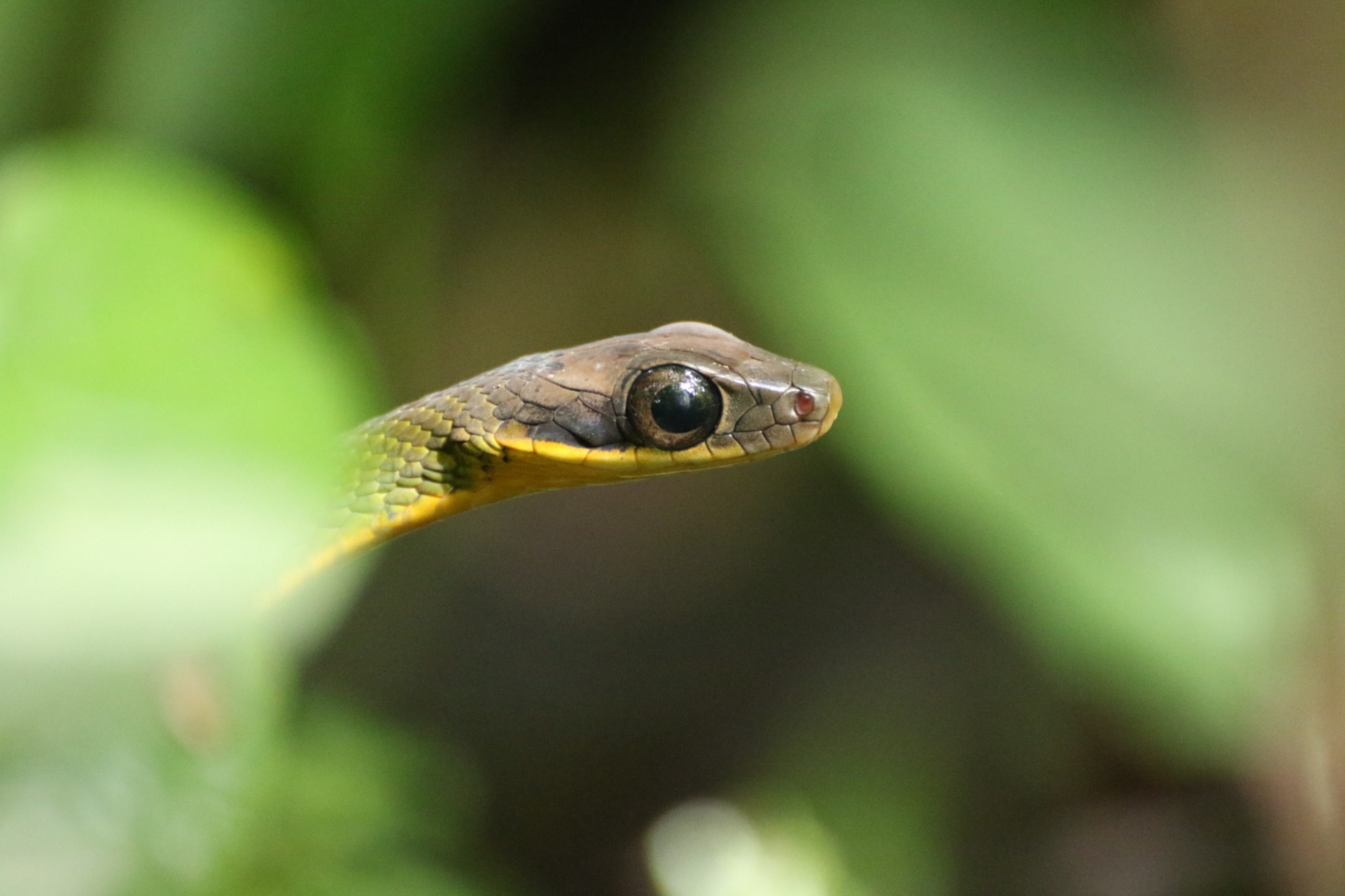
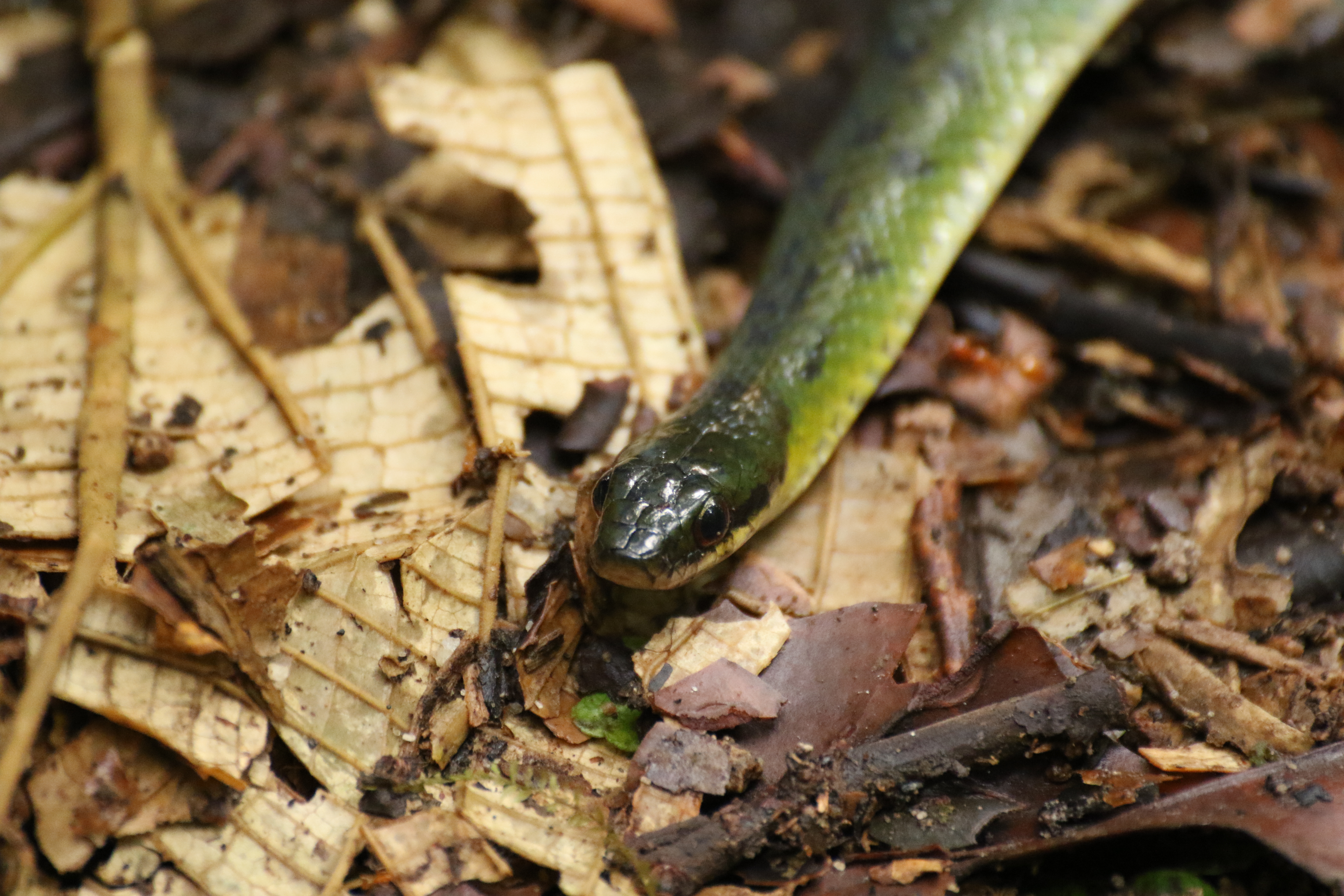
When there is sun, there must also be snakes. In the cloud forest, the sun is a limited resource. Taking advantage of the little sun we’ve had, we managed to find three snakes of two different species, the Rainbow Forest Racer (Dendrophidion clarkii) and the Golden-bellied Marsh-Snake ((Erythrolamprus albiventris). Both of these snakes have aglyphous dentition, meaning their teeth don’t have the proper gear to deliver venom. Because of this, they observe the true meaning of “fast-food”, eating prey quickly before it escapes.⁴ ⁵
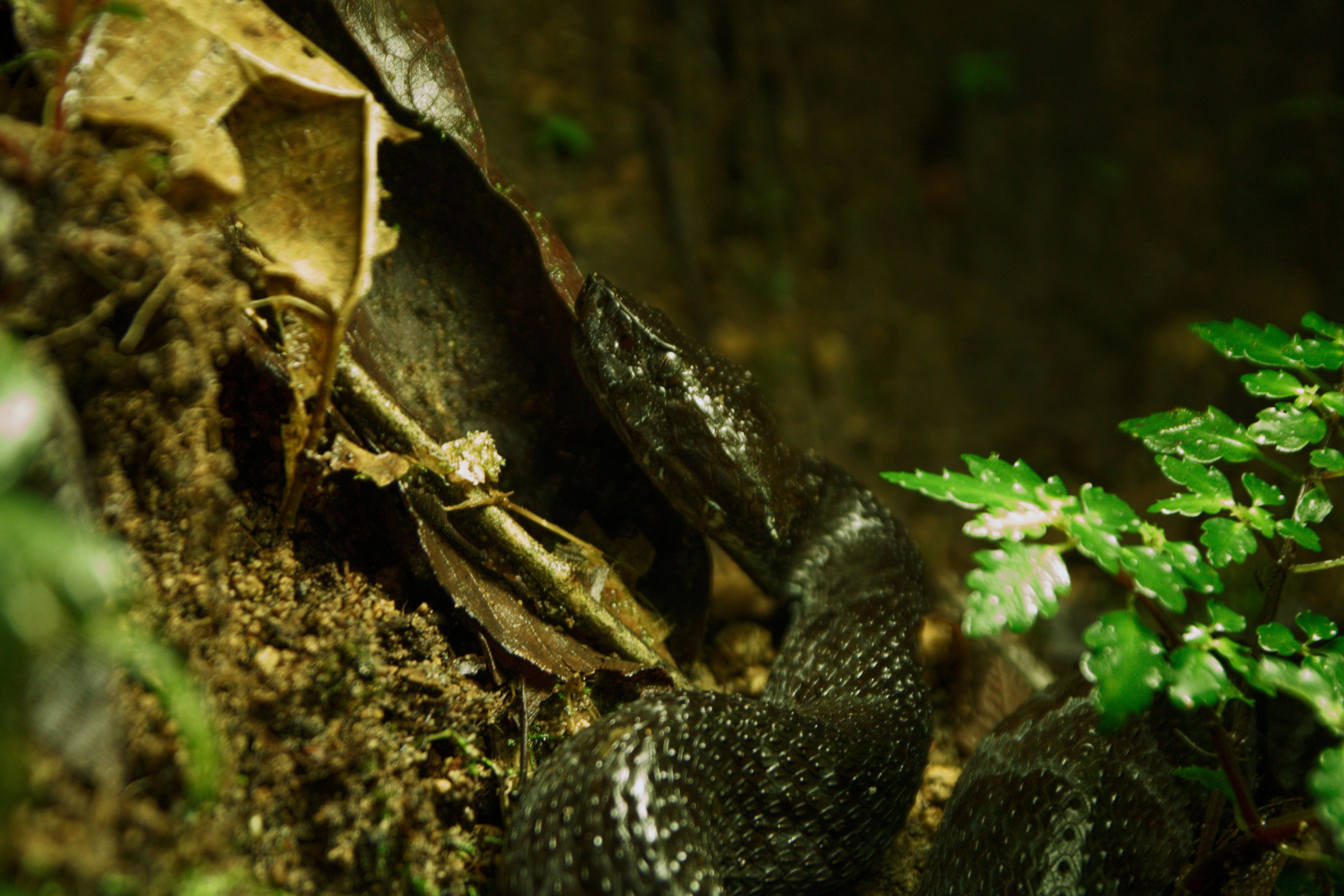
Just when you thought we were done, there’s one more find that takes the cake. At the ungodly hour before 6am, just as dawn had broken and before I had my coffee, Jonas and two guests discovered a very contemplative Ecuadorian Toadhead (Bothrocophias campbelli) enjoying the trails. These vipers are distinguished from their more aggressive cousins the Fer-de-Lance (Bothrops asper) by their slightly upturned heads, smaller eyes, and heat-sensing pits next to the nostrils. These snakes are only seen once every few months, and are considered vulnerable.⁶
As you can see, the reserve has a lot to offer. It’s a haven for snakes from common to vulnerable, with eyes large and small, throughout the night and day!
Disclaimer: Please never pick-up or touch any wildlife, especially snakes.
Resources:
¹Arteaga A (2024) Andean Snail-eating Snake (Dipsas andiana). In: Arteaga A, Bustamante L, Vieira J (Eds) Reptiles of Ecuador: Life in the middle of the world. Available from: http://www.reptilesofecuador.com. DOI: 10.47051/ERHE2385
²Quezada A, Molina-Moreno T, Aponte-Gutiérrez A, Duque-Torres D, Acosta-Ortiz J, Arteaga A (2024) Common Blunt-headed Snake (Imantodes cenchoa). In: Arteaga A, Bustamante L, Vieira J (Eds) Reptiles of Ecuador: Life in the middle of the world. Available from: http://www.reptilesofecuador.com. DOI: 10.47051/AURT2841
³Arteaga A (2024) Humpback Shadow-Snake (Diaphorolepis wagneri). In: Arteaga A, Bustamante L, Vieira J (Eds) Reptiles of Ecuador: Life in the middle of the world. Available from: http://www.reptilesofecuador.com. DOI: 10.47051/JXXF4716
⁴ Arteaga A (2023) Rainbow Forest-Racer (Dendrophidion clarkii). In: Arteaga A, Bustamante L, Vieira J (Eds) Reptiles of Ecuador: Life in the middle of the world. Available from: http://www.reptilesofecuador.com. DOI: 10.47051/COND1023
⁵Arteaga A (2024) Golden-bellied Marsh-Snake (Erythrolamprus albiventris). In: Arteaga A, Bustamante L, Vieira J (Eds) Reptiles of Ecuador: Life in the middle of the world. Available from: http://www.reptilesofecuador.com. DOI: 10.47051/LLLF9348
⁶Arteaga A (2020) Ecuadorian Toadhead (Bothrocophias campbelli). In: Arteaga A, Bustamante L, Vieira J (Eds) Reptiles of Ecuador: Life in the middle of the world. Available from: http://www.reptilesofecuador.com. DOI: 10.47051/ZBMA5522

 Reserva Las Tangaras