March Updates & Chef’s Corner
Rainy March tends to be slow for the Reserve. However, we were quite busy with tours! Joshua has started guiding “general” birding tours and it has been very successful! We enjoy sharing our excitement and experience of all things RLT with visitors from around the world.
We have been monitoring 3 Andean Solitaire nests that are built into the muddy earth about 4 ½ feet above the ground. We know that these are Andean Solitaire nests as the bird quickly flies out of the nest each time we walk by. Of the 3 nests, two were somewhat covered by dangling leaves and the other was completely visible with a little vegetation. 1 nest never had any eggs, another nest lost its’ 2 eggs and appears to be abandoned, but the final nest currently contains 2 hatchlings just starting to get their feathers. Interestingly, the nest that was completely visible is the nest that contains the hatchlings.
While monitoring the Andean Solitaire nests, we also found 2 hummingbird nests. 1 Western Emerald nest that took about 3 days until an egg appeared and 1 nest that is a bit too high for us to see inside but we will be keeping an eye on it. The Western Emerald nest (pictured below) is about 3 ft from the ground on a leafy vine that is suspended in the air by a series of downed branches. The other nest we are still working to identify the hummingbird but we believe she is a Crowned Woodnymph. She’s so fast it’s hard to get a peek!

We have finally settled into the “groove” of things here as we close out the month of March. We have started to slow down and appreciate the small wonders throughout Reserva Las Tangaras. This has certainly contributed to our findings…Hummingbird nests are SO SMALL!
WHAT’S NEW?
We have been working on updates to the Cabañas interior by treating the wood against rot and wear in the kitchen and guest sleeping quarters.
The bridge is now free of slippery moss and covered with fresh bottle caps. Though there is nothing we can do to make it appear safer with the raging Rio Nambillo beneath your feet especially during rainy season! But trust us, it’s very safe!
Our plantain feeders have gotten a face lift including a more natural look with moss and bromeliads, perching branches and now includes nails made of wood to secure the plantains. This will ensure a safer snack, free of metal contaminants for our bird visitors.

CHEF’S CORNER
Danielle here! I thought it would be fun to share some tricks we use here in the RLT kitchen to provide a delicious variety of dishes packed with flavor. We do not have electricity for refrigeration here, so we mostly stick to a vegetarian diet. Fortunately for us, I was a vegetarian for 11 years. Vegetarianism sparked my curiosity and passion for the culinary arts and the flavors/techniques used in cuisines around the world. I kept this fact close-to-the-vest while I was in culinary school and still tried all meat and seafood because I wanted to be a well-rounded Chef first and foremost. Even did an apprenticeship at a whole-animal butcher shop while maintaining a vegetarian diet. For me, what I preferred to eat at home never got in the way of my desire to learn.
A week ago, I wanted to make Pineapple Fried Rice as I had some leftover pineapple and an ají chile that needed to be used.
THE DISH: Pineapple Fried Rice THE CHALLENGE: We haven’t purchased any soy sauce as, I feel, it is too expensive for the quantity you get and, until now, it hasn’t been necessary. Additionally, I didn’t have any ginger, scallions or sesame oil. THE INGREDIENTS: 1 Red Onion, 1 ½ cups Fresh Pineapple, 1 Sm. Green Bell Pepper, 1 Large Carrot, ½ Ají Pepper (Use a full one if you like it spicy!), 5 Garlic Cloves (I was running low and only used 3), 3 TBS Panela (a sort of “brown sugar” commonly used here in Ecuador that is not as sweet), Salt, 1-1½ cup water, Veggie Oil, 3 cups of cooked rice and 3 eggs
THE PROCESS: Dice your first 4 ingredients and chop the ají pepper and garlic cloves. Add 2 TBS veggie oil to a skillet and heat until the oil is shimmering then add ½ the onion, all of the ají pepper and all of your pineapple. Saute until the onion is a pale-pink then add the panela to the pan. Stir just until you see that the sugar has dissolved. Allow the pineapple mixture to simmer for at least 3 minutes. Add 1 tsp of salt to the pan and stir the mixture until the pineapple is coated well. If your sauce is getting too thick, add a small bit of water. We are imparting a sort of spicy, salty caramel flavor into the pineapple and don’t want it to be too runny. This sauce is your soy sauce substitute. Once your sauce coats the pineapple, remove from the heat and taste. Add more salt if it is too sweet. If your pineapple is very ripe, you can add a couple dashes of vinegar to add more flavor. Allow the mixture to cool then transfer to a bowl.
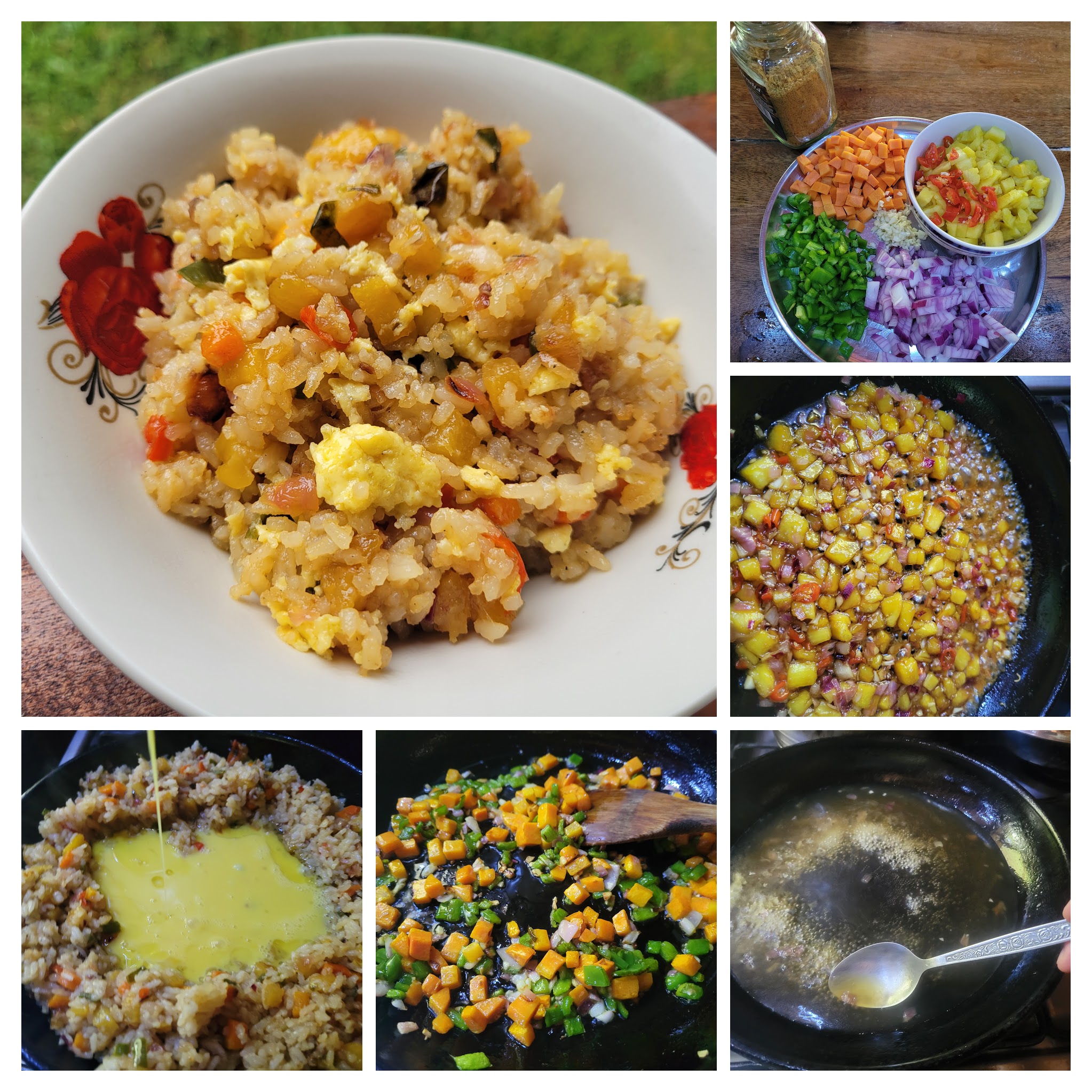
Replace your skillet onto the heat and add your water (DON’T WASH THE PAN FIRST!). As the water heats, stir and scrape the pan diluting all the gooey bits with the water. This is your make-shift soy sauce. Once your pan is clean, add to a separate cup or bowl so it can be slowly added while cooking the rice as a “seasoning”. Add 3 TBS of veggie oil to your skillet (it is fried rice after all) and heat until shimmering. Add your remaining onion, carrot and bell pepper cooking until the vegetables have softened. Add the garlic and cook until fragrant.
TIP: Leftover rice is best but fresh is okay too! You want your rice to be on the drier side (being dry helps it to absorb more sauce/more flavor). It’s super humid here so I laid the rice out in a thin layer and stirred/turned it over a few times to let the water out as best I could.
Add 1 TBS of oil to the sauteed vegetables, half of your cooked rice and 3 good spoonfuls of your sauce. Stir the mixture to combine and allow the mixture to sit on medium-high heat undisturbed for a minute or two. As your sauce is absorbed by the rice, stir and add more sauce by the spoonful. After about 5 minutes, add the rest of your rice and additional spoonfuls of your sauce. Allow the rice to cook until heated through and flavorful then add your pineapple mixture. Mix well and allow to cook for 2-5 minutes to heat the pineapple. Taste and add more sauce and salt to your liking. Push the rice to the outer edges of your pan, creating a well scraping up any stuck rice or veggies. Add a small amount of oil just to coat the pan then add your 3 eggs, scrambling them and moving them around the well until cooked mostly through. Begin slowly stirring and incorporating your scrambled egg into the rice and remove from heat.
BUEN PROVECHO

 Reserva Las Tangaras