The creatures of Reserve Las Tangaras
Sometimes you hear strange noises living in the rainforest; actually you always hear strange noises living in the rainforest. Most of the time we can try and guess and make ourselves feel safe by assuring, “oh it’s just a branch falling.” However, that could just be a lie, and a big jungle cat is waiting to eat you. With the coverage of the night many creatures become active and some of these are venomous and dangerous, but some can be as cute as a nine banded armadillo. Besides noises you will also wake up to many small holes in the ground in the yard, or the tail of a small cat running into the bushes. As we know, the birds are the main attraction at Reserve Las Tangaras with the Golden-headed Quetzal, all the beautiful hummingbirds and of course the magnificent Andean Cock of the Rock. However, there are also many magnificent mammals, reptiles and amphibians. This installment is a dedication to them, the creatures living in this Chocolate-Andean Rainforest paradise.
Here we have the Margay. A small jungle cat that likes to hang at the road into the reserve. They can run down trees headfirst and their ankles can rotate 180 degrees to accommodate hanging from branches and being super agile. They can eat birds and bird eggs (sorry fellow birders) as well as reptiles and fruit. These animals are mainly active at night, we luckily encountered this special cat at 5am as many nightjars led us up the road, flying away and landing as our headlamps reflected off of them. These cats used to be heavily exploited for their very soft fur, so they are classified as near threatened. Margays are monogamous and form pairs for mating as well as copulate in the tree tops, in true jungle cat fashion.

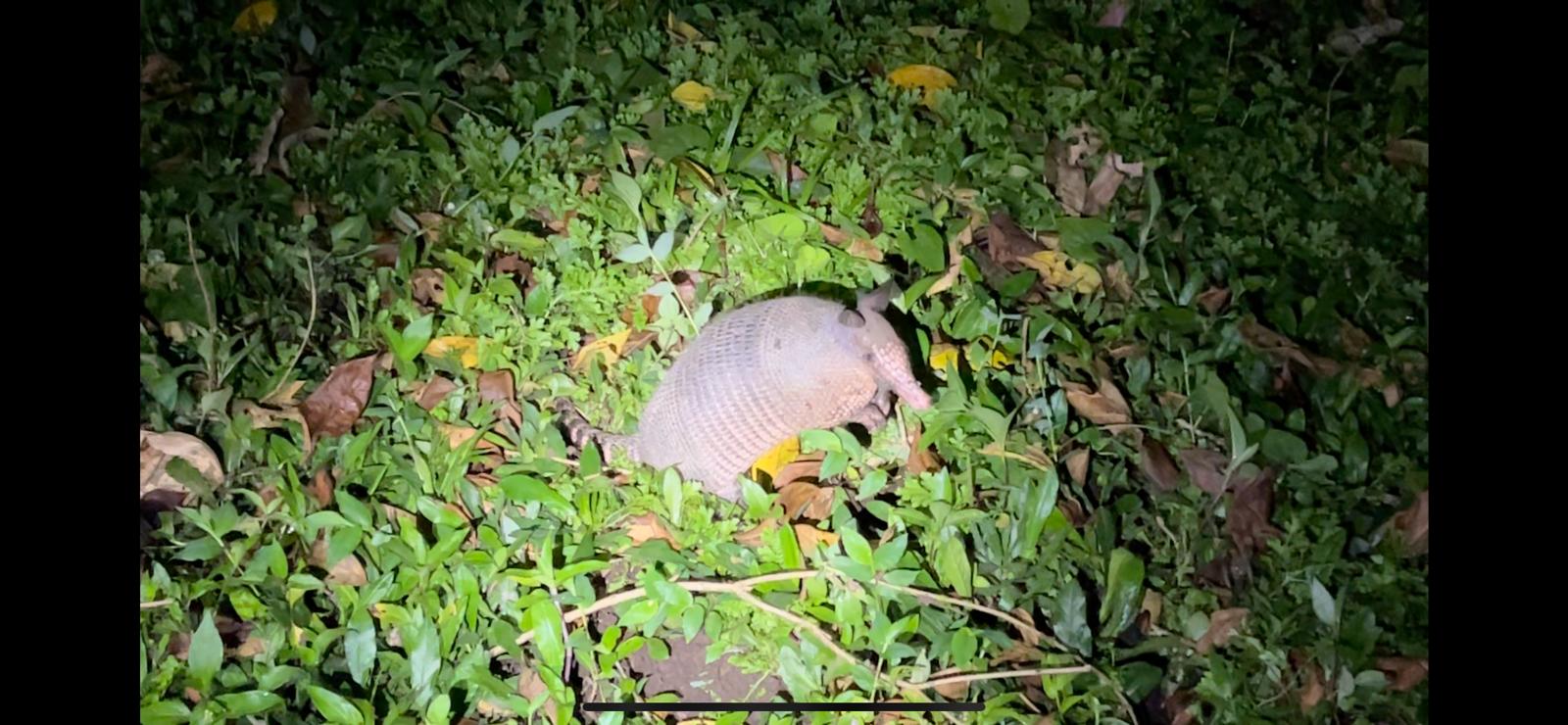
Next, we have the culprit of the hundred little holes in the yard. The nine banded armadillo. With its long nose it searches for grubs and insects in these little 1 inch wide and deep holes. Their shells are very unique since they are the only mammal with a shell, this is made of thick, hard skin and bony plates. For the nerds like me, his shell can withstand 20 Mega pascals which is 2900 PSI! He isn’t great for the lawn, but he’s got a special place in our hearts. How could you be mad at the face!
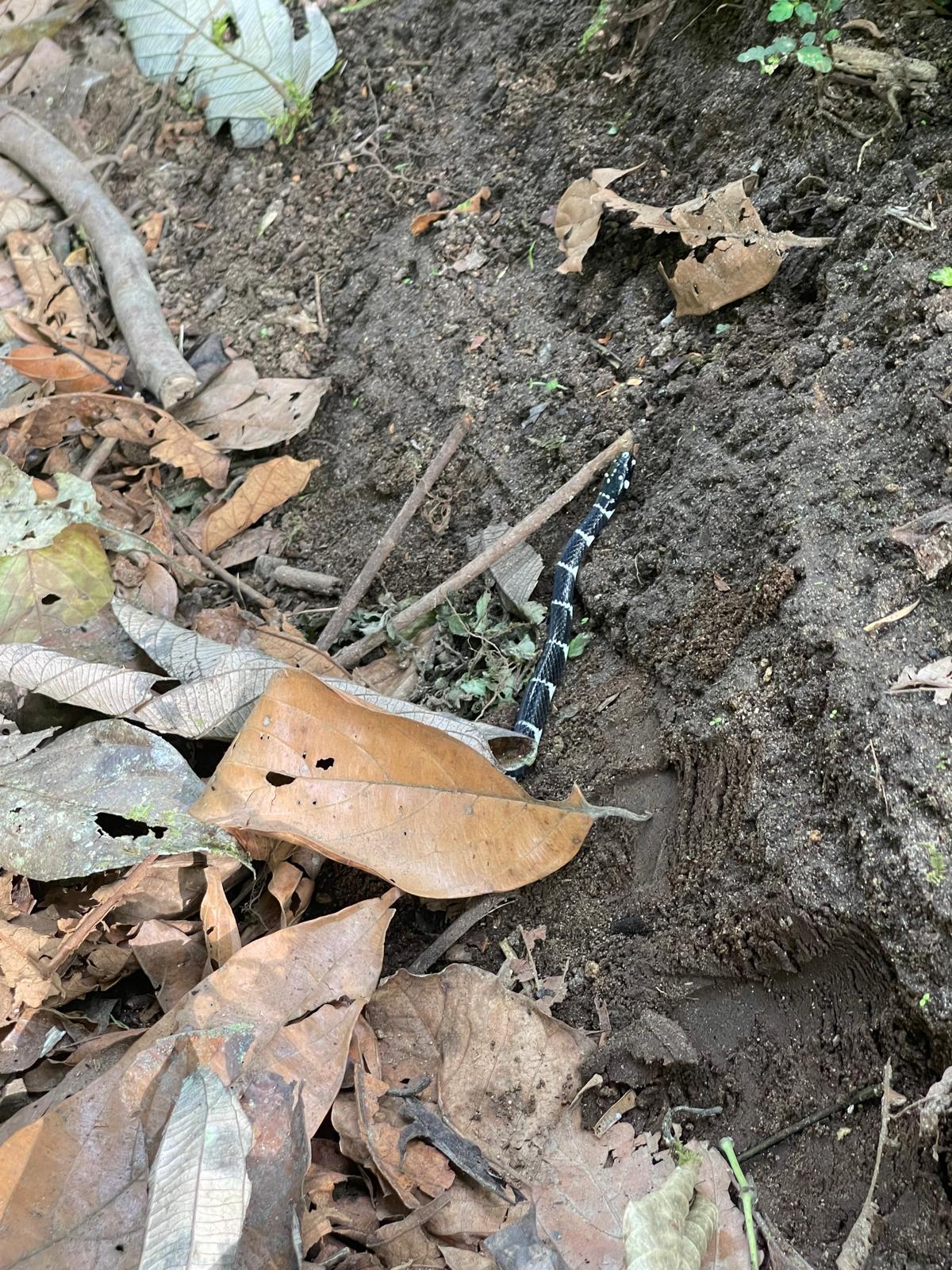
While walking the trail up to the Cock of the rock Lek, I saw movement under a leaf pile. I investigated with a long stick, knowing it could be an aggressive snake. However, this snake was friendly and small. I later identified as a halloween snake, Pliocercus Euryzonus. We haven’t seen many snakes so far, never mind an aggressive snake. However, our herpetologist friends at Mindo night walk showed us a large poisonous viper that they have been rehabilitating. We are happy we don’t have to encounter this at our reserve and it is just in captivity. We also have the Red Brocket deer here at the reserve which we had a long encounter with. Its eyes feel like its staring through your soul but also blushing while doing so. This deer can swim across rivers and are extremely agile to avoid predators. This deer reminds us of the white tailed deer which we have in New Jersey. However, the red brocket have much larger ears and have the beautiful under eye patches that add a lot more complexity to this special mammal.

Next, we saw the western Basilisk, run across water like Jesus! Which was something we have both wanted to see since seeing the National Geographic documentaries on them as kids. Later on the small river beach which we saw the Basilisk on we were trying to relax on the beach and soak in some afternoon sun. We started to uncover some large rocks to make a nice spot on the sand. We then saw about 6 white, similarly, looking rocks and realized we accidentally uncovered a clutch of eggs. We believe they are basilisk eggs, but a bit more circular than other photos we saw. If anyone knows about lizard or reptile eggs leave us a comment and let us know.

More on the river sector, we have been fishing a bit and having some luck. Our biggest competitor for fishing isn’t other fishermen, like in the states, but it is the river otter. These apex predators love to hunt for fish and can hold their breath for up to 8 minutes! Enjoy the photo of a true jungle fish, with extremely sharp teeth (which we of course ate and thoroughly enjoyed).

Lastly, we have the most common visitor at Reserva Las Tangaras, the Agouti. This little rodent is always making trouble around the yard but we love to watch him scurry around the yard curiously looking for food to eat. These animals are great seed spreaders so they are known as jungle gardeners.


 Reserva Las Tangaras
Enjoyed this! Volunteered with Dusti’s teams a fair number of times. To me it is a magical place.
Get Outlook for Androidhttps://aka.ms/AAb9ysg
LikeLike
Nice one, guys! Great to see the new trail cams in action (try to keep them dry!!).
(Oh, this is Jason Rainey with a personal comment, last term’s co-mgr…but it seems like my computer still thinks I’m RLT…)
LikeLike