Celebrating Transitions at Tangaras
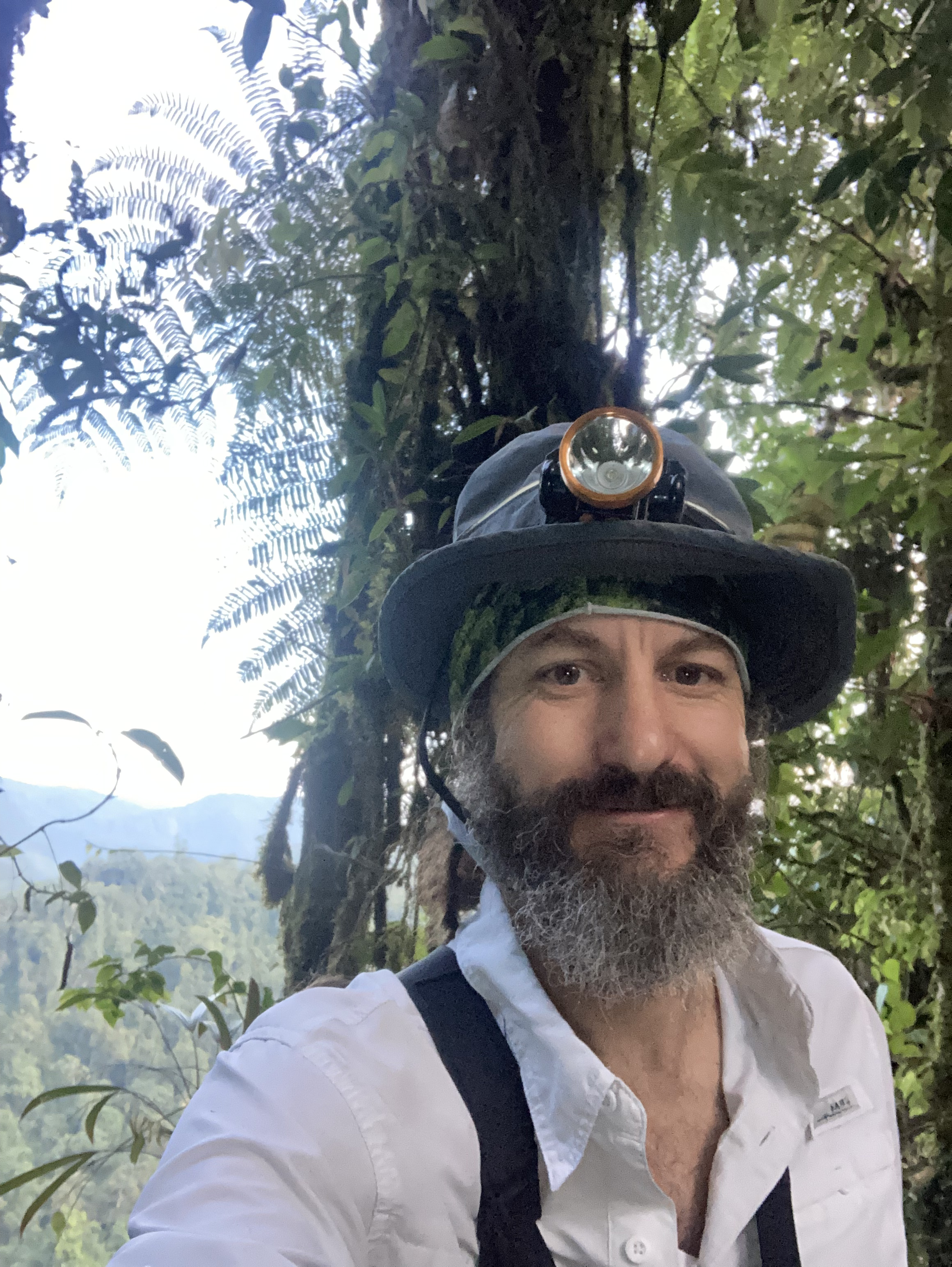
The conclusion of our tenure as co-manager’s here at Reserva Las Tangaras feels suddenly upon us. Over our 5 months here, our daily and weekly rhythms have recalibrated to the even tempo of living remotely in this equatorial cloudforest.
Waking at 6am to the predictability of day-break’s first light and the cacophony of bird song–and likewise retiring to night-fall’s lightening bugs sparkling the forest around the Lodge like a disco dancefloor–sets our diurnal rhythm, punctuated by afternoon and evening rain cycles that over time have gained a familiar feel.
Spending the daylight hours monitoring birds, occasionally hosting guests, laboring on a satisfying range of improvement projects throughout the Reserve and seldom—if ever—hearing the machinery of humanity punctuate the sound-stream of nature has become our steady state of being. As darkness sets in, some impressively-presented and decidedly delicious meal emerges from Anastasia’s Cabana kitchen. Whether we’re sharing it with guests or enjoying it ourselves by candle light, the deep darkness ensures it won’t be long before retiring to sleep to the nocturnal sounds of river flow, frog song and insect calls. This has become a nice way to be living.
It’s not been awesome all the time, but it sure has felt nourishing—if not restoratively healing—to sink deeply into “Tangaras Time” out here on the wild side of the Nambillo River. In fact, just as this experience was starting to take on a quality of timelessness, we looked at the calendar and noticed that June is upon us and it’s time to snap into “transition mode”, to prepare the Reserve for the new managers arriving in a couple of weeks for training, and to ready ourselves for our next chapter after Ecuador.
So, soon, we will join the ranks of the “alumni” of long-term volunteers at Reserva Las Tangaras. As we’ve spent dimly-lit nights reading through the old “manager’s journals” or computer files of monthly reports, we’re reminded that for the roughly 20 year history of the Reserve, this adds up to scores and scores of dedicated people who came before us! We’ve read some of their names in the helpful ecology reference books they’ve donated, or in notes that credit them for completing some significant construction project or new system for organizing the operations here at the Reserve. One thing for sure, we’ve benefited from all the contributions of previous volunteers—and most centrally the vision, initiative, dedication and leadership of our Director Dr. Dusti Becker and her colleagues at LifeNet Nature—and for that we’re appreciative.
For our part, we hope that future resident-stewards, volunteers and guests at RLT will enjoy the results of our efforts to build upon the legacy of avian conservation and research at this unique place. Some of our projects were modest and immediate in their impacts, such as installing gutters above the entrance stairs (and thus eliminating the arrival ritual of passing under a curtain of water). Other projects were implemented with an eye toward the future, such as improving the food-growing area for residents, liberating the corridors of banana trees from the tangle of pioneering forest vines (the new managers should have 8 racks of bananas to harvest shortly after arrival), and propagating perennial shrubs favored by hummingbirds throughout the yard area. Even in a climate with such a stable temperature, plants take time to mature, yet as we prepare to leave we feel really good about the botanical beauty and bounty that now encircles the Lodge, and it should get even better with time and continued care.
As for the birds, they seem to approve of our efforts to augment habitat and foraging plants, and we realize that we’ve grown quite fond of our feathered neighbors. It seems like the feeling is mutually shared. There’s a great variety of birds—individuals spanning across roughly twenty species—that greet us in the morning as Anastasia gives her whistle and places the hummingbird feeders throughout the grounds and loads bananas onto the four fruit-feeding stations we’ve built around the lodge. To the White-necked Jacobins and Purple-bibbed Whitetips that buzz our faces as we step out into the morning (they have a different notion of respecting “personal space”) and to the Red-faced Barbet couple, the injured Euphonia and his shy partner, the pairs of Golden and Silver-throated Tanagers that chirp and hang from nearby branches as we set out cut bananas, we thank you for your joyful companionship. We will miss you and we wish you well.
And for the “big birds”, too, we appreciate the trust that has grown between us. The mother Wattled Guan with her two youngsters that graced us the first week we arrived has retreated to deeper and quieter parts of the forest and is seldom seen. Yet others have gotten increasingly comfortable in our proximity, and it’s not uncommon for the large cecropia tree in the backyard to host the full suite of toucan-type birds (Choco Toucan, Yellow-throated Toucan, Crimson-rumped Toucanet, and Collared Aracari), Andean Cock-of-the-Rock, Masked Trogon and two species of Motmots. Often, on an afternoon of attentive birdwatching, we can see all these birds parade through the branches of our backyard trees. We’re confident that they’ll be just as friendly and delightful to the new volunteer managers.
As for the two of us, we’ll leave RLT with confidence that we’ll return to visit this forest and its inhabitants. We’ll rush off to lead a couple of week-long tours in Colombia in July, return to California briefly to visit family and friends, and then re-establish ourselves in a place called Jardin, our favorite little town in the western Cordillera of Colombia’s Andes mountains. From there, with unnumerable relevant experiences from our time here at Tangaras, we’ll return to our other birdy-enterprises—a little travel company called Tranquilo Birding, managing a small guest house in the hills above Jardin, and pursuing opportunities to contribute to avian conservation and supporting young birders and bird-guides. We’ll be plenty proximate to keep tabs on RLT and arrange for return visits to this 50ha cloudforest paradise, which has served as a most-memorable “home” to us.
Transitions of any kind can bring forth a range of feelings. For us, this feels like one to celebrate—there’s much we’ve gained from this experience, and we hope there’s a bit of continued goodness we’ve provided to the Reserve. We’re excited to meet the new Managers (we’ll let them introduce themselves next month), pass the proverbial baton (the Reserve cell phone and long-blade machete will stand in as the ceremonial objects in the transition of responsibility), and celebrate the continuum of care that has gone into turning a former cattle ranch into a haven for birds and bird-watchers in this wild and remote corner of cloudforest above the town of Mindo.
With gratitude,
Jason & Anastasia


 Reserva Las Tangaras