Birding the Reserve: Our Experience So Far
Our time here is coming to a close. We know from experience how quickly a month can pass by – even if it only seems that way in the rearview mirror. We feel fortunate to be here, partly for the perspective that living abroad can yield.
Pursuing naturalism evolves our perception of the world in a paradoxical way. The more we strive to learn about the organisms and natural cycles around us, the more our curiosity expands both inward and outward. We want to dig deeper to understand our home territory, yet we also imagine what there is to see if we just hop in our cars and drive to another state – or hop on a plane and fly to another continent. The result is a duel between opposite desires – one for depth of knowledge and the other breadth. Emily and I had traveled as much as we reasonably could before coming here, following our curiosity outward, expanding our breadth of knowledge. But it’s undeniable that our deepest understanding of the natural world resides in the southern Appalachian Mountains.
The deeper we dig to understand our home region, the more comfortable we feel in our environment. At this point, we feel quite comfortable in the Appalachians. We can walk around and recognize just about every bird we’re likely to see on any given day, though we do need to brush up before migration hits. The same goes for trees (minus the migration part) and many herbaceous plants and mushrooms. We also have knowledge of which of those plants and mushrooms are edible, medicinal, what to use them for, when to look for them or harvest them, etc. We know many people, some of them good friends, that take birding to another level, obsessing over it almost as a religion. They are very talented, dedicated people. We will never be quite that way, though we are quite competent as birders. The point for us, rather, is that we can look around outside with a deep sense of familiarity that’s difficult to come by without naturalistic study. We lived in a world we knew.
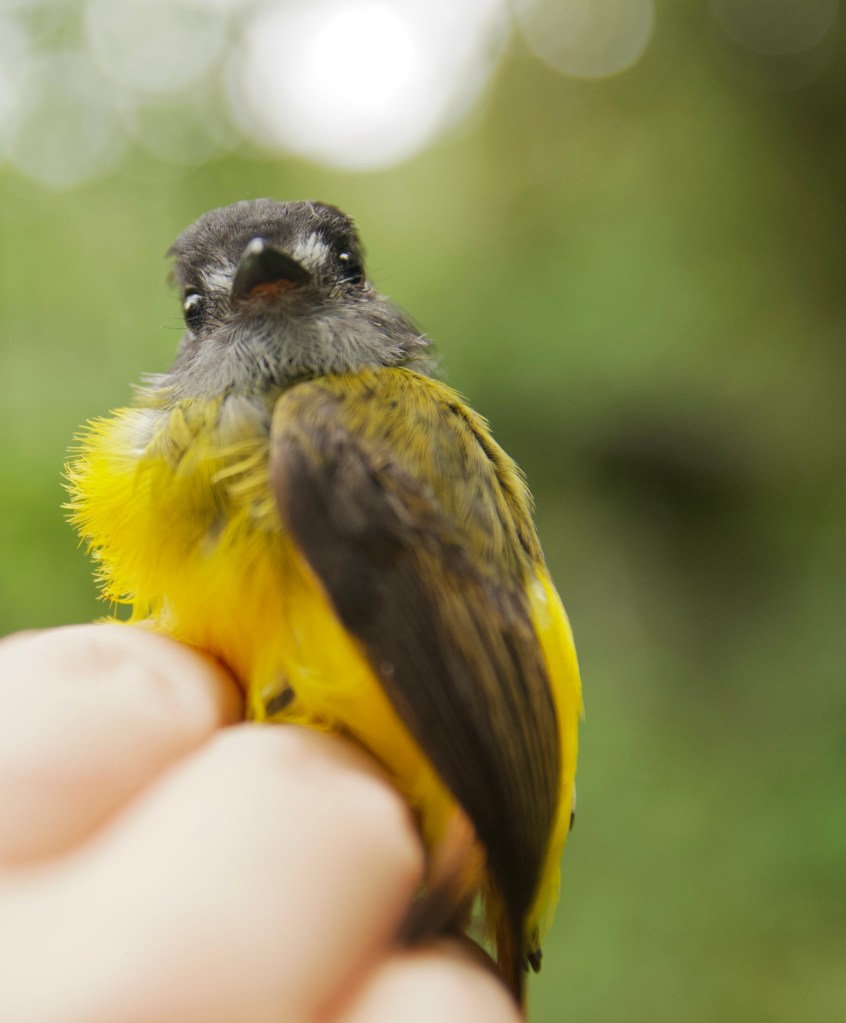
When we came to the reserve, we found ourselves in a new world. We no longer had that familiarity to lean on. Every tree, every mushroom, just about every bird was unknown. And, being in the tropics, there were about a zillion more species. We’d sit down on the porch to start the day’s hummingbird survey, watching a cloud of iridescent smudge marks zipping around the feeders, then perching there looking like airborne seahorses. Meanwhile, a mixed species flock would appear, suddenly filling the trees outside with chipping, flitting birds of various sizes. Blues, blacks, browns, yellows, and greens would flash between the leaves, trailing unfamiliar songs. A few minutes later, they’d be gone, and we would have only truly seen a handful of them. There was a lot to learn.
Opening up a field guide to a tropical region is intimidating. Flipping through Helm Field Guides’s Birds of Ecuador is reminiscent of scrolling through color palettes. Pages go by in gradients – white turns to gray turns to black turns to brown turns to purple, and eventually you’re looking at the bright greens and blues of tanagers and parrots and quetzals. The most difficult ones to learn, though, are the ones that only birders travel to see: foliage-gleaners, spinetails, woodcreepers, treehunters, flycatchers. Brown birds, gray birds, buffy birds. A few are obvious, but mostly the differences range from small to minute. This woodcreeper has a slightly paler lower mandible than that one, which has a slightly streakier belly than that other one. Or the first clue might be behavioral. A small brown bird with a medium-length tail and a short, stout, slightly upturned bill is scooting around in a tree. You figure it’s either a little Wedge billed Woodcreeper or a Plain Xenops. Probably you can squint a little harder and notice the crisp white mustache mark or the lack of supporting barbs at the ends of the tail feathers, but maybe it’s flown away before that’s possible. It doesn’t matter, because you noticed that it wasn’t pulling itself along up the trunk of the tree, but rather clambering around branches like an acrobat, flicking off bits of bark. You know it was a xenops.
The Cornell Lab of Ornithology’s Merlin Bird ID app has made things a whole lot easier, too. We no longer have to sort through the range maps of seventeen pages of furnariids to narrow down our options. And we may turn to the guidebook for further reference or a wider range of options to look through, but we don’t need to debate whether we want to bring into the field for a day of birding. Having Merlin on our phones lets us keep a manageable list of potential birds right in our pockets, and one with which we can search, query, and even listen to recordings of songs and calls. I’m generally resistant to this sort of advantage, feeling that the removal of effort from the process of learning does existential harm, but I have to admit that I love the Merlin app. It doesn’t remove all of the effort from learning the birds – if it did, we’d know them all by now, and we certainly don’t – but it does make it more manageable.
There’s an important distinction between ‘ability and ‘capability.’ ‘Ability’ is when you have the knowledge and skills to do a thing. ‘Capability’ is when you have the potential to gain that knowledge and those skills. Coming here and learning what we’ve learned has made me feel more capable as a naturalist. Having always loved nature and animals, my knowledge of the flora and fauna in the United States grew out of a natural curiosity over the course of many years. It was a slow build, knowledge piling up on knowledge, so that by the time we left for Central and South America, I don’t know that I had ever fully appreciated it. I’d forgotten what it was to be in the dark. Learning the birds from scratch has been a humbling experience.
The natural phenomena we have here to see and observe are truly amazing. From the feathered tongues of toucans to the aerobatics of hummingbirds to the dragon-like shrieks of the cocks-of-the-rock, the more you look, the more you notice. Scrutiny is rewarded with further details. In four and a half months, we’ve barely scratched the surface. A local came as a favor a couple of weeks ago to teach us some trees. He taught us about 20 species – there are probably at least 500 in the region. Just a scratch.
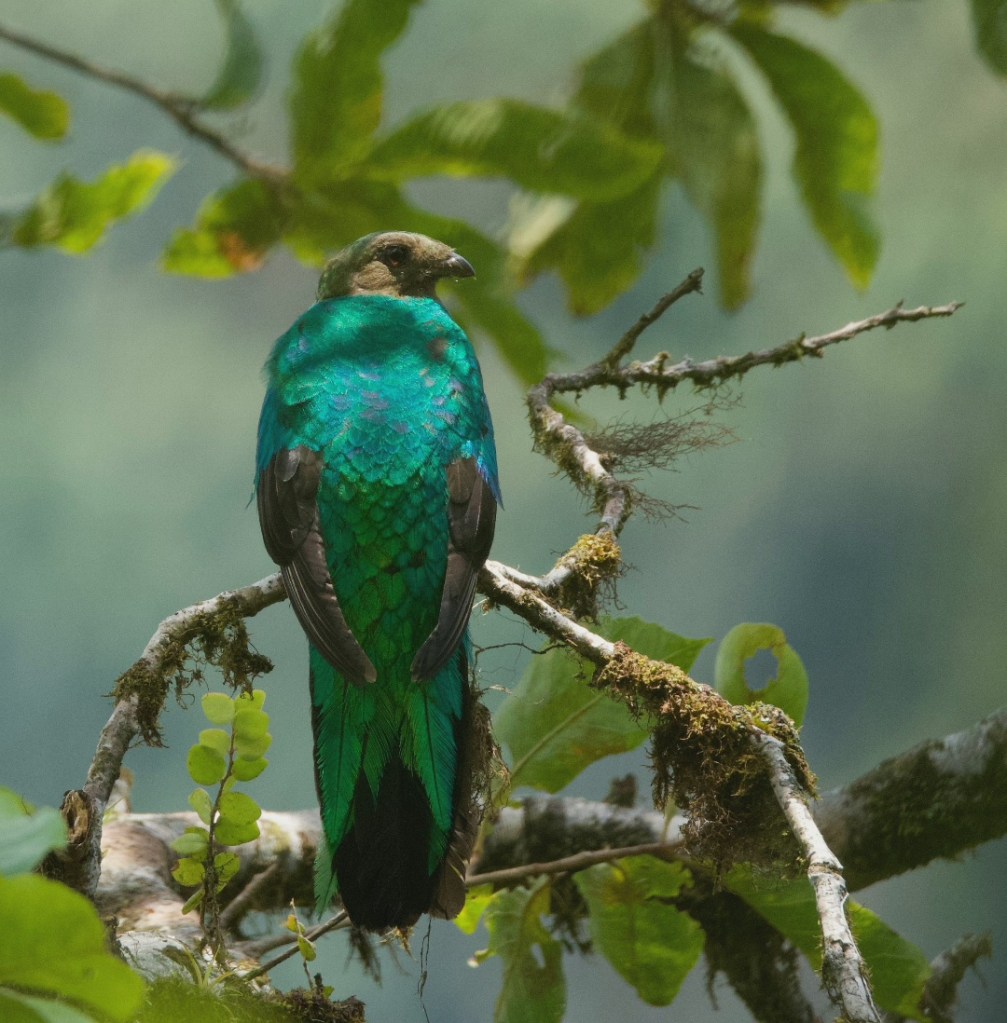
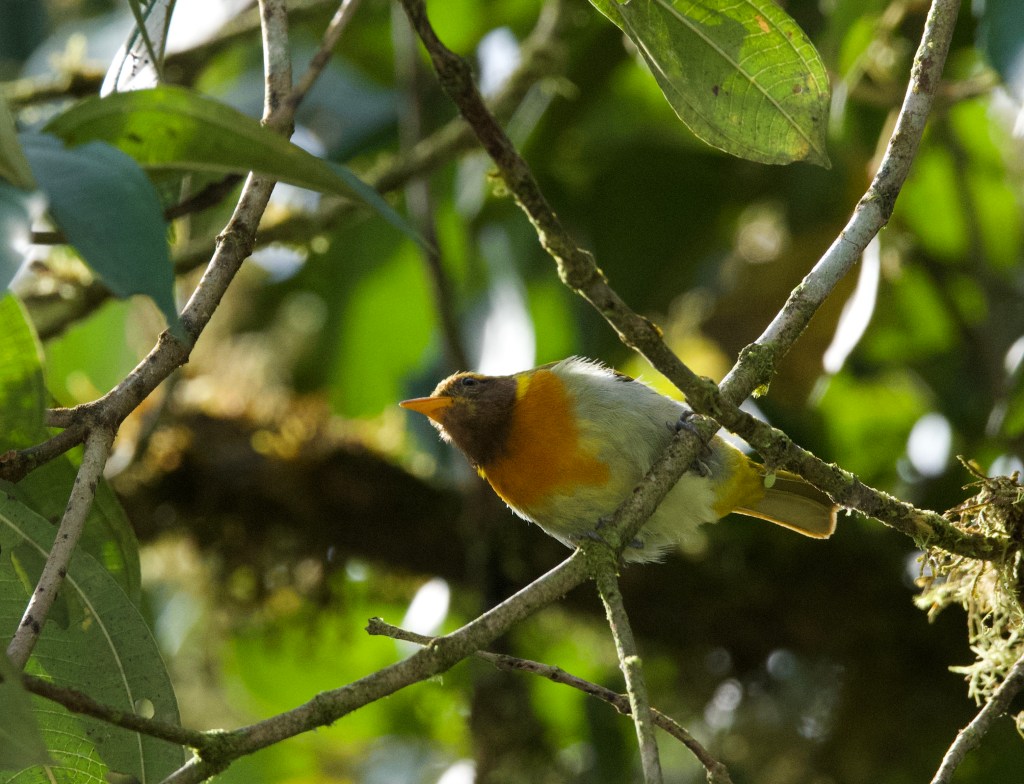
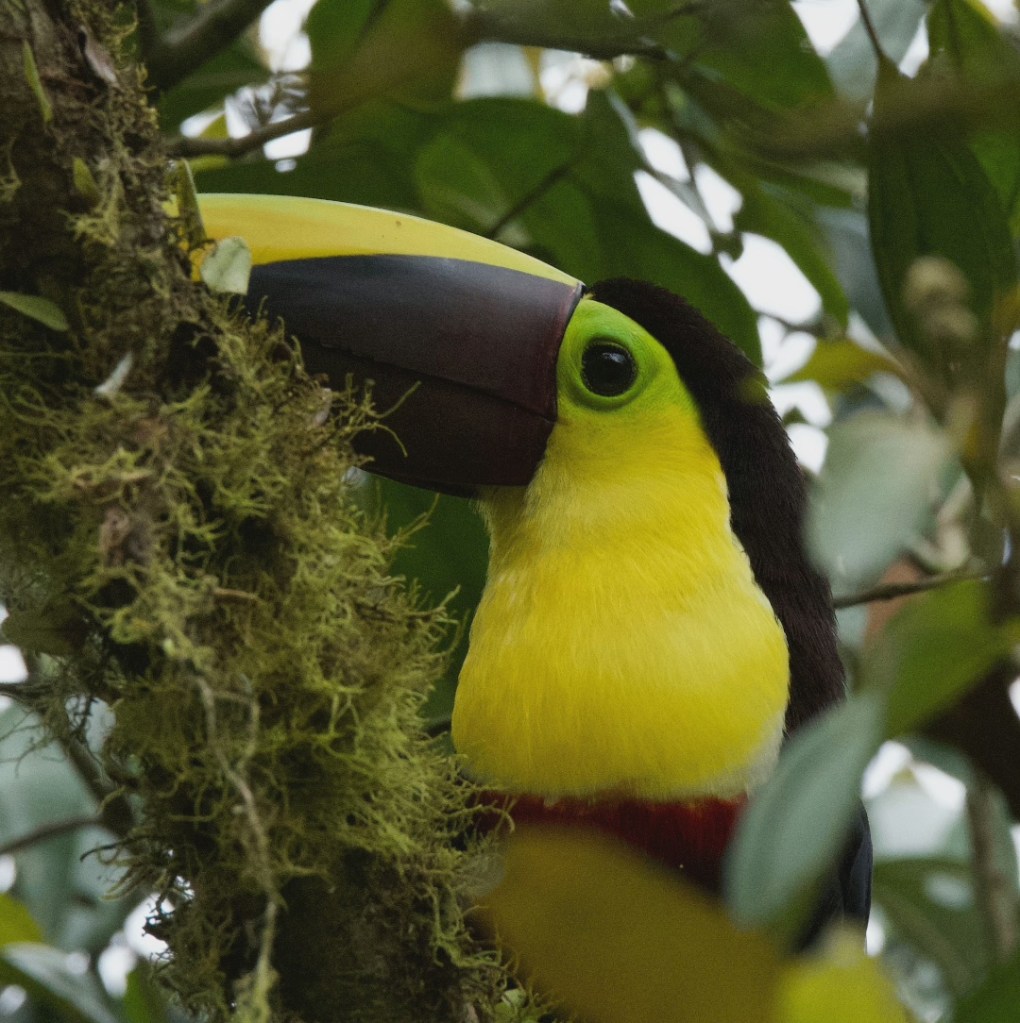
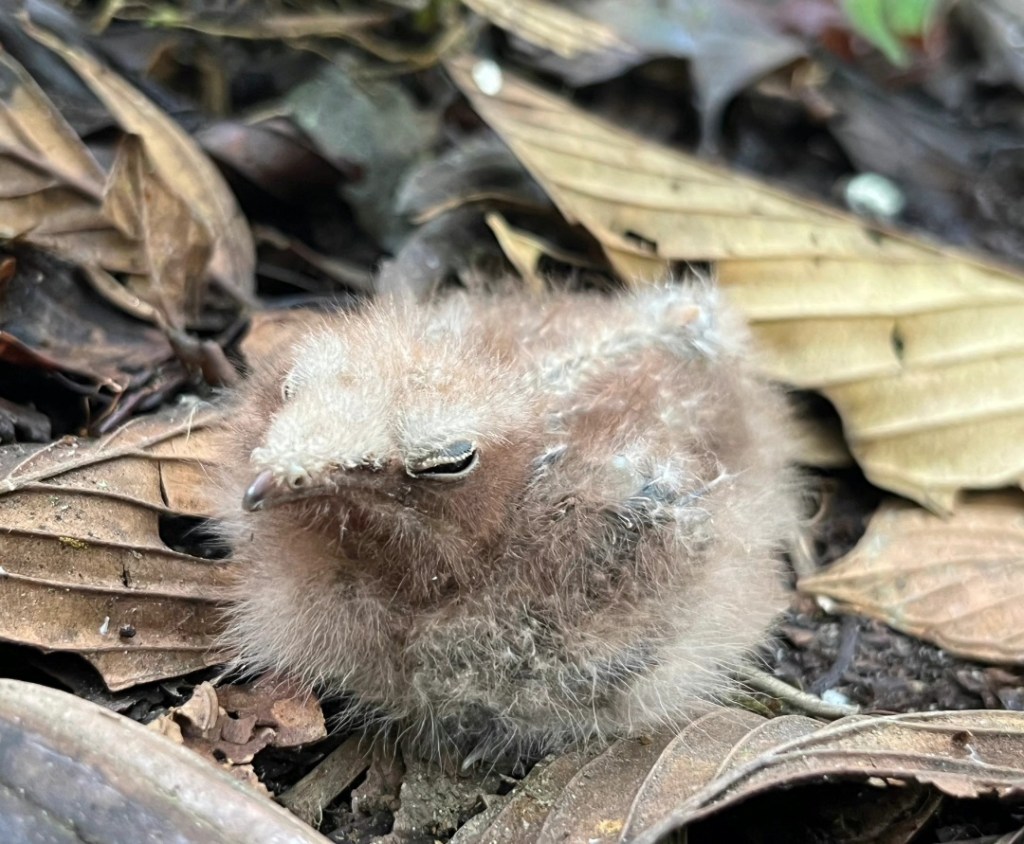

The rain is coming back strong. October has been wet. We’ve been able to notice not just an increase in humidity, but also an increase in the diversity of insects around us. Leafhoppers, katydids, weevils. There are endless beetles, often seeming to exist in sets of similar styles. We typically don’t try to identify them; we look at them more like art, like we’re browsing through a gallery. The moods and personalities of the beetles are open to interpretation. We don’t need to know their names. In a way, maybe that’s part of the shift in perspective that we’ve received. The boost in both confidence and humility in the face of a new constellation of life have brought not only an increased ability to quickly adjust to a that new constellation but also greater willingness to just appreciate it without expectation of understanding. Wherever it came from, life is art. Personally, I look forward to appreciating it, wherever we are.

 Reserva Las Tangaras
Beautiful! Thanks for taking care of Reserva las Tangaras K & E!
LikeLike
The other thing in any new birding area is that sound is denied to us as an identification tool. We can learn bird pictures, learning bird calls is possible, but it’s less feasible and, for most of us, less easy. Then find yourself in dense woodland where seeing the actual bird is hard. I wonder whether Tapaculos actually recognise each other by sight or whether it’s all by call.
LikeLike