No Fridge? No Problem!
As Emily and I think about what is different about living here, several obvious things come to mind. We’re sitting almost directly on top of the equator, so day length doesn’t change. Instead of colder seasons and warmer seasons, we have wet seasons and dry seasons. Instead of one species of hummingbird, we have a suite of fifteen or so that we may expect to see on any given day – more if we’re lucky. Yet, one of the biggest aspects of life here that stands out to us is something very simple, which until recent times would be completely normal anywhere in the world: we have no refrigerator.
It’s been instructive. It makes us realize how many of the foods that we put in the fridge don’t need to be there. It turns out that most leftovers can sit out for a couple of days before they start to go bad. Most sauces don’t need to be refrigerated at all, nor do eggs or most vegetables or fruits if you eat them within a week or so. Not that we store most fruits and veggies in the fridge under normal circumstances, but foods often shuffle around, so it’s not unusual. Cheeses like mozzarella can happily sit wrapped up for a few days in cool water. That leaves milk and meat, and we do miss those. Our milk is powdered. “Leche en Polvo.” You get used to it. As for meat, we typically buy enough for a meal with leftovers when we go to town, so we get to eat it maybe two days per week. Eggs and beans fill in the protein gaps. Do we miss our refrigerator and chest freezer back home? Yes. But it’s good to know that life isn’t terribly inconvenient without them.
I mentioned in a previous post that I enjoy fermenting foods and drinks. Sauerkraut, mead, beer, sourdough bread, and kombucha are all things that I’ve fermented on a regular basis back in the states. Generally, the historical purpose of intentionally fermenting foods has been to preserve them. It’s useful for storing nutrient-rich foods over the colder months, but it’s also useful for saving bumper crops. That’s why cabbage is the traditional vegetable used for sauerkraut – it all comes in at once. Without a refrigerator and/or freezer – or a pressure canner – you either lose most of it, or you ferment it.
We got to experience a much smaller version of that after the banding workshop last month. The group left behind a large cabbage and a pile of little rosy radishes. That doesn’t sound like much, but for two small people that aren’t interested in a single individual cruciferous vegetable and its spicy cousins dominating several meals in a row, it presented a choice: ferment it or lose it. Now, weeks later, those veggies are still around, shredded and steeped in their own now acidic juices. We eat the kraut here and there – on eggs, in soup, maybe mix things up and put it on pasta. I don’t necessarily recommend doing that, but hey, experimentation is key here. Actually, that’s part of what makes fermentation so fun: experimentation. Traditionally, sauerkraut is fermented cabbage, but as you just read, we did it with radishes mixed in. Many vegetables ferment quite well. I’ve made kraut with carrots, turnips, kale, green beans, peppers, kohlrabi, even spaghetti squash. Cabbage is almost always at least half of the mix, but it doesn’t have to be in there at all. Every time I see a vegetable I haven’t thought much about, it’s hard not to think, “I bet I can ferment that.”


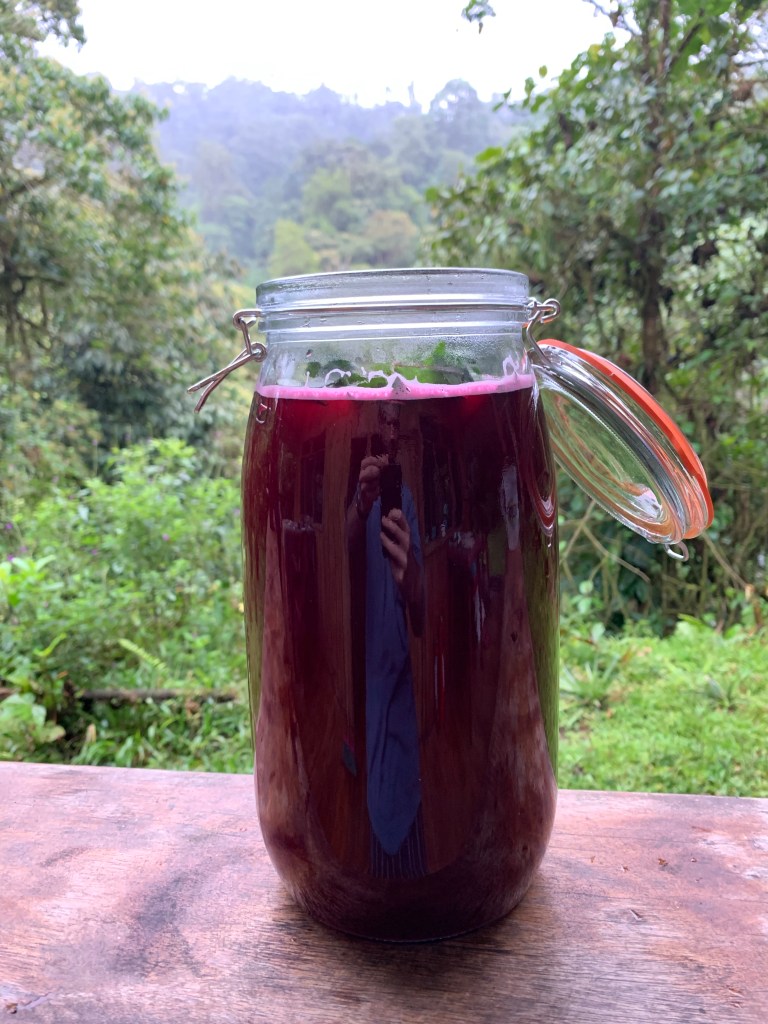
The experiments don’t end with vegetables. Around the end of August, I made a ginger beer. All it took was to boil some chopped ginger, let it cool until warm, dissolve a load of sugar into it, sprinkle on some bread yeast, and pour it into sterilized jars. I’m simplifying things a little bit, but not much. A few days later: boom, we had a tasty alcoholic beverage. The next week, I did it again but added pineapple. Use that as the base for a cocktail with rum and lime juice, and bam, you’ve got a Mindo Mule. Last week, I used beets instead of pineapple and added fresh basil during the fermentation. The result was a richly colored, nutritious brew that would make a Shrute proud (if you haven’t seen “The Office” you wouldn’t understand). Beets are well-demonstrated to be uniquely beneficial for the cardiovascular system. Too, the unfiltered “beer” is filled with B vitamins produced by the yeast as they bubble away. What’s the harm if we happen also to catch a buzz off of such a medicinal homebrew?

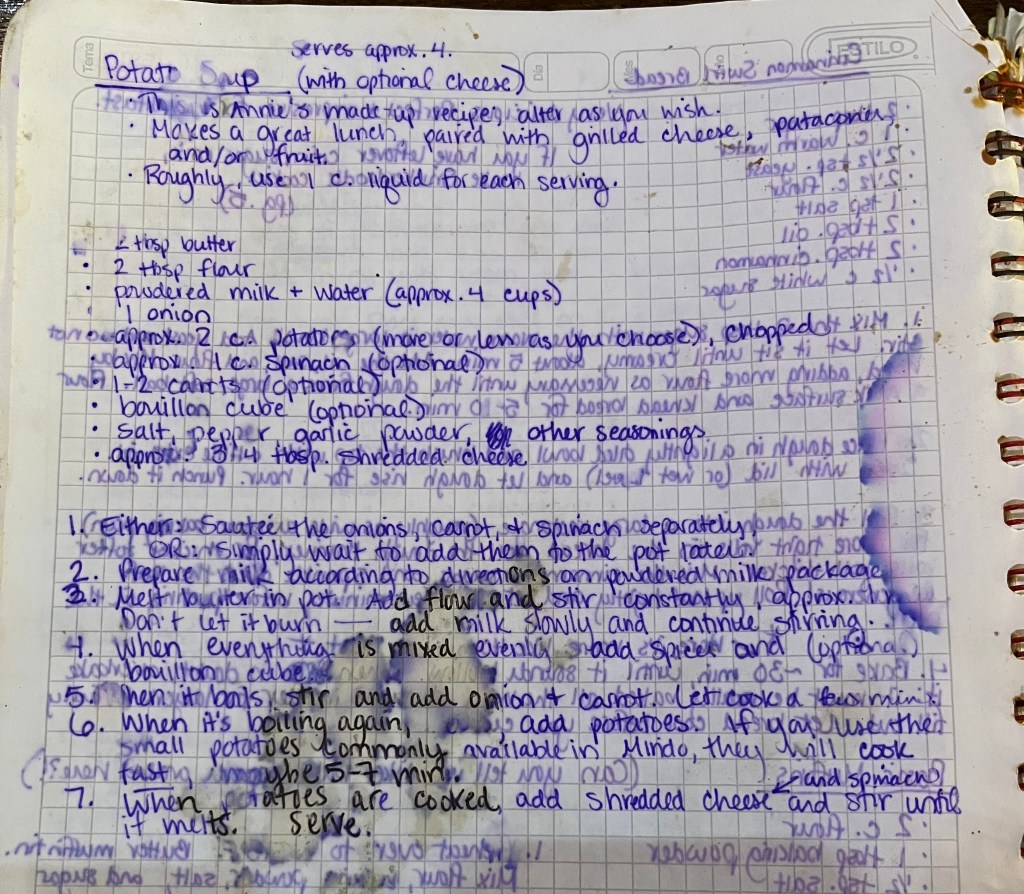
Of course, not everything we consume is fermented. Normally, Emily and I are far from vegetarian, so our diet has shifted quite a bit since coming to Ecuador. That also means we’ve had to develop a new rotation of meals to cook. We’ve taken to frequent meals of coconut curry, Pad Thai, fajitas, chili, and lots of scrambled eggs with vegetables, often served with Emily’s “zucchini patties.” Other meals and desserts have come out of the Managers’ Cookbook, created by past managers, and updated over time. The humble potato soup has been a winner; multiple guests have asked for the recipe. We like to add black-eyed peas and cabbage and/or kraut for more substance and variety.
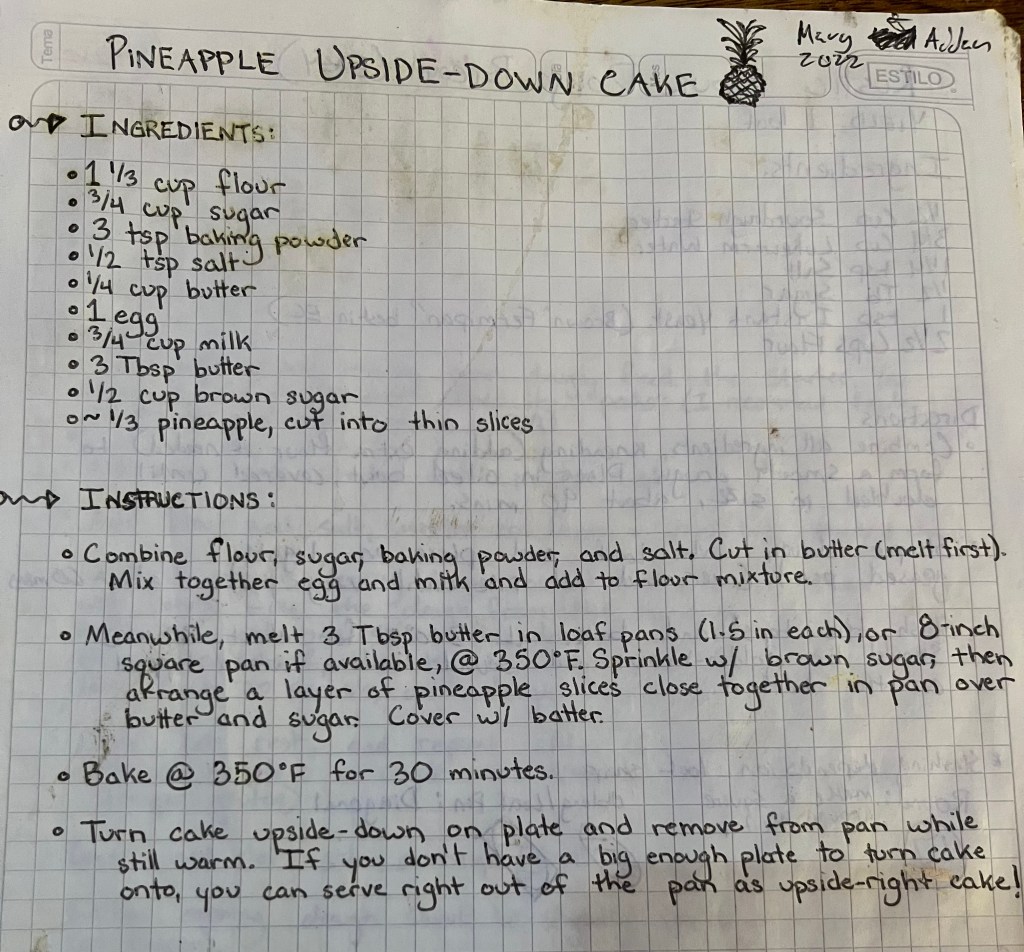
We also really like the pineapple upside-down cake, which Emily has modified by adding little pieces of pineapple to the batter itself. That makes it even more moist. Just don’t overdo it or it won’t bake properly.
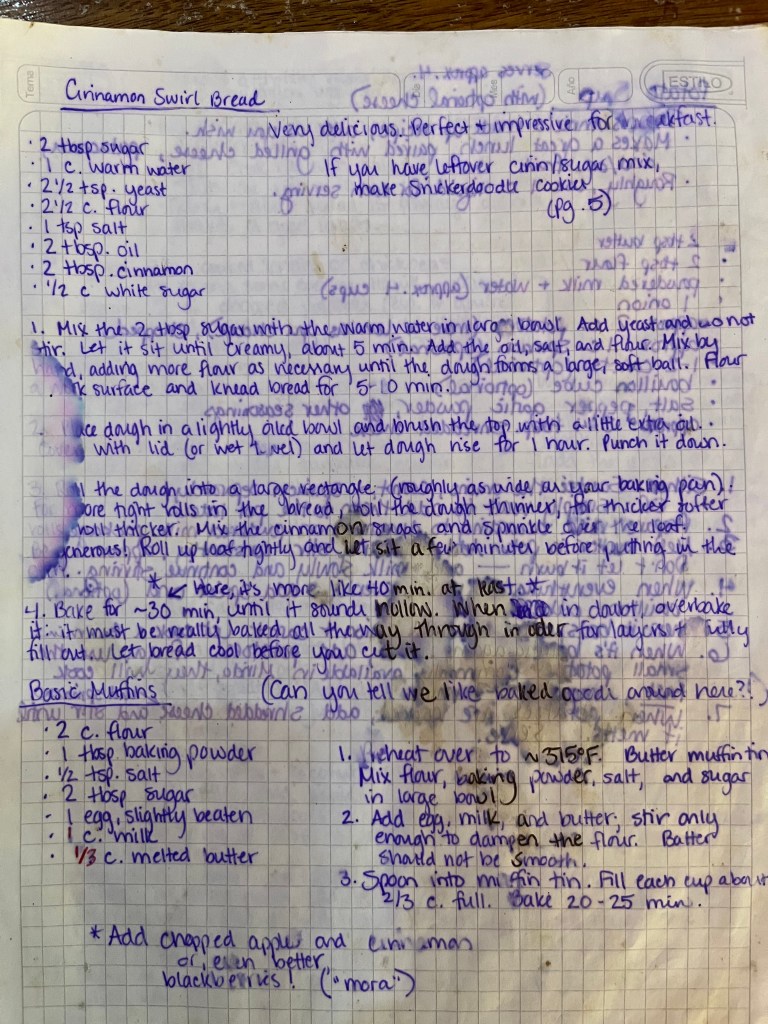
Another popular recipe that we’ve shared with guests is the “Cinnamon Swirl Bread.” We like rolls better though, so we cut it into four cross-sections and bake it like that. Emily likes to add cubed apples and sometimes a bit of anise to the cinnamon sugar mix.
As you can see, there’s more to life at Reserva Las Tangaras than hummingbirds and rain. As we go into our last two months here, we look forward to further exploring the cookbook of our predecessors, and maybe adding to it ourselves. We hope this peek into our kitchen has given you something new to explore as well.

 Reserva Las Tangaras
That all sounds so delicious. The sour dough bread looks pro! Good ole RLT a hotbed of creativity!
LikeLike