Summer comes and we leave
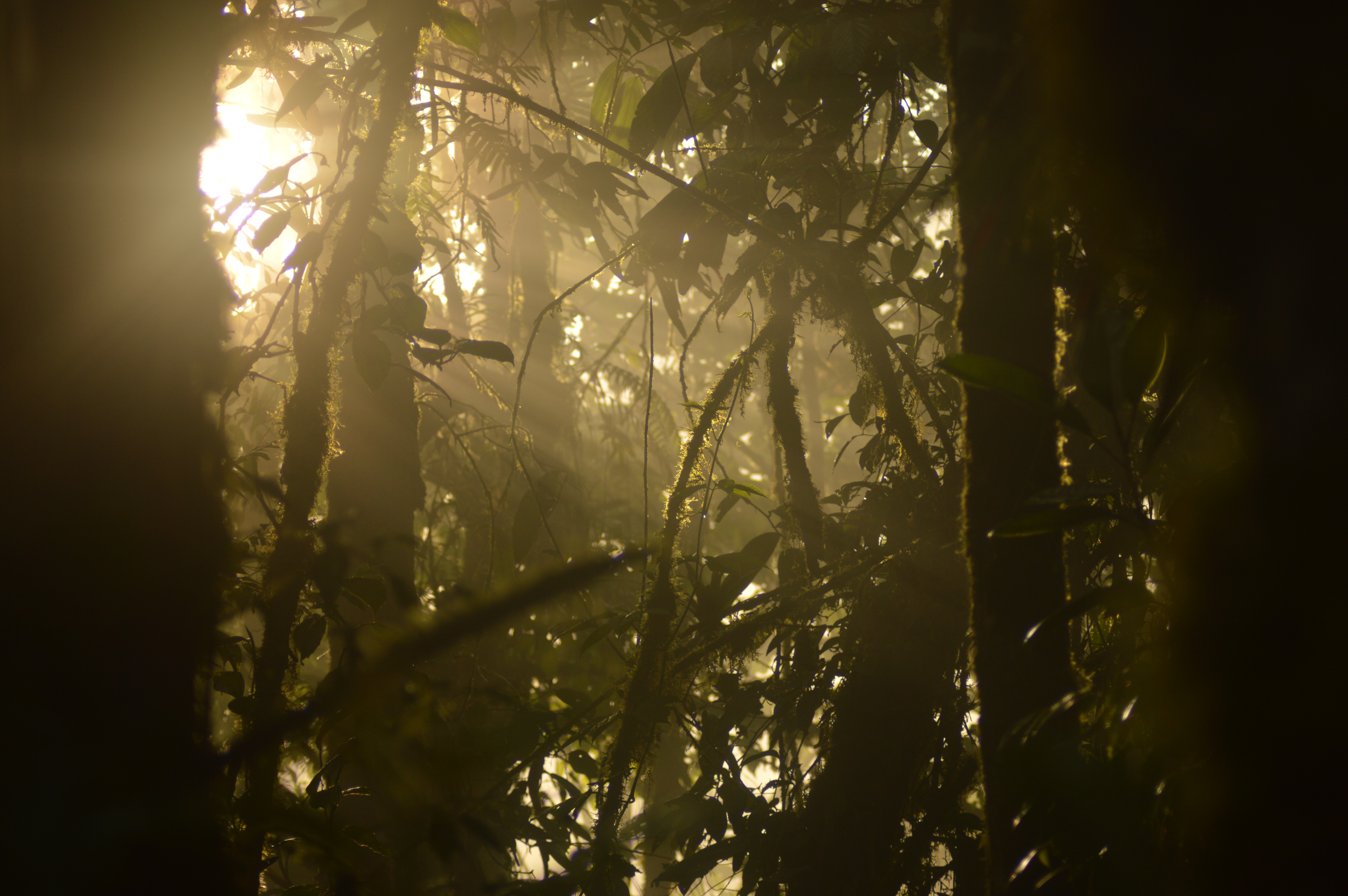
Our time is ending here just as the rainy season is drying up and summer is arriving. For the second time in our whole stay here, we got to witness the afternoon sun in its full glory. The golden-yellow light softly filtered through the canopy, revealing a new palette of greens we had yet to see. The rain has finally stopped and the river now runs crystalline blue, turning almost turquoise under the midday light. It has been a special gift to see the reserve in a new light as we wrap up our final month here.

The forest is full of flowers; so full, that the hummingbirds have almost completely stopped visiting the feeders except for a few White-Necked Jacobins, Green Crowned-Brilliants, and Brown Violetears. The chaos of the near 15 species we would survey everyday has now dropped to almost four. The Flor de Mayo, a flower that grows high up in the trees ranging from an imperceptible lavender to a soft glowing pink has begun to fall and decorate the forest floor. Meanwhile, other shades of purple, orange and red, dot the forest; a myriad of flowers that remain a mystery to us. The forest here is so diverse in vegetation, plant identification was a challenge that eluded us up until the final day.
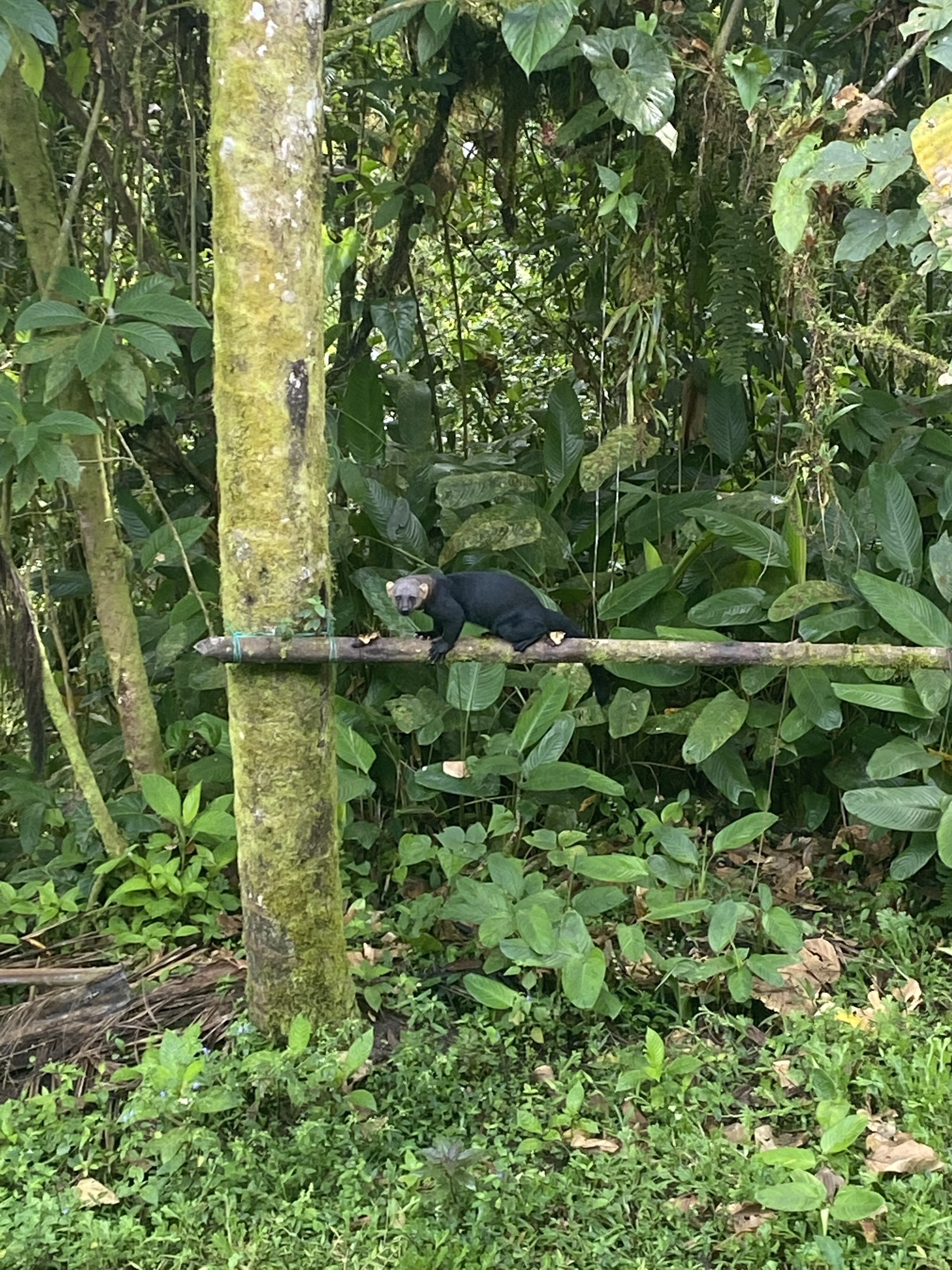
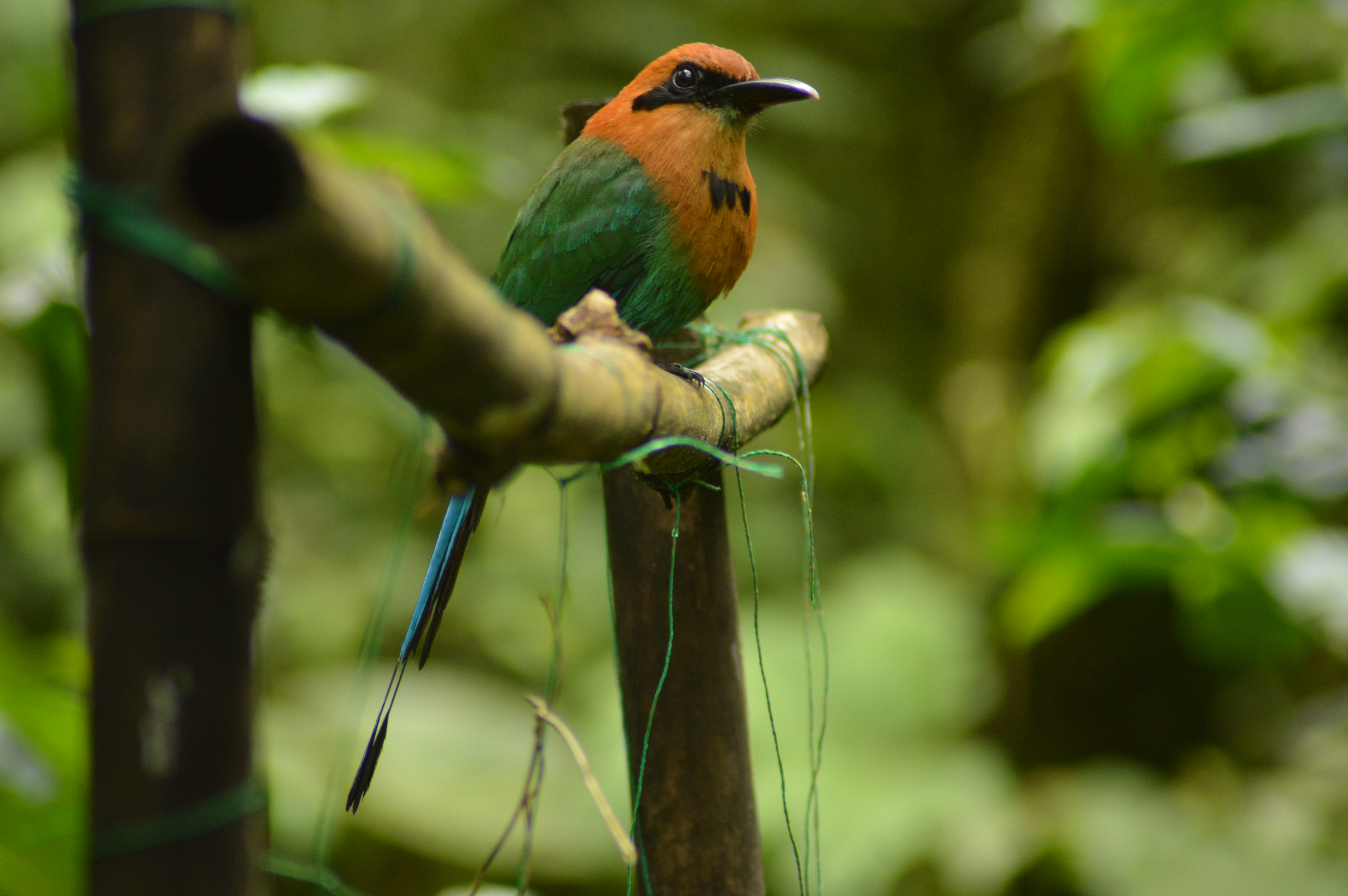
In May, we began putting bananas out on the feeders every morning. For weeks we had no visitors, except for a wily Tayra who would eat all of the bananas we had carried down the road in our heavy packs in minutes. Nonetheless, we kept our hopes up. Slowly but surely a pair of Palm Tanagers began to hesitantly come to the feeder in the back-yard. Maybe they told their friends or maybe the alluring yellow bananas drew them in, but more and more species began to come. In our last week, I saw my favorite bird, the Orange-billed Sparrow on the far feeder. I was delighted. We are passing off this project to Kieran and Emily, the new managers, and hope the fruits of our labor continue to bring more and more bird species to the yard around the cabin.
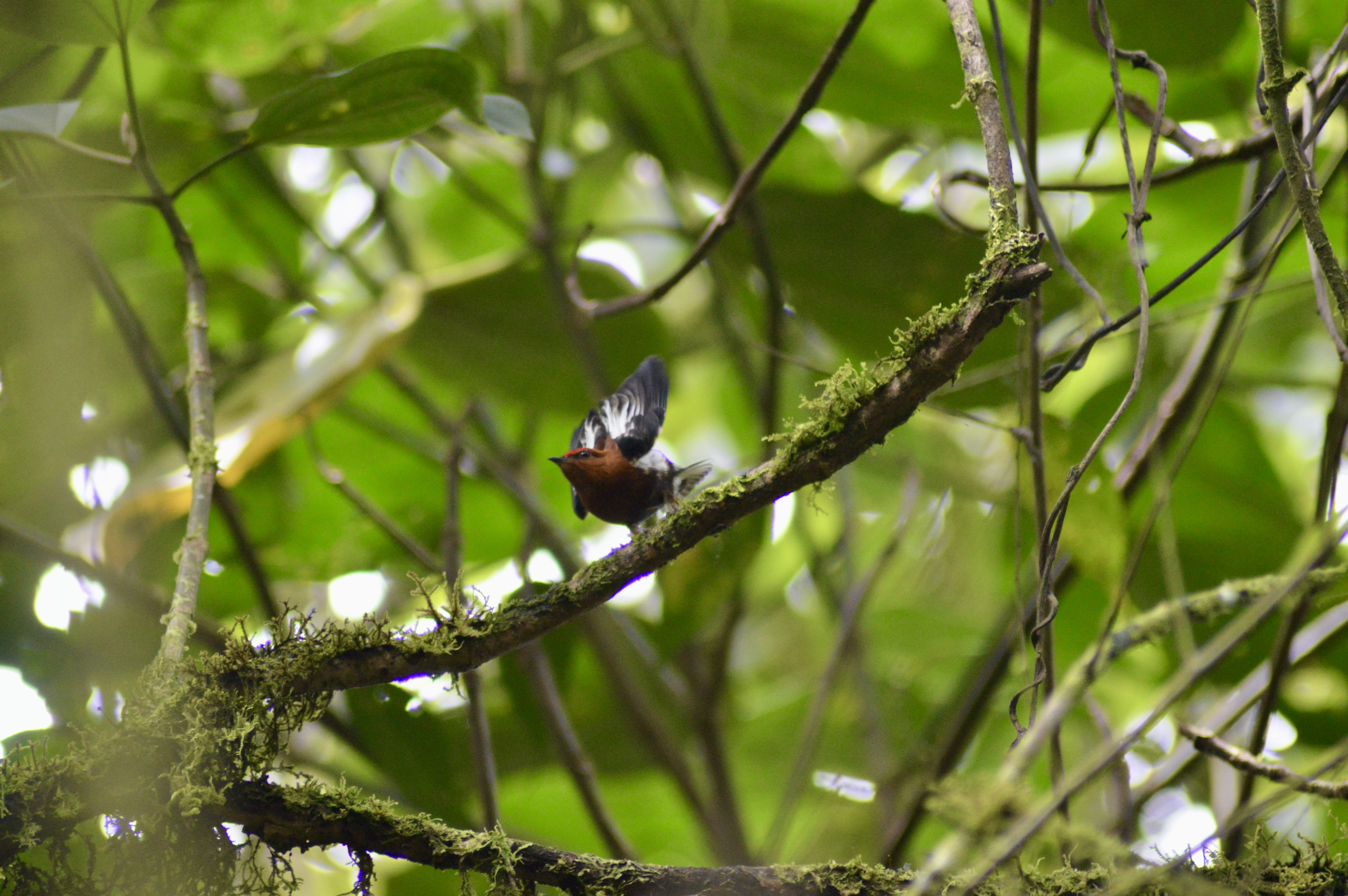
Arriving here, we new very little about birds, and even less about tropical birds. In our last month, we began to take note of how many calls we recognize and species we can identify upon first glance. We never reached our goal of identifying 150 species in one month, but we learned a lot, and are leaving with a new found appreciation for the breath-taking beauty and diversity of birds that populate the Andean Cloud-Forest.
One last gift from the forest
Towards the end of our time, we had a very special encounter with one of the most iconic species of the Andes. A visitor came to do a bird tour with us, and it was a beautiful sunny day. After seeing several species of tanagers, becards, and woodpeckers, we made our way over to the Club-winged Manakin lek to show her this amazing species. Hattie heard a loud crash, and muttered about it maybe being the bear, half joking. I shrugged it off, thinking it was a deer that we’d seen recently, but decided to check it out anyways.
We could hear it moving, slowly but steadily, and not so quietly. It seemed to be knocking into all the branches in its way, and we all got a glimmer of hope that maybe Hattie had been right. The thick vegetation of secondary forest regrowth blocked all attempts to see it, but the animal continued through the forest conveniently close to the path leading to the third observation point. We all walked as quiet as we could, although I cursed myself under my breath for snapping far too many branches along the way.
At one point, Hattie moved ahead of me on the trail. I thought I heard a sound off to the right, but Hattie seemed to know where it came from. They crept forward slowly, then rapidly turned around looking at us and said “It’s a bear.” Melanie and I looked up into the trees and saw a bristly black coat rapidly scaling the moss-covered trunk, hiding itself away in the vines and leaves. Only a small snout peaked out.
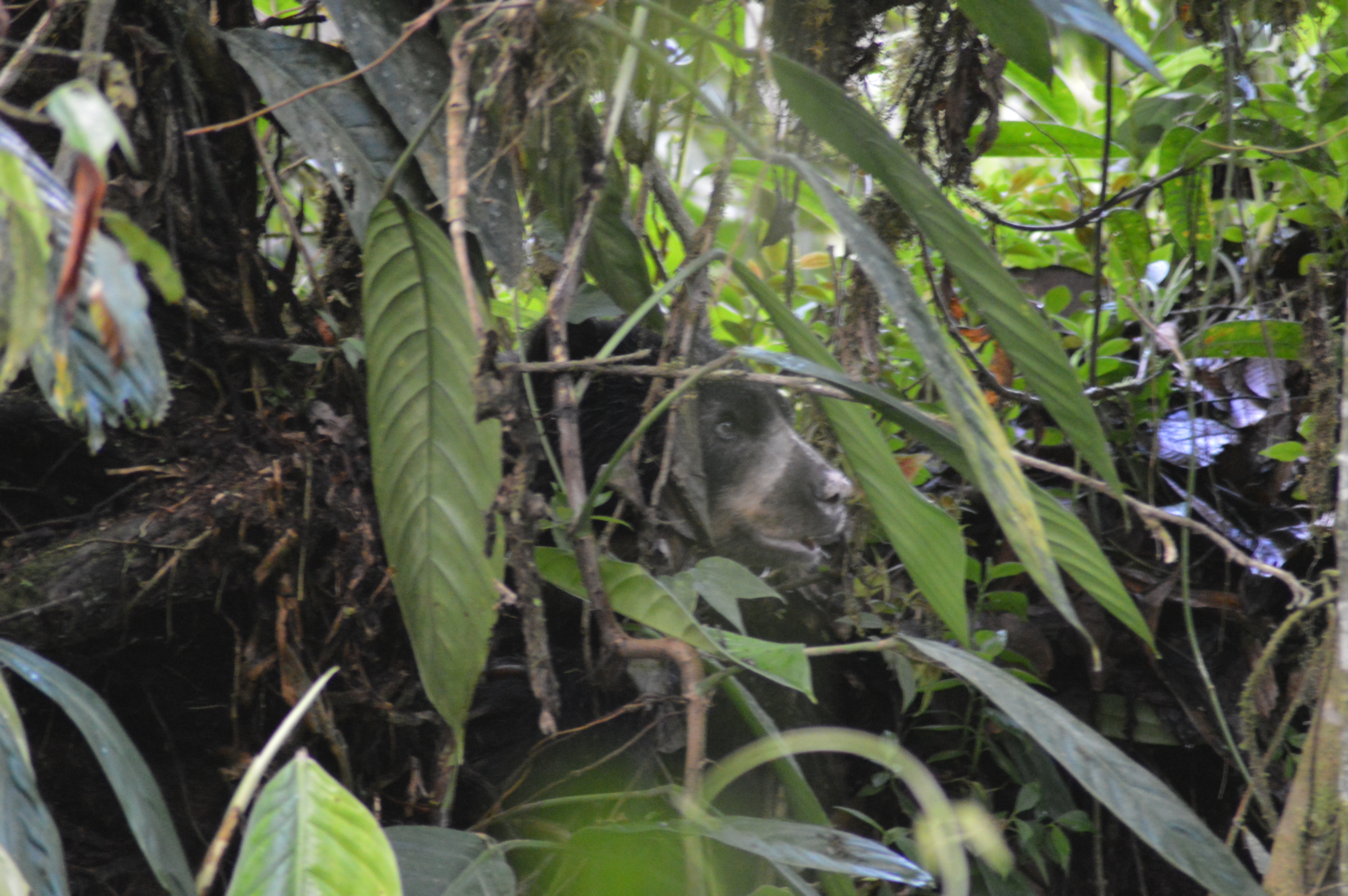
As soon as we realized what it was we had been following, we all quickly backed up until we were in a much more comfortable range of the bear so to not disturb it any more than we already had. It watched us and we watched it in return, both cautious but neither wanting harm to come of the others. I later read that Andean Spectacled Bears are extremely docile compared to other bear species. Of course, with any large mammal, it is extremely important to keep a safe distance and not agitate them, so after watching for a couple minutes and snapping a couple photos, we left the bear to its business. Trying to pay attention to the manakins after that was almost impossible. A sense of profound wonder grew inside me. For months we had dreamed about getting to see it wandering through the dense forests across the reserve, but to no avail. We saw no tracks, and it never appeared on our camera traps. Yet this day, and it is a memory I will never forget, we had a rare encounter with a frequently arboreal, cloud forest dwelling bear. It was truly an incredible way to finish off our time here.
-Logan and Hattie


 Reserva Las Tangaras